The Arizona Strip Mule Deer Reputation
For many deer hunters, the name "Arizona Strip" isn't just a geographical location; it's a whispered legend, a place synonymous with monster mule deer that seem to exist only in dreams and dusty photographs. But chasing these giants comes with incredible challenges, from understanding the deeply complex draw system to simply navigating the vast, unforgiving landscape. This guide is here to unravel the mystique, helping you understand why the Strip holds such an iconic reputation and what it truly takes to pursue its fabled bucks.
The Legend of the Arizona Strip Mule Deer
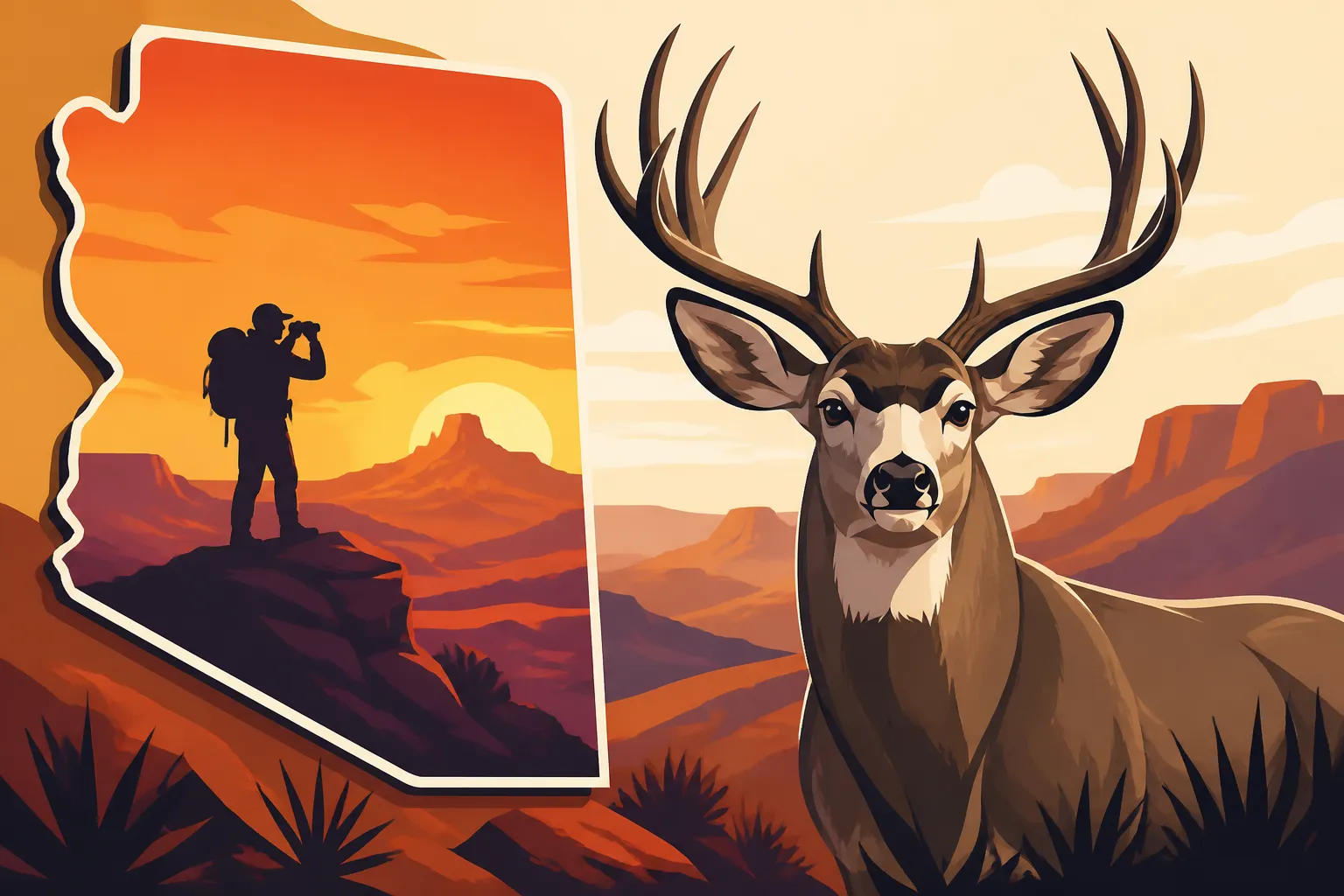
The Arizona Strip, a vast, remote expanse north of the Grand Canyon, has carved out an almost mythical status in the world of mule deer hunting. It’s not just a place where big deer live; it’s a place that consistently produces some of the largest mule deer found anywhere, drawing hunters from across the globe into its notoriously difficult draw. The stories that emerge from this country fuel a lifetime of obsession for many.
What Makes the Strip So Special
The allure of the Arizona Strip isn't born from hyperbole; it's rooted in a unique combination of factors that coalesce to create an environment where mule deer can truly thrive and grow to exceptional sizes. First and foremost is the sheer vastness and wildness of the landscape. This isn't country with easily accessible roads or a high density of human activity. It's rugged, sparsely vegetated, and demands a serious commitment from anyone who ventures into its heart. This remoteness, coupled with carefully managed hunting pressure through extremely limited tag allocations, allows deer to reach older age classes. When deer live longer, they have more seasons to grow those incredible antlers, turning average genetics into legendary racks. Think of it like a wild, natural gym where only the strongest and oldest get to prove their might. It's also the kind of country that demands you spend countless hours Reading a Unit Before You Ever Walk It, understanding every fold and contour long before you ever set foot on the ground.
Beyond the age structure and low pressure, the Strip benefits from a unique blend of forage and water resources, often spread far apart. When conditions are right, with good winter moisture and summer monsoons, the desert can explode with nutritious forbs and browse, providing a rich diet that fuels antler growth. This isn't lush, green timber, but a tough, resilient ecosystem perfectly adapted to grow big deer. The landscape itself, characterized by deep canyons, volcanic cones, and endless sagebrush flats, provides abundant cover and escape routes for these wary animals, making them incredibly challenging to locate and pursue. It's a land of extremes, and those extremes produce exceptional results.
The Genetics and Antler Growth
While good nutrition and age are crucial, the mule deer of the Arizona Strip are also blessed with remarkable genetic potential. These aren't just any mule deer; they carry the blueprint for massive antlers, with wide frames, impressive tine length, and often heavy mass. When you combine this inherent genetic quality with low hunting pressure, allowing deer to reach 6, 7, or even 8 years old, and a diet optimized by intermittent but powerful moisture events, you have a recipe for true giants. The sparse nature of the desert means less competition for available resources, further concentrating the energy into antler development.
Consider a mature buck in this environment. He has spent years navigating treacherous terrain, evading predators, and finding scarce water sources. Each year, with adequate rainfall, he gets access to quality forage, allowing him to put more energy into rebuilding and expanding his rack. It’s a slow, deliberate process, often taking many years to manifest into the 200-inch-plus trophies the Strip is famous for. This is why hunters obsess over draw odds and spend decades building points, all for a chance at one of these truly magnificent animals. The reputation for these "gorilla" bucks is well-earned, reflecting generations of robust genetics thriving in a perfectly sculpted habitat. Many hunters dedicate their entire lives to this specific pursuit, understanding that a Strip tag represents the pinnacle of mule deer hunting. You can find these giants Where Mule Deer Range on the Plateaus across this northern Arizona region, but the Strip is in a league of its own.
Understanding the Draw and Access Challenges
The dream of hunting the Arizona Strip is often tempered by the harsh reality of its tag allocation system. This isn't a walk-up-and-buy-a-tag scenario; it's a deeply competitive lottery that demands patience, strategy, and often a significant time investment. Understanding this system is crucial for anyone hoping to experience the Strip firsthand.
The Low Odds and High Demand
The legendary status of the Arizona Strip leads directly to incredible demand for its limited tags, pushing draw odds to some of the lowest in the country. Arizona manages its big game populations, especially in trophy units like the Strip, through a bonus point system designed to reward consistent applicants. You earn a point each year you apply and are unsuccessful, and these points increase your mathematical chances in subsequent draws. However, even with a substantial number of points, drawing a Strip tag remains a long shot. The number of tags available for any given unit on the Strip is exceptionally low, often in the single or low double digits, especially for premier rifle hunts.
For non-residents, the challenge is compounded by the fact that Arizona Caps Nonresidents at Ten Percent of Every Hunt. This means that out of an already tiny pool of tags, only a fraction can go to hunters from outside the state, making the draw even more competitive. Many hunters spend over two decades building points, applying every single year, before they ever see a coveted Strip tag in their GoHunt draw odds calculator. It's a game of ultimate patience, where each passing year builds not just points, but the anticipation and dedication to a lifelong goal. The system ensures that the opportunity to hunt these incredible animals remains rare, preserving the quality for those few lucky individuals who do draw. Understanding How Arizona's Bonus Point Pass Awards the First Twenty Percent is key to maximizing your strategy.
Navigating the Remote and Rugged Terrain
Even if you beat the astronomical odds and draw a Strip tag, the real work has just begun. The Arizona Strip is not for the faint of heart or the ill-prepared. This country is vast, remote, and unforgiving, demanding a high level of physical fitness, meticulous planning, and self-sufficiency. You're looking at millions of acres of challenging terrain, from vast, flat sagebrush basins that seem to stretch to infinity, to broken badlands, steep canyons, and isolated mesa tops. Water is scarce, often requiring extensive hauling, and temperatures can swing wildly, from freezing nights to scorching midday heat, even in late fall.
Access points are limited, and many roads are unmaintained dirt tracks that become impassable with rain or snow. It's not uncommon to be miles from the nearest paved road, or even the nearest human, requiring reliable vehicles, spare tires, and contingency plans for breakdowns. The sheer scale means that covering ground and finding deer often involves countless hours behind glass, followed by grueling stalks across broken terrain. Forget about easy hunting; this is true wilderness. Scouting, often requiring multiple trips, is absolutely paramount to understanding the subtle nuances of a specific unit and where Water Sources That Concentrate Arizona Desert Game. Being able to Reading an Arizona Unit Boundary Before You Apply correctly is critical, as mistakes can be costly in this country.
Strategies for Hunting the Arizona Strip
Hunting the Arizona Strip isn't just about drawing a tag; it's about executing a well-thought-out strategy that leverages meticulous preparation, advanced scouting techniques, and a deep understanding of mule deer behavior in an extreme environment. Success here is rarely accidental; it's earned through hard work and relentless dedication.
E-Scouting and Pre-Season Preparation
Before you ever set foot on the ground, your Arizona Strip hunt begins with intensive e-scouting. This digital reconnaissance is your first and most crucial step in breaking down the overwhelming vastness of the units. Utilizing advanced mapping software and tools is non-negotiable. Platforms like GoHunt allow you to dissect the terrain from your home, identifying potential bedding areas, migratory corridors, water sources, and natural funnels that deer might use. Look for subtle changes in vegetation, north-facing slopes that offer shade, and remote canyons that provide security.
Your e-scouting should focus on understanding the macro and micro movements of deer. Where will they be feeding in the morning and evening? Where will they bed during the day to escape the sun and wind? Are there any hidden tanks or springs that aren't obvious from a casual glance? This is where you identify potential glassing points, plan your access routes, and mark areas for boots-on-the-ground scouting. The better you understand the unit virtually, the more efficient your physical scouting will be. Remember, the Strip offers some of the best Mule Deer Across Northern Arizona, but finding them requires precision. Consider the seasonal changes; understanding When the Mule Deer Rut Actually Starts can inform your e-scouting by highlighting areas bucks might frequent later in the year.
Glassing Techniques and Patience
Once you're on the ground, glassing is not just a tactic; it is the primary hunting method for the Arizona Strip. The open, expansive country means that spotting deer from a distance is the most effective, and often only, way to locate trophy bucks. You'll need high-quality optics – powerful binoculars (15x or higher) and a top-tier spotting scope (at least 60x power, preferably with an angled eyepiece for comfort during long sessions) – mounted on a sturdy tripod. Forget handheld glassing; you'll be spending hours, perhaps even entire days, anchored to your tripod, systematically dissecting every square inch of terrain.
The technique involves setting up on a high vantage point, preferably before dawn, and patiently gridding the landscape. Start with the nearest terrain and slowly work your way out, looking for anything that seems out of place: a horizontal line in a vertical world, a flicker of an ear, the distinctive shape of an antler. Sun exposure plays a huge role; deer will often seek shade in washes or under small trees as the day progresses. The wind can also be your biggest friend or foe, so understanding thermals and prevailing winds is critical for your approach. Be prepared for countless hours of patient observation, because that fleeting moment when a giant buck stands up from his bed, miles away, is what you're waiting for. It's a true test of mental fortitude and optical endurance.
Water Sources and Migration Patterns
In an arid environment like the Arizona Strip, water is life, and it dictates the movement and distribution of all wildlife, especially mule deer. Identifying and understanding the critical water sources within your chosen unit is paramount to success. These can be anything from developed cattle tanks and guzzlers to seasonal potholes in rock formations or hidden springs. Deer will naturally concentrate around these precious resources, making them key areas to scout and focus your efforts. Look for sign around water: tracks, droppings, and rubbed trees.
Beyond static water sources, mule deer on the Strip often undertake significant seasonal migrations, moving from higher summer ranges to lower wintering grounds, or even between different feeding areas based on rainfall patterns. These migrations are influenced by weather, forage availability, and hunting pressure. Understanding these patterns, which often follow specific drainages or terrain features, can help you predict where deer will be at different times of the season. For example, an early season hunt might find deer higher up, while a late season hunt could see them concentrated on lower, more protected slopes. E-scouting tools like GoHunt, combined with pre-season trips, can help piece together these complex puzzle pieces, revealing the invisible highways these magnificent deer travel.
Here's a simplified look at what might be important when considering Arizona Strip units, though remember to always verify specific regulations and conditions yourself.
| Unit Feature | Characteristic 1 (e.g., Unit 13A) | Characteristic 2 (e.g., Unit 13B) | Characteristic 3 (e.g., Unit 12A/B) |
|---|---|---|---|
| Terrain Type | Rugged Canyons, Volcanic Cones, Mesas | Expansive Sage Flats, Washes, Isolated Buttes | Pinyon-Juniper, Cedar Breaks, Canyons |
| Trophy Potential | Consistently High (200"+ potential) | High (200"+ potential) | High (190"+ potential) |
| Draw Difficulty | Extremely Difficult (Very Low Odds) | Extremely Difficult (Very Low Odds) | Extremely Difficult (Low Odds) |
| Access | Limited, Remote, Challenging Dirt Roads | Remote, Extensive Road Network (Dirt) | Varied, Some Paved, Mostly Dirt |
| Water Scarcity | Very High (Critical for Deer Location) | High (Critical for Deer Location) | Moderate to High (Still Key) |
| Scouting Need | Extensive and Repeated | Extensive and Repeated | Extensive and Repeated |
| Typical Harvest | Large-bodied, Wide-racked Bucks | Large-bodied, Heavy-horned Bucks | Large-bodied, Mature Bucks |
Disclaimer
This article is for general informational purposes only and does not constitute professional advice. Laws, prices and regulations vary by location and change over time. Consult a qualified professional for guidance on your specific situation.