Where Mule Deer Winter on the High Plateaus
It's a common frustration among Arizona mule deer hunters: you scout your unit all summer and fall, patterning deer, finding their food sources and bedding areas, only for them to vanish come late November or early December. That's because many of these majestic animals aren't just shifting a little; they're making a strategic retreat to lower, more hospitable winter grounds. This guide will walk you through understanding where Arizona's mule deer typically winter on the high plateaus, helping you predict their movements and locate them when the snow starts to fly.
The Annual Shuffle: Why Arizona Mule Deer Seek Winter Range
Arizona's high country is a land of dramatic seasonal shifts, and mule deer are masters of adapting to these changes. While we might think of them as permanent residents of a particular mountain or plateau, many populations undertake significant migrations to survive the leanest months. Understanding why they move is the first step to knowing where they'll end up.
The Driving Forces Behind Winter Migration
Imagine being a deer in a foot of fresh snow up on the Kaibab Plateau. Every step takes immense effort, exposing you to the cold wind, and burying your food sources deep beneath a white blanket. This isn't just uncomfortable; it's a matter of survival. The primary drivers for mule deer seeking winter range are simple: food, energy conservation, and thermal cover. As temperatures drop and snow levels rise, browse like bitterbrush, cliffrose, and various forbs become inaccessible. The deer's metabolic rate, already taxed by the rut, needs easily digestible forage and less energy expenditure. Deep snow makes foraging difficult, movement costly, and escape from predators challenging.
This physiological need for efficiency drives them to lower elevations, typically south-facing slopes, where snow melts faster, and vegetation remains more exposed and nutritious. It's a calculated move to ensure they have enough reserves to make it through winter and begin antler growth (for bucks) or gestation (for does) in the spring. If you've ever scouted a unit in October only to find it seemingly barren in January, you've witnessed this migration firsthand. It’s not that the deer are gone; they’ve simply moved to where survival is easier, sometimes miles away.
Migratory Versus Resident Mule Deer
It's important to note that not all mule deer populations in Arizona are strictly migratory. Some populations, particularly those in lower desert mountain ranges or units with less severe winters, might be considered "resident" deer. They may only move short distances, perhaps from higher ridges down into canyon bottoms or protected pockets within their home range. However, on Arizona's high plateaus, migration is a common and critical strategy.
For instance, the legendary mule deer of the Kaibab Plateau are known for their distinct seasonal movements, transitioning from high summer ranges near the Grand Canyon's North Rim down to lower elevations as winter sets in. This distinction is crucial for hunters. If you're targeting a herd known for its migratory behavior, scouting summer and fall ranges alone won't tell you where they'll be in December or January. You need to understand their entire annual circuit, and resources like GoHunt can often provide insights into these broader migration corridors based on historical data and observed patterns. Learning to decipher the signs of these movements can give you a significant advantage when the season gets tough.
Unpacking Arizona's High Plateaus: Prime Wintering Grounds
Arizona's diverse landscape means that "high plateaus" isn't a single, uniform environment. Each major region offers unique characteristics that dictate where mule deer will choose to spend their winters. Knowing these specific areas and their typical winter range elevations is key to successful cold-weather hunting.
The Kaibab Plateau: A Classic Winter Migration
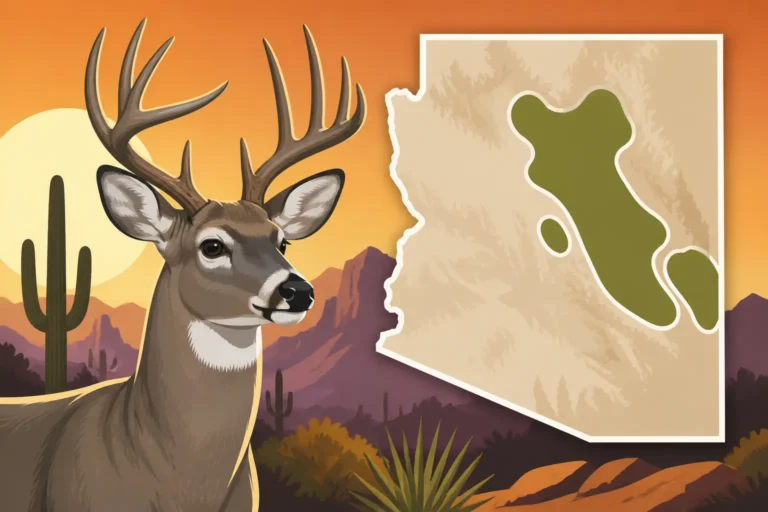
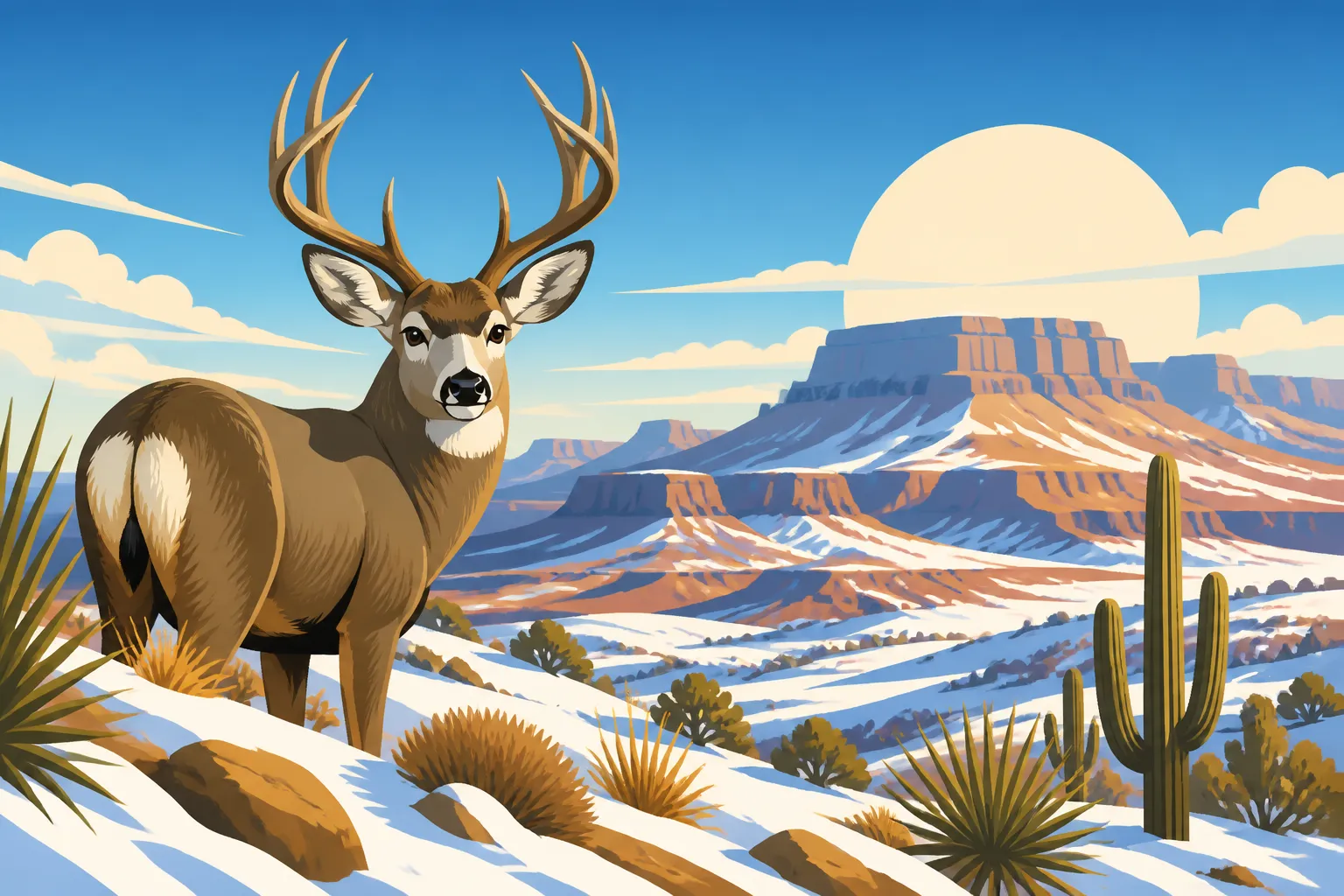
Perhaps the most famous mule deer migration in Arizona occurs on the Kaibab Plateau. During the summer and early fall, these deer thrive in the dense ponderosa pine and mixed conifer forests of the plateau's higher elevations, often right up to the rim of the Grand Canyon. However, once heavy snows blanket this high country, which can reach elevations of 8,000 to 9,000 feet, the deer begin their descent.
Their wintering grounds are primarily found on the lower fringes of the plateau, particularly on the western, southern, and eastern escarpments, often between 5,000 and 7,000 feet. These areas feature a more open pinyon-juniper woodland mixed with sagebrush and cliffrose, providing crucial browse and reduced snow depths. The south-facing slopes here are golden tickets; they soak up more sun, melting snow faster and keeping forage more accessible. Understanding Kaibab Plateau Mule Deer Quality is often tied to these very specific seasonal movements, as the animals move to sustain themselves through the harsh winters before returning to the high country for summer.
Northern Arizona Plateaus: Diverse Wintering Options
Beyond the Kaibab, other northern Arizona plateaus, such as those found in units surrounding Flagstaff and Williams, also host significant mule deer populations that exhibit seasonal movements. While perhaps not as dramatic as the Kaibab's migration, deer here will still seek out lower elevations and more sheltered canyons as winter progresses.
These areas often feature expansive pinyon-juniper woodlands, especially on mesa edges and in the deeper canyon systems. The deer will move off the higher ponderosa-covered mesas and into these more protected zones. Elevations here might range from 6,000 to 7,500 feet for summer range, with wintering occurring in the 4,500 to 6,000-foot range. Look for areas with a mix of pinyon-juniper, Gambel oak, and various brush species that offer both food and cover. Understanding Mule Deer Across Northern Arizona involves recognizing that these animals use vast tracts of land, adapting to topography and vegetation throughout the year.
The Mogollon Rim and Associated Plateaus: Seeking Shelter
The Mogollon Rim and its adjacent plateaus, while often known for elk, also hold healthy populations of mule deer. Here, the winter migration tends to be a bit more localized but no less critical. Deer will descend from the high, dense pine forests of the Rim, which can exceed 7,000 feet, into the more protected canyons, drainages, and pinyon-juniper belts just below the escarpment.
Winter ranges along the Rim are often found in the "break country"—the steep, rugged terrain that drops off the main plateau. Elevations for wintering can vary widely, from 4,000 to 6,000 feet, depending on the severity of the winter and the specific unit. These areas provide vital thermal cover in thick stands of pinyon and juniper, as well as crucial browse species. You might find them concentrated on south-facing benches or in deep, sheltered draws that offer respite from the wind and snow. When you're trying to figure out Reading an Arizona Unit Boundary Before You Apply, it's important to consider how these units span different elevation bands, and therefore, different seasonal ranges for mule deer.
Decoding the Terrain: What Makes Ideal Winter Habitat
Once you've identified the general regions where mule deer winter on Arizona's high plateaus, the next challenge is narrowing down exactly where within those vast landscapes they'll congregate. It's not just about lower elevation; it's about a specific combination of factors that make a piece of ground truly ideal for surviving winter.
South-Facing Slopes: The Sun's Embrace
This is perhaps the single most important factor when looking for wintering mule deer. South-facing slopes receive the most direct sunlight throughout the day. This warmth does several critical things: it melts snow faster, exposing crucial forage earlier than on shaded slopes; it makes the ground warmer, reducing the deer's energy expenditure to stay warm; and it often promotes the growth of more palatable and nutritious browse.
When e-scouting, pay close attention to aspect. Look for broad, south-facing hillsides, particularly those with a mosaic of open patches and dense cover. Even on partially snow-covered terrain, deer will often be seen pawing through the shallow snow to access grass and forbs, or browsing on the tips of shrubs that protrude. This preference for sunny slopes is so strong that you might find deer concentrated in relatively small areas, even if surrounding terrain appears similar but lacks that crucial southern exposure.
Pinyon-Juniper and Sagebrush Ecosystems: Food and Shelter
The vegetation found in these lower elevation wintering areas is also paramount. While ponderosa pine forests dominate the summer ranges of many plateau deer, the winter brings them into the pinyon-juniper and sagebrush communities. These habitats are rich in critical winter browse.
Pinyon-Juniper: The trees themselves provide excellent thermal and hiding cover from the elements and predators. The understory, however, is where the real magic happens for deer. Species like cliffrose, mountain mahogany, bitterbrush, and various evergreen shrubs retain their foliage and nutritional value through the winter. Deer will heavily browse these plants, relying on them when other food sources are scarce.
Sagebrush: In many areas, particularly on the lower, more open plateaus, large expanses of sagebrush provide a readily available food source. Sagebrush is a high-energy plant that deer will consume, especially when other options are limited. It's not always their first choice, but it's a vital backup. When you're trying to figure out The Arizona Strip Mule Deer Reputation for trophy bucks, remember that the quality of their winter range directly impacts their ability to grow those antlers. A mild winter with ample forage on these specific plant types can make a huge difference.
Thermal Cover and Escape Routes
Beyond food, wintering mule deer need protection from the elements. Dense stands of pinyon and juniper provide excellent thermal cover, buffering them from biting winds and insulating them from extreme cold. Look for thick patches of these trees, especially in draws or on the lee side of ridges. These areas allow deer to bed down and conserve precious energy.
Just as important are escape routes. Even in winter, deer are constantly aware of predators. Their wintering grounds should offer a combination of dense cover for hiding and quick access to broken terrain, steep slopes, or areas where they can quickly disappear if threatened. Often, these escape routes will lead into deeper canyons or up onto rugged, rocky slopes that are difficult for predators (and hunters) to navigate. When planning your hunt, consider Winter Access to Northern Arizona Units and how you might approach these areas without disturbing deer that are already under stress from winter conditions.
Your Winter Scouting Playbook: Finding the Deer
Locating wintering mule deer requires a shift in strategy from your typical early-season approach. It's less about finding fresh rubs or scrapes and more about identifying consistent food sources, sheltered bedding areas, and understanding migration corridors. Modern tools and old-fashioned boots-on-the-ground effort both play crucial roles.
Leveraging E-Scouting Tools and Data
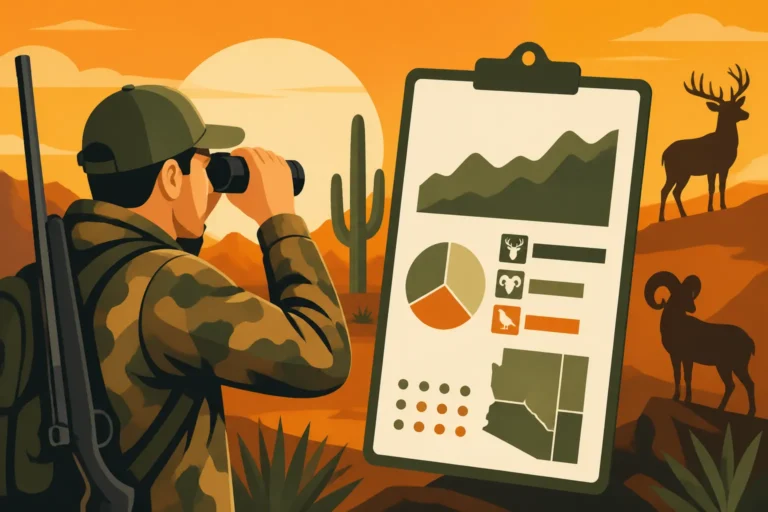
Before you even step foot in the field, use digital mapping tools like GoHunt to your advantage. Start by identifying the higher elevation summer ranges in your unit. Then, look at the topography below those areas. Trace drainages and canyon systems that descend to lower, more open country. Use satellite imagery to pick out areas with a higher density of pinyon-juniper or sagebrush. Pay very close attention to aspect; highlight or mentally note all south-facing slopes, especially those with good cover.
Many mapping platforms also allow you to layer in public land boundaries. Use this feature to identify accessible public lands that offer good winter range. Remember, E-Scouting an Arizona Unit Before the Season is not just for fall hunts; it's arguably even more critical for winter, as deer are concentrated in specific, often predictable, pockets. Cross-reference this with historical harvest data if available, which can sometimes indicate areas that consistently hold deer in late season hunts. Look for unit-specific information, as GoHunt often compiles draw odds and hunter success for various seasons, which can sometimes correlate with deer concentrations.
Boots-on-the-Ground Reconnaissance
Once you have a few promising spots identified through e-scouting, it's time to put boots on the ground. Winter scouting is different. Instead of looking for sign scattered across a vast landscape, you're looking for heavy concentrations of sign in specific areas.
Tracks and Trails: In snow, tracks are your best friend. Look for well-worn deer trails leading from bedding areas to feeding grounds. Pay attention to track density; heavy concentrations of tracks indicate a popular wintering spot. Follow fresh tracks to try and locate bedding areas, often found in thickets on sunny slopes. If there's no snow, look for well-defined game trails and areas where the vegetation is heavily browsed.
Droppings and Beds: Abundant droppings indicate deer have been spending significant time in an area. Look for multiple fresh beds, especially on sunny benches or under thick pinyon-juniper. These tell you where they're resting and conserving energy. The more beds you find, the more confident you can be that you're in a consistent wintering area.
Understanding Water and Natural Funnels
While water sources aren't as critical in deep winter as they are in the scorching Arizona summer, deer still need access. Look for natural seeps, springs, or even pockets of snow that persist longer in shaded areas. Deer may also get moisture from the vegetation they consume. However, understanding How Drought Affects Desert Deer Numbers can influence their distribution even in winter is important, as areas with more reliable water might still see higher deer densities, even if that water is frozen or snow-covered.
Natural funnels are also key. As deer move from higher elevations to lower ones, they'll often use the path of least resistance. This might be a wide, gentle saddle between two peaks, a gradual drainage, or a series of benches that connect different elevation bands. Identifying these funnels during your scouting can help you predict their travel corridors and set up ambushes. Using tools like Using onX Layers for Arizona Public Land can help you visualize these funnels and pinpoint where deer movement is concentrated between their summer and winter ranges.
Adjusting Your Approach for Winter Hunting
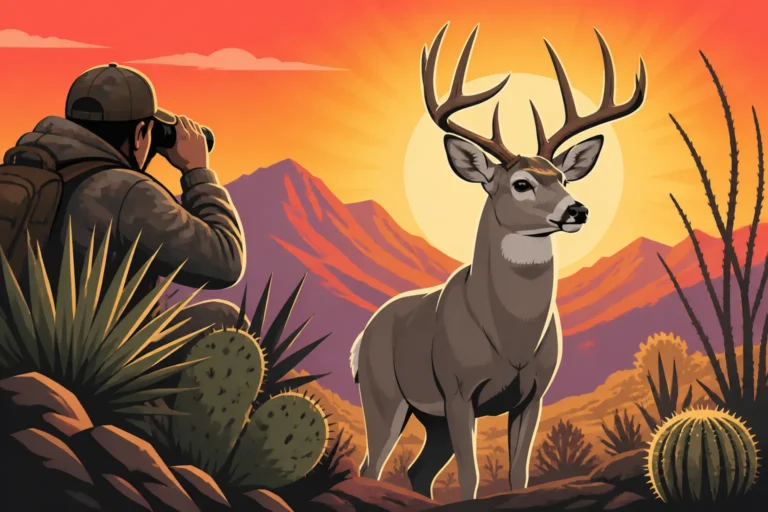
Hunting wintering mule deer demands patience and an understanding of their energy-saving behavior. They will often move less, preferring to feed in sheltered areas and bed down for long periods on sunny slopes. This makes glassing incredibly effective, especially during the middle of the day when they might be up feeding or soaking up the sun. Consider Optics Power for Arizona's Long Desert Sightlines and bring a quality spotting scope and binoculars, as you'll often be spotting deer from a distance and planning a stalk.
Dress in layers, be prepared for cold and wind, and understand that daylight hours are shorter. The effort you put into understanding these winter movements, both through detailed e-scouting and rigorous field reconnaissance, will be repaid when you finally connect with an Arizona high-plateau mule deer in its winter sanctuary.
| High Plateau Region | Typical Summer Range (Elevation) | Typical Winter Range (Elevation) | Key Winter Habitat Features | Primary Winter Food Sources |
|---|---|---|---|---|
| Kaibab Plateau | 8,000 – 9,000 feet | 5,000 – 7,000 feet | South-facing pinyon-juniper, sagebrush escarpments | Cliffrose, Bitterbrush, Sagebrush |
| Northern Plateaus | 6,000 – 7,500 feet | 4,500 – 6,000 feet | Pinyon-juniper woodlands, mesa edges, canyon bottoms | Mountain Mahogany, Gambel Oak, Yucca |
| Mogollon Rim | 7,000 – 8,500 feet | 4,000 – 6,000 feet | Break country, steep draws, sheltered canyons | Pinyon-juniper, various evergreen shrubs |
Disclaimer
This article is for general informational purposes only and does not constitute professional advice. Laws, prices and regulations vary by location and change over time. Consult a qualified professional for guidance on your specific situation.