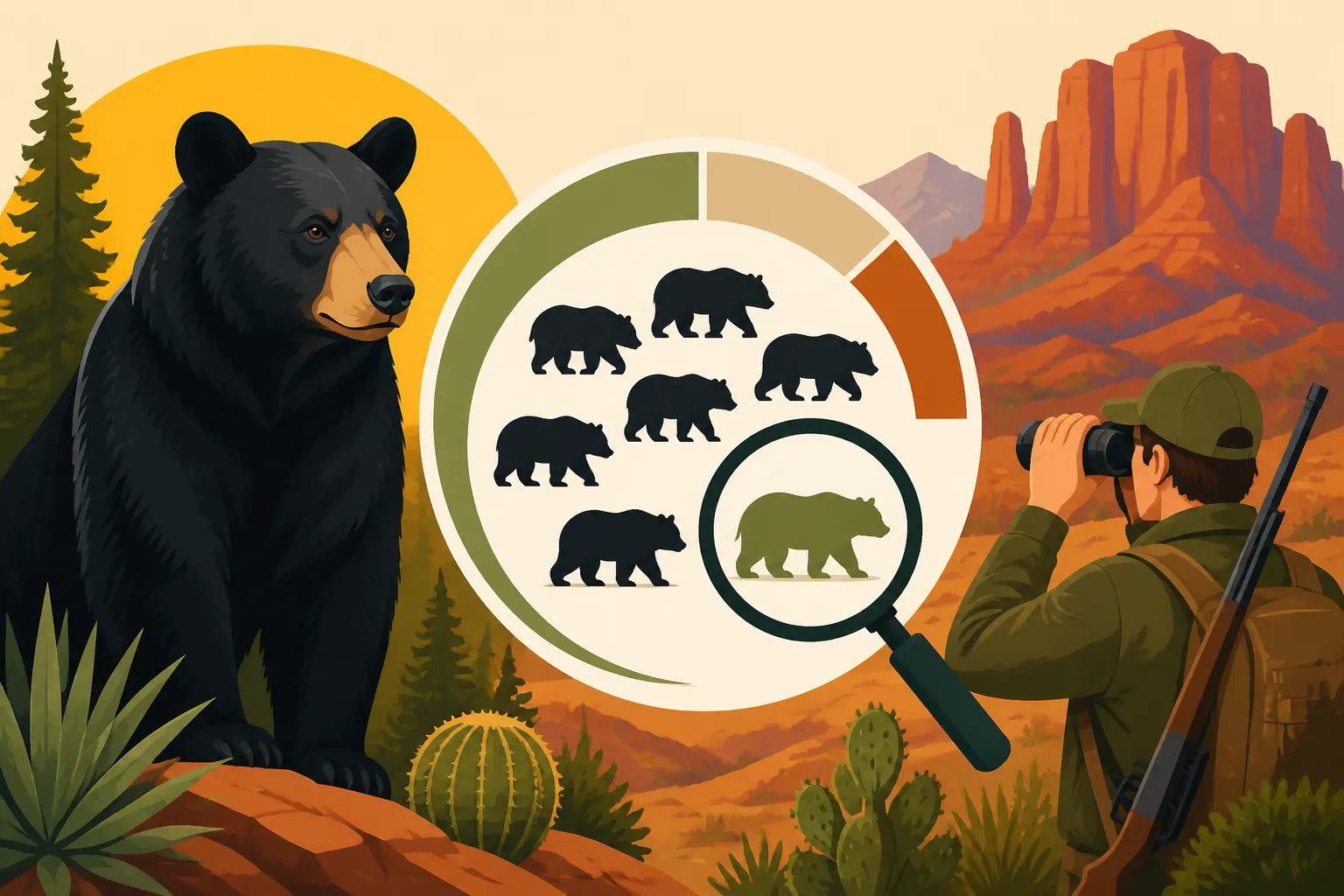
The Black Bear Population Estimate Explained
As Arizona hunters, we often find ourselves looking at those application guides, dreaming of a black bear tag, and wondering, "Just how many bears are actually out there?" It’s a common frustration to want to plan a hunt for such an elusive and exciting animal, but feel like you’re guessing in the dark about the population. This guide is here to shed some light on exactly how Arizona Game and Fish estimates the black bear population, so you can make more informed decisions about your next hunt.
Why Population Estimates Matter for Arizona Hunters
When you’re dedicating time, money, and precious bonus points to apply for a tag, you want to feel confident in your choices. Knowing how wildlife agencies arrive at their population figures for species like black bear isn't just a matter of scientific curiosity; it directly impacts your hunting prospects and the health of the resource we all cherish.
Understanding Harvest Opportunity
Let's be real: as hunters, we're keenly interested in how many animals are available for harvest. For a species like black bear, which is managed carefully with specific harvest limits, the population estimate directly translates into opportunity. If the population is healthy and growing in a particular unit, you might see more tags available or a longer season. Conversely, if numbers are lower or facing environmental stress, the department might reduce tag allocations or implement earlier closures. This can be incredibly frustrating when you've invested time in scouting or researching a specific unit, only to find the opportunities limited. Understanding the "why" behind these decisions helps us appreciate the careful balance biologists strike between providing hunting opportunities and ensuring the long-term sustainability of the herd. Without reliable estimates, wildlife management would be a chaotic guessing game, making consistent hunting seasons nearly impossible.
Informing Management Decisions and Conservation
Beyond the immediate hunting opportunity, population estimates are the bedrock of responsible wildlife conservation. Arizona Game and Fish isn't just trying to put tags in our hands; they're working to maintain robust, healthy wildlife populations for generations to come. For black bears, these estimates help them prevent over-harvest, which could have devastating long-term impacts on a slow-reproducing species. They inform decisions about habitat protection, understanding migration corridors, and even managing human-wildlife conflicts, which sometimes flare up when bear populations shift or expand into new areas. When a big wildfire sweeps through a unit, for example, population estimates, coupled with habitat assessments, help biologists understand the potential impact on bears and adjust management strategies accordingly. It’s a complex puzzle, and each piece of data, including how many bears are believed to be roaming the landscape, contributes to the overall picture. You can often get a sense of how these broader goals translate to specific areas by checking resources like Reading a Herd Unit Management Plan.
The Methods Arizona Uses to Estimate Bear Numbers
Counting every single bear across Arizona's vast and rugged landscape is, frankly, impossible. Black bears are solitary, secretive creatures that cover huge territories. So, how do biologists even begin to put a number on them? They use a combination of sophisticated scientific methods and observations, piecing together clues to form a comprehensive picture.
DNA-Based Hair Snare Surveys
One of the most effective and non-invasive methods Arizona Game and Fish uses is DNA-based hair snare surveys. Imagine a perimeter of barbed wire set up in an area known for bear activity, often around a scent lure that smells irresistible to a bear. When a curious bear investigates, it has to crawl over or under the wire, leaving behind precious strands of hair. Biologists then collect these hair samples, and in a lab, they extract DNA. Each bear has a unique DNA profile, just like us. This allows them to identify individual bears and, crucially, to know if the same bear has visited multiple snares or if different bears are in the area.
This data is then plugged into what's called a "capture-recapture" or "mark-recapture" model. By looking at how many unique individuals were "captured" (identified via DNA) and how many were "recaptured" (identified again), they can statistically estimate the total population within that specific study area. It’s a pretty ingenious way to count animals without ever seeing or physically handling them. Of course, setting up these snares in remote, mountainous Arizona terrain is no small feat, requiring significant effort and resources. These surveys are essential for getting reliable data on How Biologists Count a Desert Big Game Herd, even for species like bear.
Using Trail Camera Data and Sightings
While not as precise as DNA sampling for direct population counts, trail cameras and public sightings still play a valuable supplementary role. Hunters are, arguably, some of the best eyes and ears in the woods. Your reports of bear sightings, especially when coupled with photos or videos, contribute to the overall understanding of bear distribution, activity patterns, and even reproductive success (like sows with cubs).
Trail cameras, strategically placed in key locations, can provide valuable insights into which areas bears are frequenting, their travel routes, and even changes in body condition over time. While you can't typically identify individual bears from trail camera photos with the same certainty as DNA, they offer a broad strokes view. These observational data sources help biologists identify potential "hot spots" for future, more intensive studies or confirm habitat use patterns. It's a bit like putting together a puzzle: the scientific surveys are the corner pieces, and hunter observations and trail camera data fill in many of the middle sections, adding richness and detail to the overall understanding of Black Bear Density Across Arizona.
Modeling and Extrapolation
Even with sophisticated surveys, biologists can't monitor every square mile of bear habitat every single year. That's where advanced statistical modeling and extrapolation come in. They take the data from hair snare surveys, combined with historical harvest records, data on cub production, known survival rates, and detailed habitat mapping (identifying areas with good food sources, water, and cover).
These models allow them to project population estimates across broader landscapes and even predict how populations might respond to different environmental factors or management actions. It’s a sophisticated process that blends field data with scientific theory. It's important to remember that these are, by nature, estimates. Wildlife populations are dynamic and always fluctuating, so the numbers represent the best available scientific understanding, not an exact census. Reputable sources like GoHunt often incorporate this data to provide hunters with insights into specific units, helping you make more informed decisions about where to apply.
Interpreting the Numbers: What They Mean for Your Hunt
So, now that you know how these numbers are generated, how do you translate that into practical knowledge for your next Arizona bear hunt? It's not just about a single statewide number; it's about understanding the nuances of bear distribution, management strategies, and the dynamic nature of their populations.
Regional Differences in Bear Density
One of the most crucial things to understand is that bear populations aren't evenly distributed across Arizona. Some units are simply better bear habitat than others, leading to vastly different densities. Generally, you'll find higher concentrations of black bears in the timbered mountain ranges, particularly areas with good acorn crops, fruit-bearing shrubs, and ample water sources. Think about the Mogollon Rim, the White Mountains, and the Sky Islands in the southeastern part of the state.
These regions offer the dense cover, diverse food sources, and rugged terrain that bears thrive in. Units within these areas will naturally have higher population estimates and often present better hunting opportunities. Conversely, vast stretches of low desert might have bears, but they are typically much more spread out, making them harder to locate. Understanding Where Black Bear Density Runs Highest will be key to focusing your efforts. When you're E-Scouting an Arizona Unit Before the Season, pay close attention to the terrain, vegetation, and water sources to identify prime bear country.
How Harvest Limits Influence Hunting
Arizona actively manages its bear population through harvest limits, and these are directly tied to those population estimates. Unlike some species where you might have a long, open season, bear hunts often have unit-specific harvest quotas, sometimes even broken down by sex. Once a certain number of bears, or a specific number of female bears, have been harvested in a unit, that unit's season closes, regardless of the official end date. This is critical for managing populations, especially considering Female Harvest Limits on Arizona Bears can be particularly restrictive to protect the breeding stock.
This means you can't just set it and forget it after you draw a tag. You have to be proactive in monitoring the harvest data. How Arizona Closes a Bear Unit Mid-Season is a real and common occurrence, and if you're not paying attention, you could find yourself hunting illegally or missing your window entirely. This is why resources that track harvest data in real-time are invaluable for bear hunters. The annual Arizona Bear Season and Harvest Limits regulations will detail these specific quotas by unit and season.
The Dynamic Nature of Bear Populations
Bear populations are not static; they ebb and flow based on a multitude of environmental factors. Droughts, for instance, can significantly impact natural food sources like acorns and berries, leading bears to forage more widely or even push them into closer proximity with human settlements. Large wildfires can destroy habitat in the short term, but often create new, nutrient-rich forage in the long term, eventually benefiting bear populations.
Reproduction rates also play a huge role. Bears typically don't reproduce every year, and litter sizes can vary. A few good years with abundant food can lead to a boom in cub survival, while harsh winters or poor forage years can see a dip. Understanding these dynamics helps explain why the "numbers" might seem to shift from one season to the next. It’s a constant dance between the bears, their environment, and the management efforts. When you look at Where Arizona Publishes Population Estimates, you'll often see explanations for these fluctuations, giving you a better understanding of the big picture.
Applying for an Arizona Bear Tag with Confidence
Now that you have a better grasp of how Arizona estimates its black bear population and what those numbers signify, let's talk about putting that knowledge to work for your actual hunt. Confidence in your application and preparation comes from informed decisions.
Choosing Your Hunt Area Wisely
Selecting the right unit is paramount for a successful Arizona bear hunt. Don't just pick a unit because it's convenient or you've heard a rumor. Dive into the data! Look at the latest population estimates for various units, review harvest success reports, and spend time on mapping tools. GoHunt and other platforms often compile this information in an accessible way, allowing you to see which units have historically high harvest rates or seem to hold healthy bear populations.
Consider factors beyond just the bear numbers. What's the public land access like? Are there significant wilderness areas that might require a pack-in hunt, or is there a good road system? What is the general terrain like? Some units might have high bear numbers but be incredibly rugged, demanding extreme physical fitness. Others might be easier to access but have more hunting pressure. Combining population data with logistical considerations is key to finding a unit that aligns with your hunting style and physical capabilities. Remember, Reading an Arizona Hunt Success Report can offer tremendous insight into which units consistently produce for hunters.
Strategies for a Successful Bear Hunt
Black bears are intelligent and notoriously elusive, so a successful hunt often requires a blend of preparation, patience, and adapting to the conditions. First, thorough scouting, both physically and through E-Scouting an Arizona Unit Before the Season techniques, is non-negotiable. Look for fresh sign: scat, tracks, claw marks on trees, and turned-over rocks. Identify key food sources like oak stands for acorns, chokecherry bushes, or prickly pear patches, depending on the season. Bears are often concentrated around these resources.
Understanding Baiting Rules That Apply to Arizona Bears is also crucial, as baiting is legal in some areas and can be an effective strategy for some hunters. If using hounds is part of your plan, ensure you understand the specific regulations for that method. Most importantly, embrace patience. Bear hunting often involves long hours of glassing hillsides, still-hunting through thick cover, or sitting patiently over a water source or food plot. Physical preparation is also vital; Arizona's bear country is often steep and demanding. Utilizing tools from GoHunt can help you overlay critical data points like water sources and dense cover over topographic maps, giving you an edge in identifying prime bear habitat.
Staying Informed Throughout the Season
This cannot be stressed enough: bear hunting is unique because of the dynamic nature of unit closures. As soon as you draw a bear tag, make it a habit to check the Arizona Game and Fish Department's website regularly, and especially as your hunt approaches and during the season itself. They publish harvest updates, and units will close as their quotas are met.
The consequences of not knowing How Arizona Closes a Bear Unit Mid-Season can be severe, ranging from penalties for hunting in a closed unit to simply wasting your time and effort if your chosen area shuts down before you even get there. Set up alerts if available, or make it part of your daily routine to check the official harvest report page. Being diligent about this information is just as important as your scouting and shooting skills for a successful and legal bear hunt in Arizona.
Here's a quick look at some key aspects of Arizona's bear population management:
| Aspect | Description | Impact on Hunters |
|---|---|---|
| Population Estimates | Derived from DNA surveys, sightings, and modeling. Not an exact count, but a scientific approximation. | Influences overall tag numbers and season lengths. |
| Habitat Quality | Availability of food, water, and cover varies by unit, directly impacting bear density. | Guides hunters to units with higher bear concentrations and better success rates. |
| Harvest Limits | Unit-specific quotas, often with limits on female bears, can lead to mid-season closures. | Requires constant monitoring of harvest data during the season to hunt legally. |
| Environmental Factors | Drought, wildfire, and food crop failures can cause populations to fluctuate year to year. | May alter bear behavior and distribution, requiring hunters to adapt strategies. |
| Conservation Goals | Management aims for sustainable populations, balancing hunting opportunity with long-term species health. | Ensures that black bear hunting remains a viable and ethical pursuit in Arizona. |
Disclaimer
This article is for general informational purposes only and does not constitute professional advice. Laws, prices and regulations vary by location and change over time. Consult a qualified professional for guidance on your specific situation.