Hunting Coyotes Year Round in the Desert
Hunting coyotes year-round in Arizona's vast and often unforgiving desert presents a unique challenge, one that can quickly humble even experienced hunters if they're not prepared. Many folks get frustrated by inconsistent results, especially when the brutal summer heat or the vast, open terrain makes it feel like the coyotes just vanish into thin air. This guide is all about helping you understand the nuances of hunting these clever canids in the Arizona desert throughout the entire year, equipping you with the strategies, gear, and knowledge to find consistent success no matter the season.
Why Year-Round Coyote Hunting is Different in Arizona
Coyote hunting in Arizona isn't like chasing them in agricultural fields or timbered country. The desert environment shapes everything, from their behavior to your tactics, and what works in January might be entirely useless in July. Understanding these fundamental differences is key to becoming a more effective predator hunter here.
Adapting to Extreme Heat
The Arizona desert is famous for its intense heat, especially during the long summer months. This isn't just an inconvenience for hunters; it dramatically impacts coyote activity. During the peak of summer, coyotes are largely nocturnal or crepuscular, meaning they're most active at dawn, dusk, and throughout the night when temperatures are somewhat cooler. Hunting mid-day in July is often a fruitless endeavor, not just because of the heat, but because the coyotes are simply not moving. Your calling efforts will be met with silence, and you'll put yourself at risk of heat exhaustion for little reward.
In these conditions, you need to shift your hunting windows dramatically. Think about those first few hours after sunrise and the last few before sunset. Even then, the sun can be brutal. Water sources, even small ones like guzzlers or stock tanks, become absolute magnets for coyotes, especially when natural water is scarce. You might find success setting up near these vital spots, often with the wind in your favor, during those cooler hours. Water Sources and Ethics in Arizona Desert Hunting is a great place to dig deeper into the importance of water.
Coyote Behavior in the Desert
Desert coyotes are survivors. They are highly attuned to their environment, accustomed to vast open spaces, and often more cautious than their counterparts in more forgiving landscapes. They've learned to navigate sparse cover, utilize washes and arroyos for travel and concealment, and react quickly to any perceived threat. This means your approach, setup, and calling sequences need to be highly refined.
Unlike denser areas where a coyote might bust out of thick brush at close range, in the desert, they often approach from a distance, circling downwind to catch your scent. They rely heavily on their eyesight in the open, making camouflage and minimizing movement absolutely critical. Understanding the terrain that naturally funnels them or provides them cover for an approach is paramount. Think about how those washes or sparse mesquite thickets might offer them a path, and anticipate their movements. Their food sources also fluctuate; in some seasons, they might be keying in on rabbits, while in others, it could be rodents or even insects. Being observant of what's available can help you pick the right call.
Pressure and Consistency
Arizona's vast public lands mean that coyotes, while numerous, can still experience significant hunting pressure, especially around accessible areas. If you're hunting a unit close to a major city or with easy road access, those coyotes have likely heard every call in the book and seen their share of hunters. This pressure makes them warier, harder to call in, and more prone to hanging up out of range.
To combat this, consistency is key. Don't just show up on opening weekend or when you feel like it. Year-round hunting allows you to learn patterns, understand how different seasons affect their behavior, and adapt. Furthermore, don't be afraid to put in the legwork to get away from easy access points. The farther you walk, the more likely you are to find less pressured animals. Using tools like GoHunt to scout remote areas and identify potential hidey-holes can be a game-changer. It helps you visualize those remote basins and finger ridges that hold less disturbed coyotes.
Essential Gear and Tactics for Desert Coyotes
Hunting coyotes effectively in the Arizona desert requires a specific set of tools and a nuanced understanding of how to use them. It's not just about the rifle; it's about the entire setup.
Calling Strategies for Wary Coyotes
Electronic calls have become the gold standard for many predator hunters, and for good reason. They offer a vast array of sounds, from distress calls (rabbit, fawn, bird) to coyote vocalizations (howls, barks, pup distress). In Arizona, where coyotes are often pressured, variety and subtlety can be more effective than simply blasting a loud rabbit in distress call on repeat. Start with softer calls, and gradually increase volume if you're not getting a response. Consider using "stand-alone" coyote vocalizations like lonely howls or a challenge bark, especially if you're targeting dominant animals or hunting in areas where they might be responding to other coyotes.
When you're dealing with coyotes that have heard it all, mixing up your calling sequence is crucial. Try short bursts of a distress call, followed by silence, and then a few coyote howls. Don't be afraid to experiment. Sometimes, a subtle mouse squeak or a specific bird distress call can pique the interest of an otherwise call-shy coyote. Remember to keep the calls brief; don't overcall. Sometimes, less is more. For more on this, check out Electronic Calls for Predators and Varmint Hunting.
Optics and Long-Range Shooting Considerations
Given the open nature of the Arizona desert, engagements can happen at significant distances. Quality optics are not just a luxury; they're a necessity. A good pair of binoculars, 10×42 or 10×50, is essential for scanning the vast landscape, picking up subtle movement, or identifying a coyote approaching from afar. A spotting scope can also be invaluable for confirming a target at extreme ranges before you even consider a shot.
When it comes to your rifle setup, accuracy is paramount. Coyotes aren't huge animals, and precise shot placement is crucial for a clean kill. Many desert hunters opt for flat-shooting calibers like .223 Remington, .22-250 Remington, or .204 Ruger, paired with quality scopes that have bullet drop compensators or custom turrets. Practice shooting at various distances and learn your rifle's capabilities thoroughly. Wind can be a significant factor in the open desert, so learning to read mirage and judge wind speed accurately will dramatically improve your success. Rifle Zero Distance for Open Desert touches on similar concepts for big game, but the principles apply here too.
Staying Mobile and Hydrated
The sheer scale of the desert means you'll often need to cover a lot of ground. Being mobile is critical to finding active coyotes and setting up in advantageous positions. This might mean driving desert roads and glassing, then quickly moving to a promising spot, or hiking into more remote areas. Lightweight gear that allows for swift movement is a huge advantage.
Hydration, especially during the warmer months, isn't just a suggestion; it's a matter of survival. The desert heat can quickly lead to dehydration, even on cooler days if you're exerting yourself. Always carry more water than you think you'll need. Electrolyte packets can also be beneficial. Factor in the weight of water when planning your trips, and know where potential resupply points (like gas stations or small towns) might be if you're on an extended outing. For a deeper dive into desert preparedness, read Water You Must Carry on a Day Hunt and Heat Management on an Arizona Early Season Hunt.
Understanding Arizona's Coyote Hunting Regulations
While coyote hunting is open year-round, it's never a "no-rules" affair. You're still obligated to understand and follow Arizona's specific regulations for predator hunting. Ignorance is never an excuse, and violating regulations can lead to serious consequences.
Legal Shooting Hours and Methods
Arizona generally allows coyote hunting year-round, day or night. However, there are nuances to understand. While you can hunt coyotes at night, certain methods might be restricted, especially concerning artificial light. Always check the current Arizona Game and Fish Department regulations to ensure you're in compliance. Generally, spotlighting is permissible for predatory animals like coyotes, but there are often restrictions on where and how you can do it, especially regarding proximity to roads or residences.
When it comes to methods, common firearms, archery equipment, and electronic calls are generally legal. However, some specific units or seasons (e.g., during general big game hunts) might have additional restrictions or recommendations regarding weapon choice or the use of specific devices. Legal Shooting Hours and Blaze Orange in Arizona provides an excellent overview of general regulations that might also touch upon predator hunting.
Public Land Access for Coyote Hunters
Arizona boasts a significant amount of public land managed by agencies like the Bureau of Land Management (BLM) and the Forest Service. These lands are generally open to coyote hunting without needing special permits beyond your hunting license. However, always verify land ownership using detailed maps or apps like GoHunt, which provide excellent layers for public and private land boundaries. Accidentally trespassing onto private property is a serious offense.
Additionally, certain public lands, such as Arizona State Trust Land, require a permit in addition to your hunting license for recreational access, although a valid hunting license often serves this purpose for hunting. It's critical to understand which type of public land you're on. Even on generally open public lands, there can be specific restrictions on vehicle travel (e.g., designated roads only, seasonal closures), camping, or the discharge of firearms near developed areas. Always consult Motor Vehicle Use Maps (MVUMs) for Forest Service lands and check BLM office websites for current restrictions. BLM and Forest Ground Across Arizona Needs No Permit and Motor Vehicle Use Maps for Forest Ground are essential reads for understanding access.
Ethical Considerations for Predator Hunting
Just because you can hunt coyotes year-round doesn't mean every shot is an ethical one. As hunters, we have a responsibility to pursue animals humanely and to respect the land and its wildlife. This means ensuring you have a clear shot at a reasonable distance for your skill level and equipment, and making every effort to recover any animal you shoot.
Consider the time of year and the condition of the coyotes. While not subject to the same strict management as big game, avoiding targeting coyotes during denning season, if possible, is a personal ethical choice many hunters make. Also, be mindful of other users of the land. If you're calling in an area with hikers, campers, or other hunters, ensure your actions don't put anyone at risk or disrupt their experience. It's about being a good ambassador for hunting.
Making the Most of Your Desert Coyote Hunts
Success in year-round desert coyote hunting comes down to preparation, persistence, and continuous learning.
Scouting and E-Scouting for Coyotes
You can't just show up to the desert and expect coyotes to magically appear. Scouting is crucial. Look for sign: tracks in washes, scat, or even den sites during specific times of the year. Pay attention to terrain features like finger ridges, saddles, and drainages that coyotes use for travel. Areas with thickets of mesquite, catclaw, or prickly pear can offer good cover and hold prey species like rabbits, making them prime coyote habitat.
E-scouting is an incredibly powerful tool for desert coyote hunting. Using satellite imagery on platforms like GoHunt, you can identify remote water sources, potential denning areas, travel corridors, and suitable calling setups long before you ever set foot on the ground. Look for subtle changes in vegetation, washes that cut through plains, or the edges of dense cover. Mark potential calling locations and exit routes. This saves you valuable time and legwork in the field. E-Scouting an Arizona Unit Before the Season provides excellent insights into this modern planning method.
Patterning Coyotes Through the Seasons
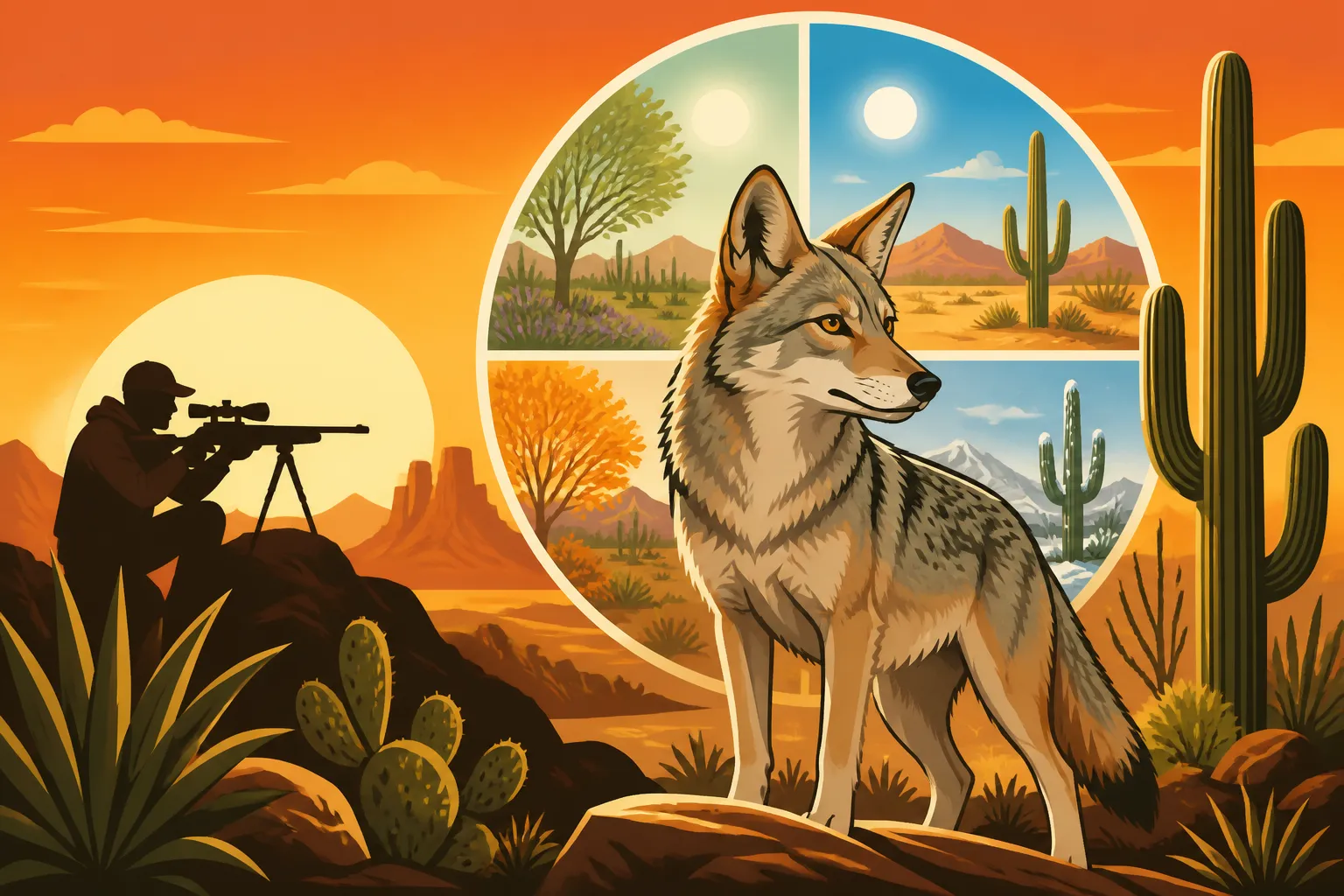
Coyote behavior changes dramatically throughout the year, primarily influenced by food availability, breeding cycles, and temperature.
- Winter (Breeding Season): Coyotes are more vocal and respond well to howls and challenge barks. Pair calling is common.
- Spring (Denning Season): Female coyotes are often tied to dens, while males might be more aggressive towards intruders. Pup distress calls can be effective.
- Summer (Pup Rearing): Pups are growing, and the entire family unit needs to eat. Food distress calls are highly effective, but extreme heat shifts activity to night.
- Fall (Dispersal/Hunting up): Young coyotes are dispersing, and all coyotes are focusing on building reserves for winter. They are very responsive to distress calls.
Understanding these seasonal shifts allows you to adjust your calling strategies, hunting hours, and preferred locations. For instance, in summer, you might focus on hunting around water sources near dawn and dusk, while in winter, you might cover more ground during the day, using howls to locate them.
Safety First in the Arizona Desert
The desert is beautiful, but it can be dangerous. Always prioritize safety.
- Dehydration: As mentioned, carry plenty of water.
- Wildlife Encounters: Be aware of venomous snakes (rattlesnakes, Gila monsters), scorpions, and other desert creatures. Snake Awareness on an August Archery Hunt is a critical read.
- Navigation: Carry a reliable GPS device or a smartphone with mapping capabilities (and backup battery). Signal can be spotty. Tell someone where you're going and when you expect to return.
- Vehicle Preparedness: If you're driving desert roads, ensure your vehicle is in good condition, and carry spare tires, water, and emergency supplies. Roads can be rough and remote.
- Firearms Safety: Always follow the four rules of firearm safety. Be aware of your surroundings and potential backstops, especially in areas with varied terrain or other users.
Hunting coyotes year-round in the Arizona desert is a rewarding pursuit that hones your skills as a predator hunter. By understanding the unique challenges of the environment, adapting your tactics and gear, and always hunting ethically and safely, you can enjoy success and contribute to healthy wildlife populations across the state.
| Season | Primary Coyote Activity | Recommended Calling Strategies | Key Considerations |
|---|---|---|---|
| Winter | Breeding, increased vocalization | Howls, challenge barks, pair calls, distress calls | Very responsive, cover more ground, full day hunting |
| Spring | Denning, rearing young | Pup distress, distress calls, challenge howls (males) | Females tied to dens, focus on known territories |
| Summer | Nocturnal/crepuscular activity | Distress calls, pup distress, subtle coyote vocalizations | Extreme heat, focus on dawn/dusk, near water sources |
| Fall | Young dispersing, focused on food | Distress calls (rabbit, bird, rodent), howls | Increased activity, wide-ranging movements by young |
Disclaimer
This article is for general informational purposes only and does not constitute professional advice. Laws, prices and regulations vary by location and change over time. Consult a qualified professional for guidance on your specific situation.