Day-Use Fees at Developed Arizona Sites
There’s nothing quite like rolling out of your truck at dawn, eyes on the horizon, ready to hit the trail for a day of hunting in Arizona. But that feeling can quickly curdle into frustration when you’re met with an unexpected fee station or a sign demanding payment just to park your rig. It’s a scenario many of us have faced, scratching our heads and wondering if our hunting license covers everything, or where exactly we're allowed to go without shelling out extra cash. This guide is all about demystifying those day-use fees at developed sites across Arizona, so you can plan your hunt smarter and avoid those unwelcome surprises.
Understanding Developed Sites and Their Purpose
Arizona is a vast and wild state, offering millions of acres of incredible public land for hunters and outdoor enthusiasts. However, not all public land is created equal, especially when it comes to access and amenities. You’ve got your wide-open stretches of Bureau of Land Management (BLM) land and National Forest wilderness, which are generally free for dispersed use. Then, you have what we call “developed sites,” and these are the places where those little signs asking for money start popping up. It's not always clear-cut, and it's easy to get caught off guard if you haven't done your homework.
What Constitutes a "Developed" Site in Arizona?
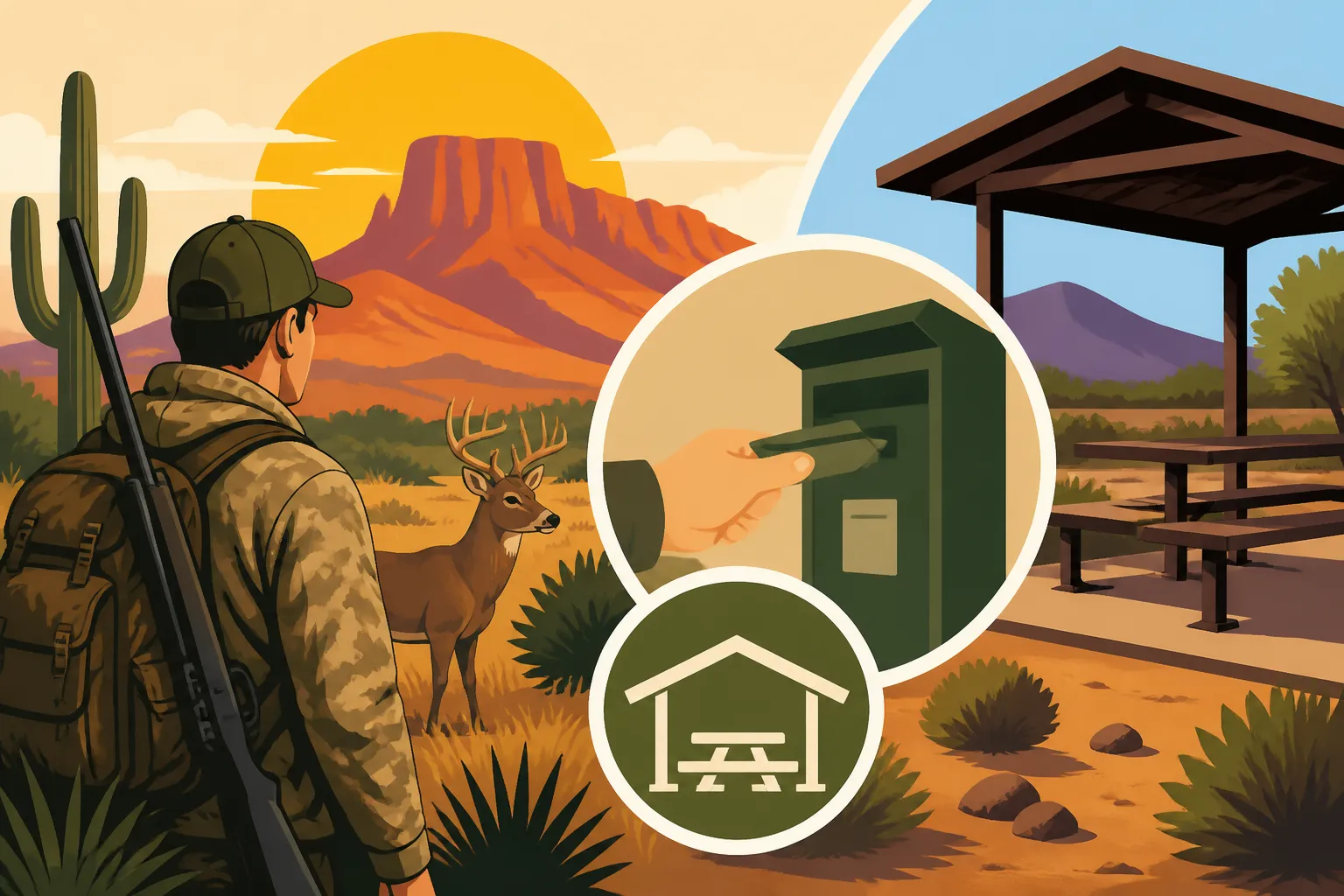
When we talk about a "developed site" in the context of Arizona's public lands, we're generally referring to areas that have received some sort of infrastructure investment to enhance public access, safety, and recreation. Think about it: if you're pulling into a spot with a paved parking lot, a restroom facility (even a vault toilet!), picnic tables, fire rings, or designated camping pads, you’re likely at a developed site. These aren’t just random pull-offs on a dirt road. These are places where agencies like Arizona State Parks, the U.S. Forest Service, or the Bureau of Land Management have actively managed and maintained the area for public use beyond just raw wilderness.
A prime example might be a popular trailhead with a designated parking area and informational kiosks, a boat launch on a lake, or a dedicated picnic area with shaded ramadas. These are facilities that require regular upkeep, trash removal, and possibly even staff presence. Compare that to simply pulling off a dirt road in the middle of nowhere to set up a primitive camp or hike into a canyon – those are usually free, "undeveloped" experiences. The key differentiator is the presence of maintained facilities that go beyond basic access. Knowing this distinction is your first step in understanding where you might encounter a fee.
Why Fees Exist for These Amenities
It’s easy to grumble about paying a few bucks for parking or access when you feel like you’re already supporting public lands through your hunting license and federal excise taxes on gear. Believe me, I get it. But these fees serve a critical purpose: funding the very services and maintenance that make these developed sites usable and enjoyable. Imagine a popular trailhead if no one ever emptied the trash or cleaned the restrooms. It wouldn’t take long for it to become an unsightly mess, impacting not just the experience for everyone, but also potentially affecting local wildlife and natural resources.
The money collected from day-use fees often goes directly back into maintaining these facilities. This includes everything from repairing picnic tables, emptying garbage cans, cleaning vault toilets, maintaining access roads within the site, and even providing information and interpretive services. These funds also contribute to law enforcement presence to ensure safety and compliance with regulations. In many cases, these fees are a vital part of the budget that allows state and federal agencies to continue offering and improving these public amenities. So, while it might feel like an extra pinch, it’s often contributing to the overall health and accessibility of the outdoor spaces we cherish, especially those in high-use areas where environmental impact is a constant concern.
Types of Arizona Developed Sites Where Fees Apply
Arizona's landscape is diverse, and so are the agencies managing its public lands. This means that day-use fees aren't universal; they vary depending on who manages the developed site you're visiting. Understanding these different authorities can save you a headache and help you prepare for potential costs. It's not just about knowing if there's a fee, but whose fee it is, as that often dictates the type of pass or payment system you'll encounter.
State Parks and Recreation Areas
Arizona State Parks manages a fantastic network of natural, cultural, and recreational sites across the state, from the stunning red rocks of Red Rock State Park near Sedona to the historical sites and lake recreation areas. If you’re planning a hunt that involves driving through or camping near one of these designated state parks, you’ll almost certainly encounter a day-use fee. These fees cover the cost of maintaining visitor centers, hiking trails, picnic areas, restrooms, and often, specific amenities like boat ramps or interpretive programs.
For example, if you're hunting deer in a unit that borders a major lake like Lake Roosevelt or Alamo Lake, you might use a state park or recreation area for boat access or a convenient overnight stay. Even if your ultimate destination is outside the park boundary, accessing it via a state park often requires a fee. These aren't just for tourists; hunters frequently use these facilities for convenient staging points or for specific access points. You'll typically find clearly marked entrance stations or self-pay kiosks, and paying up front helps keep these places pristine.
National Forest Campgrounds and Picnic Areas
A huge portion of Arizona's prime hunting ground lies within its various National Forests: the Coconino, Kaibab, Apache-Sitgreaves, Tonto, Coronado, and Prescott. While vast sections of these forests are open for dispersed camping and hunting without fees, you'll definitely run into day-use fees at developed campgrounds, picnic areas, and certain trailheads. These are typically managed by the U.S. Forest Service. They often categorize their fee sites into "Standard Amenity Recreation Fees" (basic facilities like picnic tables, restrooms, trash) and "Expanded Amenity Recreation Fees" (more complex facilities like boat ramps, developed swimming sites, visitor centers).
Imagine you're hunting elk in the Mogollon Rim as Arizona Elk Country and decide to camp at a designated Forest Service campground for its potable water and vault toilets. That campground will have a fee. Or perhaps you're glassing for Coues deer in the Coronado National Forest and the Sky Islands and want to use a developed picnic area for lunch before heading back into the backcountry. Again, a fee would apply. The fees contribute to the upkeep of these specific sites, ensuring they remain clean and functional for everyone, including us hunters who value a comfortable spot for a night or a quick stop. These sites often use a self-pay envelope system, so it's wise to carry small bills.
BLM Developed Recreation Sites
The Bureau of Land Management (BLM) manages an immense amount of public land in Arizona, particularly in the lower desert regions. Much of this land is accessible for dispersed recreation with no fees. However, just like the Forest Service, the BLM also operates a number of developed recreation sites where fees are charged. These might include campgrounds, boat launch areas, or specific scenic overlooks with improved facilities. While perhaps less common for hunters than Forest Service sites, depending on your target species and hunting unit, you could definitely find yourself needing to access or use a BLM-managed developed site.
For example, if you're planning on chasing javelina or even some desert mule deer in areas like the Sonoran Desert, you might encounter BLM campgrounds or river access points that require a fee. These sites provide a level of service and maintenance that goes beyond the vast, undeveloped stretches of BLM land. The fees help cover everything from maintaining access roads and signage within the site to providing trash services and basic amenities, much like the Forest Service. Being aware of these areas, especially when e-scouting your unit before the season, can prevent surprises. Tools like onX Hunt can often highlight these designated fee areas, helping you plan your approach.
County and Local Parks with Hunting Access
While less frequent for big game hunting, some county or local parks in Arizona might border or provide unique access to public hunting lands, or they might offer facilities like shooting ranges. In these situations, local governments might impose day-use fees. These are typically smaller in scale than state or federal fees but are just as important to acknowledge. For example, a county park might have a developed parking area adjacent to a wildlife area that allows hunting, or it might contain a public shooting range where you can sight in your rifle before the season, which could involve a per-use fee.
These local fees are vital for local communities to maintain their specific recreational offerings, much like the larger state and federal agencies. They ensure that local facilities are clean, safe, and accessible for residents and visitors alike. It's always a good practice to check the specific regulations and fee schedules for any county or local park you plan to use as part of your hunting trip. Sometimes, even if you’re just passing through or parking near a local park to access state or federal land, a fee might apply if you utilize their developed facilities.
Navigating the Various Fee Structures
Understanding that a fee exists is one thing, but knowing how to pay it, and what options are available, is another entirely. Arizona's public lands offer a mix of payment systems, from simple envelopes to comprehensive annual passes. For a hunter, choosing the right payment method can often save money and hassle, especially if you plan multiple trips or use developed sites frequently. It’s all about planning ahead and having the right strategy in your back pocket.
Annual Passes vs. Day-Use Fees
For many hunters, the question comes down to a simple calculation: is it worth buying an annual pass, or should I just pay the daily fee?
-
Day-Use Fees: These are pretty straightforward. You pay a set amount for entry or use of a developed site for one day. It’s perfect if you only plan to visit a specific site once or twice a year, or if your hunting plans rarely involve developed areas. For instance, if you're only hitting a state park boat ramp for a single javelina hunt and then heading deep into the backcountry, a day-use fee is probably your best bet. You just pay at the kiosk or entrance station and you're good to go. The downside, of course, is that these can add up quickly if you end up using developed sites more often than anticipated, or if you make multiple trips in a short timeframe.
-
Annual Passes: If you're a frequent visitor to Arizona's developed recreation sites, or if you hunt multiple species across different units that might require access through these areas, an annual pass can be a real money-saver. An Arizona State Parks Annual Pass, for example, typically covers day-use entry to all state parks for a full year. Similarly, federal passes (which we'll dive into next) cover many Forest Service and BLM developed sites. The upfront cost is higher, but it can pay for itself after just a few visits. For a dedicated Arizona hunter who might scout several units throughout the year and camp at developed sites, this is often the most economical choice. It also offers peace of mind, allowing you to drive into a developed area without fumbling for cash or worrying about payment.
Federal Interagency Passes
For hunters accessing National Forests and BLM lands, understanding federal interagency passes is absolutely crucial. The "America the Beautiful – National Parks and Federal Recreational Lands Pass" system is a fantastic option that covers entrance and day-use fees at national parks, national wildlife refuges, and many Forest Service and BLM-managed sites across the country, including Arizona.
There are several types of these passes, including:
- Annual Pass: This is the most common option for the general public, valid for one year from the month of purchase. If you’re regularly using developed campgrounds, trailheads, or picnic areas on Forest Service or BLM land in Arizona throughout the year, this pass is often a no-brainer. Think about how many times you might visit a trailhead for scouting, or use a developed campground before heading into a Backcountry Units That Require a Pack Trip.
- Senior Pass: Available for U.S. citizens or permanent residents 62 years or older. This pass offers significant discounts and, for a one-time fee, can be a lifetime pass. This is a huge benefit for our more experienced hunters!
- Access Pass: A free lifetime pass for U.S. citizens or permanent residents with permanent disabilities.
- Military Pass: Free annual passes for active duty military, veterans, and Gold Star families.
These passes are recognized across multiple federal agencies, meaning one pass can cover your day-use fees whether you're at a Forest Service picnic area or a BLM boat launch. This simplifies things greatly and provides excellent value for frequent users of federal public lands. You can often purchase these online, at federal recreation sites, or at many Forest Service and BLM offices.
Arizona-Specific Passes
Beyond the federal passes, Arizona has its own suite of passes designed for state-managed facilities. The most prominent for hunters is the Arizona State Parks Annual Pass. As mentioned, this pass grants you unlimited day-use entry into all Arizona State Parks for a year. If your hunting plans involve using state park facilities for access, camping, or just staging, this pass is worth considering. Remember, a lot of prime Arizona hunting units, especially for species like javelina or desert mule deer, are relatively close to or require access through areas managed by State Parks or other state agencies.
Sometimes, local municipalities or counties might also offer their own specific passes for parks or recreation areas they manage. These are less common for direct hunting access but are worth researching if you know you’ll be in a specific local area frequently. Always check the official websites for Arizona State Parks and local recreation departments for the most up-to-date information on pass options, pricing, and where they are accepted. It pays to do your homework before your trip to see if an annual pass, either state or federal, makes sense for your hunting calendar.
Payment Methods and Kiosks
Once you're at a developed site that requires a fee, how do you actually pay? Arizona's public land agencies use a variety of methods, and it's good to be prepared for all of them.
- Self-Pay Envelopes: This is incredibly common at many Forest Service and BLM developed sites, especially campgrounds and trailheads. You'll find a small kiosk with envelopes and a slot. You fill out your information on the envelope, insert your cash or check (exact change is often required, as no change is given), tear off your receipt/stub to display on your vehicle's dashboard, and drop the envelope in the secure slot. This system relies on the honor system, but trust me, compliance checks do happen, and not paying can lead to a citation.
- Credit Card Machines/Kiosks: More and more state parks and larger federal recreation areas are upgrading to automated credit card payment kiosks. These are usually pretty straightforward, allowing you to pay with a debit or credit card and print a receipt to display. They offer convenience, but they do require you to have a working card and, sometimes, a decent cell signal or reliable machine.
- Entrance Stations/Manned Booths: At busier state parks or major federal recreation areas, you might encounter a staffed entrance booth where you pay a ranger directly. This is often the easiest method, as you can ask questions and get change if needed.
- Online/App Payments: Some areas are starting to experiment with online or app-based payment systems. While not universal, it's worth checking if a specific site offers this, as it can be convenient for pre-paying or if you forget cash.
The key takeaway here is always to be prepared. Carry small bills and change, have your credit card handy, and if you have an annual pass, make sure it’s clearly displayed. There’s nothing worse than pulling into a beautiful trailhead, ready to start your Glassing Arizona's Sky Islands for Coues Deer session, only to realize you can’t pay the fee and have to turn around.
Here's a quick comparison of typical fee structures:
| Fee Type | Coverage | Best For | Considerations |
|---|---|---|---|
| Day-Use Fee | Single entry/use at a specific developed site | Infrequent visitors, single trips to developed areas | Can add up quickly; often requires exact cash at self-pay kiosks. |
| AZ State Parks Pass | Unlimited day-use entry to all Arizona State Parks | Frequent visitors to AZ State Parks (e.g., lake access, specific trailheads) | Does not cover federal lands (Forest Service, BLM); usually purchased annually. |
| Federal Interagency Pass | Unlimited day-use at most federal developed sites | Frequent visitors to National Forests, BLM lands (campgrounds, trailheads) | Does not cover state parks; various options (annual, senior, military, access). |
| Local Park Fee/Pass | Specific county/city park or facility | Local residents, specific access to smaller, localized hunting/recreation zones | Coverage is very limited; check local regulations for details. |
Avoiding Unexpected Costs While Hunting in Arizona
The last thing any hunter wants is an unnecessary expense or, worse, a fine because they weren't aware of a fee. Arizona's public lands are primarily free for hunting, but those developed sites can sneak up on you. The good news is, with a little foresight and the right tools, you can almost always avoid these unexpected costs or at least factor them into your trip budget. It’s all about doing your homework before you ever hit the road.
How to Identify Fee Areas Before You Go
Forewarned is forearmed, especially when it comes to navigating fees on public land. The best way to avoid unexpected costs is to know exactly where developed sites and their associated fees are before you even leave your driveway.
- Official Agency Websites: The websites for Arizona State Parks, the U.S. Forest Service (for the specific National Forest you're interested in, e.g., Kaibab National Forest), and the Bureau of Land Management are your primary sources of information. They often have maps and lists of developed recreation sites with their associated fees. This is the official word, so always check here first.
- Mapping Applications: This is where tools like onX Hunt and GoHunt really shine for us hunters. These apps often have layers that indicate public land ownership, and crucially, they can show developed recreation sites, campgrounds, and trailheads. Many will even indicate if a fee is required. You can zoom in on your specific hunting unit, identify potential access points or camping areas, and see if they fall within a developed, fee-based zone. This kind of e-scouting is invaluable for planning. When you're E-Scouting an Arizona Unit Before the Season, make sure to pay close attention to the icons for campgrounds, picnic areas, and visitor centers.
- Hunt Regulations: While less detailed on specific site locations, the official Arizona Game and Fish Department (AZGFD) hunt regulations booklet might have general information or references to areas with special access requirements, though it usually focuses more on hunting rules than recreation fees. Still, it's always worth a thorough read.
- Call Ahead: When in doubt, call the local ranger district office for the National Forest or BLM field office you plan to visit. They are the experts on their specific area and can tell you exactly where fees apply, what facilities are available, and the best way to pay. Don’t hesitate to use this resource!
Planning Your Route to Minimize Fee Exposure
Once you know where the fee areas are, you can strategically plan your movements to either avoid them entirely or integrate them into your budget. This is particularly important for hunters who prefer a truly primitive, no-cost experience.
- Utilize Dispersed Access: Arizona has vast amounts of public land where dispersed camping and access for hunting are entirely free. If you're targeting a Backcountry Units That Require a Pack Trip, you're likely going to be far from any developed sites. Learn how to identify these areas on your maps. Often, unimproved dirt roads and trails leading off main routes on Forest Service or BLM land will allow you to access hunting areas without encountering a fee station.
- Park Outside Developed Boundaries: Sometimes, a developed site might be the easiest access, but not the only access. You might be able to park just outside the designated fee area (ensuring you're still on legal public land and not blocking any roads or private property) and walk in. This requires a bit more legwork but can save you the fee. Always double-check land boundaries using your GPS or mapping app like onX Hunt to ensure you’re not inadvertently trespassing or parking illegally.
- Scout Alternative Entry Points: While a popular trailhead might have a fee, there might be another, less developed, and therefore free, access point a bit further down the road or around a different ridge. Take the time during your Scouting an Arizona Unit Before the February Deadline to look for these alternatives. It might add a bit more driving or hiking time, but it preserves your budget and gives you a more secluded experience.
- Coordinate with Group Members: If you're hunting with a group, ensure everyone is aware of potential fees and has the necessary passes or payment methods. There's nothing worse than one person getting a ticket because they weren't clued in.
What Happens If You Don't Pay
Ignoring a day-use fee at a developed site is never a good idea. While it might seem like a small amount of money, the consequences of not paying can quickly escalate and turn a fantastic hunting trip into a frustrating and costly legal headache.
- Citations and Fines: The most common outcome of not paying a required day-use fee is a citation. Law enforcement, including Forest Service rangers, BLM officers, or park rangers, regularly patrol these developed sites. If they find a vehicle without the proper fee receipt or pass displayed, they can issue a ticket. The fine for these violations can be significantly higher than the original day-use fee, making that "saved" few dollars seem very short-sighted.
- Vehicle Towing: In some extreme cases, or if a vehicle is parked illegally in conjunction with not paying a fee, authorities might have the vehicle towed. This is a far more expensive and inconvenient scenario, involving towing fees, impoundment fees, and the hassle of retrieving your vehicle, all on top of the original fine.
- Future Restrictions: Repeated violations could potentially lead to further legal action or even restrictions on your ability to use certain public lands or facilities in the future. While this is less common for a single day-use violation, it’s a possibility if you’re a habitual non-payer.
The bottom line is: it's simply not worth the risk. A few dollars for a day-use fee is a small price to pay for hassle-free access and the peace of mind that you're complying with the rules and supporting the lands you love to hunt. Always keep some cash, especially small bills, in your vehicle, or invest in an annual pass if your usage warrants it.
The Hunter's Perspective: Balancing Access and Cost
As hunters, we're constantly weighing different factors – time off work, gear costs, travel, and of course, the ever-present cost of tags and licenses. Day-use fees might seem like a small line item, but ignoring them can lead to bigger problems. It's about finding that sweet spot where you get the access and convenience you need without breaking the bank or running afoul of the rules.
When Paying the Fee Makes Sense
While it's natural to want to save money, there are definitely times when paying a day-use fee is not just a necessity, but a smart choice that actually enhances your hunting experience.
- Convenience and Amenities: Sometimes, the ease of a paved parking lot, a clean vault toilet, or readily available potable water at a developed campground is worth the small fee. After a long day of Packing an Elk Out of Rim Country Alone or Reading Fresh Elk Sign in Ponderosa Timber, having a comfortable, established camp spot with basic amenities can make all the difference. These sites are maintained for a reason, and that reason is often to provide a better, safer, and more convenient experience than strictly dispersed camping or parking.
- Direct Access to Key Hunting Areas: Some developed sites are strategically located to provide the best or even only practical access to certain trailheads, boat launches, or wilderness boundaries that lead directly into prime hunting grounds. Rather than trying to bushwhack in from a less convenient, free parking spot, paying the fee gets you straight to where you need to be. Think about a boat launch that might be the only way to effectively hunt certain waterfowl areas or sections of river corridor.
- Safety and Security: Developed parking areas are often more secure and visible than random pull-offs on remote dirt roads. While no parking spot is completely immune to crime, a well-used, visible developed site might offer a bit more peace of mind regarding your vehicle and gear while you’re out in the field. Plus, the presence of rangers or other users can deter mischief.
- Supporting the Resource: Ultimately, these fees help fund the very places we love to recreate and hunt. By paying the fee, you're directly contributing to the maintenance, improvement, and conservation efforts that keep these public lands healthy and accessible for future generations. It's an investment in the resource.
Budgeting for Developed Site Use
Just like you budget for your tags, fuel, and food, it’s wise to factor in potential day-use fees when planning your Arizona hunting trips.
- Research Early: As soon as you start planning your hunt (perhaps after you've landed an Arizona elk tag!), use online maps and agency websites to identify the access points and potential camping spots you'll use. Note any fees listed. Tools like GoHunt can be invaluable here, as they often integrate public land data and facility information, allowing you to see potential costs at a glance.
- Calculate Total Costs: If you plan on multiple trips or extended stays at developed sites, do the math. Compare the cost of individual day-use fees against the price of an annual state or federal pass. Often, if you anticipate more than 3-5 days of use in a year, an annual pass becomes the more economical choice.
- Allocate Funds: Set aside a small portion of your hunting budget specifically for access fees. Even if you ultimately don't use many developed sites, having a contingency fund means you're not scrambling for cash or stressed about an unexpected expense.
- Carry Cash and Cards: Always have a mix of payment options. Keep small denominations of cash and a credit/debit card readily available in your vehicle. This ensures you can pay at self-pay stations or manned booths without issue.
Respecting the Rules and Supporting Conservation
As hunters, we are often among the most passionate conservationists. Adhering to day-use fee requirements is part of that ethic. When we pay our fees, we're doing more than just gaining access; we're actively participating in the stewardship of our public lands.
Every dollar collected helps ensure that the trails remain clear, the restrooms are maintained, and the overall quality of our outdoor spaces is preserved. It demonstrates respect for the land, for the agencies that manage it, and for the other users who share these resources. Moreover, following these rules reflects positively on the hunting community as a whole, showing that we are responsible and engaged citizens. So, the next time you see that fee station, remember that it's not just an impediment; it's an opportunity to contribute to the long-term health and accessibility of Arizona's incredible wild places.
Disclaimer
This article is for general informational purposes only and does not constitute professional advice. Laws, prices and regulations vary by location and change over time. Consult a qualified professional for guidance on your specific situation.