Patterning a Buck in the Weeks Before Opener
That anxious feeling leading up to hunting season, knowing there's a buck out there with your name on it, but having no idea where he actually is or what he's doing? It's a common frustration, especially when you've invested time and money in drawing a coveted Arizona tag. This guide is all about equipping you with the knowledge and strategies to eliminate that guesswork, helping you effectively pattern a buck in the critical weeks before the opener so you can step into the field with confidence and a solid plan.
Understanding Pre-Season Buck Behavior in Arizona
Before you even step foot in the field, it’s crucial to understand the dynamic life of an Arizona buck. Their behavior isn't static; it shifts dramatically with the seasons, the availability of resources, and the looming pressure of hunting season. Getting a handle on these changes is the first step in effective patterning.
The Rhythms of Summer and Early Fall
Summer in Arizona is a time of growth, for both the landscape and the deer. Bucks are often in velvet, focused on packing on calories, and generally less wary. They're typically found in areas with ample forage and consistent water. For mule deer, this might mean higher elevations where green feed persists longer, or specific agricultural areas. For Coues deer, the "gray ghosts" of the desert, they're often tucked away in the thick cover of the Sky Islands, utilizing washes and shaded canyons.
As late summer transitions into early fall, a few critical changes occur. The monsoons might have passed, or they might still be providing sporadic moisture. This influences water sources – some may dry up, concentrating deer around more reliable ones like stock tanks or perennial springs. Bucks begin to shed their velvet, their antlers hardening. This physiological change, often around late August or early September, can cause a brief shift in their patterns as hormones begin to stir. Their focus slowly moves from pure caloric intake to establishing dominance and preparing for the rut, though the intensity of that shift varies depending on the species and local conditions. You might start seeing early rubs on small saplings as they test their new hard antlers.
Transition Zones and Key Resources
Deer, especially mature bucks, are masters of efficiency. They navigate their landscape using transition zones that offer both security and access to vital resources. These "transition zones" are where two distinct habitats meet—think the edge of a thick oak brush patch meeting an open grama grass hillside, or where a deep canyon bottom opens into more accessible foraging grounds. These edges provide cover for bedding, easy access to food, and often natural travel corridors.
Water is another critical resource, particularly in Arizona's arid environment. Even a small, stagnant pool after a rain can draw deer. Identifying reliable water sources, whether natural or man-made, is paramount. Deer will often bed close enough to water to make a quick, low-risk trip. As the days shorten and temperatures begin to drop, especially in the mornings and evenings, bucks will exploit thermals, using rising air currents to carry their scent up ridges in the morning, and falling thermals to detect danger below them in the evening. Understanding how they use wind and thermals for security will help you predict their travel routes between bedding and feeding areas. This is particularly true for glassing Arizona's Sky Islands for Coues deer, where thermals play a huge role in their daily movements.
Impact of Human Pressure
It's a delicate balance: you want to scout and pattern, but too much intrusion can blow your buck right out of the country. Arizona bucks, whether it's the mule deer of the Mogollon Rim or the Coues deer in the southern mountains, are highly sensitive to human presence. Even weeks before the opener, repeated visits to a bedding area or a popular water source can alter their routines.
Consider the areas you're scouting. Is it a popular hiking spot? Are there active logging operations? Even off-highway vehicle (OHV) traffic can push deer into more remote, thicker cover. A buck that felt safe feeding in an open flat in August might become strictly nocturnal by early September if it detects human scent or presence too often. This means your scouting efforts need to be as low-impact as possible, especially as you get closer to opening day. Think about your scent control, the routes you take to access areas, and minimizing direct visual contact. A buck that is bumped once might return, but repeated disturbances could cause him to relocate entirely, undoing all your patterning work.
Essential Scouting Techniques for Patterning Bucks
Effective patterning is a blend of technology and boots-on-the-ground effort. You need to leverage all available tools to create a comprehensive picture of a buck's habits.
E-Scouting and Map Analysis
Before you burn a drop of gas, dedicate serious time to e-scouting. This is where modern tools shine, allowing you to cover vast amounts of country from your couch. Platforms like GoHunt offer incredible mapping capabilities that are invaluable for Arizona hunters. You can pore over satellite imagery, topographical maps, and land ownership layers to identify key terrain features and potential buck habitat.
Start by looking for areas that offer a combination of necessities:
- Water Sources: Identify perennial springs, stock tanks, guzzlers, and potential seeps. These are often hubs of activity. You can find many of these marked on detailed maps. Consider how Finding water in Arizona's dry country directly impacts deer movement.
- Food Sources: Locate areas with preferred forage. For mule deer, this might be browse in higher elevations or specific agricultural fields. For Coues deer, look for oak brush, mesquite, and other desert plants that provide sustenance.
- Cover/Bedding Areas: Bucks need security. Look for thick timber, dense canyons, rugged hillsides, or dense brush where they can bed down undetected. These areas are often north-facing slopes or thick draws that offer shade and thermal protection.
- Travel Corridors: Identify natural pinch points, saddles, washes, and ridge lines that bucks would use to move between bedding, feeding, and water. These are often areas where multiple draws converge or where terrain funnels animals.
Utilize the public and private land layers to ensure you're scouting legal hunting ground. Don't forget to check out articles like "E-Scouting an Arizona Unit Before the Season" for even more detailed tips on virtual reconnaissance. By doing your homework here, you'll narrow down your physical scouting efforts to the most promising locations, saving you precious time and effort in the field.
Boots-on-the-Ground Reconnaissance
Once you've identified promising areas through e-scouting, it's time to hit the dirt. Nothing beats actual boots-on-the-ground reconnaissance for confirming suspicions and finding the subtle clues a map can't show. This isn't just about walking around; it's about being a detective.
- Look for Sign: Your eyes should be glued to the ground and surrounding vegetation. Fresh tracks, especially larger ones, indicate recent buck activity. Look for rub lines—where bucks have scraped the velvet off their antlers or marked territory. Fresh rubs, with sap still oozing from the tree, are gold. Scrapes, particularly those under low-hanging branches, signal rutting behavior and buck presence.
- Identify Bedding Areas: Don't just look for where they might bed; look for where they actually have bedded. Fresh beds will still have compressed leaves or grass, possibly even fresh droppings nearby. Note the prevailing wind direction relative to the bed and the escape routes available.
- Focus on Water Sources: Physically check the water sources you identified during e-scouting. Are there fresh tracks? Droppings? Is the water accessible? This is crucial for early season hunts, especially when heat management on an Arizona early season hunt is a major factor.
- Low-Impact Scouting: Remember the sensitivity of bucks to human pressure. Minimize your scent by wearing clean clothes, using scent-eliminating sprays, and avoiding direct contact with vegetation if possible. Walk softly, pay attention to the wind, and don't linger in bedding areas. The goal is to observe, not disturb. Consider reading "Reading Terrain Before You Pick a Camp" to understand how to move efficiently and minimize disturbance.
Strategic Trail Camera Deployment
Trail cameras are an incredible asset for patterning bucks, offering a glimpse into their nocturnal and diurnal habits without constant human presence. However, their deployment needs to be strategic, especially with Arizona's rules on trail camera use. While currently legal on public land, ethical considerations mean checking them sparingly and not relying on them for baiting, which is illegal for big game in Arizona.
- Placement is Key: Don't just stick a camera anywhere. Place cameras on identified travel corridors, near water sources, or on the edges of suspected bedding areas. Position them to capture deer moving through an area, rather than simply standing still. Angling the camera to catch animals as they walk parallel to the lens often yields better results than head-on shots.
- Mineral Sites and Mock Scrapes (without bait): While baiting big game is illegal, a mock scrape can be a legal way to attract attention if you're not adding food. You can also monitor natural mineral licks.
- Interpreting Data: Don't just collect pictures; analyze them. Note the time of day bucks are active, their travel direction, and their frequency. Look for consistency in their patterns. Are they nocturnal, or do they move during legal shooting hours? Pay attention to any identifiable characteristics that allow you to track a specific buck.
- Minimizing Pressure: Check your cameras infrequently—once every week or two is often enough. Every visit is an intrusion. Approach the camera from a direction that minimizes disturbing the area, and get in and out quickly. Remember that Arizona's "Baiting and Trail Camera Rules in Arizona" are in place to ensure fair chase.
Interpreting Patterns and Making a Hunt Plan
Collecting data is only half the battle; the real skill comes in interpreting that information and transforming it into a actionable hunt plan. Bucks are creatures of habit, but they are also adaptable, meaning your plan needs to be flexible.
Analyzing Data and Identifying Core Areas
Once you have a collection of e-scouting observations, ground sign, and trail camera photos, it's time to piece the puzzle together. Look for repeated themes and common denominators.
- Map It Out: Use your mapping software (like GoHunt) to mark every piece of buck sign you find: rubs, scrapes, beds, tracks, and every trail camera picture location. Plot the times of day you see activity. This visual representation will help you identify hot spots and movement corridors.
- Identify Core Areas: A buck's "core area" is where it spends the majority of its time. This typically includes secure bedding cover, reliable food, and easy access to water. Look for clusters of sign and consistent trail camera activity within a specific zone. You might find a core area for a specific Coues buck in a remote canyon of the Chiricahua Mountains, or a mule deer buck in a particular section of ponderosa pine on the Kaibab.
- Understand "Why": Don't just note where a buck is; try to understand why it's there. Is it due to dense cover, a specific food source, proximity to water, or thermal advantages? This understanding allows you to predict where a buck might be even if it's not captured on camera every day. For example, if a buck is consistently hitting a specific water hole early in the morning, consider if there's a nearby bedding area on a cool, north-facing slope.
Predicting Movement and Staging Areas
Once you've identified a buck's core area, the next step is to predict how and when it moves. Bucks often have predictable patterns of movement between their bedding, feeding, and watering areas.
- Bed-to-Feed Patterns: Most bucks will move from their bedding area to a feeding area in the late afternoon/early evening and from a feeding area back to a bedding area in the early morning. These movements are often along specific, well-worn trails or through natural funnels.
- Staging Areas: Bucks rarely just pop out into an open field. They often "stage" in thicker cover bordering open feeding areas for a period, waiting for conditions to feel safe, or for enough light to fade. Identifying these staging areas is critical, as they can offer excellent opportunities for an ambush or a stalk. These might be a small clump of oaks on the edge of a meadow or a deep wash leading up to a water tank.
- Pinch Points and Funnels: Look for terrain features that naturally concentrate deer movement. These could be saddles in a ridge, narrow canyons, the confluence of several game trails, or a single accessible crossing point on a fence line. These are high-odds spots for an encounter. When you're actively hunting, thinking about "Using Washes and Draws to Close Distance" can be particularly effective in these areas.
Developing a Flexible Hunt Strategy
Even the most meticulously patterned buck can throw a wrench in your plans. Weather changes, increased hunting pressure, or even a sudden shift in available forage can alter their behavior. Therefore, your hunt plan needs to be a living document, ready to adapt.
- Have Multiple Plans: Don't put all your eggs in one basket. Develop a primary plan based on your most reliable patterns, but also have backup plans for different wind directions, increased pressure, or if the buck simply isn't where you expect him.
- Monitor Conditions: Keep an eye on the weather forecast. High winds can make deer skittish and alter their movements. A sudden cold snap might increase daytime activity, while warm spells might push them to water more frequently.
- Stay Mobile and Adaptable: If your primary spot isn't producing, don't sit there all day hoping. Be prepared to move to a secondary location, or even re-scout a new area. Sometimes, a buck that was patterned perfectly pre-season will change its behavior dramatically once hunting pressure begins. This is particularly true in areas like the "Mogollon Rim as Arizona Elk Country" where hunting pressure can be intense.
- Trust Your Gut (and the Data): While it's important to be flexible, don't abandon solid patterns without a good reason. Sometimes a buck is just running late, or you haven't spooked him, but he's simply using a slightly different route. Use your collected data to make informed decisions, not just guesses.
Here's a quick overview of scouting methods and what they reveal:
| Scouting Method | What it Reveals | Pros | Cons |
|---|---|---|---|
| E-Scouting/Mapping | Terrain, water, access, potential bedding | Efficient, low-impact, covers vast areas | Doesn't show fresh sign, relies on interpretation |
| Boots-on-the-Ground | Fresh sign, actual bedding, travel routes | Confirms patterns, finds subtle clues | Can spook deer, time-consuming, physically demanding |
| Trail Cameras | Times of activity, specific buck ID, consistency | 24/7 monitoring, objective data | Can spook deer if checked often, battery life, cost |
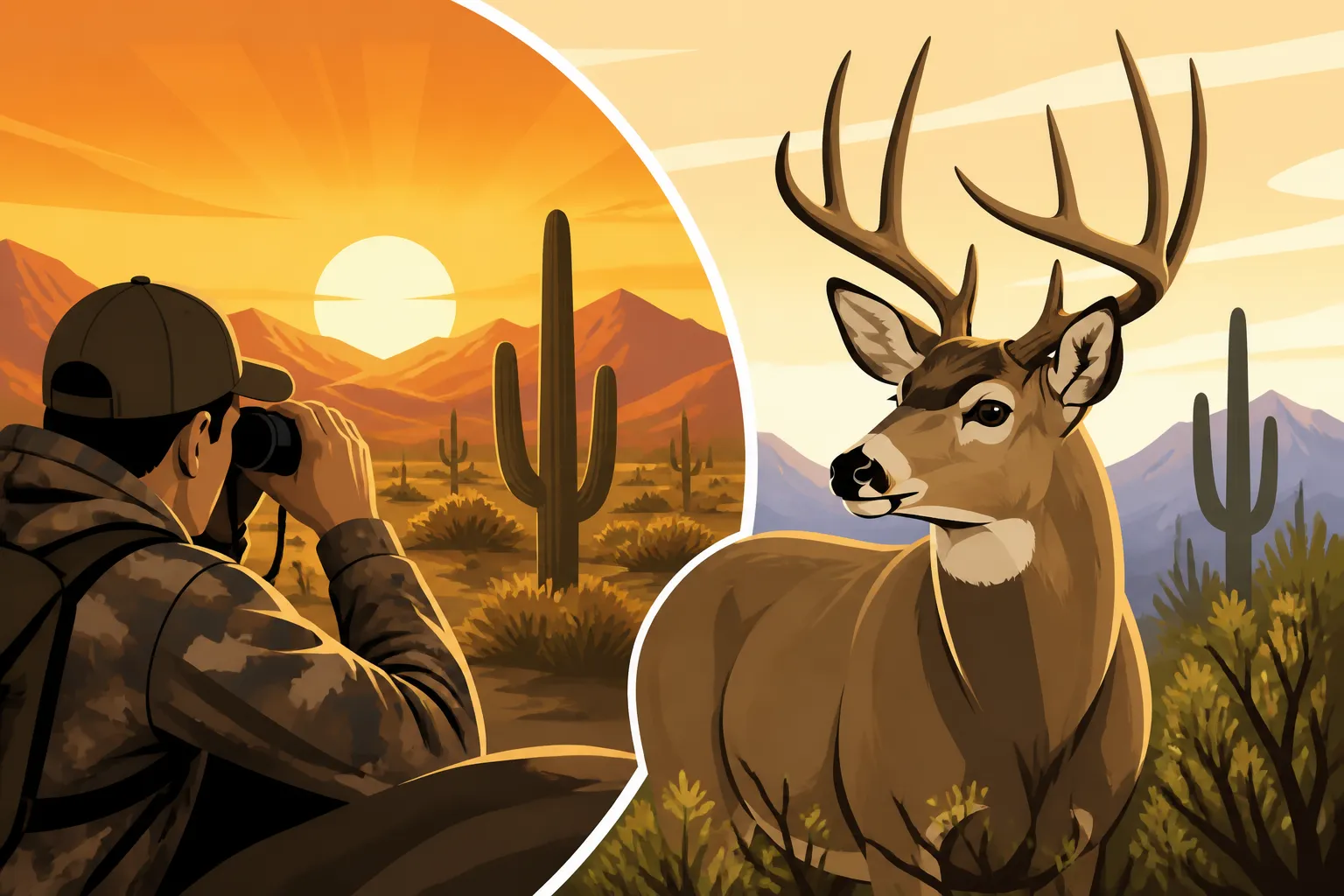
| Glassing | Live animal observation, undisturbed behavior | Confirms presence, shows natural movement | Requires good optics, patience, and often elevated positions |
Patterning a buck in the weeks before opener is a commitment, but it's one that drastically increases your odds of success. By understanding their seasonal shifts, leveraging modern technology, and putting in the boots-on-the-ground work, you can transform that pre-season anxiety into informed confidence, ready to make the most of your Arizona hunt.
Disclaimer
The information provided in this guide is for general educational purposes only and is not legal advice. Hunting regulations, laws, and seasons in Arizona can change frequently. Always consult the most current Arizona Game and Fish Department regulations and official publications before participating in any hunting activities. It is the individual hunter's responsibility to know and follow all applicable laws and regulations.