What a Guided Arizona Bison Hunt Involves
Hunting Arizona bison is an aspiration for many, but the reality of securing a tag and executing a successful hunt can feel incredibly daunting, especially for those unfamiliar with these powerful animals and the unique Arizona landscape. This guide aims to demystify the process of a guided Arizona bison hunt, laying out exactly what it involves from planning to post-harvest logistics, so you can approach this once-in-a-lifetime opportunity with confidence.
Understanding Arizona Bison Hunts
Arizona offers some of the most sought-after bison hunting opportunities in the Lower 48, attracting hunters from across the globe. However, these hunts are far from a casual affair. They involve complex draw systems, physically demanding terrain, and a profound respect for an animal that can weigh over a ton. Understanding the nuances of these hunts is the first step toward preparing for such an adventure.
Where Arizona Bison Roam
Arizona's bison herds are primarily found in two distinct areas, each presenting its own challenges and allure. The most well-known is the House Rock Wildlife Area, which lies north of the Grand Canyon on the Kaibab Plateau. This area is known for its free-ranging herd, offering a true wilderness experience. The terrain here can be rugged, with juniper and ponderosa pine forests giving way to open grasslands, and the weather can be unpredictable, ranging from mild sunshine to heavy snow, sometimes within the same day. Hunters pursuing a tag here are seeking a genuine western adventure against a backdrop of stunning landscapes.
Another significant population, which has become a focal point of recent management efforts, resides within Grand Canyon National Park. While hunting is not permitted within the park boundaries, specific management hunts are conducted in partnership with the state, often involving controlled access to reduce herd numbers impacting park resources. These hunts are highly regulated and often involve very unique logistics and strict conditions. Regardless of the location, pursuing bison in Arizona means stepping into wild, often remote, country where these magnificent beasts roam. Arizona Bison on the Kaibab and House Rock is an excellent resource for understanding these distinct populations and their habitats.
Draw Odds and Tag Allocation for Bison
Securing an Arizona bison tag is arguably the most challenging part of the entire process, requiring immense patience and often a significant accumulation of bonus points. Arizona's draw system is highly competitive, especially for trophy species like bison. There are typically separate application periods for spring and fall bison hunts, each with its own set of rules and units. Non-residents face even steeper odds, as only a small percentage of tags are allocated to them, making every application cycle a long shot.
Many dedicated hunters apply for decades to draw one of these coveted tags. The state uses a bonus point system, where applicants accrue a point for each year they apply and are unsuccessful, increasing their statistical chance in future draws. However, even with maximum points, a bison tag is never guaranteed; luck still plays a significant role. It's crucial for any aspiring bison hunter to meticulously track application deadlines and understand the draw odds for specific units and seasons. Arizona Bison Draw Odds provides detailed information that can help you strategize your applications. Arizona Fall Bison Against Spring Bison Hunts also offers critical insight into the different season structures.
The Unique Challenge of Bison Hunting
Hunting bison is unlike pursuing deer or elk. These animals are immense, powerful, and incredibly tough, capable of absorbing a tremendous amount of punishment. Their sheer size means that a well-placed shot is absolutely critical, not just for an ethical harvest, but for recovery. Once down, moving a bison, even just a few yards, is an arduous task that demands significant physical effort and specialized equipment. Furthermore, bison are herd animals, and approaching them often requires stealth and an understanding of their group dynamics.
They have excellent senses, particularly their smell, and can be surprisingly agile for their size. The terrain they inhabit, whether the rocky slopes of the Kaibab or the dense juniper stands, adds another layer of complexity. Hunters must be prepared for long walks, sometimes at high elevations, and the strength to handle heavy lifting and quartering in the field. This isn't a hunt for the faint of heart or those unprepared for the physical demands and the respect due to such a magnificent animal.
The Role of a Guided Hunt for Bison
Given the extreme difficulty in drawing a tag, the unique challenges of the animal itself, and the remote nature of Arizona's bison country, many hunters, particularly those new to the state or to bison hunting, opt for a guided experience. A skilled outfitter can be the difference between a once-in-a-lifetime memory and a frustrating, unsuccessful endeavor.
Why Hunters Opt for a Guide
The decision to hire a guide for an Arizona bison hunt often stems from several practical and strategic considerations. Firstly, guides possess intimate knowledge of the specific hunt units, including bison habits, traditional travel corridors, and watering holes – information that can take years, even decades, for an individual hunter to acquire. This local expertise significantly increases the chances of locating a trophy-quality animal. Secondly, the logistics of a bison hunt are formidable. From transportation in rugged terrain to packing out hundreds of pounds of meat, a guide provides the manpower and specialized equipment necessary to manage these demanding tasks safely and efficiently.
For many, the physical demands of tracking, stalking, and then processing a massive animal like a bison are simply too much to handle alone, or even with a small group of friends. A guided hunt mitigates these concerns, allowing the hunter to focus on the actual hunting experience. Lastly, a guide brings a wealth of experience in reading bison behavior, judging age and trophy potential, and ensuring an ethical shot placement. This mentorship is invaluable, transforming a potentially overwhelming hunt into a well-executed expedition.
Services a Bison Guide Provides
A reputable Arizona bison outfitter offers a comprehensive suite of services designed to maximize your chances of success and minimize logistical headaches. These typically begin long before you even set foot in the field, often assisting with the complex application process and providing advice on unit choices based on draw odds and recent herd dynamics. Once a tag is secured, their pre-hunt scouting efforts are crucial. Many outfitters will have already spent weeks or months in the field, locating herds and identifying potential target animals. How Outfitters Scout Before Your Arrival details this crucial preparatory work.
During the hunt itself, guides provide transportation into prime hunting areas, often utilizing specialized 4×4 vehicles or ATVs to navigate rough roads. They lead the actual hunt, employing glassing techniques, tracking skills, and calling strategies where applicable, to get you within range of a bison. After a successful harvest, their services become even more vital: field dressing, quartering, and packing out the enormous amount of meat and hide. This often involves horses, mules, or specialized game carts, as dragging a bison out by hand is rarely an option. Finally, they often assist with initial meat cooling, trophy preparation, and fulfilling reporting requirements.
Understanding the Outfitter's Expertise
The true value of a bison guide lies in their deep expertise and seasoned judgment. This isn't just about knowing where the bison are, but understanding why they are there, and how they react to pressure, weather, and terrain. A good guide can interpret subtle signs in the environment, from tracks and scat to feeding patterns, to accurately predict animal movement. They've spent countless hours glassing distant hillsides, learning to distinguish between a mature bull and a younger animal, which is critical if you're holding a trophy tag.
Their experience also extends to safety protocols in remote, potentially dangerous wilderness. They are equipped to handle emergencies, from minor injuries to severe weather events. How Outfitters Plan Emergency Evacuations is a topic you'll want to discuss with any potential guide. Furthermore, their ethical commitment is paramount. They prioritize fair chase principles, ensuring the hunt is conducted respectfully and that every effort is made to recover an animal quickly and humanely. When researching potential outfitters, platforms like BookYourHunt can be a great starting point for finding experienced professionals.
Planning Your Guided Bison Hunt
Once you've decided to pursue an Arizona bison with the help of a guide, the planning phase becomes a critical undertaking. This involves not only selecting the right outfitter but also understanding the financial commitments and navigating the specific requirements of such a unique hunt.
Researching and Selecting an Outfitter
Choosing the right outfitter for your Arizona bison hunt is perhaps the most important decision you'll make after drawing that coveted tag. Begin by seeking recommendations from trusted hunting companions, online forums, and reputable hunting organizations. Look for outfitters with a proven track record specifically with Arizona bison, as experience with other species or states may not translate directly. You'll want to thoroughly vet potential candidates, asking probing questions about their experience, success rates (and how they define success), ethical practices, and client testimonials. Don't shy away from asking for a list of recent clients you can call directly for honest feedback.
Consider their logistical capabilities: do they own their own pack stock or specialized vehicles? How do they handle meat processing and transport? What kind of accommodations do they offer? It's also wise to check their standing with the Arizona Game and Fish Department to ensure they are properly licensed and have no significant complaints. Sites like BookYourHunt often feature verified outfitters, and many serious Arizona hunters also use resources like GoHunt to understand draw odds and unit breakdowns, which can inform questions to ask an outfitter. For more detailed questions, refer to Questions to Ask an Arizona Outfitter.
Navigating the Application Process with a Guide
While a guide cannot guarantee you'll draw a bison tag, many will offer invaluable assistance throughout the complex Arizona application process. They can advise you on the best units to apply for based on your personal goals (trophy quality vs. success odds) and current herd conditions. Some outfitters might even have programs where they front the application fees for multiple years, only requiring payment if you draw a tag with them. Be absolutely clear about these arrangements and get everything in writing.
It's essential to understand that even with a guide's help, you are ultimately responsible for ensuring your application is correctly submitted and on time. Most outfitters prefer that you apply as an individual rather than attempting group applications for such rare tags, as group dynamics can sometimes complicate the draw. If you plan to book your guide before you even draw, which is common for highly sought-after hunts, make sure their contract clearly outlines their policy if you are unsuccessful in the draw. Booking Before Arizona Draw Results Land offers important considerations for this scenario.
Financial Considerations and What's Included
A guided Arizona bison hunt represents a significant financial investment, often among the highest for North American big game. While specific prices fluctuate and are based on many factors, you can expect the cost of a fully guided hunt to encompass a considerable sum. This fee typically covers the guide's services, camp accommodations (which might range from a comfortable wall tent to a more rustic spike camp), meals, field transportation, and the initial field dressing and pack-out of your animal.
However, it's crucial to understand what is not included. Your Arizona hunting license and the actual bison tag fee are separate costs and must be paid directly to the state. Travel to and from Arizona, meat processing beyond initial field quartering, taxidermy, shipping of meat or trophies, and gratuities for your guide are almost universally additional expenses. Always request a detailed, itemized contract that clearly outlines all inclusions and exclusions. Don't be afraid to ask for clarification on any line item. A transparent outfitter will be happy to walk you through all costs.
What to Expect During the Hunt
With preparations complete and your tag in hand, the real adventure begins. A guided Arizona bison hunt is a physically and mentally demanding experience, requiring patience, resilience, and a readiness for the unexpected.
Typical Hunt Duration and Strategy
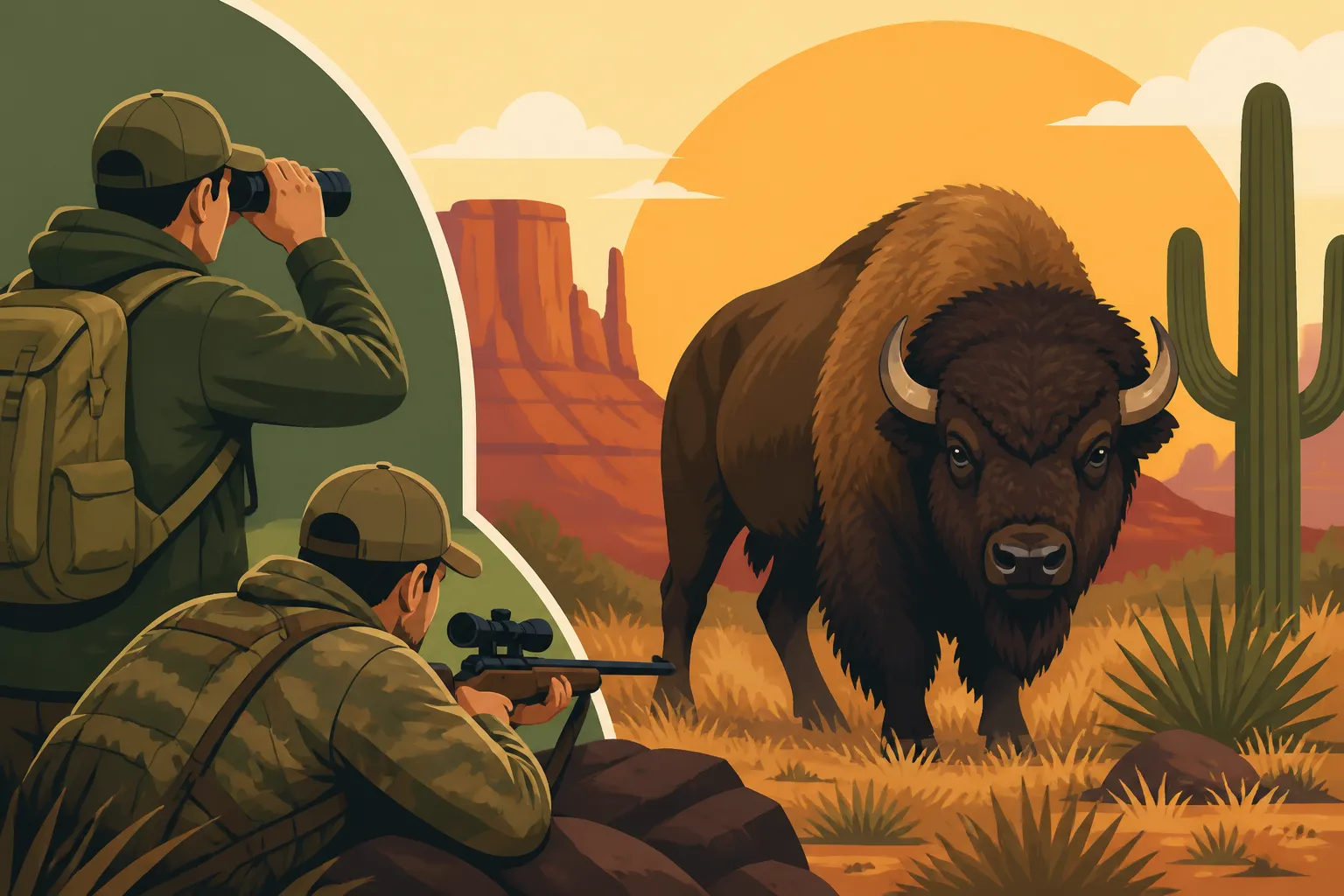
Arizona bison hunts are typically 5 to 7 days in length, though some outfitters may offer shorter or longer options depending on the specific hunt code and the location (e.g., Grand Canyon management hunts can sometimes be shorter, more intensive operations). The strategy employed will vary significantly based on the unit, the time of year, and the specific herd dynamics. In the House Rock area, hunts often involve extensive glassing from elevated positions, followed by long stalks across open country or through dense timber. Your guide will likely use powerful optics to spot animals from a distance, then assess their sex, age, and trophy potential.
Once a target animal is identified, the stalk will begin, often taking hours as you navigate difficult terrain to get within shooting range. Communication with your guide is paramount during this phase, as they will be reading the wind, monitoring the bison's behavior, and guiding your approach. Patience is key; a bison hunt is rarely a rushed affair. The guide's goal is to put you in the best possible position for a clean, ethical shot.
Physical Demands of Bison Hunting
Make no mistake: bison hunting in Arizona is physically demanding, perhaps more so than any other big game hunt in the state. You will likely be hiking many miles over varied and often steep terrain, carrying your rifle, optics, and daypack. Elevations can vary significantly, especially on the Kaibab Plateau, which means thin air and strenuous climbs are common. You'll need strong legs, good cardiovascular endurance, and the ability to maintain focus and stamina over long days in the field.
The weather can also present extreme challenges. Early fall hunts might involve intense heat, while late season hunts can mean navigating deep snow and freezing temperatures. Physical Conditioning for a Sky Island Hunt offers general advice that translates well to any physically demanding Arizona hunt, including bison. Your guide will expect you to be in good physical condition to keep up, stalk effectively, and assist with the inevitable post-harvest work. Begin a rigorous fitness regimen well in advance of your hunt to ensure you're prepared for whatever the Arizona wilderness throws your way.
Shot Placement and Ethical Harvest
Due to their immense size and incredibly tough hide and bone structure, proper shot placement on a bison is absolutely critical for a quick, ethical harvest. Unlike deer or elk, a bison's vitals are positioned slightly differently, set further forward and lower in the chest cavity. Your guide will spend time with you discussing and often illustrating the precise kill zones. A broadside shot aiming for the shoulder pocket, just behind the front leg and about a third of the way up the body, is typically recommended for rifle hunters, targeting both lungs and the heart. For archery hunters, extreme precision and powerful bows are essential.
You will need to be proficient with your chosen weapon and comfortable taking a shot under pressure. Bison rarely drop instantly, even with a perfect shot, and often require a follow-up shot. Your guide will be right there with you, directing your shot and preparing for any necessary follow-up. The ultimate goal is to dispatch the animal humanely and efficiently, minimizing any suffering. After the shot, the guide will immediately begin tracking the animal, which, given their size, often leaves a visible trail.
Post-Hunt Logistics and Considerations
The hunt doesn't end when the bison goes down. The real work, and planning, for handling such a massive animal truly begins after the shot. Your outfitter's expertise in this phase is often priceless.
Field Dressing and Meat Care
Once your bison is on the ground, the clock starts ticking, especially in Arizona's warmer climates. Field dressing a bison is an enormous undertaking, far more involved than with smaller big game. Your guide will direct and assist with the process, which usually involves opening the animal, removing the viscera, and beginning the quartering process. The goal is to get the carcass cooled down as quickly as possible to preserve the meat quality. This often means breaking the animal down into manageable quarters, removing the hide, and getting the meat into game bags.
Even quartered, a single bison quarter can weigh well over a hundred pounds. This is where the guide's logistical experience with pack animals or specialized equipment becomes indispensable. Field Dressing in Desert Heat and Getting Meat Cooled on an Early Season Hunt are vital considerations that your guide will be well-versed in handling. You should discuss their specific procedures for meat care and transport before the hunt to understand your responsibilities and their capabilities.
Trophy Care and Taxidermy
If you're interested in preserving your bison as a trophy, whether it's a shoulder mount or a skull, meticulous care in the field is essential. Your guide will assist with skinning the cape correctly for taxidermy, taking careful measurements, and preparing the skull if desired. The sheer size and thickness of a bison hide make this a labor-intensive process. Once skinned, the cape and skull will also need to be cooled and preserved, often by salting, to prevent spoilage during transport.
Many outfitters have relationships with local taxidermists and can arrange for the initial delivery of your trophy. However, the cost of taxidermy and the subsequent shipping of a finished mount are significant and entirely your responsibility. Plan these logistics in advance, including selecting a taxidermist and understanding their payment and shipping policies.
Reporting Requirements and Transport
Arizona, like all states, has specific reporting requirements for harvested big game. Your guide will be familiar with these and will ensure you correctly fill out your tag and report the harvest to the Arizona Game and Fish Department within the specified timeframe. This often involves calling a hotline or reporting online. Failure to properly report your harvest can result in penalties. Mandatory Reporting After an Arizona Harvest is a critical step in concluding your hunt legally.
Transporting a bison harvest, both meat and trophy, out of Arizona and potentially across state lines, also requires careful planning. Ensure all meat is properly identified and packaged. If you're driving, you'll need ample cooler space or a refrigerated trailer. If flying, you'll need to coordinate with airlines and potentially a meat processor to prepare and ship your meat. Your outfitter can usually provide guidance and recommendations for these complex logistics, helping you navigate the journey home with your incredible bounty.
Disclaimer
This article is for general informational purposes only and does not constitute professional advice. Laws, prices and regulations vary by location and change over time. Consult a qualified professional for guidance on your specific situation.