When a Semi-Guided Hunt Makes Sense
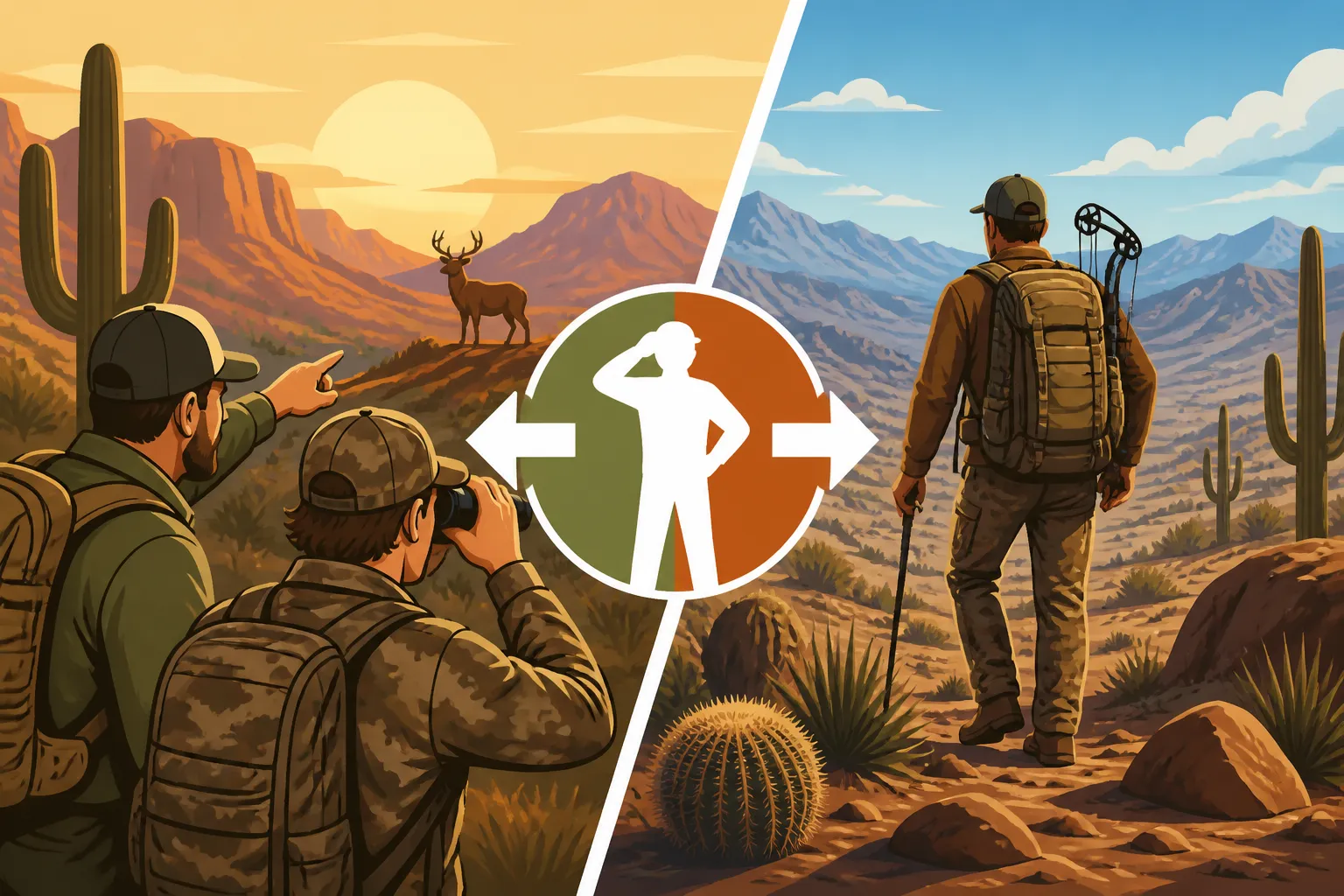
It's a common crossroads for hunters in Arizona: you've spent years honing your skills, but you're tired of pouring countless hours into scouting units that might not pan out, or struggling with the sheer logistics of an epic backcountry hunt. On the other hand, a fully guided trip can feel like an all-expenses-paid vacation from hunting, often coming with a price tag that makes your wallet weep. This guide is here to help you navigate that middle ground, exploring exactly when a semi-guided hunt makes perfect sense for your Arizona adventure, blending self-reliance with expert assistance.
What Exactly Is a Semi-Guided Hunt in Arizona?
Let's cut through the confusion right off the bat, because "semi-guided" can mean different things to different people and even different outfitters. It's not a one-size-fits-all package; instead, it’s a spectrum of services that fall between going completely solo (DIY) and having a guide by your side every step of the way. Think of it as getting a significant leg up on your hunt without sacrificing the thrill of earning your animal yourself.
Understanding the Spectrum of Support
On one end of the spectrum, a semi-guided hunt might simply involve an outfitter providing pre-scouted areas, marking potential water sources or bedding grounds on your map, and perhaps setting up a basic camp. You get the benefit of their local knowledge and preparation, but once you leave camp, you're on your own to stalk, call, and harvest. They might offer game retrieval assistance once your animal is down, which can be an absolute lifesaver in rugged Arizona terrain, especially on a remote Packing an Elk Out of Rim Country Alone trip.
Further along the spectrum, a semi-guided experience could include daily check-ins, transportation to specific hunting spots in their vehicle, or even a “spotter” who helps locate animals from a distance. The key differentiator from a fully guided hunt is that your outfitter or their staff typically won't be actively hunting with you, making calls on the shot, or leading every stalk. You retain control and responsibility for the actual hunting process. It’s about being provided the tools and insights to hunt effectively, rather than being taken hunting.
Common Semi-Guided Offerings
Here's a breakdown of what you might typically find included in a semi-guided package, keeping in mind that these can vary wildly from one outfitter to the next:
| Service Aspect | DIY Hunt (Unguided) | Semi-Guided Hunt (Typical) | Fully Guided Hunt (Typical) |
|---|---|---|---|
| Pre-Season Scouting | 100% your responsibility | Outfitter provides intel/maps/areas | Outfitter does all scouting |
| Camp & Lodging | You set up, supply your own | Outfitter provides pre-set camp (tent/RV) | Outfitter provides comfortable lodging |
| Meals | You cook, supply your own | Usually self-prepared, sometimes basic supplies | All meals provided, often cooked |
| Transportation | Your own vehicle, on-foot | Outfitter may transport to hunting areas | Outfitter drives/packs you everywhere |
| Active Guiding/Stalking | 100% your effort | You execute the hunt, outfitter advises | Guide leads every aspect of the hunt |
| Game Retrieval | 100% your effort, physically taxing | Outfitter assists with pack out, vehicle | Guide handles all retrieval |
| Local Knowledge | Acquired through personal experience | Shared by outfitter (hot spots, water) | Constantly applied by active guide |
| Permits/Licenses | You research and purchase | You research and purchase | You research and purchase |
It's clear that while a semi-guided hunt requires you to bring your hunting skills and decisions, it dramatically reduces the logistical headaches and learning curve associated with a new unit or species. For instance, if you're trying to figure out which outfitters offer semi-guided options, platforms like BookYourHunt can be a useful starting point for comparing services and reading reviews.
When Your Skill Level Aligns with Semi-Guided
A semi-guided hunt isn't for everyone, but it can be a perfect fit for a particular type of hunter. If you're someone who thrives on the challenge of the hunt itself—the stalk, the shot, the close encounter—but wants to offload the immense amount of research, planning, and heavy lifting, then this option might just be calling your name.
You're a Capable Hunter, But Short on Time
Let's face it, life gets busy. For many of us, scouting an Arizona unit before the February deadline, pouring over maps, driving countless miles, and hiking the terrain simply isn't feasible. A semi-guided hunt bridges that gap. You've got the hunting chops – you know how to read sign, you can stalk, and you're confident in your shooting. What you lack is the time to dedicate to pre-season preparation that often makes or breaks a DIY hunt.
Imagine trying to pinpoint the best Water Sources That Concentrate Arizona Desert Game in an unfamiliar unit for an early archery deer hunt, or figuring out the specific bugle timing across the Mogollon Rim. An outfitter who lives and breathes that country can give you a massive head start, directing you to active areas they've already identified. You still get to execute the hunt, making those critical decisions in the field, but you're doing it in an area with a much higher probability of success, thanks to someone else's legwork.
You Want the Challenge Without the Unknown Logistics
There's a significant difference between challenging yourself to make a difficult stalk on a mature mule deer and challenging yourself to figure out how to pack that deer out of a three-mile canyon solo while battling heat and dehydration. Many seasoned hunters relish the former but dread the latter, especially when hunting species like elk or bighorn sheep where game retrieval can be an epic undertaking.
A semi-guided hunt often provides logistical support that allows you to focus on the hunting itself. This could be anything from a pre-set camp with basic amenities, so you don't have to haul in all your gear, to direct assistance with game retrieval. If you're drawing a coveted tag for a species like Arizona Holds Desert and Rocky Mountain Bighorns, you want every advantage possible to ensure that once you make that shot, the animal isn't wasted, and the retrieve is manageable. This support reduces the mental and physical burden of "what ifs," letting you concentrate on the hunt.
Expanding Your Horizons to New Species or Terrain
Arizona offers an incredible diversity of hunting experiences, from glassing for Coues Deer Are Arizona's Signature Whitetail in the Sky Islands to calling Arizona Elk on the Rim, White Mountains and Kaibab in ponderosa forests. Each presents its own unique challenges and learning curves. If you're an experienced hunter but new to a specific Arizona species or a particular type of terrain, a semi-guided hunt can be an excellent way to gain crucial insights without committing to a full guide.
For example, if you've primarily hunted elk in other states and are now targeting Arizona's elk, understanding Bugle Timing Across the Mogollon Rim or how elk use specific Water Sources That Concentrate Arizona Desert Game can be very different. A semi-guided outfitter can share those nuanced details, directing you to prime areas where you can apply your existing skills in a new context. Similarly, for someone new to the intense glassing game required for Coues deer, an outfitter might point you to strategic glassing knobs or suggest optimal times of day to glass a sky island, significantly shortening your learning curve. Just like you'd use tools like GoHunt for e-scouting your own DIY hunt, outfitters often leverage similar data to pinpoint high-probability areas for their semi-guided clients.
Budgeting for the Middle Ground: Costs and Value
Let's be real, price is almost always a factor when planning a hunt. A fully guided hunt for a premium species like Arizona elk or bighorn sheep can be a significant investment, often costing thousands of dollars. DIY hunts, while seemingly cheaper upfront, can accrue hidden costs in fuel, gear, food, and the potential for a wasted tag if you can't find animals. A semi-guided hunt often presents a compelling value proposition by offering a more accessible price point than fully guided, while still significantly improving your chances of success and reducing logistical stress.
What an Arizona Drop Camp Costs
One common form of semi-guided hunt, especially in more remote areas, is a drop camp. This involves an outfitter packing you and your gear into a wilderness area, setting up a camp for you, and then leaving you to hunt on your own. They'll typically return on a pre-arranged date to pack you out, along with any game you've harvested. This is often considerably less expensive than a full guide, as you're not paying for a guide's daily presence in the field.
The cost will fluctuate based on the remoteness of the camp, the duration of your hunt, and what amenities are provided (e.g., wall tent, cooking gear, water). While you're still responsible for your own food and hunting, the outfitter handles the heavy lifting of getting you deep into productive areas where vehicle access might be limited or impossible. This is particularly appealing for remote Backcountry Units That Require a Pack Trip where the physical demands of packing in everything yourself are immense.
Comparing Semi-Guided to Fully Guided Prices
While it's impossible to give exact figures (prices change, and every outfitter is different!), you can generally expect a semi-guided hunt to fall somewhere between a third and two-thirds of the cost of a fully guided hunt for the same species and duration. This can translate into significant savings, especially for highly sought-after tags. For example, What a Guided Arizona Elk Hunt Costs might be at the higher end, but a semi-guided elk experience could be a fraction of that, still putting you in excellent country with some key support.
The value isn't just in the dollar amount, though. It's in the increased likelihood of filling your tag compared to a purely DIY approach, and the reduction in the sheer physical and mental exhaustion that can accompany a challenging hunt. If you draw a limited-entry tag that you might only get once every several years, like a quality elk or mule deer tag, investing in a semi-guided experience can be a smart move to maximize that opportunity. It’s about making a strategic investment in your hunting success without breaking the bank on a fully catered experience.
The Logistics Advantage: Help Without Hand-Holding
The beauty of a semi-guided hunt lies in its ability to streamline the often-overwhelming logistical aspects of hunting, allowing you to focus your energy on what you love most: the actual pursuit of game. It's the perfect sweet spot for those who appreciate preparation and support but want to make their own choices in the field.
Pre-Scouted Areas and Hot Spots
One of the biggest time-sinks and potential frustrations for any hunter, especially in a vast state like Arizona, is pre-season scouting. Finding productive areas, identifying game patterns, and locating water sources can take weeks of dedicated effort, sometimes months. A semi-guided outfitter has often done this work for you. They live in or near these units, observe game year-round, and know the local nuances of How Drought Affects Desert Deer Numbers or How Wildfire Changes Elk Habitat.
They can direct you to specific drainages where elk tend to bed, point out the best glassing knobs for Coues deer, or identify active waterholes in desert units. This isn't just drawing an X on a map; it's providing current, actionable intelligence that dramatically increases your odds. They've likely analyzed data similar to what you'd find when checking Arizona Draw Odds by Unit or Where Arizona Publishes Hunt Success Data, translating that into on-the-ground knowledge. This targeted approach means you spend less time searching for animals and more time hunting them, often on terrain you might have overlooked or struggled to access on your own.
Camp Setup and Game Retrieval Assistance
Setting up a comfortable camp, especially for an extended hunt in challenging terrain, requires considerable planning and effort. From hauling in tents, cooking gear, and water to setting up a functional base of operations, it can eat into precious hunting time. Many semi-guided packages relieve you of this burden by providing a pre-set camp, often a wall tent or even an RV, ready for your arrival. This means you can hit the ground running, focusing on the hunt from day one.
And then there's the inevitable: once you punch your tag, the real work begins. Retrieving a large animal, particularly an elk, from steep, rough country can be a monumental task, especially if you're hunting alone or with a single partner. A semi-guided service often includes assistance with game retrieval, whether that's providing horses, ATVs, or simply additional manpower to help pack out your animal. This support is invaluable, ensuring that your hard-earned trophy is brought out efficiently and ethically. It removes a massive source of stress and potential physical strain, allowing you to tackle a Packing an Elk Out of Rim Country Alone challenge with confidence, knowing help is on standby.
Navigating Regulations and Access
Arizona has a complex landscape of public and private lands, with specific rules for everything from Motorized Travel Rules on Arizona Public Land to Tree Stand Rules That Apply on Public Land. Understanding these nuances is critical to hunting legally and ethically. A semi-guided outfitter, being a local expert, can help you navigate these rules, ensuring you stay compliant.
For instance, they know the boundaries of Arizona State Trust Land Needs a Permit, and Your License Counts versus BLM or National Forest ground, and can advise on any specific access restrictions or seasonal road closures that might impact your hunt. They can also clarify rules around Baiting and Trail Camera Rules in Arizona or specific requirements like Evidence of Sex Requirements on a Carcass. This local expertise is more than just convenience; it's a safeguard, helping you avoid accidental trespass or regulatory violations that could spoil your hunt and lead to fines. It allows you to focus on the game, not the rulebook.
Disclaimer
This article is for general informational purposes only and does not constitute professional advice. Laws, prices and regulations vary by location and change over time. Consult a qualified professional for guidance on your specific situation.