What Meals Look Like on a Guided Hunt
Booking a guided hunt in Arizona means committing to long, physically demanding days, and honestly, many hunters wonder about the food. Will it be hearty enough? Will it taste good? Your energy and morale in the field rely heavily on good nutrition. This guide dives deep into what you can truly expect from meals on a guided hunt, from camp breakfasts to essential trail snacks, ensuring you’re well-prepared for the culinary adventure.
Understanding Your Guided Hunt's "Kitchen"
The type of meals you'll encounter on a guided Arizona hunt is intrinsically linked to the style of camp your outfitter runs. It's not a one-size-fits-all situation, and understanding these differences is key to setting your expectations correctly. A hunt that takes place primarily out of a comfortable base camp will offer a vastly different dining experience than a multi-day spike camp deep in the wilderness.
Base Camp Comfort and Culinary Delights
Many Arizona outfitters operate out of a fixed "base camp." This could be a cabin, a wall tent camp with a dedicated cooking tent, or even an RV setup. The beauty of a base camp is the infrastructure it allows for. With refrigeration, running water (sometimes), and more space, guides and cooks can truly prepare substantial, fresh meals. I've been in base camps where the smell of bacon and coffee wafted through the crisp morning air, pulling me out of my sleeping bag before the alarm even went off. This is where you'll typically find the most varied and comfortable eating experience.
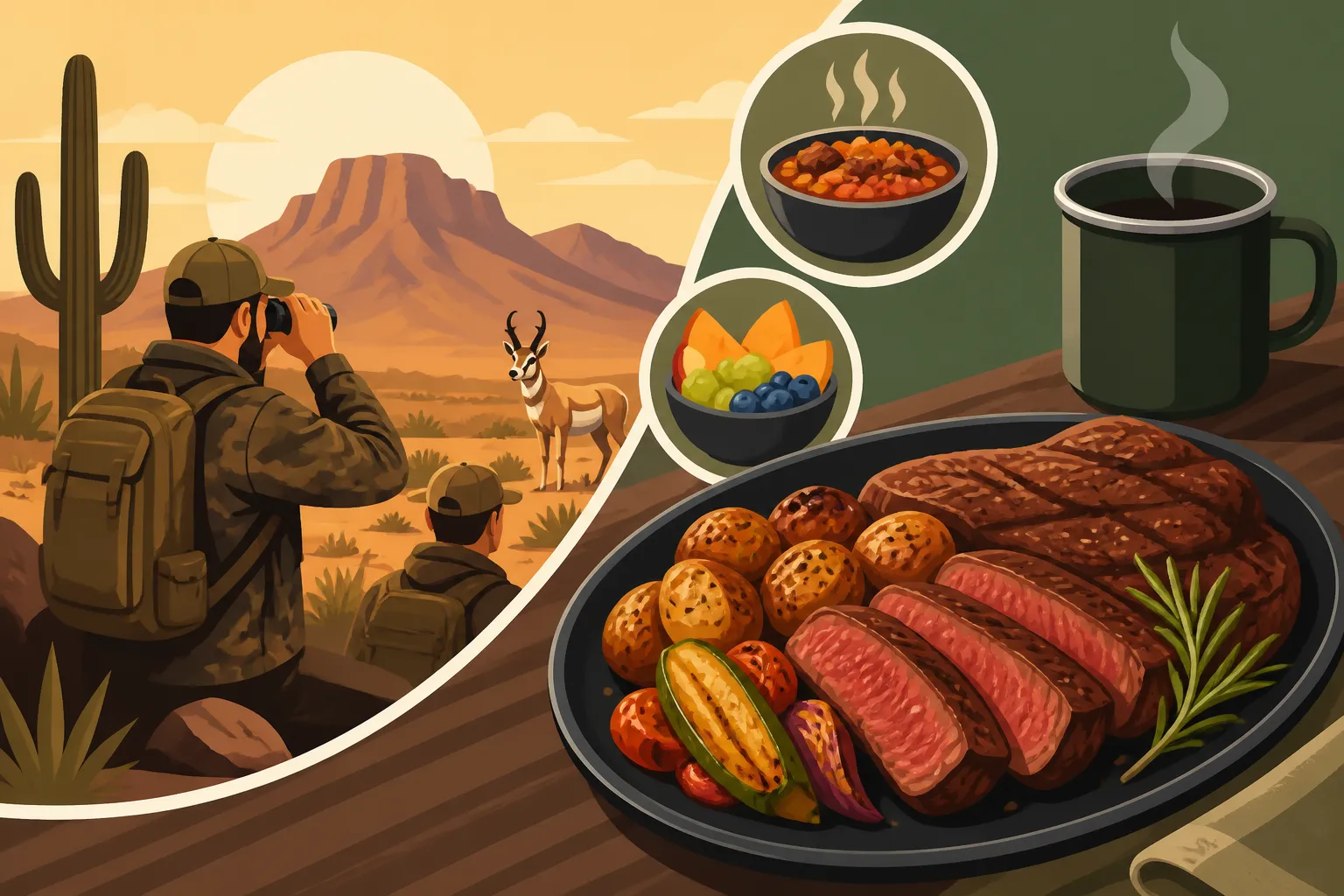
At a base camp, breakfast often consists of eggs to order, sausage, bacon, pancakes, oatmeal, and fresh fruit – a real spread designed to load you up for a long day. Dinners might include roasted chicken, steak, chili, hearty stews, or pasta dishes, often served with fresh vegetables and homemade desserts. Lunches can be packed sandwiches and snacks for the field or, if you're returning to camp mid-day, another warm meal. The convenience and quality here are often a huge morale booster after a tough day of Glassing Arizona's Sky Islands for Coues Deer or Calling Bulls on Arizona's Mogollon Rim. When you're vetting an outfitter, particularly through resources like BookYourHunt, it's worth asking about their camp setup and typical meal plans if food quality is a high priority for you.
Spike Camp Simplicity for Deep Wilderness Hunts
Spike camps are a completely different beast, and understanding this is crucial. These are often minimalist camps set up far from vehicle access, requiring everything to be packed in – sometimes on horseback, other times on your back. The goal here is to reduce travel time to prime hunting areas, allowing you to be in the field longer. Naturally, the food reflects this need for lightweight, non-perishable items. Forget the fresh eggs and roasted potatoes; you're looking at functional fuel.
In a spike camp, meals are designed for caloric intake and ease of preparation with minimal equipment. Breakfasts might be oatmeal packets, instant coffee, or granola bars. Lunches are almost always carried in your pack: jerky, energy bars, trail mix, hard cheese, and crackers. Dinners are typically dehydrated meals (MREs or similar backpacking fare), instant noodles, or pre-cooked foil-pouch meals. While they might not win any gourmet awards, these meals are often surprisingly tasty and, most importantly, provide the sustained energy needed for demanding stalks and long hikes. The focus shifts from culinary enjoyment to efficient refueling.
Mobile and Day Hunts: Lunch on the Go
For guided hunts that involve less stationary camping, like those where you might return to a motel or your own private vehicle each night, the meals provided typically center around field lunches and snacks. Your guide will often provide a packed lunch cooler for the day. This usually means sandwiches, wraps, fruit, chips, and drinks.
The benefit here is that you can often request specific items, or if you prefer, bring your own specialty snacks or drinks to supplement. Your breakfasts and dinners would then be up to you, either at local restaurants or cooked at your lodging. This style of hunting might be less "inclusive" on the food front, but it offers more flexibility for personal preferences. Always clarify these arrangements with your outfitter beforehand to avoid surprises. What a Guided Arizona Coues Deer Hunt Costs might reflect this less-inclusive meal plan, focusing more on the guide's expertise in the field.
From Campfire Cuisine to Backpack Rations: The Spectrum of Meals
Let's dive deeper into the actual types of food you'll likely encounter. The range is vast, from rustic, home-cooked meals that feel like a warm hug after a cold day to efficient, calorie-dense packets designed purely for performance. It's a spectrum, and where your outfitter falls on it depends heavily on their style, the hunt's logistics, and what they've promised in their booking.
Hearty Home-Style Cooking
For many base camp or lodge-style hunts, especially those with dedicated cooks, you can expect genuinely good, hearty, home-style cooking. These are the meals that become part of your cherished hunt memories, almost as much as the animals themselves. Imagine waking up to the smell of fresh coffee and breakfast burritos, or coming back to camp after a cold morning glassing to a steaming pot of chili and cornbread.
Outfitters who offer this level of cuisine understand that good food is vital for hunter morale and sustained energy. They often pride themselves on it. These meals are typically cooked from scratch, using fresh ingredients, and portion sizes are generous. You'll likely see a rotation of comfort foods: pasta dishes with meat sauce, roasted meats with mashed potatoes and gravy, robust soups, and maybe even a dessert like cobbler or cookies. This kind of meal plan helps hunters recover quickly and stay energized for Physical Conditioning for a Sky Island Hunt and other rigorous activities.
Dehydrated, Freeze-Dried, and Pre-Packaged Fuel
When you step into the world of spike camps or remote wilderness hunts, the food paradigm shifts dramatically. Here, weight, shelf-life, and ease of preparation are paramount. This is where you'll encounter a lot of dehydrated and freeze-dried meals. Brands like Mountain House, Backpacker's Pantry, or even MRE-style pouches are common. Don't let the "dehydrated" label scare you too much; modern options are surprisingly palatable and come in a vast array of flavors, from chicken teriyaki to beef stroganoff.
These meals require just hot water (boiled on a small stove) and a few minutes to rehydrate. They are calorie-dense, designed to provide the energy needed for physically demanding days, and incredibly lightweight. While they might not be gourmet, they are efficient and effective. Alongside these, you'll pack staples like instant oatmeal, granola bars, jerky, nuts, and hard candies for quick energy boosts. It’s all about function over fancy when you’re miles from the nearest road, pursuing Arizona Elk on the Rim, White Mountains and Kaibab.
The Role of Snacks and Field Lunches
Regardless of the camp style, field lunches and snacks are a universal constant on an Arizona guided hunt. Most guides will provide a packed lunch that you carry with you into the field. This usually includes a sandwich or wrap, a piece of fruit, a bag of chips or crackers, and perhaps a sweet treat. These are simple, easy-to-eat items that don't require heating.
Beyond the provided lunch, I always recommend bringing some of your own favorite high-energy snacks. Things like protein bars, trail mix, fruit leathers, or even small bags of M&M's can provide crucial morale and energy boosts when you're feeling a mid-afternoon slump. Dehydration and hunger can quickly sap your focus, which is the last thing you want when you're trying to How Close a Bowhunter Needs to Get on Coues or make a crucial shot.
Here's a quick comparison of meal types across different camp styles:
| Meal Category | Base Camp / Lodge Hunt | Spike Camp / Wilderness Hunt | Mobile / Day Hunt |
|---|---|---|---|
| Breakfast | Full cooked meals (eggs, bacon, pancakes), fresh fruit | Instant oatmeal, granola, instant coffee, breakfast bars | Self-catered at lodging, or quick grab-and-go options |
| Lunch | Packed sandwiches, wraps, fruit, chips (or hot lunch in camp) | Packed jerky, nuts, energy bars, crackers, hard cheese | Packed sandwiches, wraps, fruit, chips, provided by guide |
| Dinner | Home-style cooking (roasts, stews, pasta), fresh sides, dessert | Dehydrated meals (just add hot water), instant noodles, foil-pouch meals | Self-catered at lodging, or local restaurants |
| Snacks | Often available in camp, but bring personal favorites | Essential for energy, bring high-calorie, lightweight options | Provided in lunch, but personal additions are always good |
| Hydration | Bottled water, juice, coffee, sometimes sodas | Water filters/purifiers, electrolyte mixes, limited other drinks | Bottled water, sports drinks, easily accessible at vehicle |
Navigating Dietary Needs and Expectations
One of the most common anxieties for hunters embarking on a guided trip is how their dietary restrictions or preferences will be accommodated. It's a totally valid concern! You don't want to be miles into the Arizona backcountry, feeling under-fueled because you can't eat what's served. The key here is clear, early communication.
Communicating Allergies and Restrictions
This is non-negotiable. If you have any food allergies (nuts, dairy, gluten, shellfish, etc.) or serious dietary restrictions (diabetic, celiac, vegetarian), you must inform your outfitter as soon as you book your trip. Don't wait until you're in camp. Reputable outfitters, especially those that cater to clients found on platforms like GoHunt, are experienced in handling a variety of requests, but they need ample time to plan and source appropriate foods.
When communicating, be specific and clear. Instead of just saying "I can't eat dairy," explain why and what alternatives work for you. For severe allergies, ask about cross-contamination prevention. Some outfitters might ask you to bring your own specialty items, while others will be fully prepared. Having this conversation early is also a great way to gauge an outfitter's professionalism and willingness to ensure your comfort and safety. Questions to Ask an Arizona Outfitter should definitely include inquiries about meal planning and dietary accommodations.
Vegetarian, Vegan, and Specific Preferences
While most guided hunts aren't exactly known for their vegan-friendly menus, many outfitters can accommodate vegetarian requests if given enough notice. Vegan options can be trickier, especially in remote camps where fresh produce and specialized ingredients are hard to transport and store. Again, upfront communication is paramount.
For general preferences – like not liking spicy food, or preferring chicken over beef – it's a bit more nuanced. If it's a base camp with a dedicated cook, there's often more flexibility. In a spike camp, choices are much more limited, and you might need to be more adaptable. It's often best to prioritize your most important needs and be prepared to supplement with your own preferred snacks if some meals aren't quite to your liking. Remember, the goal is often sustenance for the hunt, not a Michelin-star dining experience.
Supplemental Foods You Might Bring
Even with an outfitter promising fantastic meals, it's never a bad idea to bring a few personal supplements. This is particularly true if you have very specific dietary needs, a sensitivity to certain foods, or just a favorite snack that gives you an energy boost.
Consider packing:
- Favorite protein or energy bars: These are lightweight and provide reliable fuel.
- Electrolyte drink mixes: Crucial in Arizona's arid environment.
- Specialty jerky or dried fruits: If you have preferred brands or types.
- Instant coffee or tea bags: If you have a specific morning ritual.
- Small, dense snacks: Nuts, seeds, or even a small bag of your preferred candy for a quick pick-me-up.
These small additions can make a big difference in your comfort and energy levels throughout the hunt, without significantly impacting your gear weight. Your guide can advise you on The Gear List Your Outfitter Will Send, which might include suggestions for personal food items.
Beyond the Main Course: Snacks, Drinks, and Hydration
While the main meals are important, the unsung heroes of a successful Arizona hunt are often the snacks and, critically, proper hydration. Especially when you're enduring long days of hiking, glassing, and stalking in Arizona's diverse and often arid landscapes, what you consume between meals can make or break your performance.
The Power of Well-Chosen Snacks
I can't stress this enough: snacks are your best friend on a guided hunt. They are not just for warding off hunger; they are for maintaining steady energy levels, keeping your blood sugar stable, and boosting morale when you're feeling worn down. A well-timed granola bar, a handful of almonds, or a piece of jerky can prevent the "bonk" that can derail a stalk or make a long hike back to camp feel unbearable.
Outfitters will provide some snacks, usually along with your packed lunch, but bringing your own favorite high-energy options is always a smart move. Think about items that are:
- Calorie-dense: You're burning a lot of energy, so choose snacks that give you a good bang for your buck.
- Easy to eat: No complicated packaging or messy foods that require a lot of effort in the field.
- Non-perishable: Especially important for items you carry all day.
- Personal preference: If you like what you're eating, you're more likely to eat it, even when you're tired.
Consider how these snacks will sustain you during moments like Reading Wind on a Sky Island Stalk or How Far to Stalk a Bedded Coues Buck – times when you need sharp focus and sustained energy.
Hydration: Arizona's Silent Necessity
Arizona is a desert state, and even in higher elevations or cooler seasons, proper hydration is absolutely critical. This isn't just about drinking when you're thirsty; it's about constant, proactive hydration. Dehydration can lead to fatigue, headaches, dizziness, and impaired judgment – all things you absolutely want to avoid when handling firearms or navigating rugged terrain.
Your outfitter will provide water, either bottled water in base camps or the means to filter/purify water in spike camps. However, it's your responsibility to drink enough. Carry a large water bottle or hydration bladder with you at all times. On a typical day hunt, especially during early seasons, you might need to carry several liters of water. Water You Must Carry on a Day Hunt is a topic often underestimated.
Many hunters also benefit from electrolyte supplements, especially if they are sweating a lot. Powders or tablets that you add to your water can help replenish essential salts and minerals, preventing cramps and fatigue. Discuss hydration strategies with your guide before you head out, as they will have invaluable local knowledge on water sources and requirements for your specific hunt area. Knowing How Outfitters Plan Emergency Evacuations often includes managing hydration issues, underscoring its importance.
Beverages: Coffee, Tea, and Camp Favorites
Beyond water, many outfitters will provide coffee, tea, and sometimes hot chocolate, especially in base camps. A warm mug in the chilly morning air before heading out is a classic hunting comfort. Some might even offer sodas or juices with dinner.
In spike camps, instant coffee or tea bags are the norm due to weight restrictions. If you have a particular preference for a certain coffee or tea, it's easy enough to pack a few of your own individual servings. Just remember that anything you pack in, you'll need to pack out, including wrappers and used tea bags. Your guide will expect you to leave no trace, so think carefully about every item you bring into the field.
Disclaimer
This article is for general informational purposes only and does not constitute professional advice. Laws, prices and regulations vary by location and change over time. Consult a qualified professional for guidance on your specific situation.