Firearm Safety Expectations From Your Guide
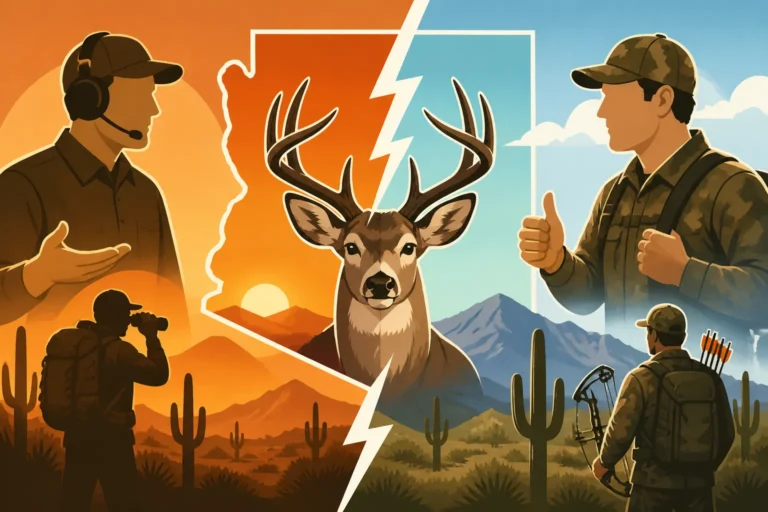
One of the most valuable things you can bring to an Arizona hunt, beyond your rifle and your boots, is a clear understanding of firearm safety – and what you should expect from your guide regarding it. It’s easy to feel a mix of excitement and perhaps a little apprehension, especially if you’re hunting with a new guide or in unfamiliar territory, and uncertainty around weapon handling can add to that. This guide is all about giving you the confidence to know what a professional guide’s firearm safety expectations should be, both for themselves and for you, ensuring everyone comes home safe and sound.
The Foundation: Clear Communication Before the Hunt Even Begins
Before you ever set foot in the Arizona desert or the high country, the groundwork for a safe hunt should already be laid through open and honest communication. This isn't just about what you do with a firearm, but how you think about it, and how your guide helps establish that mindset.
Pre-Trip Discussions: Setting the Stage for Safety
A reputable guide understands that safety isn't something you learn on the fly; it's a commitment that starts well before the first sunrise of the season. During your initial conversations, whether they’re over the phone or via email, don't hesitate to bring up your expectations around firearm handling, and be prepared for them to bring it up too. A good guide will often initiate this, explaining their protocols for everything from transportation to the firing line. They might send out a pre-trip packet detailing rules about loaded firearms in vehicles, how rifles will be secured in camp, and their general philosophy on when a chamber should be loaded.
Imagine a scenario where a new hunter, perhaps accustomed to hunting alone on private land with slightly different traditions, books their first guided Coues deer hunt in the Sky Islands. They might assume their rifle stays loaded in the truck for quick action, as they've done before. However, the guide's policy, and often the law in specific areas or for particular transport methods like ATVs, dictates a cased, unloaded firearm until deep in the hunting area. This potential mismatch in expectations can be a source of immediate friction or, worse, a safety hazard. Open dialogue prevents this. You should feel comfortable asking about these specifics, and your guide should be ready with clear answers. It’s also wise to prepare a list of Questions Worth Asking Before You Book to cover these and other important aspects of the trip.
Understanding Your Guide's Safety Philosophy
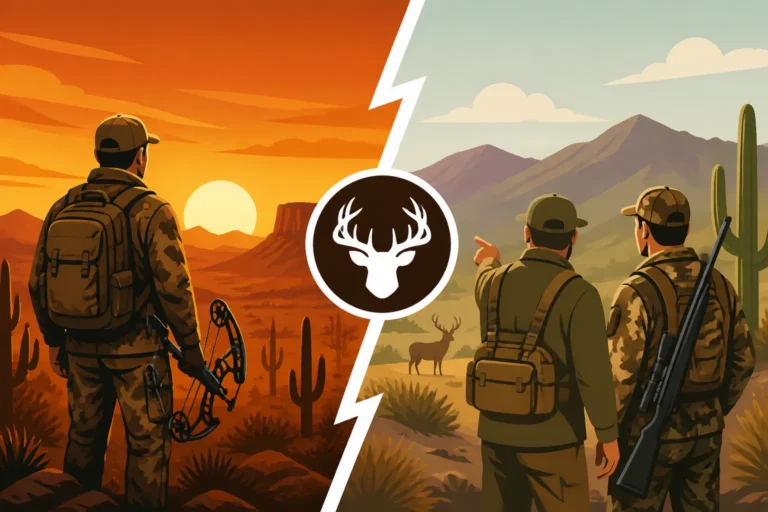
Every guide, much like every hunter, brings their own personality and approach to the field. While all licensed guides operate under a baseline of professional ethics and legal requirements, their individual "safety philosophy" can vary. Some guides are meticulously rigid, preferring actions open and chambers clear until the absolute last possible second before a shot opportunity. Others might allow a loaded chamber once you’re actively stalking in a hunting scenario, but with strict muzzle control and safety-on requirements. Neither approach is inherently wrong, as long as it adheres to legal standards and is clearly communicated and consistently enforced.
It's your right, as a client, to understand this philosophy. Ask direct questions like, "What are your absolute non-negotiables regarding firearms during our hunt?" or "When do you typically have clients chamber a round?" Their answers will reveal a lot about their approach to safety. A guide who takes these questions seriously and provides confident, detailed responses is likely one who prioritizes safety. Conversely, a guide who dismisses these concerns or provides vague answers might be a red flag. Remember, you are entrusting your life, and the guide is entrusting theirs, to careful firearm handling. This mutual understanding forms the backbone of a safe hunting experience. As you research potential guides, using platforms like BookYourHunt can sometimes offer insights into a guide's client reviews, which might touch upon their professionalism and safety focus.
On the Ground: Safety Protocols in the Field
Once you're actually out there, whether you're chasing mule deer across the Northern Plateaus or calling elk on the Mogollon Rim, specific, actionable safety protocols become paramount. This is where theory meets reality, and consistent practice is key.
Handling Firearms in Camp and Transit
The safe handling of firearms in camp and during transit is often where many incidents could potentially occur if not managed properly. In camp, the universal expectation is that firearms are always unloaded, with their actions open or a chamber flag inserted, and preferably secured in a safe manner. This prevents accidental discharges and ensures everyone in camp, from fellow hunters to camp staff, feels secure. It’s also a common courtesy and a sign of respect for others sharing the space. Your guide should clearly state these rules upon arrival.
When moving between hunting areas, whether it's a quick drive down a forest road or a longer journey over rough terrain, the guide will have a specific policy for firearms in vehicles. In Arizona, it's generally required that firearms transported in vehicles are unloaded. Some guides might insist on them being cased as well, particularly for longer transits or when moving through areas with higher public presence. You need to understand the specifics. For example, when using ATVs or UTVs to access more remote areas, firearms are almost universally required to be unloaded and securely fastened or cased to prevent accidental discharge from bumps and jostles, or to prevent them from falling out. Always clarify with your guide if the vehicle-specific Rules on Hunting From a Vehicle apply to your method of transport, as these can be crucial. This isn't just about legal compliance; it's about minimizing risk in dynamic environments.
Safety During the Stalk and Setup
This is perhaps the most dynamic phase of firearm safety during a hunt. As you and your guide navigate varied terrain—steep canyon walls while Playing Thermals on a Canyon Stalk for Coues deer, or dense ponderosa pine forest looking for elk—muzzle control is absolutely critical. The universal rule: always know where your muzzle is pointing and ensure it never covers another person. Your guide will be acutely aware of this, especially as they move ahead or alongside you. They will expect you to maintain disciplined muzzle control, even when scrambling over rocks or pushing through thick brush.
The debate of "chamber loaded" versus "chamber when ready" often comes into play during a stalk. Some guides prefer you to keep the chamber empty until you're in a shooting position, ready to take the shot, arguing it eliminates the risk of an accidental discharge during a stumble. Others, especially in fast-paced or thick-cover hunts, might prefer you to have a round chambered with the safety on, to minimize movement and noise when game is encountered suddenly. Whichever method your guide prefers, they should clearly communicate it and ensure you are comfortable and proficient with it. As you approach game, your guide will typically communicate shot opportunities, confirming the animal and the safest approach. When getting into a shooting position, be mindful of your guide's position and any obstacles around you. They will be watching to ensure your shot is safe and clear of any potential hazards, both natural and human.
The Moment of Truth: Shot Placement and Backstop
When an animal is finally in range and a shot opportunity presents itself, your guide takes on a crucial safety role beyond just calling the shot. They become your extra set of eyes, not only helping you confirm the animal and its trophy quality but also, critically, assessing the safety of the shot. This means confirming that your shot has a safe backstop—something beyond the animal that will safely stop your bullet, such as a hillside, the ground, or a thick stand of timber, and not open air, a road, or another hunter.
Your guide will often be the one to give the final "Are you clear?" or "Take him when you're ready" command, but implicitly, that includes their assessment of the backstop. You, as the shooter, still bear the ultimate responsibility for verifying your target and ensuring a safe shot, but the guide's input is invaluable. They might instruct you to shift slightly for a better angle or to wait for the animal to move to a safer spot. In the heat of the moment, with adrenaline surging, it’s easy to focus solely on the animal. A good guide will pull you back to the fundamentals, confirming, "What's behind him?" or "Watch that ridge line." This emphasis on ethical shot placement and a safe backstop is not just about bringing down the animal; it’s about upholding the highest standards of safety and responsibility, as covered in principles like those taught in The Ethically Hunting Arizona Course Explained.
Post-Shot Procedures and Game Handling
The hunt doesn’t end with the shot, and neither does the need for vigilant firearm safety. The moments immediately following a shot, and throughout the tracking and retrieval process, can be just as critical for maintaining safety, especially when adrenaline is high and focus might shift to the downed animal.
Securing the Firearm After the Shot
As soon as your shot rings out, and assuming the animal is down or visibly hit, the first, most immediate safety action should be to apply the safety catch, then unload your firearm, and open the action if possible. Even if you believe the animal is down for good, maintaining this discipline is paramount. Adrenaline can make you forget simple steps, and an accidental discharge while moving towards a downed animal or celebrating can have serious consequences. Your guide will often prompt you with "Safety on, unload!" as a reminder, or they will visually confirm that you've done so.
This is critical because once the shot is taken, your immediate focus shifts to the animal and the recovery. You might need to move quickly, traverse uneven ground, or even make a follow-up shot if the animal isn't fully dispatched. Having your firearm immediately secured prevents a myriad of potential issues. It also allows you and your guide to scan the area for other animals that might have been part of a herd, or for unexpected hazards. In a Coues deer hunt, for instance, a buck rarely travels alone, and you might have multiple eyes on you even after the shot. Your guide will prioritize this post-shot securing of the weapon before any approach to the animal begins.
Tracking and Retrieval Safety
Tracking a wounded animal can be intense, often leading you into thicker cover or steeper, more challenging terrain than you might have navigated during the initial stalk. During this phase, your guide will lead the way, reading signs and evaluating the safety of the path ahead. The question of when to re-load your firearm, or if it should remain unloaded, is something to clarify with your guide. Some guides prefer you to remain unloaded until the animal is located, especially if the tracking is difficult and involves scrambling. Others might suggest chambering a round, safety on, if the animal is known to be in thick cover and a close-quarters follow-up shot might be necessary.
Muzzle control, as always, is vital. Navigating dense prickly pear and catclaw or ascending a rocky wash while tracking a javelina requires absolute attention to where your muzzle is pointing. Your guide will be extremely attentive to this, especially if they are leading or behind you. If a follow-up shot is needed, the guide will again assess the immediate surroundings for safety, ensuring no one is in the line of fire and there's a good backstop. They’ll communicate clearly about how to approach a wounded animal safely, emphasizing caution and respect. This meticulous attention to safety also extends to the physical demands of game recovery, such as Field Dressing in Desert Heat, where fatigue can sometimes lead to lapses in concentration.
Common Safety Missteps and How to Avoid Them
Even with the best intentions and the clearest guidelines, hunting involves dynamic situations where missteps can happen. Understanding these common pitfalls and actively working to avoid them is part of being a responsible hunter and client.
Over-Reliance and Under-Communication
One of the most common safety missteps is either over-relying on your guide to manage all aspects of your firearm safety or, conversely, not communicating your own comfort levels or questions. While a guide is there to ensure a safe and successful hunt, ultimate responsibility for safe firearm handling always rests with the individual hunter. Think of it as a team effort, where the guide is the coach and strategist, but you are still the player on the field, performing the actions. You should never assume the guide has seen every potential hazard or that they know your personal habits with a firearm.
A common scenario might involve a hunter who is less experienced with steep, rocky terrain, but doesn't communicate this. When the guide asks them to quickly get into position for a shot, they might rush, lose their footing, and momentarily lose control of their muzzle. This could be mitigated by the hunter communicating, "I need a moment to get stable here," or by the guide proactively assessing the hunter's movement capabilities. It's crucial to speak up if you're unsure about a command, feel uncomfortable with a particular firearm handling request, or simply need more time to execute a safety procedure. The phrase "Safety first" isn't just a slogan; it's a constant, active engagement that prevents accidents.
Handling Different Hunter Experience Levels
Guides encounter hunters with a wide range of experience, from seasoned veterans who've hunted all their lives to novices on their first big game adventure. A good guide will adapt their communication and supervision to the client's experience level, but the basic safety rules remain universal. As a hunter, regardless of your experience, you are expected to know and follow the fundamental rules of firearm safety: treat every firearm as if it's loaded, never point the muzzle at anything you're not willing to destroy, keep your finger off the trigger until ready to shoot, and be sure of your target and what's beyond it.
If you're new to hunting or specific firearm types, it's essential to practice extensively before your hunt. This includes not just shooting accurately, but also safely loading, unloading, clearing malfunctions, and carrying your firearm in various positions. Investing time in Building a Practice Routine Before Opener is invaluable. When selecting a guide, especially if you know you need extra guidance on safety, consider asking about their experience with less experienced hunters. Resources like BookYourHunt or GoHunt might help you find guides who specifically highlight their training capabilities or cater to different client experience levels, ensuring you find a match that prioritizes your learning and safety.
The Unforeseen: Weather, Terrain, and Fatigue
Arizona's diverse landscapes present unique safety challenges. Steep, loose scree slopes in the mountains, dense, thorny brush in the desert, or slick, wet rock after a monsoon rain can all increase the risk of a stumble or fall. Add to this the physiological effects of exertion, heat, cold, and early mornings, and fatigue becomes a very real factor that can erode concentration and quick reflexes. Your guide will be keenly aware of these environmental and physical factors and will adjust the pace and approach accordingly.
It's vital for you to recognize your own limits and communicate them. If you're physically exhausted, dehydrated, or struggling with the terrain, tell your guide. Pushing past your limits silently can lead to a lapse in judgment, a misstep, and potentially a safety incident involving your firearm. For example, descending a particularly steep section of a canyon after a long day of Glassing Arizona's Sky Islands for Coues Deer might be when a hunter needs to extra consciously manage their footing and muzzle direction. A guide might suggest securing the firearm in a pack or even carrying it for a short, challenging section to ensure safety. Open dialogue about these challenges fosters a safer environment for everyone.
Remember, a successful hunt isn't just about punching a tag; it's about making memories and returning home safely. By understanding and actively participating in firearm safety with your guide, you contribute significantly to that success.
| Firearm Safety Aspect | Guide's Role (Expectations) | Hunter's Role (Responsibilities) |
|---|---|---|
| Pre-Trip Communication | Clearly outline safety policies, answer questions thoroughly. | Ask questions, understand policies, communicate comfort levels. |
| In Camp Handling | Enforce unloaded, action-open/flagged, secured firearm rules. | Adhere to camp rules strictly, ensure firearm is always safe. |
| Vehicle Transit | Dictate unloaded/cased requirements, ensure secure transport. | Follow all transit rules, ensure firearm is unloaded and secure. |
| During Stalk/Movement | Constantly monitor client's muzzle control, guide through terrain. | Maintain strict muzzle control, keep finger off trigger, communicate footing issues. |
| Shot Opportunity | Confirm target, assess backstop, give "all clear" for the shot. | Verify target, ensure clear backstop, take ethical shot, follow commands. |
| Post-Shot Procedure | Remind client to unload/safe, scan for follow-up needs. | Immediately unload, engage safety, open action, remain alert. |
| Tracking/Retrieval | Lead safely through terrain, advise on loaded/unloaded status. | Maintain muzzle control, follow guide's instructions, communicate fatigue. |
| Overall Philosophy | Prioritize safety as paramount, lead by example. | Adhere to all rules, ask questions, take personal responsibility. |
Disclaimer
This article is for general informational purposes only and does not constitute professional advice. Laws, prices and regulations vary by location and change over time. Consult a qualified professional for guidance on your specific situation.