How Outfitters Scout Before Your Arrival
It's completely normal to wonder what your hunting outfitter is actually doing before you ever set foot in Arizona. You've invested your hard-earned money and time, probably drawn a coveted tag after years of applying, and now you're trusting someone else to put you on an animal. The stress is real! This guide will pull back the curtain on how professional Arizona outfitters scout, ensuring they give you the best possible chance at success when your hunt finally arrives.
The Foundation: Year-Round Knowledge and Data Collection
Good Arizona outfitters aren't just scrambling the week before your hunt. Their preparation is a continuous, year-round effort built on deep local knowledge, historical data, and constant monitoring of the landscape. They're essentially living and breathing the units they guide in, long before you ever send a deposit.
Historical Data and Unit Intelligence
Think of an outfitter as a walking, talking library of hunting information for their chosen areas. They track everything. This isn't just about what happened last season, but what's happened for years, even decades. They keep meticulous records of past client success rates, which stands they used, where certain deer or elk populations tend to concentrate, and what patterns emerge during specific rut phases. They are intimately familiar with the units they operate in, whether it's the high country of the Mogollon Rim for elk or the rugged Sky Islands for Coues deer.
They also pay close attention to official reports. Arizona Game and Fish Department data, including harvest success rates and population estimates, becomes part of their internal database. For instance, understanding Reading an Arizona Hunt Success Report for a particular unit helps them gauge its potential and what kind of pressure to expect. They know which areas consistently produce mature animals and which might be struggling due to environmental factors. This long-term perspective is invaluable because animal behavior, while somewhat predictable, is also influenced by variables like drought, wildfire, and predator presence. They'll tell you how a particular canyon has held elk for years, or how a specific ridge is always worth checking for Coues bucks during the late season.
Winter Range Reconnaissance and Post-Season Analysis
Even after hunting seasons close, an outfitter’s work doesn’t stop. The post-season is a critical time for gathering intelligence that directly impacts the following year's hunts. Once the snow flies in the high country or the desert cools down, animals move to their wintering grounds. This allows outfitters to assess the health of the herd and identify areas where mature animals survived the previous hunting pressure.
They spend countless days walking these winter ranges, looking for shed antlers, which provide a tangible indication of genetics and antler growth potential for the upcoming season. Collecting sheds isn't just a hobby for them; it's a vital part of their scouting process, giving them clues about where specific bucks or bulls might be surviving and growing. Understanding Arizona Shed Antler Gathering Rules ensures they operate legally while gathering this crucial information. They’re also looking for signs of winter kill, assessing how harsh the conditions were and what impact it might have on the population. Are there many unharvested animals still in the area? Did certain areas hold more mature animals than others? They'll note new rubs from late-season bucks, fresh tracks indicating lingering animals, or even discover new travel corridors established due to changed water sources or vegetation. All this information is logged, mapped, and cross-referenced with their historical data to start building the framework for next year’s strategy.
Digital Scouting: Tools and Techniques
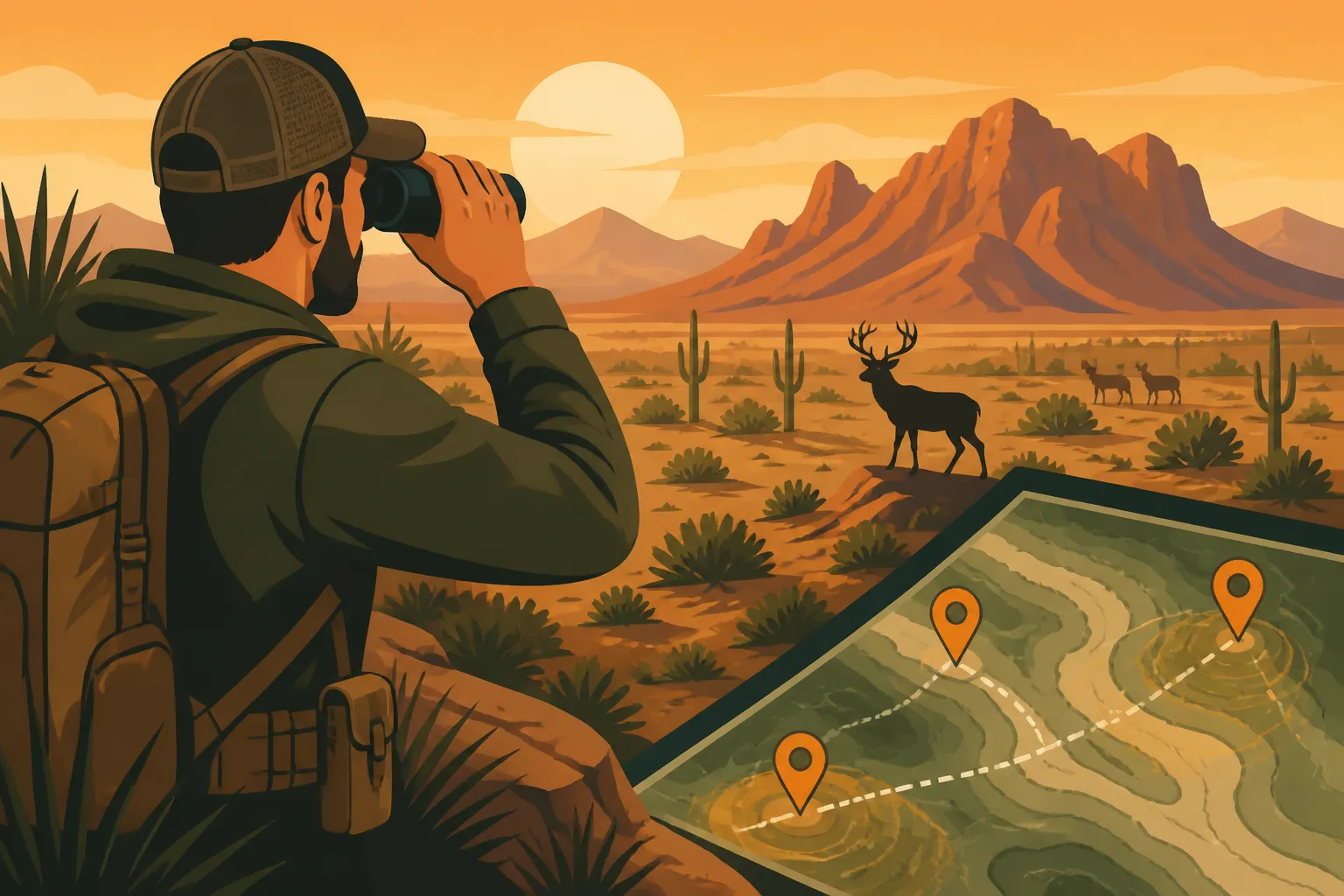
Modern technology has revolutionized the initial phases of scouting, even for seasoned outfitters. Before ever stepping foot in the field, they are meticulously "e-scouting" using a suite of digital tools. This is where services like GoHunt become incredibly valuable. Outfitters pore over high-resolution satellite imagery, topographic maps, and public/private land ownership layers. They identify potential hotspots, analyze terrain features, and plan access routes, all from their computer screen.
What are they looking for? They're searching for specific habitat types: north-facing slopes that hold moisture, dense bedding cover, open feeding areas, and most critically, water sources in arid Arizona. They’ll mark every stock tank, spring, or ephemeral wash that might hold water. Water Sources That Concentrate Arizona Desert Game are goldmines in the desert and mountains alike. They study elevation changes, drainages, and ridgelines to understand how animals might move through the landscape and how to plan a stealthy approach. They can overlay historical burn maps to see how wildfires have changed the habitat, creating new browse or opening up old growth. This digital reconnaissance allows them to narrow down vast areas into manageable sections, making their actual boots-on-the-ground scouting much more efficient and targeted. It's like having a bird's-eye view of your hunt unit before you even pack a bag. E-Scouting an Arizona Unit Before the Season is a common practice for serious outfitters.
Pre-Season Intensive Scouting: Feet on the Ground
While digital tools provide an excellent overview, nothing replaces actual boots on the ground. This intensive pre-season scouting is where outfitters confirm their digital hunches and gather real-time intelligence on animal behavior.
Timing and Strategy of Pre-Season Scouting Trips
Outfitters typically begin their intensive field scouting weeks, sometimes months, before the season opener, and often conduct multiple trips. The timing varies significantly by species and season. For early archery elk or deer, they might be out in July and August, despite the scorching Arizona heat, observing bachelor herds and trying to pinpoint their summer patterns. For Coues deer in the Sky Islands, they might be glassing diligently in December to pattern bucks before the January rut. The monsoon season in late summer presents unique challenges and opportunities; outfitters know that Timing a Summer Scouting Trip Around Storms can reveal new water sources and shift animal movements.
Their strategy isn't just random wandering. They target specific areas identified during their digital scouting, but they're always ready to adapt. If an area that looked promising on a map is dry or devoid of recent sign, they quickly move to a backup location. They might focus on higher elevations during the early season to escape heat, or lower country as winter approaches. They’re looking for patterns in how animals use the landscape in response to current conditions, not just historical ones. This adaptability is key; a good outfitter doesn't just stick to a plan that's no longer working.
Locating Animals: Sign, Water, and Habitat
When outfitters are physically in the field, they are looking for unmistakable evidence of the animals they intend to hunt. This goes far beyond just spotting an animal with optics. They’re reading the landscape like a book. Fresh tracks in the dust or mud around a spring are a clear indicator of recent activity. Rubs on trees and scrapes on the ground tell them about buck and bull territories, and sometimes even the size of the animal that made them. Droppings provide clues about diet and how recently an animal passed through. They’re analyzing bedding areas – exactly where an animal chose to rest, which way it faced, and why. Was it for shade, cover, or wind advantage?
Water sources are paramount, especially in Arizona's dry climate. An outfitter will spend hours watching a remote waterhole, understanding Hunting a Stock Tank During Early Archery or how Finding Water in Arizona's Dry Country shapes daily movements. They know that during dry periods, animals are slaves to water, and patterns around these vital spots become highly predictable. They're also identifying transition zones – the areas where animals move between bedding cover and feeding areas. These can be key ambush points for archery or rifle hunts. They'll notice which browse species are being heavily utilized and which are untouched, indicating preferred food sources at that specific time of year.
Trail Camera Deployment and Monitoring
Trail cameras are an invaluable tool for outfitters, providing round-the-clock surveillance when they can't be in the field. But it's not as simple as strapping a camera to a tree. Ethical outfitters are meticulous about adhering to Trail Camera Rules on Arizona Public Land, ensuring they're following all state regulations. They strategically place cameras on known game trails, near water sources, over scrapes, or in pinch points that animals are forced to traverse.
The placement considers factors like sun angle to avoid glare, camouflaging to prevent theft, and height to capture the best images. Once deployed, they're not just left to sit for months. Outfitters will make regular trips to check cards, often syncing these trips with other scouting objectives. They analyze the photos and videos for patterns: what time are animals moving? Are they using this area primarily at night or during daylight? What is the age class and quality of the bucks and bulls visiting? This continuous monitoring allows them to track specific animals, understand their routines, and get a real-time pulse on the unit's activity leading right up to the hunt. It’s an ongoing process of data collection and adjustment.
Client-Specific Scouting and Real-Time Adjustments
Even with extensive general scouting, a good outfitter understands that every client and every hunt is unique. Their final preparations involve tailoring the knowledge they’ve gained to your specific needs and making crucial adjustments based on dynamic field conditions.
Tailoring Scouting to Client Capabilities and Preferences
A cookie-cutter approach won't work in the diverse and challenging landscapes of Arizona. An outfitter will consider your physical conditioning: are you a seasoned backcountry hunter ready for a strenuous mountain climb, or do you need a more accessible hunt due to physical limitations? Your weapon choice is also a significant factor. If you're an archery hunter, the outfitter needs to scout areas where close-range encounters are probable, requiring different strategies than a rifle hunt where longer shots are common. For example, a guide might prioritize thick cover and natural funnels for a bowhunter in a unit known for its elk, whereas for a rifle hunter, open glassing points overlooking expansive terrain might be the focus.
Your desired trophy quality also plays a role. Are you looking for a once-in-a-lifetime Boone and Crockett animal, or are you happy with any legal bull or buck? This dictates the areas they prioritize and the level of selectivity they employ during scouting. They also factor in your hunting style – do you prefer to sit and ambush, or spot and stalk? All these variables mean that while the core scouting intel is broad, the final "plan of attack" is highly personalized. Before your arrival, they’ll have specific areas in mind that align with your unique profile.
Adapting to Conditions: Weather and Pressure
Arizona's weather can be notoriously fickle, and hunting pressure can change dramatically from year to year, or even day to day. A great outfitter is constantly monitoring these variables and adjusting their plans. An unseasonable heat wave can push animals to higher elevations or make them exclusively nocturnal, requiring a shift in strategy. Early snow might move elk out of their usual haunts, or make access roads impassable. Outfitters often consult detailed weather forecasts right up until your arrival and have contingency plans for various scenarios.
Similarly, unexpected hunting pressure from other hunters can scatter game and make animals wary. Outfitters will be aware of other camps, vehicle traffic, and shot counts in their areas. They'll have backup spots scouted that are harder to access, or simply less known, to escape crowded areas. This means that even if a spot was hot a week before your arrival, if conditions change, they might have to audible to a completely different location. The ability to be flexible and think on their feet, leveraging their extensive scouting, is a hallmark of a professional Arizona guide.
Pre-Hunt Communication and Final Preparations
Leading up to your arrival, a good outfitter maintains open and transparent communication. They'll often provide updates on scouting conditions, animal activity, and any significant changes in weather or habitat. This helps manage your expectations and gets you mentally prepared for the hunt. Booking platforms like BookYourHunt can facilitate this connection, allowing for easy communication between client and outfitter. They might share recent trail camera photos or describe recent encounters they’ve had while scouting.
Just before you arrive, the outfitter is typically performing one last reconnaissance. This could be a quick drive through key areas, a last check of trail cameras, or a final glassing session from a vantage point. They're looking for the absolute latest intel – fresh tracks from an animal that moved in overnight, a new rub line, or a particular animal spotted feeding in an unexpected location. This real-time information is crucial for formulating the most current and effective plan for your first day in the field. They want to start the hunt with the freshest possible information, knowing that conditions in the wild are always changing.
Ethical Considerations and The Outfitter's Role
Beyond the strategy and hard work, a core principle for any reputable Arizona outfitter is an unwavering commitment to ethics and fair chase. This isn't just about following the rules; it's about upholding the integrity of the sport.
Respecting Regulations and Fair Chase
A professional outfitter understands that their reputation, and indeed their livelihood, depends on operating within the bounds of the law and ethical hunting practices. In Arizona, this means strict adherence to Game and Fish regulations. They know the rules inside and out regarding everything from legal shooting hours and weapon restrictions to specific tagging requirements. For instance, they will never engage in illegal baiting practices; they are intimately familiar with Baiting Rules That Apply in Arizona and will ensure your hunt is conducted fairly.
They also ensure that all motorized vehicle use complies with regulations, avoiding driving off-road where prohibited. Rules on Hunting From a Vehicle are clear, and a good outfitter respects them. They emphasize proper game retrieval and ethical shot placement, prioritizing the swift and humane taking of an animal. This commitment to fair chase means they're using their knowledge and effort to give you an opportunity, not a guarantee, and certainly not an unethical advantage. They teach, they guide, and they ensure that the hunt is conducted with respect for the animal and the spirit of the sport.
Managing Client Expectations
Even with the most exhaustive scouting, hunting is inherently unpredictable. A truly honest and ethical outfitter will always manage client expectations realistically. They will never guarantee success, because wildlife are wild, and a myriad of factors can influence a hunt. Weather can turn, animals can move unexpectedly, or a targeted animal might simply evade detection.
What a good outfitter does guarantee is their best effort, their extensive knowledge, and their dedication to providing a high-quality hunting experience. They will put you in the best possible position to be successful, based on their meticulous scouting and real-time adjustments. They understand the emotional and financial investment you've made, and they want to see you succeed as much as you do. However, they also know that the experience of being in Arizona's stunning landscapes, learning about its wildlife, and participating in the ancient tradition of hunting is a success in itself, regardless of whether a tag gets filled. They're there to guide you through that entire journey, from the pre-hunt anticipation fueled by their scouting, to the moments when you're finally in the field.
| Scouting Phase | Key Activities | Output for Outfitter | Benefit to Client |
|---|---|---|---|
| Year-Round Knowledge | Historical data review, post-season observation, shed hunting, digital mapping, GoHunt data | Deep unit familiarity, long-term animal patterns | Informed decision-making, choice of best units |
| Pre-Season Intensive | Boots-on-the-ground recon, sign reading, water checks, trail camera deployment | Current animal locations, preferred feeding/bedding | Targeted hunting zones, fresh animal intel |
| Client-Specific Prep | Fitness assessment, weapon discussion, trophy goals, weather monitoring, BookYourHunt communication | Tailored hunt plan, real-time adjustments | Personalized experience, maximized opportunity |
| Ethical Adherence | Strict regulation following, fair chase principles | Legal compliance, positive reputation | Trustworthy experience, ethical hunting practices |
Disclaimer
This article is for general informational purposes only and does not constitute professional advice. Laws, prices and regulations vary by location and change over time. Consult a qualified professional for guidance on your specific situation.