Landowner Ground and Private Access Across Arizona
Navigating the complex tapestry of land ownership in Arizona can feel like trying to solve a Rubik's Cube blindfolded, especially when you're dreaming of chasing that elusive Coues deer or a monster bull elk. Many hunters get incredibly frustrated trying to figure out where public land ends and private land begins, often leading to missed opportunities or, worse, accidental trespass. This guide is dedicated to demystifying private land access in Arizona, exploring everything from simply asking permission to leveraging outfitters and understanding unique tag programs, so you can confidently plan your next hunt.
Understanding Arizona's Land Ownership Mosaic for Hunters
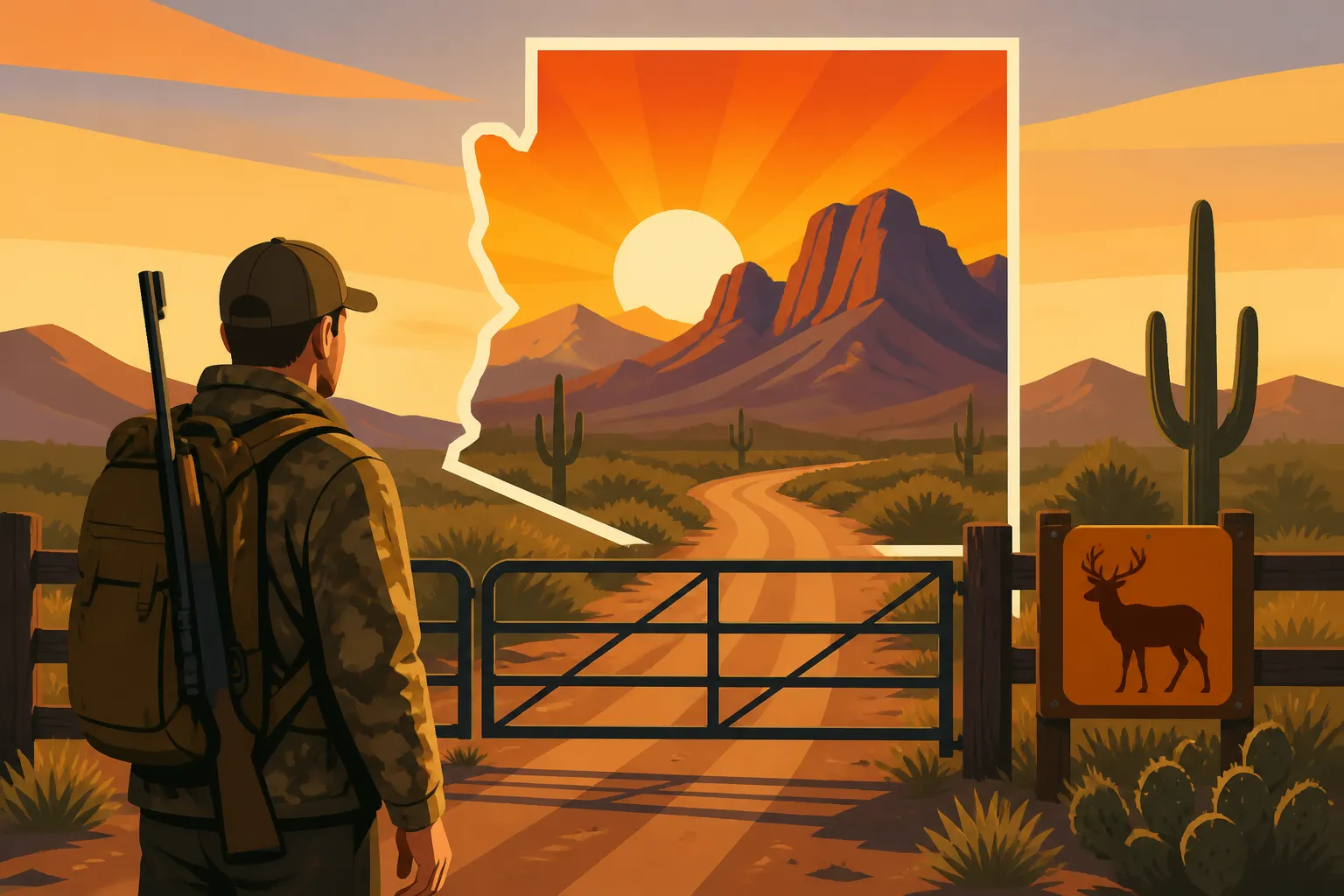
Arizona's landscape is a fascinating, yet often bewildering, patchwork of land ownership. Unlike some states where public land might be contiguous for hundreds of miles, Arizona presents a mix of federal, state, private, and tribal lands, often in a "checkerboard" pattern that can make a hunter's head spin. This intricate mosaic directly impacts where and how you can hunt, making it crucial to understand the lay of the land before you ever set foot in the field.
The Reality of Public vs. Private Land in Arizona
Imagine looking at a satellite map of a promising unit, and you see swaths of green (Forest Service) and tan (BLM), but also blocks of white (private) and even more confusingly, crisscrossing lines indicating State Trust Land. This is the reality for hunters in Arizona. Federal lands, managed by the Bureau of Land Management (BLM) and the U.S. Forest Service (USFS), typically offer open access, but they are often interspersed with private holdings. These private parcels can block access to otherwise huntable public ground, or they might hold incredible game populations due to less pressure. The frustration here is real – you might scout a beautiful ridge on public land, only to realize the only way to get there involves crossing private property that's completely locked up. It's a constant puzzle, and finding those access points or understanding the boundaries is half the battle.
Then there's Arizona State Trust Land, a massive amount of acreage that isn't quite public and isn't quite private in the traditional sense. It's managed to generate revenue for specific state beneficiaries, primarily public education. While often open to hunters with a valid Arizona hunting license, it comes with its own set of rules and potential restrictions, which we'll dive into shortly. This mixed ownership creates a dynamic environment where knowing your maps and understanding regulations isn't just helpful, it's absolutely essential to avoid issues and maximize your hunting opportunities.
Why Private Land Access Matters for Arizona Hunters
So, why go through all the trouble of understanding and securing private land access? The answer, for many, boils down to quality and opportunity. On a heavily hunted public unit, game animals often become nocturnal or move into thick cover at the first sign of human pressure. Private lands, particularly those with responsible management and limited hunting, can offer a sanctuary where animals feel safer and exhibit more natural behavior during daylight hours.
Think about those trophy photos you see of giant Arizona elk or mule deer. While many are taken on public land by incredibly dedicated hunters, a significant number come from private properties or lands accessed through exclusive arrangements. These areas can hold higher densities of game, less pressured animals, and the potential for a truly memorable experience without the crowds. For instance, a private ranch nestled in a prime migration corridor might see hundreds of deer pass through, while adjacent public land is pounded by hunters. Accessing these private havens can mean the difference between a frustrating hunt competing with dozens of others and a peaceful, high-quality experience. It’s about leveraging every available advantage to pursue your passion in a state known for its challenging, yet rewarding, big game.
Navigating State Trust Land: A Unique Arizona Category
Arizona's State Trust Land is a massive, often misunderstood component of the state's land ownership. It comprises over 9.2 million acres, managed by the Arizona State Land Department (ASLD), with a mandate to generate revenue for 13 specific beneficiaries, predominantly public education. For hunters, this land offers vast opportunities, but it also comes with a unique set of rules that differ from both federal public land and traditional private property. Getting it wrong can lead to serious consequences, so understanding the nuances is paramount.
The Hunting License as Your Basic Permit
For most general hunting activities on Arizona State Trust Land, your valid Arizona hunting license acts as your basic recreational permit. This means if you're out chasing deer, elk, javelina, or small game, and you have all your necessary tags and licenses, you are generally covered for access to State Trust Land. It's a fantastic perk that allows hunters to access vast expanses of potential habitat that might otherwise be off-limits. This is often a pleasant surprise for new residents or out-of-state hunters who might expect to purchase an additional permit. It streamlines access and encourages participation in the state's hunting heritage. Why a Hunting License Is Your Trust Land Permit is a key point to remember; it simplifies things significantly for the core hunting activities.
However, this foundational access comes with important caveats. While your license covers the act of hunting itself, it doesn't necessarily cover all other activities you might undertake while hunting or recreating on State Trust Land. The rules are designed to protect the integrity of the land for its primary purpose: revenue generation. So, while you're focused on the hunt, you still need to be aware of what else might require a different level of permission.
When a Separate Recreational Permit is Needed
While your hunting license is a great start, there are specific instances where you'll need a separate Recreational Permit from the Arizona State Land Department. This usually applies to non-hunting activities that might coincide with your trip, or certain types of prolonged stays. For example, if you plan to camp overnight on State Trust Land, even if you're there to hunt, you’ll typically need one of these permits. The same goes for activities like hiking, photography, or birdwatching if you're not actively engaged in hunting. The recreational permit covers these ancillary uses, ensuring that the ASLD can manage and regulate activity on the land. When Arizona Requires a Recreational Permit Instead offers more detail on these scenarios.
It’s easy to get caught up in the excitement of a hunt and overlook these details, but failing to obtain the correct permit can lead to fines and legal trouble. Always check the ASLD's website for the most current information regarding recreational permits and their specific requirements. Fees for these permits are generally quite reasonable and are another way the ASLD generates revenue for its beneficiaries. A good rule of thumb is this: if you’re doing anything other than the direct act of hunting (e.g., setting up a base camp for multiple nights, doing extensive scouting without a weapon, or simply going for a scenic drive), it’s wise to investigate whether a recreational permit is required.
Understanding Lessee Rights and Access Restrictions
Perhaps the most complex aspect of hunting on Arizona State Trust Land comes from understanding the rights of lessees. Much of this land is leased out for purposes like ranching, agriculture, mining, or commercial development. These lessees, the individuals or entities who have a legal agreement with the ASLD to use the land, have primary rights to the surface. This can significantly impact a hunter's access, even if you have your hunting license and a recreational permit. Why Arizona Lessees Can Restrict Trust Land Access is a critical piece of the puzzle here.
For example, a rancher might have a grazing lease on thousands of acres of State Trust Land. While you might legally be allowed to hunt there, the rancher can, within reason, restrict access to prevent damage to their property, livestock, or infrastructure. This could mean locking gates, requiring you to park in specific areas, or even temporarily closing off certain sections during calving season or when moving herds. It's not uncommon to encounter "No Trespassing" signs on what appears to be State Trust Land, often placed by a lessee to protect their operations. In these cases, contacting the lessee for permission to cross or hunt that specific parcel is the correct and respectful approach. Always assume gates are closed for a reason and leave them as you found them, whether open or closed. Respecting these arrangements is not only the law but also crucial for maintaining positive relationships and ensuring continued hunting access on these valuable lands.
The Traditional Private Land Approach: Permission and Relationships
When it comes to accessing purely private land in Arizona, beyond the State Trust Land specifics, the game changes entirely. Here, it’s not about licenses or permits from the state; it's about good old-fashioned communication, respect, and often, a handshake deal. Many hunters overlook this avenue, assuming all private land is completely off-limits, but with the right approach, it can unlock incredible opportunities.
The Art of Asking for Permission
Asking for permission to hunt on private land might seem daunting, but it's a skill worth cultivating. The key is to be respectful, well-prepared, and understanding of the landowner's perspective. Start by doing your homework: use mapping tools like GoHunt or onX Hunt to identify private parcels and who owns them. Once you have a name, try to find contact information. Showing up unannounced can be seen as disrespectful, so a phone call or a letter of introduction is often a better first step.
When you do make contact, be clear, concise, and polite. Introduce yourself, state your intentions (e.g., "I'm hoping to get permission to archery hunt for javelina on your property this winter"), and be ready to answer questions. Offer to provide references, show proof of insurance, and commit to following all their rules. Many landowners are wary of hunters who are careless, leave trash, or disregard property. Emphasize that you are a responsible hunter who respects the land, the wildlife, and their property. Sometimes, it’s about timing – approaching them well before the season, rather than right at opening day when they might be overwhelmed, can make a huge difference. Don't be discouraged by a "no"; there are often valid reasons, and a polite "thank you anyway" leaves the door open for future opportunities. Getting Landowner Permission in Arizona details this process further.
Building Long-Term Landowner Relationships
Securing permission once is great, but building a lasting relationship with a landowner is gold. This isn't just about getting to hunt a prime spot; it's about trust, mutual respect, and often, friendship. After your initial hunt, follow up with a thank you note, a small gift, or even an offer to help with chores around the ranch. Did you see a fence down? Offer to fix it. Notice some mesquite that needs clearing? Ask if you can help. Bringing them a cut of venison from your harvest, if you're successful, is a classic gesture that often goes a long way.
Consistency is key. If you prove yourself to be reliable, respectful, and helpful year after year, you become a valued guest, not just another hunter. This means leaving absolutely no trace, closing all gates, staying on designated paths, and reporting any issues you notice on their property (like trespassers or broken infrastructure). Landowners often see their property as an extension of their home, and treating it with that level of care will build immense goodwill. These long-term relationships can lead to incredible, low-pressure hunting experiences year after year, a truly invaluable asset in a state like Arizona where public land pressure is ever-increasing.
Understanding Trespass Laws and Their Ramifications
Ignoring private property boundaries or attempting to hunt on private land without explicit permission is not just unethical; it's illegal, and the consequences in Arizona can be severe. Trespass laws are clear: if land is privately owned and you do not have permission to be there, you are trespassing. This applies whether the land is fenced, posted with "No Trespassing" signs, or not. While signs certainly reinforce the message, their absence does not grant implied permission. Trespass Law on Posted Arizona Property is a resource every hunter should consult.
The legal ramifications for trespassing can range from fines and civil penalties to the loss of hunting privileges, confiscation of equipment, and even criminal charges, especially if property damage or other offenses occur. Imagine driving hours to a hunting spot, making a successful harvest, only to have your entire experience ruined, and face legal action, because you neglected to confirm property lines. It’s simply not worth the risk. Always consult detailed maps (like those provided by GoHunt or onX Hunt), respect posted signs, and if in doubt, err on the side of caution. If you suspect you've accidentally crossed onto private land, immediately back out the way you came. A hunter's reputation, both individually and collectively, hinges on respecting property rights, and one careless act can damage that trust for everyone.
The Role of Outfitters and Guides in Private Land Access
For many hunters, particularly those from out of state or those with limited time for scouting and relationship-building, outfitters and guides become an invaluable key to unlocking private land access in Arizona. These professionals often have established relationships, lease agreements, or even ownership of prime hunting ground that would be otherwise inaccessible to the average hunter.
How an Outfitter Opens Private Arizona Ground
Outfitters and guides operate as a bridge between the hunter and exclusive private land. They spend years, sometimes decades, cultivating relationships with ranchers, farmers, and private landowners across Arizona. These relationships often evolve into formal lease agreements, where the outfitter pays the landowner for exclusive hunting rights for a specific period or species. This means that when you book a hunt with a reputable Arizona outfitter, you're not just paying for their expertise in the field; you're often paying for guaranteed, exclusive access to high-quality private ground. How an Outfitter Opens Private Arizona Ground details this symbiotic relationship.
This can be a game-changer, especially for species like trophy elk or mule deer, where private lands might harbor older, less-pressured animals. The outfitter handles all the complexities of land access, landowner relations, and navigation, allowing the hunter to focus solely on the hunt. For instance, an outfitter might have a lease on a sprawling cattle ranch in central Arizona that encompasses a critical winter range for deer or an elk migration corridor. Without that outfitter, a hunter would likely never get past the front gate, regardless of how much public land surrounds the property. They provide a vital service that transforms otherwise inaccessible ground into a hunting opportunity.
Leasing Hunting Ground in Arizona
Beyond individual arrangements with outfitters, some hunters, particularly groups or those looking for more autonomy, opt to directly lease hunting ground in Arizona. This involves entering into a formal agreement with a private landowner for exclusive hunting rights to a specific parcel for a defined period, usually a year. Leasing can range from a small plot for dove or quail hunting to thousands of acres for big game. It requires a significant upfront investment, legal agreements, and a commitment to land management and ethical conduct. Leasing Hunting Ground in Arizona provides further context on this increasingly popular option.
The benefits of leasing are substantial: exclusive access, reduced hunting pressure, the ability to manage game populations (within state regulations), and the freedom to develop stands, blinds, or food plots. However, it also comes with responsibilities. The lessee is typically responsible for maintaining fences, gates, and roads, adhering to all local laws, and ensuring no unauthorized individuals access the property. It's essentially managing your own private hunting preserve, which requires time, effort, and financial resources. Many outfitters also offer lease management services, handling the administrative burden for groups of hunters who prefer a hands-off approach to the paperwork.
Trespass Fee Arrangements and Ranch Access
Another model for private land access that has gained traction, particularly for DIY or semi-guided hunters, is the "trespass fee" arrangement. This isn't a fully guided hunt, nor is it a long-term lease. Instead, a hunter pays a landowner or rancher a set fee for permission to access and hunt their private property for a specific period, often a few days or a week, without the services of a guide. How Trespass Fee Arrangements Work clearly outlines the details.
These arrangements are usually more affordable than a fully guided hunt and offer a blend of private land access with the independence of a DIY hunt. For example, a rancher might charge a daily or per-animal fee for a hunter to access their property for javelina or Coues deer. The hunter is responsible for all their own logistics, equipment, and finding the game, but they gain the crucial benefit of hunting on private ground. It's essential to clarify exactly what the trespass fee includes: Is it just access, or does it include a place to camp? Are there any restrictions on areas you can hunt? What are the expectations for reporting harvests? This model is particularly appealing for hunters who have strong hunting skills but struggle to find quality, unpressured ground, and wish to avoid the higher costs of a fully outfitted experience.
Special Access Programs: Conservation and Auction Tags
Arizona's commitment to wildlife management and conservation is also reflected in unique tag programs that offer unparalleled access and opportunity, albeit at a significant cost. These "special tags" are often tied directly to exclusive access, sometimes on private lands that would otherwise be impenetrable to hunters. They represent a different tier of hunting experience, blending high-end opportunity with substantial contributions to conservation.
Arizona's Special Big Game License Tags (Auction Tags)
Imagine holding a tag that allows you to hunt any unit, during any season, for a specific species. That's essentially what Arizona's Special Big Game License Tags, often referred to as "auction tags" or "governor's tags," offer. These tags are not drawn through the regular lottery system; instead, they are auctioned off to the highest bidder each year. The proceeds from these auctions, which can reach hundreds of thousands of dollars for a single elk or bighorn sheep tag, go directly to conservation efforts for that specific species. How Arizona Auctions Conservation Tags explains the process.
The allure of these tags lies not just in their exclusivity but in the incredible flexibility and access they provide. A hunter with an auction tag can often secure access to prime private lands or highly restricted public areas that are typically off-limits, simply because the landowner or managing agency recognizes the immense conservation benefit derived from the tag's purchase. This flexibility also allows for extended hunting periods, often spanning several months, which dramatically increases the odds of finding and harvesting a truly trophy-class animal. It's the pinnacle of hunting opportunity in Arizona, a chance to pursue an animal without the typical limitations of unit boundaries or season dates, all while contributing significantly to the species' future.
Conservation Tag Hunts and Guide Involvement
Due to the immense value and flexibility of Arizona's special auction tags, almost every hunter who acquires one chooses to employ a professional outfitter or guide. In these instances, the guide's role transcends traditional guiding; they become an integral part of facilitating the entire experience, from securing land access to extensive scouting and strategizing. Who Guides Arizona Auction Tag Hunters highlights this crucial partnership.
The high price tag of these special licenses means that hunters want every possible advantage, and guides specializing in these hunts bring an unmatched level of experience and connections. They leverage their network to gain access to exclusive private ranches, often negotiating directly with landowners who might otherwise deny access. These guides dedicate countless hours to scouting before the hunter even arrives, locating specific trophy animals and understanding their patterns across vast landscapes that might include a mosaic of public, private, and State Trust Land. The conservation tag hunt is a true partnership between the hunter, the guide, and the land, all culminating in an attempt to harvest an exceptional animal while supporting crucial conservation initiatives across the state.
Leveraging Technology and Resources for Private Land Information
In today's hunting world, digital tools have revolutionized how we scout, plan, and navigate. For Arizona hunters grappling with the complex private land puzzle, these technologies are not just helpful; they're often indispensable. Understanding how to use them effectively can save you hours of frustration and prevent accidental trespass.
Digital Mapping Tools for Land Ownership
Gone are the days of relying solely on paper maps and guessing where property lines might be. Modern digital mapping applications have put detailed land ownership information right in our pockets. Tools like onX Hunt, Gaia GPS, and BaseMap allow hunters to overlay property boundaries onto satellite imagery and topographic maps. This capability is absolutely critical in Arizona's checkerboard landscape. You can see at a glance whether that promising ridge is on public land, private land, or State Trust Land. Using onX Layers for Arizona Public Land is something every hunter should explore.
These apps also provide landowner names in many areas, which is the essential first step if you're trying to gain permission. While these digital maps are incredibly accurate, it's vital to remember they are not infallible. Always use them as a primary planning tool, but remain vigilant in the field. Look for fences, gates, and signs to corroborate what your app is telling you. Property lines can shift, and GPS accuracy can sometimes be off by a few feet, especially in rugged terrain or areas with poor satellite reception. Double-checking your location and being aware of physical markers can prevent an unintentional trespass, ensuring you're hunting legally and ethically. Reading a Land Ownership Layer Correctly is a skill worth honing.
Online Platforms for Finding Private Land Opportunities
Beyond simply identifying property lines, specialized online platforms have emerged to connect hunters directly with private land opportunities. Services like BookYourHunt and GoHunt have created marketplaces where landowners, outfitters, and guides can list available private land hunts, trespass fee arrangements, or leasing options. These platforms aggregate opportunities that would otherwise require extensive networking and searching.
For example, on BookYourHunt, you might find a rancher listing access for a DIY archery javelina hunt on their property for a set daily fee. Or, through a service like GoHunt, you could discover an outfitter who has secured a multi-year lease on prime elk habitat and is offering guided hunts on that private ground. These platforms streamline the process, allowing hunters to filter by species, location, price range, and type of access (e.g., fully guided, trespass fee). They often include photos, testimonials, and detailed descriptions of the property and what's included. While you still need to do your due diligence and vet any provider, these online resources are an incredibly efficient way to discover and secure private land hunting experiences that fit your specific needs and budget, saving you countless hours of cold calling or driving rural roads.
Reading Arizona's Hunt Regulations for Access Clues
While not directly a technology tool, Arizona's official hunt regulations booklet is an absolutely essential resource for understanding land access, including nuances related to private property. Every year, the Arizona Game and Fish Department publishes this comprehensive guide, and it's far more than just season dates and bag limits. It contains critical information about land status, specific unit boundaries, and often, notes about unique access challenges or rules within certain areas. Reading the Arizona Hunt Regulations Booklet is a non-negotiable step for any hunter.
For instance, the regulations might highlight specific units with a high percentage of private land, advising hunters to secure permission beforehand. They may also include contact information for large landowners or land management entities that oversee significant tracts of private property within a unit. Sometimes, there are special provisions or exceptions for hunting particular species on certain private lands that wouldn't apply elsewhere. It's crucial to read these documents thoroughly, not just skim for the big game dates. The fine print often holds the key to understanding legal access, potential restrictions, and opportunities that might be hidden in plain sight. Combining this regulatory knowledge with your digital mapping tools creates the most robust approach to navigating Arizona's complex land ownership.
Challenges and Ethical Considerations of Private Land Hunting
While private land access offers undeniable advantages, it also brings a unique set of challenges and ethical responsibilities that hunters must carefully consider. It's not just about securing permission; it's about upholding the integrity of hunting and ensuring these opportunities remain available for future generations.
The Ethical Imperative of Respect and Responsibility
Hunting on private land places an even greater emphasis on respect and responsibility. When you're a guest on someone's property, you represent not only yourself but the entire hunting community. Every action you take, or fail to take, can impact the landowner's perception of hunters and their willingness to grant access in the future. This means leaving absolutely no trace behind – packing out all your trash, spent casings, and anything else you brought in. It means respecting all infrastructure, whether it's a fence, a stock tank, or a piece of farm equipment. If you open a gate, close it. If you see livestock, give them a wide berth and never harass them. Water Sources and Ethics in Arizona Desert Hunting is a good reminder that your actions have consequences beyond your immediate hunt.
Furthermore, adherence to game laws and ethical hunting practices is paramount. Landowners trust you to be a lawful hunter who will respect bag limits, shooting hours, and fair chase principles. Any violation of these trusts, from poaching to negligence, not only jeopardizes your own access but can lead the landowner to close their property to all hunters indefinitely. Being a good steward of the land and a responsible guest is the single most important factor in maintaining private land hunting opportunities.
Balancing Access with Conservation
The pursuit of private land access often highlights a tension between individual hunting opportunities and broader conservation goals. While revenue generated from leases or trespass fees can sometimes benefit landowners who manage their property for wildlife, the exclusive nature of private land hunting can also create a disconnect from the collective responsibility of public land management. When prime habitat is locked behind private gates, it can concentrate hunting pressure on adjacent public lands, potentially impacting game populations and the quality of the public hunting experience.
However, many landowners are also keen conservationists. They actively manage water sources, forage, and cover to benefit wildlife, sometimes even partnering with wildlife agencies on habitat improvement projects. The financial incentive of hunting leases can fund these efforts, turning private land into critical wildlife havens. The challenge lies in finding a balance where private land access contributes positively to the overall health of Arizona's wildlife populations, rather than creating isolated pockets of opportunity at the expense of other areas. It requires thoughtful land management, adherence to scientific principles, and a recognition that wildlife is a shared resource, regardless of whose land they temporarily inhabit.
Financial Barriers to Entry for Private Land Hunting
Let's be realistic: private land hunting often comes with a significant price tag, creating a financial barrier for many hunters. While simply asking for permission might cost little more than your time and a thoughtful gift, most other forms of private land access involve substantial fees. Leasing an entire property can run into thousands of dollars annually, and a fully guided hunt on prime private ground can cost even more, especially for trophy big game animals. As noted with the special auction tags, the costs can be astronomical.
This reality means that private land hunting, particularly for premier experiences, is often more accessible to those with greater financial resources. This can be a point of contention and frustration for hunters who lack the means but yearn for similar opportunities. It's important to acknowledge this disparity. While public land remains the backbone of hunting for the majority, the rise of fee-based private access means that hunters often face a choice: invest significant time and effort into scouting and hunting public land, or invest financially into private land opportunities. Understanding these cost structures and planning accordingly is crucial for making informed decisions about your Arizona hunting adventures.
Summary of Arizona Private Land Access Methods
To help clarify the various paths to accessing private land in Arizona, here's a quick comparison of the primary methods we've discussed. Each has its own benefits, costs, and level of effort required.
| Method | Cost Range | Effort Required | Access Quality | Best For |
|---|---|---|---|---|
| Asking Permission | Low (gifts, labor, gas) | High (research, networking, rejections) | Variable, can be excellent | Budget-conscious, local, patient hunters |
| Leasing Ground | Moderate to High (annual fees) | Moderate (legal, maintenance) | High, exclusive | Dedicated groups, consistent access, management |
| Outfitter Services | High (per hunt) | Low (guide handles logistics) | High, guided | Time-limited, seeking success, trophy hunters |
| Trespass Fees | Moderate (per day/animal) | Moderate (DIY hunt, secure access) | Variable, access only | Independent hunters wanting private ground |
| Auction/Conservation Tags | Extremely High (auction bids) | Low (guide typically included) | Highest, unique | Philanthropic, seeking ultimate trophy |
This table should give you a quick reference point as you consider which private land access strategy aligns best with your hunting goals and resources in Arizona.
Disclaimer
This article is for general informational purposes only and does not constitute professional advice. Laws, prices and regulations vary by location and change over time. Consult a qualified professional for guidance on your specific situation.