Water You Must Carry on a Day Hunt
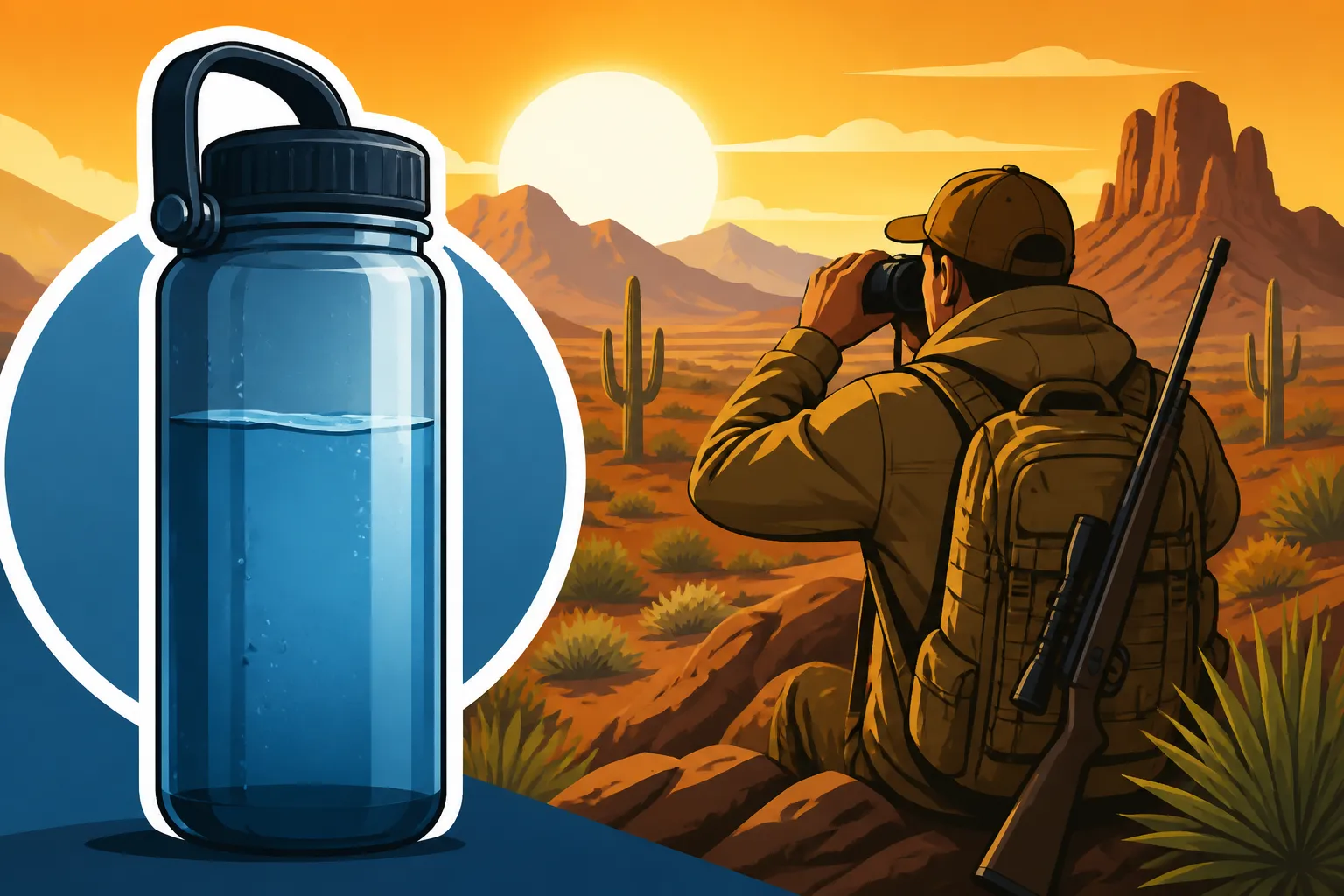
Venturing out into Arizona's vast and breathtaking wilderness for a day of hunting is an experience unlike any other, but it comes with a unique and often underestimated challenge: staying hydrated. I've seen countless hunters, myself included in my earlier days, underestimate just how quickly the arid climate, intense sun, and physical exertion can drain your body. This isn't just about feeling a little parched; it's about avoiding serious risks like heat exhaustion or heat stroke, which can quickly turn a dream hunt into a nightmare. This guide is here to walk you through exactly how much water you really need to carry on an Arizona day hunt and the best ways to manage it, ensuring you stay safe, comfortable, and focused on the hunt.
The Deceptive Thirst of Arizona's Wilderness
Arizona's landscapes are stunning, from the scorching Sonoran Desert to the high-elevation pine forests of the Mogollon Rim and the isolated "sky island" mountain ranges in the south. Each presents its own brand of beauty and its own set of challenges when it comes to hydration. What might seem like a manageable day trip can quickly become a struggle against the elements if you're not prepared.
Understanding the Unique Environmental Factors
It's easy to dismiss a "dry heat" as less threatening than humid conditions, but in many ways, it's more insidious. The low humidity in Arizona means your sweat evaporates almost instantly, taking crucial moisture from your body without you even realizing how much you're losing. This rapid evaporation fools your body's natural cooling mechanisms, often making you feel less sweaty than you actually are, masking the true extent of your fluid loss. Add to this the intense solar radiation, even on what feels like a mild day, and your body is working overtime to regulate its temperature.
Consider a typical early archery deer hunt in August or September. Temperatures can easily soar into the 90s or even 100s in the lower elevations. Even up on the Mogollon Rim or in the mountains, daytime temps can still hit the 80s, especially when you're hiking exposed ridges under a relentless sun. Combine that with climbing steep, rocky terrain in pursuit of a coues deer or elk, carrying a heavy pack, and pushing through thick brush, and your body becomes a furnace. Every step you take, every breath you exhale, every bead of sweat you don't see evaporate, contributes to a constant drain on your hydration levels. It's a cumulative effect that can catch even experienced hunters off guard if they aren't diligent.
Recognizing the Early Warning Signs of Dehydration
The tricky thing about dehydration is that by the time you feel truly thirsty, you're already behind. Your body has been trying to tell you it needs water for a while, but it often expresses it in subtle ways first. Don't wait until your mouth feels like sandpaper or your head starts throbbing. Early signs include fatigue, a slight headache, dizziness, or even irritability. You might notice your urine is darker than usual – a clear indicator that your kidneys are working harder to conserve water.
I remember a javelina hunt where a friend, usually meticulous about his water, started getting uncharacteristically short-tempered with the smallest things. He brushed it off as "just being tired," but I recognized the signs. We stopped, forced him to drink a liter with electrolytes, and found some shade for a solid 20-minute break. His mood completely shifted. Had we pushed on, it could have escalated to more serious symptoms like muscle cramps, nausea, or even confusion, which are red flags for heat exhaustion. Ignoring these signals is not just uncomfortable; it can be dangerous, impairing your judgment and physical ability when you need them most, especially if you're trying to Tracking Javelina Through Prickly Pear or navigate tricky terrain.
Pinpointing Your Personal Hydration Requirements
There's no single, magic number for how much water you need because everyone's body is different, and every hunt is different. However, we can establish solid baselines and then adjust based on a few key factors to ensure you're carrying enough.
Calculating Baseline Water Needs for Desert Hunting
As a general rule of thumb for moderate activity in temperate climates, you might hear recommendations of 1 liter of water every 2-3 hours. In Arizona's hunting conditions, you need to throw that number out the window. For a day hunt in the Arizona desert or high country, especially during warmer seasons like early archery, you should be aiming for a minimum of 1 liter per hour of activity. Yes, you read that right. If you plan to be out for an 8-hour day, you're looking at 8 liters of water. This might sound excessive, and it will certainly feel heavy in your pack, but trust me, it's a non-negotiable for safety and performance.
This baseline accounts for the constant evaporative loss, the energy expenditure of hiking, and the general dryness of the air. It's about proactive hydration, not just reactive. Think of it this way: water is arguably more important than ammunition or food for a day hunt. You can survive a day without eating, but you won't last long, or be effective, without adequate water. This is particularly true when you are pushing yourself physically, perhaps trying to How Close a Bowhunter Needs to Get on Coues on a strenuous stalk, or navigating the demanding terrain.
Adjusting for Terrain, Temperature, and Physical Exertion
Once you have your 1 liter per hour baseline, you need to be honest with yourself about the specific conditions of your hunt and your own body.
Temperature: This is perhaps the biggest factor.
- Cooler Temps (50s-60s): You might get away with slightly less, maybe 0.75-1 liter per hour, especially if you're largely sedentary while glassing.
- Moderate Temps (70s-80s): Stick firmly to 1 liter per hour, even consider adding a bit more if you're working hard.
- Hot Temps (90s+): You should be pushing 1.5 liters per hour, especially if you're in direct sun and moving consistently. On an August archery hunt, for example, temperatures can easily reach the triple digits. This isn't just uncomfortable; it's a critical danger zone where dehydration sets in rapidly.
Terrain and Exertion: Are you covering flat, easy ground, or are you tackling steep ascents and descents in a unit known for its ruggedness?
- Flat, Easy Hiking: You might be on the lower end of the per-hour recommendation.
- Steep, Rugged Climbing: Factor in at least an additional 0.25-0.5 liters per hour. Think about a tough climb up one of Arizona's sky islands; that kind of exertion means your body is burning fuel and expelling heat at an accelerated rate.
- Heavy Pack: If you're carrying a pack with camp gear, or even just a heavier day pack, your body works harder, increasing your water demands.
Individual Factors:
- Acclimation: Are you a flat-lander coming to Arizona's elevation? Your body will work harder just to breathe, increasing water loss. Give yourself a day or two to acclimate if possible.
- Fitness Level: While fitter individuals might feel less tired, their bodies still process fluids and expend energy, so don't assume fitness grants immunity to dehydration.
- Diet: A diet high in sodium can increase thirst, while some fruits and vegetables can contribute to hydration.
I often use a simple matrix like this to help gauge:
| Activity Level | Temperature Range | Water/Hour (Liters) | Example Scenario |
|---|---|---|---|
| Light (Glassing, Slow Walk) | 50s-70s | 0.75 – 1.0 | Early morning glassing for Coues Deer Are Arizona's Signature Whitetail |
| Moderate (Steady Hike, Light Pack) | 70s-80s | 1.0 – 1.25 | Mid-day hike on rolling hills |
| High (Steep Climb, Heavy Pack) | 80s-90s+ | 1.25 – 1.5+ | Strenuous elk hunt in mountainous terrain |
Remember, it's always better to carry too much than not enough. That extra liter might feel like a burden at the trailhead, but it can be a lifesaver miles deep in the desert.
Essential Gear for Efficient Water Management
Once you've calculated your water needs, the next step is figuring out how to comfortably and efficiently carry it. This isn't just about throwing a few bottles in your pack; it's about having a reliable system.
Choosing the Right Hydration System
For day hunts, you essentially have two primary choices: hydration bladders or water bottles. Many hunters use a combination of both for maximum flexibility and redundancy.
- Hydration Bladders (Reservoirs): These are fantastic for consistent, hands-free hydration. A 2-3 liter bladder is standard for a day pack, and many packs have dedicated sleeves for them. The ability to sip water frequently without stopping or reaching for a bottle is a huge advantage, encouraging more consistent intake. Look for durable, puncture-resistant bladders with wide openings for easy cleaning and filling. Brands like CamelBak, Osprey, and Platypus are reliable choices.
- Pros: Easy to drink from on the move, distributes weight well within a pack, higher capacity often.
- Cons: Can be difficult to see how much water is left, harder to refill in some situations, potential for leaks if not properly sealed or if punctured, harder to clean thoroughly.
- Water Bottles: Nalgenes (32-48 oz) or insulated stainless steel bottles (like Hydro Flask or Stanley) are great for carrying additional water. I often carry one or two Nalgenes in external side pockets of my pack, alongside a hydration bladder inside. This provides backup, and you can add electrolyte mixes to one bottle without contaminating your main bladder. Insulated bottles are a godsend for keeping water cool in the Arizona heat.
- Pros: Easy to see water levels, simple to refill, durable, easy to clean, insulated options keep water cold.
- Cons: Requires stopping to drink (if stored in pack), can be bulky, weight distribution less even.
I often recommend a 3-liter hydration bladder backed up by a 32-ounce Nalgene. This gives you roughly 4 liters (over a gallon) right off the bat. If you anticipate a hotter, longer, or more strenuous day, then adding another 32-ounce bottle or even a collapsible soft bottle for 1-2 extra liters is a smart move. When planning my route with mapping tools like GoHunt, I'll identify any potential water sources, even if they're unreliable, and consider where I might need to carry extra to bridge the gaps. This helps inform my water carrying strategy, especially when scouting an E-Scouting an Arizona Unit Before the Season.
Backup Water Sources and Filtration Solutions
While your primary water supply should always be what you carry from the start, a reliable water filter can be a crucial backup for emergency situations or if you're on a multi-day trip where resupply isn't an option. Arizona, even in its most arid regions, often has hidden springs, stock tanks, or seasonal creeks, especially in areas like the White Mountains or the Sky Islands.
- Portable Water Filters: Lightweight, compact filters like the Sawyer Squeeze, Katadyn BeFree, or Lifestraw are excellent choices. They can quickly convert questionable water sources (like a murky stock tank or a slow-running trickle) into potable drinking water.
- Important Note: A filter should never be your primary plan for a day hunt. Filters can clog, break, or simply not be able to filter highly contaminated water (like standing water with a lot of sediment or chemicals). Always carry enough clean water to get you through your planned trip, plus an emergency reserve. A filter is your absolute last resort when you've miscalculated or an unexpected situation arises.
- Water Purification Tablets/Drops: Iodine or chlorine dioxide tablets are another lightweight backup. They take longer to purify water than a filter (typically 30 minutes to 4 hours), but they kill viruses that some filters don't remove. They're good to have in conjunction with a filter or as a standalone, ultra-light emergency option.
When I'm hunting in the desert and plan to be far from any established water source, I always check my GoHunt maps for potential undeveloped water. Sometimes you'll see a small blue line indicating a wash or a spring. Knowing the location of these, even if they're dry most of the year, can be valuable intelligence. If I happen upon a stock tank that is legally accessible and filled with water, and I'm prepared with a filter, it can mean the difference between cutting a hunt short and being able to extend my time afield. However, always exercise caution when relying on natural water sources, as they can be contaminated or dry. Finding Water in Arizona's Dry Country is a crucial skill, but one that shouldn't replace carrying your own supply.
Smart Strategies for Staying Hydrated and Safe
Carrying enough water is only half the battle; knowing how to manage it and your body is equally important for a successful and safe hunt in Arizona.
Pre-Hydration and Electrolyte Best Practices
The process of staying hydrated for an Arizona hunt starts days before you even hit the trailhead. Think of your body like a sponge: you want it fully saturated before it starts working hard.
- Pre-Hydrate: In the 2-3 days leading up to your hunt, significantly increase your water intake. Don't wait until the morning of your hunt to chug a liter. Aim for consistent, ample hydration. This allows your body's cells to fully absorb and retain water, creating a reservoir that will serve you well once you start expending energy.
- Electrolytes: Water alone isn't always enough, especially in hot, dry conditions where you're sweating out essential salts and minerals. Electrolytes (sodium, potassium, magnesium, calcium) are crucial for your body's cellular function and for helping your body properly absorb and retain water.
- When to Use: I typically start adding electrolyte mixes to some of my water the day before and throughout the hunt itself, especially if temperatures are expected to be above 70 degrees or if I know I'll be exerting myself heavily. Brands like Liquid IV, DripDrop, or even simple sports drinks (diluted to reduce sugar) can make a huge difference.
- How to Use: Don't just chug an electrolyte drink; mix it into your water and sip it steadily. You want to replenish these salts gradually, not in one concentrated dose. I often alternate between plain water and water with electrolytes in my hydration bladder or separate bottles. This is particularly vital on those grueling early season hunts, where Heat Management on an Arizona Early Season Hunt becomes a primary concern.
I once spent a whole day Glassing Arizona's Sky Islands for Coues Deer and was surprised by how drained I felt despite drinking a lot of plain water. Turns out, I was losing so many electrolytes that my body wasn't able to effectively use the water I was taking in. Now, an electrolyte mix is as standard as my binoculars when I head out.
In-Field Water Conservation and Monitoring
Beyond carrying enough water and pre-hydrating, adopting smart practices during your hunt can significantly extend your effective hydration.
- Don't Ration, Drink Consistently: This is a huge one. Unless you've made a serious miscalculation and are truly running out of water with no known resupply, do not ration your water. Your body needs a consistent supply. Sip frequently, even if you don't feel acutely thirsty. Small, regular sips are more effective than chugging large amounts sporadically.
- Seek Shade: Whenever you stop for a break, even a quick one, get into the shade. The difference in radiant heat can be astounding. Five minutes in direct sun can feel like twice that in terms of heat load on your body compared to shade. This simple act drastically reduces your body's need to sweat to cool down. When taking a break to identify a new approach or to Reading Wind on a Sky Island Stalk, always make it under a tree or rock overhang.
- Dress Appropriately: Lightweight, breathable, moisture-wicking clothing in light colors is essential. It allows sweat to evaporate (even if you don't feel it) and reflects sunlight, keeping your core temperature lower. Avoid cotton, which absorbs sweat and stays wet, potentially leading to chafing and actually making you feel hotter once it dries.
- Monitor Your Urine: This is a simple, effective way to gauge your hydration level. Your urine should be light yellow or almost clear. If it's dark yellow, you're dehydrated and need to increase your fluid intake immediately.
- Plan Your Route: When using a tool like GoHunt or other mapping resources, consider potential shade points or areas known for cooler microclimates if possible. Plotting a course that utilizes canyons or north-facing slopes can sometimes offer relief from direct sun during the hottest parts of the day. Similarly, knowing where potential water sources exist can give you peace of mind, even if you don't plan to use them. For instance, knowing if a stock tank is available when you're Sitting Water for Javelina and Deer can be very helpful.
Ultimately, proper hydration is not just a suggestion for hunting in Arizona; it's a critical component of your safety plan. By understanding the demands of the environment, calculating your needs, choosing the right gear, and implementing smart hydration strategies, you can ensure your Arizona hunting adventure is memorable for all the right reasons.
Disclaimer
The information provided in this guide is for general informational purposes only and does not constitute professional medical advice. Always consult with a qualified healthcare professional before making any decisions about your health or hydration strategy, especially when undertaking strenuous physical activity in challenging environments. Hunting carries inherent risks, and personal safety is paramount.