Arizona Bear Season Structure
Hunting bear in Arizona can feel like navigating a maze blindfolded, especially with the unique challenges of harvest quotas and sudden unit closures that change everything mid-season. It's not like other big game hunts with fixed dates. This comprehensive guide is here to shed light on Arizona's bear season structure, detailing how these seasons operate, what you need to know about harvest limits, and how to stay legal and ethical while pursuing these incredible animals.
The Unpredictable Nature of Arizona Bear Seasons
Arizona's approach to bear hunting seasons stands out significantly from many other states. Instead of simply setting a start and end date for a particular weapon type in a unit, Arizona Game and Fish Department (AZGFD) uses a dynamic system primarily driven by harvest limits. This means that a season can be open one day and closed the next, often without much warning, which can be incredibly frustrating for hunters who have spent countless hours scouting and preparing.
The core reason for this structure is wildlife management. Bear populations are sensitive, and managing them effectively requires real-time adjustments to harvest numbers. Unlike deer or elk, which often have fixed tag numbers and season lengths, bear management often prioritizes preventing overharvest, especially of female bears, to maintain healthy populations. This translates into seasons that are less about a calendar date and more about a running tally.
Spring Bear Hunts
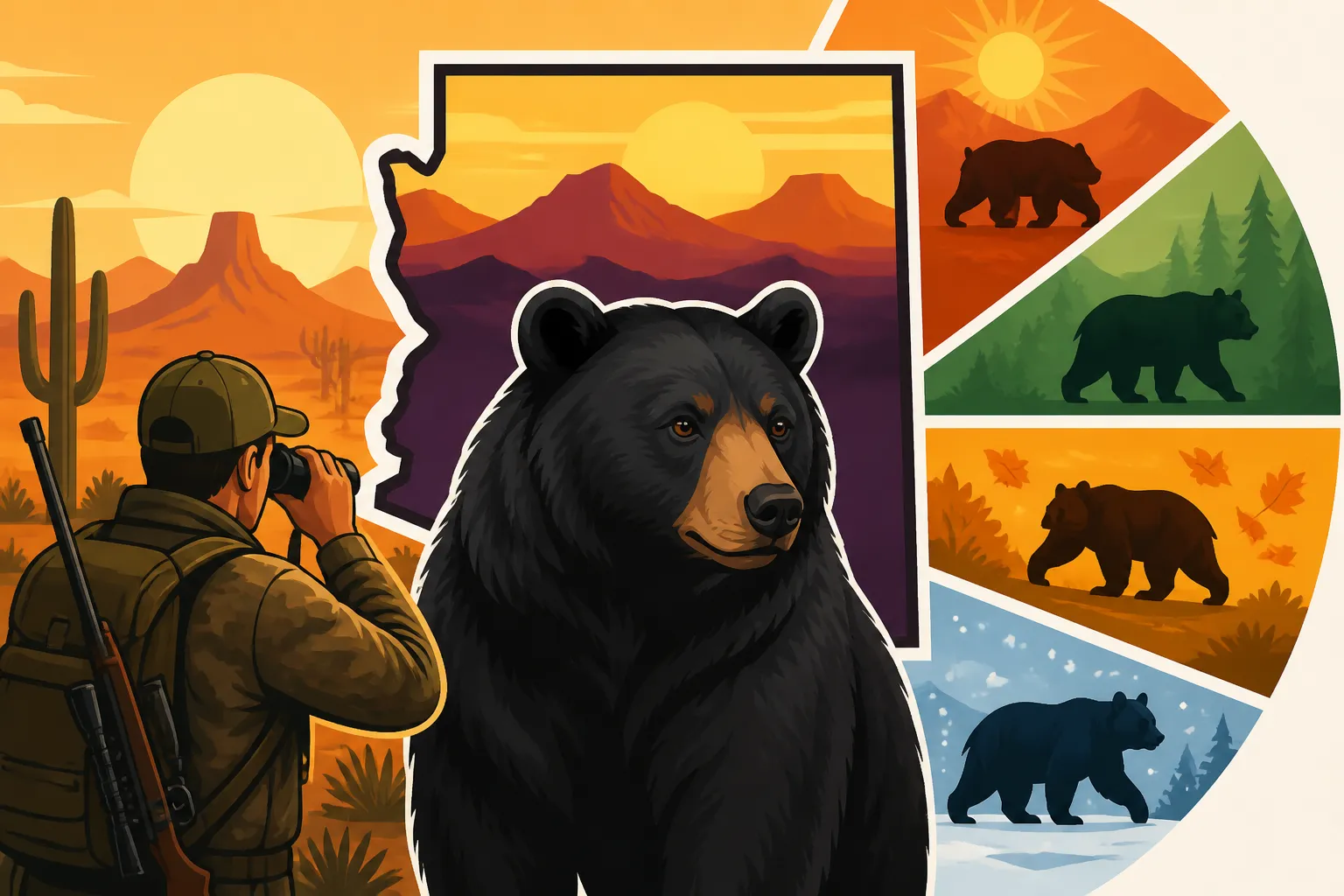
Spring bear season in Arizona is a cherished opportunity for many, offering a chance to get into the backcountry before the intense summer heat sets in. These hunts typically focus on specific periods, often from March into May, varying by unit. What makes spring bear particularly unique, and sometimes challenging, is the emphasis on ethical harvest and sex identification. Many spring hunts are structured as "male-only" or carry specific restrictions against harvesting a sow with cubs. This means hunters must be absolutely sure of their target's sex, which can be incredibly difficult in the field, especially when bears are just emerging from dens and their coats can be quite shaggy.
The mild temperatures can be a blessing for hunters, but they also bring bears out of hibernation, often in search of new green growth on south-facing slopes. These areas can be surprisingly accessible, but bears are still bears – they'll utilize thick cover for bedding and will often be found near reliable water sources. Hunters often focus on glassing vast landscapes, picking apart shaded pockets and canyons where bears might be feeding or traveling. It’s a hunt that demands patience, meticulous observation, and a solid understanding of bear behavior.
Fall Bear Hunts
As the desert transitions into autumn, fall bear seasons in Arizona open up a different set of challenges and opportunities. These seasons typically run from August or September through November or even into December, again, depending heavily on the unit and harvest limits. Fall hunts usually have broader parameters than spring hunts, often allowing for the harvest of either sex, though the critical "no sow with cubs" rule almost always remains in effect. The sheer length of the potential season, coupled with varying weapon types like archery, general rifle, and muzzleloader, means there's a lot more flexibility, but also more to keep track of.
Early fall hunts can be brutal due to the heat, especially in the lower elevations. Bears are often concentrated around reliable water sources like stock tanks and natural springs, making them key areas to scout. As the season progresses and temperatures drop, bears shift their focus to foraging for acorns, berries, and other mast crops in higher elevations, particularly in the oak and ponderosa pine forests of the Mogollon Rim and Arizona's Sky Islands. Understanding Heat Management on an Arizona Early Season Hunt becomes paramount, as does the ability to shift tactics as food sources change and bears move between different elevation bands.
Decoding Arizona's Bear Harvest Limits and Closures
This is where Arizona bear hunting truly separates itself from other big game opportunities. The seasons aren't just dates on a calendar; they are a fluid state, dictated by real-time harvest data. This system can be daunting, but understanding its mechanics is crucial for any aspiring bear hunter.
How Harvest Limits Operate
Each Game Management Unit (GMU) in Arizona is assigned specific harvest limits for bears. These limits are typically broken down by overall bear harvest and, critically, by female bear (sow) harvest. The AZGFD carefully monitors these numbers through mandatory reporting. For example, a unit might have an overall limit of 15 bears, with a sub-limit of 5 female bears. Once either of these limits is reached, the season for that unit or region closes immediately.
The female harvest limit is often the more restrictive and frequently triggers closures first. This is because the reproductive capacity of a bear population is directly tied to its female component. Protecting sows is a cornerstone of sustainable bear management. Hunters must be incredibly diligent about checking the AZGFD website or using a reliable hunting app like GoHunt to see if their chosen unit is still open, sometimes even on a daily basis. A good habit is to check every morning before heading out, because the status can change overnight. The frustration of arriving at your hunting spot only to find the unit closed is a shared experience among Arizona bear hunters.
The Impact of Mid-Season Closures
Mid-season closures are not just a possibility; they are an expectation when hunting bear in Arizona. Imagine spending days E-Scouting an Arizona Unit Before the Season, planning your trip, setting up camp, and then receiving the news that your unit has closed. It happens. This unpredictable nature means hunters need to be flexible and have backup plans. Some hunters will scout multiple units, knowing that if one closes, they might still have an opportunity in another.
The AZGFD does an admirable job of communicating these closures as quickly as possible, typically through their website and email alerts. However, cell service is often non-existent in prime bear country, which means hunters can be caught off guard. This is why having a satellite communication device or checking the status frequently when you do have service is not just a good idea, it's essential for a responsible hunter. This dynamic structure is why understanding How Arizona Closes a Bear Unit Mid-Season is so important.
Here's a simplified look at the typical structure of Arizona bear seasons, but remember, actual dates and limits vary widely by unit and year, so always check the current regulations!
| Season Type | Typical Dates (Approx.) | Weapon | Harvest Limits Notes |
|---|---|---|---|
| Spring Bear | Mid-March to Early May | Archery/Rifle | Often male-only; strict limits on total harvest and female harvest. Unit-specific. |
| Early Fall Bear | Mid-August to Mid-Sept. | Archery/Rifle | Often allows either sex; moderate limits on total and female harvest. Unit-specific. |
| Late Fall Bear | Late Sept. to Dec. | Archery/Rifle | Often allows either sex; moderate limits on total and female harvest. Unit-specific. |
Always consult the official AZGFD regulations for specific unit dates and current harvest thresholds.
Navigating Bear Hunting Regulations and Reporting
Arizona has stringent regulations for bear hunting, and knowing them inside and out is not just about staying legal; it's about being an ethical and responsible hunter. These regulations cover everything from proper identification to mandatory reporting, and understanding them is non-negotiable.
Mandatory Reporting Requirements
This is perhaps the single most critical regulation for Arizona bear hunters: if you harvest a bear, you must report it to the AZGFD within 48 hours of harvest. In many cases, it's even more immediate, with a requirement to call a specific number before leaving the unit. This immediate reporting is vital for the AZGFD to track harvest limits and announce unit closures in a timely manner. Failing to report a bear is a serious offense and can result in significant penalties. You'll need to provide details like the unit, date, and sex of the bear.
After reporting, you will be directed to present the bear's skull and hide for inspection and sealing by an AZGFD official within 10 days. This allows biologists to collect important data on bear health, age, and reproductive status. This is not a suggestion; it's a legal requirement designed to aid in scientific wildlife management. Make sure you understand Mandatory Reporting After an Arizona Harvest to avoid any issues.
Sex Identification and Ethical Harvest
As mentioned, correctly identifying the sex of a bear is paramount, especially during spring hunts or in units with specific female harvest limits. Harvesting a sow with cubs is strictly prohibited and is an immediate forfeiture of hunting privileges and severe fines. Bear cubs are highly dependent on their mother for survival, and removing the sow is often a death sentence for her offspring. Hunters must take every possible measure to ensure they are shooting a lone bear and, if possible, a male.
Judging sex in bears can be incredibly challenging. Males often have broader heads, smaller ears relative to their head size, and a more robust body build, but these are subtle differences that require experience and patience. Never take a shot if you are unsure of the bear's sex or if you suspect it might have cubs nearby. This commitment to ethical hunting is at the heart of Arizona's bear regulations, including Female Harvest Limits on Arizona Bears.
Understanding Other Important Regulations
Beyond harvest limits and reporting, there are numerous other regulations to be aware of. Baiting Rules That Apply in Arizona are very specific and often prohibit the use of bait for big game, including bear, on public lands. Trail Camera Rules on Arizona Public Land also govern how and where you can use trail cameras, which are commonly employed for scouting bears.
You also need to know the Arizona Legal Shooting Hours for Big Game, which typically run from 30 minutes before sunrise to 30 minutes after sunset. Staying within these hours is critical for both safety and legality. Always carry a copy of the current year's Arizona Hunt Regulations Booklet and review it thoroughly before your hunt. It's available online through the AZGFD website, and many hunters also use apps like GoHunt which often include digital versions or links to the most current regulations.
Strategies for a Successful Arizona Bear Hunt
Bear hunting in Arizona is a test of patience, persistence, and adaptability. Given the challenging terrain and the dynamic nature of the seasons, success often comes down to solid preparation and smart hunting tactics.
Pre-Season Scouting and Planning
Thorough scouting is the bedrock of any successful bear hunt. Start by researching units with healthy bear populations and good public land access. Online mapping tools, like the public land layers available through GoHunt, are invaluable for this. Look for areas with diverse terrain – thick timbered canyons, brushy slopes, and elevated ridges with good glassing opportunities. Bears will utilize all these habitats depending on the season and food availability. Identifying potential food sources, such as oak thickets for acorns in the fall or green-up areas in the spring, is critical.
In spring, focus your scouting on south-facing slopes where snow melts first and new vegetation emerges. In fall, pivot your attention to areas with mast crops. Also, pay close attention to Water Sources and Ethics in Arizona Desert Hunting. Bears, like all wildlife in Arizona's arid environment, are never far from water. Scouting stock tanks, springs, and riparian corridors can reveal fresh sign, like tracks and scat, indicating bear presence. Even if you can't physically scout every inch of your unit, leveraging satellite imagery and topographical maps can give you a significant advantage.
Effective Hunting Tactics
Once the season opens (and you've confirmed your unit is still open via the AZGFD website or a tool like GoHunt!), your tactics will depend heavily on the time of year and terrain.
- Glassing: This is arguably the most effective tactic for bear in Arizona. Find a high vantage point with expansive views and systematically pick apart the landscape with quality optics. A good spotting scope and binoculars are essential. Bears can appear surprisingly small in vast country, so look for anything out of place – a dark blob, a moving shadow, or a patch of fur against the background. Spend hours patiently glassing, especially during the early morning and late evening when bears are most active.
- Still Hunting/Stalking: Once a bear is spotted, the real work begins. Planning a careful approach that uses terrain and wind to your advantage is crucial. Bears have incredible senses of smell and hearing. Pay attention to thermals, which often rise in the morning and fall in the evening. Move slowly, deliberately, and quietly, pausing frequently to glass and listen.
- Waterhole Ambush: In arid parts of Arizona, especially during warmer periods of the fall season, bears will frequent water sources. Setting up a blind or finding natural cover near a remote stock tank or spring can be a productive strategy. Remember to follow all rules regarding Hunting Over a Stock Tank Legally and maintaining an ethical distance.
- Calling: While less common than for other species, some hunters find success with bear calls, often mimicking cub distress sounds to attract curious sows (though this risks attracting a sow with cubs, which is illegal to harvest) or territorial grunts from boars. This is a specialized tactic and should be used with extreme caution and a full understanding of ethical implications and regulations.
Post-Harvest Protocol and Meat Care
If you are fortunate enough to harvest a bear, the work isn't over. Beyond the mandatory reporting, proper field dressing and meat care are critical, especially in Arizona's often warm environment. Bears have a thick layer of fat, and their meat can spoil quickly if not cooled properly. Immediately gut and skin the bear. Getting the hide off and the body cavity cooled down as fast as possible is crucial. If you're deep in the backcountry, you'll need a plan for packing out the meat and hide. This might mean making multiple trips or using a game cart or pack animals. Refer to resources like Field Dressing in Desert Heat and Getting Meat Cooled on an Early Season Hunt to prepare yourself. Remember, ethical hunting extends beyond the shot to responsible handling and utilization of the animal.
Disclaimer
Please remember that hunting regulations, season dates, and harvest limits are subject to change. Always consult the most current Arizona Game and Fish Department regulations before planning or undertaking any hunting trip. This guide provides general information and should not be considered a substitute for official legal documentation.