Coues Deer in the Southeastern Sky Islands
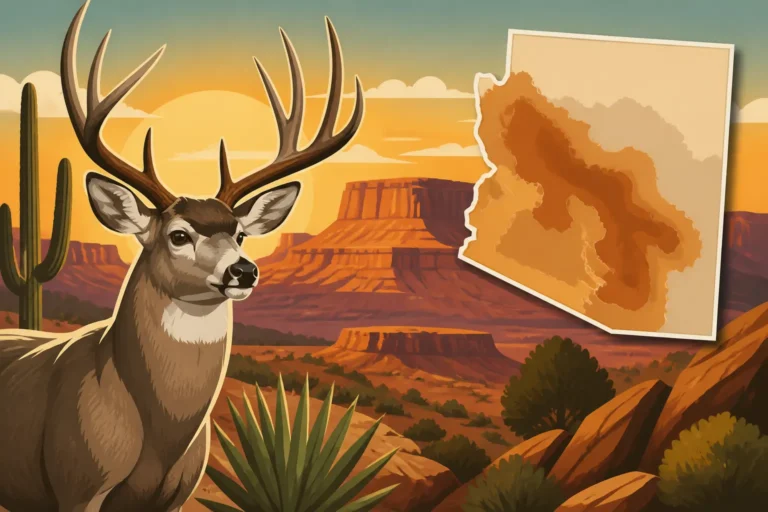
Finding Coues deer can feel like searching for a phantom in Arizona's vast and rugged landscapes. These elusive "gray ghosts" are masters of their mountainous domains, making them a true challenge for any hunter. This comprehensive guide will peel back the layers of frustration and dive deep into how to locate, understand, and successfully hunt Coues deer, specifically focusing on their unique habitat in the southeastern Sky Islands.
Understanding the Sky Island Ecosystem for Coues Deer
The southeastern corner of Arizona is a world unto itself, a mosaic of diverse habitats that seem almost out of place in the desert state. This is the realm of the Sky Islands, a series of isolated mountain ranges that rise dramatically from the Sonoran Desert floor, creating unique ecological oases.
Defining the Sky Island Phenomenon
Imagine vast, arid desert stretching for miles, then suddenly, towering mountain ranges pierce the sky, clad in pine forests, oak woodlands, and lush canyons. These are Arizona's Sky Islands, like the Chiricahua Mountains, Huachuca Mountains, Santa Rita Mountains, and the Galiuro Mountains. They are, quite literally, islands of temperate and even boreal ecosystems surrounded by an "ocean" of desert. As you climb in elevation, the climate shifts dramatically, moving through saguaro-studded desert scrub, then grasslands, then oak woodlands, and finally, pine forests at the highest peaks. This vertical zonation creates incredibly diverse habitats, offering everything from arid-adapted plants to those thriving in cooler, moister conditions. For a hunter, understanding these transitions is paramount, as different vegetation zones hold different wildlife, often within a short hiking distance. The complexity is exhilarating but also demanding, as weather can change drastically from base to summit in a single day.
Why Coues Deer Thrive in These Habitats
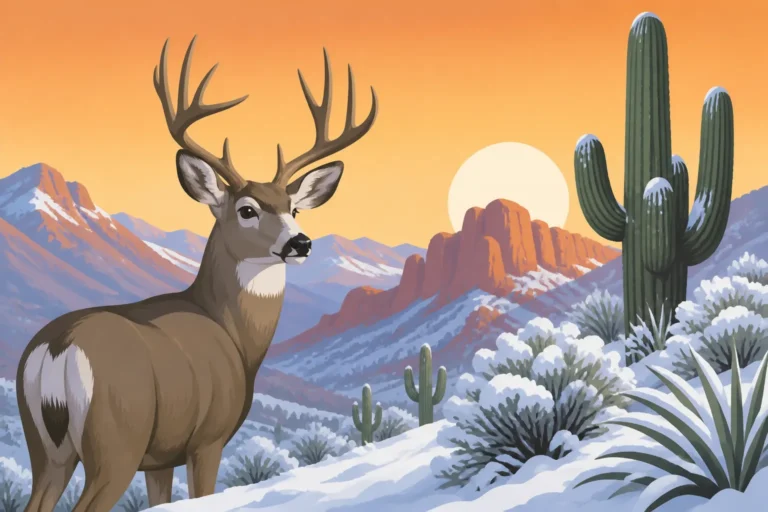
Coues deer, a subspecies of the white-tailed deer, are perfectly adapted to this Sky Island environment. Their smaller stature and gray-brown coat make them incredibly difficult to spot against the granite and oak brush, earning them the nickname "gray ghost." They are masters of concealment, able to vanish into what seems like sparse cover. The varied elevation provides crucial thermal cover, allowing them to move to cooler, shaded slopes during the heat of the day or sunnier, warmer slopes in winter. Food sources are abundant, from the acorns of the diverse oak species to various forbs and browse plants that flourish in the moister mountain environments. Water, though sometimes scarce in the desert lowlands, is often more readily available in the Sky Islands through natural springs, seeps, and even man-made stock tanks. The broken, rugged terrain of these mountains, with their steep canyons, rocky outcrops, and dense brush, provides an endless labyrinth of escape routes and bedding areas, making them incredibly secure from predators, including human hunters. Their small size and agility allow them to navigate this steep, rocky country with ease, often leaving a larger mule deer in the dust.
Identifying Key Coues Deer Habitat Within the Sky Islands
Within these sprawling mountain ranges, Coues deer aren't just everywhere. They have specific preferences that savvy hunters learn to recognize. Pinpointing these prime habitats is the first step to successful hunting.
Oak Woodlands and Browse Lines
The transition zone between the desert scrub and the higher pine forests—the oak woodlands—is classic Coues country. Look for areas dominated by various oak species, such as Emory oak, Arizona white oak, and Mexican blue oak. These trees provide not only critical cover but also a primary food source: acorns. Coues deer will spend significant time browsing on the leaves and twigs of these oaks and other shrubs like mountain mahogany, ceanothus, and cliffrose. When you're glassing, pay close attention to the "browse line" – the height at which deer have been consistently feeding on vegetation. This indicates recent or active use. I've spent countless hours picking apart hillsides with my spotting scope, specifically looking for that subtle difference in vegetation texture or color that signals a heavy browse area. Sometimes, the only thing that gives them away is a flick of an ear in the shadow of an oak tree, or a flash of white tail as they bound through the thick stuff.
North-Facing Slopes and Canyon Bottoms
For Coues deer, especially during warmer seasons or times of day, north-facing slopes are gold. These slopes receive less direct sunlight, retaining more moisture and thus supporting denser, lusher vegetation, and offering crucial shade. This combination makes them ideal bedding areas. Similarly, the bottoms of canyons and drainages provide cooler temperatures, often hold more water, and offer excellent cover. Deer will frequently move into these cooler, shaded areas to bed down during the midday heat, especially in the early archery seasons in August. Understanding how to Play Thermals on a Canyon Stalk becomes incredibly important here, as the wind currents will shift from uphill in the morning to downhill in the evening, carrying your scent directly to your quarry if you're not careful. These locations are also natural travel corridors, as deer use the protected bottoms to move between feeding areas, water, and bedding. Don't overlook the dense growth along these ephemeral waterways; it's often where deer feel most secure.
Water Sources and Travel Corridors
Water is life in the desert, and even in the relatively wetter Sky Islands, knowing the location of reliable water sources is a huge advantage. Natural springs, seeps, and man-made stock tanks or guzzlers concentrate deer activity, particularly during dry periods. While Arizona hunting regulations do not permit hunting directly over water for most species, these areas are crucial for patterning deer movement. Identify the trails leading to and from these water sources. These often serve as primary travel corridors, connecting bedding areas to feeding grounds. A great tool for finding these crucial spots is using e-scouting platforms like GoHunt Maps, where you can often identify springs, tanks, and potential travel routes before you even step foot in the unit. Observing these trails for fresh tracks and droppings will give you a real-time understanding of recent deer activity. Remember, the fresher the sign, the closer you are to finding your "gray ghost."
The Art of Glassing for Coues Deer in the Sky Islands
Hunting Coues deer in the Sky Islands is predominantly a glassing game. Unlike whitetail hunting in denser forests, you're not still-hunting through thick timber. Here, patience and exceptional optics are your best friends.
Optimal Glassing Locations and Techniques
Success hinges on finding high vantage points that offer expansive views of multiple slopes, ridges, and canyon systems. Think of yourself as a hawk, surveying the landscape. Once you've found a suitable spot, setting up a sturdy tripod with a quality spotting scope and binoculars is non-negotiable. Spend minutes, not seconds, meticulously picking apart the terrain. Many seasoned Coues hunters swear by The Grid Glassing Method, Step by Step, systematically scanning small sections of a hillside, overlapping your view, and then moving to the next. It’s painstakingly slow, but it works. You're not looking for a whole deer; you're looking for a flicker of an ear, a patch of hide, a glint of antler, or the dark shadow that looks "wrong." Patience is the ultimate virtue here; I've personally glassed the same hillside for hours only to have a buck magically appear from a shadow I swore I had scrutinized a dozen times. Some of the best glassing opportunities in the Sky Islands are found on the higher peaks or along prominent ridge lines, giving you a commanding view of the oak-studded slopes below. Remember, Optics Power for Arizona's Long Desert Sightlines is key, as you'll often be looking across vast distances.
Reading Thermals and Wind Patterns
Understanding the invisible forces of thermals and wind is as crucial as understanding the terrain itself when pursuing Coues deer. Thermals are air currents driven by temperature changes: as the sun heats the ground, air rises (updrafts); as temperatures cool, air falls (downdrafts). In the mountains, this means that in the mornings, thermals generally pull air (and your scent) uphill. As the day progresses and the sun moves higher, heating slopes more intensely, the thermals might shift. By late afternoon and evening, as the sun begins to set and slopes cool, thermals reverse, pulling air (and your scent) downhill. Ignoring these shifts is a surefire way to spook deer. Always try to approach from downwind, or at least crosswind, keeping your scent from reaching the deer's nose. This often means planning circuitous routes, adding significant time to your stalk, but it's time well spent. A good practice is to carry a wind checker, like a small bottle of unscented powder, and use it frequently to confirm the wind direction, especially before making any critical movements. This skill is critical, and knowing how to adjust your approach based on Playing Thermals on a Canyon Stalk can make or break your hunt.
Interpreting Deer Behavior at a Distance
Once you've spotted a "gray ghost" through your glass, the real challenge begins: interpreting its behavior to formulate a successful stalk. Are they feeding, bedded, or moving? A deer feeding will often lower its head for prolonged periods, move slowly, and periodically lift its head to scan. A bedded deer will be much harder to spot, often just revealing a patch of hide, an ear, or a tine. They might occasionally stand, stretch, and then re-bed. Deer on the move will often be seen walking with purpose, covering ground between bedding and feeding areas, or heading to water. Pay attention to how many deer are present, their sex and age, and their general direction of travel. This observation phase, often lasting hours, provides invaluable information. When a buck is bedded, notice the exact angle of its body relative to the wind, its escape routes, and any immediate cover. This initial interpretation directly informs your stalking plan. Knowing how to discern the subtle cues for Judging an Arizona Coues Buck at Distance is also vital here, helping you decide if this is the deer you want to pursue. Remember, Why Coues Deer Reward Patience Over Movement is a mantra for a reason in this country.
| Habitat Element | Key Characteristics | Coues Deer Use | Hunter Strategy |
|---|---|---|---|
| Oak Woodlands | Dense canopy, varied oak species, rocky terrain, often mid-elevation. | Primary feeding (acorns, browse), bedding, escape cover. | Focus glassing on edges, browse lines, and shadowed draws within. |
| North-Facing Slopes | Cooler, moister, denser vegetation, less direct sun exposure. | Midday bedding, thermal cover, feeding in hot weather. | Prioritize glassing during midday; approach with caution due to scent. |
| Canyon Bottoms | Protected, often holds water, dense vegetation, natural travel corridors. | Water access, bedding, protected movement between areas. | Scan heavily for movement; check for fresh sign near water sources. |
| Ridgelines/Vantage Points | Exposed, high elevation, panoramic views. | Observation, travel (less common for bedding). | Optimal glassing positions; use as staging areas for stalks. |
| Springs/Guzzlers | Specific water points, often with lush vegetation nearby. | Crucial water source, especially in dry periods; high traffic. | Scout for trails leading to/from; observe from a distance. |
Scouting and Planning Your Sky Island Coues Hunt
Preparation is everything, and for Coues deer in the Sky Islands, that means a significant investment in scouting, both from your armchair and on the ground.
Leveraging E-Scouting Tools
In today's hunting world, digital tools are indispensable, especially for navigating complex terrain like the Sky Islands. Platforms like GoHunt Maps, onX Hunt, and Google Earth allow you to meticulously scout a unit from the comfort of your home. You can identify potential access points, prominent ridges for glassing, likely bedding areas (north-facing slopes, dense canyons), and crucial water sources. I spend hours looking for the subtle nuances of topography, marking waypoints for everything from potential glassing knobs to saddle crossings that deer might use. Look for changes in vegetation density, indicating different habitat types, and map out your planned routes, considering elevation changes and potential obstacles. Using these layers, you can effectively perform E-Scouting an Arizona Unit Before the Season, allowing you to arrive in your unit with a well-researched plan, rather than spending precious hunting days blindly searching. This significantly cuts down on guesswork and allows you to focus on the actual hunting.
On-the-Ground Reconnaissance
While e-scouting is powerful, there's no substitute for getting boots on the ground. Preseason scouting trips, if possible, are invaluable. This is where you verify your e-scouting findings, identify fresh deer sign (tracks, scat, rubs on small oaks), and get a true feel for the terrain. Pay attention to game trails, especially those leading to and from water or between different habitat types. These trails will give you insight into deer movement patterns. I always hike into potential glassing spots to understand the approach, and to see what they really look like, verifying the accuracy of maps. Check water sources to see if they're active. This firsthand knowledge can reveal nuances that no map can, such as thick stands of brush that create perfect bedding cover, or hidden seeps that become magnets for deer. This type of detailed Scouting an Arizona Unit Before the February Deadline can be the difference between a successful hunt and a frustrating one. You'll also identify potential stalking routes, noting areas of noisy rock or dense vegetation that could hinder a quiet approach.
Gear Essentials for a Sky Island Hunt
Hunting Coues deer in the Sky Islands demands specific gear to ensure comfort, safety, and success. Your optics setup is paramount: high-quality 10x binoculars, a powerful spotting scope (20-60x or 15-45x), and a sturdy tripod are non-negotiable. Without them, you simply won't find these deer. Hydration is another critical factor in Arizona's often-arid environment; carry plenty of water, especially during early seasons, and consider a water filter or purification tablets. Layered clothing is essential because temperatures can swing dramatically from cold mornings on a ridge to hot afternoons in a canyon. Think moisture-wicking base layers, insulating mid-layers, and a wind/waterproof outer shell. Your boots are arguably your most important piece of clothing: choose comfortable, sturdy boots with excellent ankle support and aggressive tread, as you'll be navigating steep, rocky, and often loose terrain for many miles. This is not the place for flimsy footwear; knowing how to pick Choosing Boots for Rocky Desert Ground can prevent blisters and injuries. A comfortable, well-fitting backpack to carry all your essentials for long days afield is also crucial. Don't forget navigation tools (GPS, downloaded maps on your phone), a headlamp, and a first-aid kit.
Stalking Strategies for the "Gray Ghost"
Once you've located a Coues deer through your glass, the true test of your hunting prowess begins: the stalk. This is where patience, stealth, and a deep understanding of the terrain come into play.
Closing the Distance on Bedded Deer
Stalking a bedded Coues deer is an exercise in extreme patience and precision. These deer often bed in areas that give them a commanding view of their surroundings, meaning they're usually watching their backtrail and downwind. Your approach must be painstakingly slow, using every piece of terrain for cover. Think in terms of inches, not yards. Utilize washes, draws, ridges, and even individual saguaros or large rocks to break up your silhouette. Move only when the deer's head is down or obscured. Pay constant attention to the wind, using a wind checker frequently. A sudden shift in wind can blow your cover instantly. This methodical approach is about minimizing noise and movement. If you find yourself in a tricky spot with no cover, wait. Wait for cloud cover, for the deer to shift, or for a gust of wind to mask your movement. Remember, the goal is to get within an ethical shooting distance, which for rifle hunters might be 200-300 yards, and for bowhunters, often 40 yards or less. Knowing How Close a Bowhunter Needs to Get on Coues significantly influences your stalk strategy. Successfully Using Washes and Draws to Close Distance effectively becomes an art form.
Handling the Unexpected in Rugged Terrain
The Sky Islands are wild and unpredictable. Stalks often involve navigating loose, noisy rock, dense patches of thorny brush, or sudden changes in elevation. Expect the unexpected. A sudden updraft might carry your scent, or a rogue rock might clatter loudly underfoot. When this happens, freeze. Assess the deer's reaction. Did it hear you? Is it looking in your direction? Sometimes, a deer might stand up, look around, and then re-bed, giving you a second chance. Other times, it's game over, and you'll have to back out and try another day. Being prepared for these moments means moving slowly enough that you can stop instantly. It also means mentally rehearsing different scenarios and having contingency plans. Sometimes, the "two steps forward, one step back" approach is literal. Don't be afraid to back out and restart your stalk if the conditions become unfavorable. Pushing too hard almost always results in a spooked deer. It takes immense mental fortitude to know when to retreat, but it's often the smartest move for future success.
Shot Placement and Ethical Considerations
Reaching ethical shooting range is only half the battle; making a clean, ethical shot is the ultimate goal. Know your weapon, know its capabilities, and, most importantly, know your own limitations. Practice shooting from various field positions that mimic what you might encounter in the mountains – kneeling, prone, or braced against a tree or rock. For Coues deer, their smaller vitals mean precision is even more critical. Aim for the heart-lung area, typically just behind the front shoulder. After the shot, observe the deer's reaction closely. Did it drop? Did it run? Note the exact location where you last saw it. In this rugged terrain, tracking can be incredibly difficult. Always assume a hit, and begin your recovery process immediately. Following a blood trail through dense oak brush or across rocky ground demands patience and sharp eyes. Ethical hunting also means being prepared for field dressing and meat care, especially in warmer conditions common in the early seasons. Completing a course like The Ethically Hunting Arizona Course Earns a Permanent Point not only helps with drawing tags but also reinforces crucial principles of responsible hunting. Every effort must be made to recover an animal and ensure no meat is wasted.
Disclaimer
Please be aware that hunting regulations, seasons, and requirements can change. Always consult the most current Arizona Game and Fish Department regulations before planning or undertaking any hunting activity. This guide is for informational purposes only and does not supersede official state regulations.