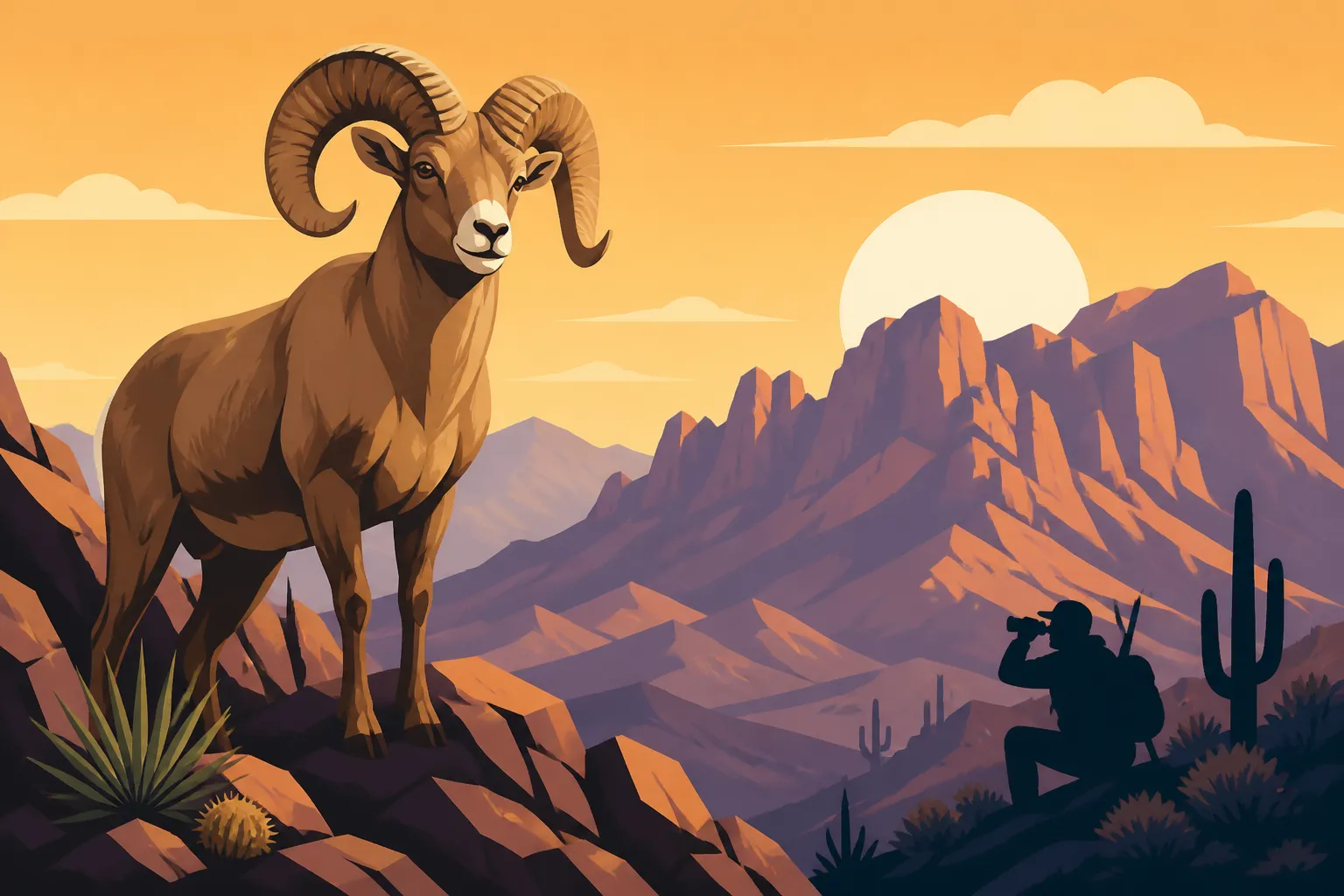
Desert Bighorn in Arizona’s Mountain Ranges
Hunting desert bighorn sheep in Arizona is, for many, the pinnacle of North American big game hunting, a true quest that often feels out of reach due to the incredible difficulty in drawing a tag. The sheer ruggedness of their habitat and their elusive nature present challenges that test even the most seasoned hunters. This guide will delve deep into the world of Arizona's desert bighorn, offering a comprehensive look at these magnificent animals, their remote homes, the near-mythical tags, and what it truly takes to pursue them.
Understanding Arizona's Desert Bighorn
Arizona is blessed with two subspecies of bighorn sheep: the desert bighorn and the Rocky Mountain bighorn. While both are incredibly special animals, it's the desert bighorn that truly embodies the spirit of the state's rugged, sun-baked landscapes. These animals are a symbol of resilience, thriving in environments that would break most other large mammals.
The Desert Bighorn: An Arizona Icon
The desert bighorn (Ovis canadensis nelsoni) is not just another game animal; it's an emblem of the Southwest. Imagine a creature that can navigate sheer cliff faces with astonishing grace, endure scorching temperatures with minimal water, and blend seamlessly into a backdrop of unforgiving rock and cactus. That's the desert bighorn. Their very presence in these harsh environments speaks volumes about their incredible adaptations and survival instincts. For hunters, drawing a desert bighorn tag isn't just about the trophy; it's about the immersive experience in some of the most remote and wildest parts of Arizona, a true test of mental and physical fortitude.
Distinguishing Desert from Rocky Mountain Bighorn
While both bighorn subspecies share the iconic curled horns and muscular build, there are distinct differences that set them apart. The Why Arizona Treats the Two Bighorns Separately is a testament to these distinctions. Desert bighorns are generally smaller in body size and lighter in color than their Rocky Mountain counterparts. Their coats are typically a pale tan or grayish-brown, providing excellent camouflage against the desert's sun-bleached rocks and sandy washes. Rocky Mountain bighorns, found in higher elevations and more northern ranges like along Arizona's Salt River, tend to be darker brown with thicker coats, built to withstand colder, snowier conditions. The desert bighorn's lighter build and coloration are crucial adaptations for heat dissipation in their extreme, arid environments. Understanding these differences is not only important for biological classification but also for appreciating how each subspecies has evolved to master its unique habitat.
Physical Traits and Adaptations for Arid Lands
The desert bighorn's physical attributes are nothing short of remarkable, honed over millennia to thrive in some of the most extreme desert environments. Their hooves, for instance, are perfectly designed for gripping slippery rock and scaling steep terrain, acting like natural climbing shoes with soft, pliable pads surrounded by sharp, rigid outer edges. This allows them to navigate vertical cliffs with astonishing agility. Their ability to go extended periods without water is another incredible adaptation. They can obtain much of the moisture they need from vegetation, especially succulent plants, and can tolerate a significant amount of dehydration, rehydrating rapidly when water becomes available. This metabolic efficiency and physiological resilience are key to their survival in a land where water sources are often scarce and widely dispersed. Their keen eyesight is also paramount, allowing them to spot predators or potential threats, as well as crucial water sources, from vast distances across open country.
Where Arizona's Desert Bighorns Roam
Arizona's desert bighorns are creatures of the crags and canyons, preferring the most rugged and inaccessible mountain ranges that punctuate the Sonoran Desert. Their habitat choices are driven by the need for escape terrain, vantage points, and proximity to water.
Key Mountain Ranges and Habitat
Arizona boasts numerous mountain ranges that provide ideal habitat for desert bighorns. Many of these ranges are true sky islands in their own right, isolated peaks rising dramatically from the desert floor. Iconic ranges like the Kofa Mountains, New Water Mountains, and the Yuma Proving Ground areas in southwestern Arizona are renowned strongholds. Further east, populations can be found in the Superstition Mountains, Mazatzal Mountains, and areas around Lake Mead and the Colorado River corridor. These ranges typically feature steep, rocky slopes, deep canyons, and sparse vegetation, offering the perfect combination of security and forage. Bighorns thrive in these areas because the broken terrain allows them to quickly escape predators like mountain lions and coyotes, while also providing elevated positions from which they can survey their surroundings. When you're scouting for bighorn, you're not just looking at a map; you're imagining where a creature built for vertical movement would feel safe and find sustenance.
Water Sources: A Lifeline in the Desert
In the desert, water is life, and this holds especially true for desert bighorn sheep. While they are incredibly adapted to conserve moisture, they still require regular access to water sources, especially during the brutally hot summer months. Natural springs, seeps, and potholes that collect rainwater are vital. Wildlife guzzlers, often installed and maintained by the Arizona Game and Fish Department, also play a critical role in supporting populations, particularly in areas where natural water is limited. Hunters often focus their efforts around these known water sources, especially during early season hunts when temperatures soar. Observing these water points from a distance, or using remote cameras where legal, can reveal patterns of bighorn movement. However, ethical considerations are paramount; care must be taken not to disturb these critical resources or the animals that depend on them. You can find more details about Water Sources and Ethics in Arizona Desert Hunting in another helpful guide.
Population Strongholds and Historical Ranges
Historically, desert bighorns were more widespread across Arizona, but factors like unregulated hunting, habitat loss, and disease significantly reduced their numbers. Today, thanks to dedicated conservation efforts, populations have rebounded in many of their traditional strongholds. The Kofa National Wildlife Refuge is perhaps one of the most famous areas, established in part to protect the desert bighorn. Other significant populations persist in various wilderness areas and remote mountain ranges across the southwestern and central parts of the state. The Arizona Game and Fish Department (AZGFD) continuously monitors these populations, conducting aerial surveys and health assessments to ensure their long-term viability. Understanding these population strongholds is key for anyone researching potential hunt units or simply appreciating the success of conservation in bringing these magnificent animals back from the brink.
The Elusive Nature of Bighorn Hunting Tags
If drawing a premier elk tag in Arizona is tough, securing a desert bighorn tag is on another level entirely. These tags are among the rarest and most coveted in the hunting world, making the application process a rite of passage in itself.
Arizona Desert Bighorn Draw Odds: The Ultimate Challenge
The phrase "once-in-a-lifetime" often applies to bighorn sheep tags, and in Arizona, it's a stark reality for many. The Arizona Desert Bighorn Draw Odds are famously low, often less than 1% for residents, and even lower for nonresidents due to the state's 10% nonresident cap. Only a handful of tags are issued each year for very specific units, making the competition fierce. Hunters accumulate bonus points year after year, hoping that their persistence will eventually pay off. It's not uncommon for hunters to apply for 20, 30, or even 40 years before finally drawing a tag. This extreme rarity is what elevates a bighorn hunt beyond just a trip; it becomes a culmination of decades of dedication and dreams. It's a reminder that some of the most precious experiences are those that demand the greatest patience and perseverance.
Navigating the Application Process
Applying for an Arizona bighorn tag requires careful attention to detail and a thorough understanding of the Arizona Game and Fish Department's draw system. The application deadline for deer, sheep, and bison typically falls in June, so it's crucial to mark your calendar and not miss it. You'll need an Arizona hunting license first, and then you can apply for your desired hunt number. Many applicants use tools from services like GoHunt to research past draw odds, unit success rates, and optimal application strategies. These platforms can provide invaluable insights into how points accumulate and which units might offer a slightly better chance, though "better" is a relative term when odds are so minuscule. It's a process of hope, strategy, and consistent participation, ensuring you don't lose out on those precious bonus points. Remember, even if you don't draw a bighorn, you can still apply for a point-only option to keep building towards that distant dream.
Understanding Ram Curl Requirements Arizona Enforces
When you finally draw that coveted bighorn tag, understanding the legal ram curl requirements is absolutely critical. Arizona has specific regulations regarding what constitutes a legal ram, primarily based on horn size and development. Generally, a legal ram must be at least 3/4 curl or better. This means the tip of the horn must extend forward beyond a line drawn from the rear base of the horn to the eye. Some units might have additional criteria, so always consult the latest Arizona hunting regulations booklet for your specific hunt unit and year. Field judging a ram at a distance in rugged terrain can be incredibly challenging, and mistakes can be costly. This is where extensive scouting, high-quality optics, and often, the assistance of an experienced guide or seasoned hunting partner become invaluable. Taking The Ethically Hunting Arizona Course Explained can also help sharpen your understanding of responsible hunting practices, which is particularly vital for such a prized animal.
Strategies for a Successful Desert Bighorn Hunt
Once the impossible happens and a desert bighorn tag is in hand, the real work begins. Hunting these animals in their native habitat is a physically demanding and mentally taxing endeavor that requires meticulous planning and execution.
Intensive Scouting and Glassing Techniques
Hunting desert bighorn is first and foremost a glassing game. You simply cannot "still hunt" or "walk hunt" these animals effectively in their vast, rugged landscapes. Days, and often weeks, of intensive preseason scouting are not just recommended, they're essential. This means covering countless miles with your optics, meticulously dissecting every rock face, every canyon, and every sparse patch of brush. High-quality binoculars (10x-15x) and a powerful spotting scope (20x-60x or higher) on a sturdy tripod are non-negotiable. Many hunters utilize grid glassing methods, systematically sweeping areas from high vantage points, pausing to let their eyes adjust, and looking for any tell-tale sign – a patch of lighter wool, the glint of a horn, or subtle movement. E-scouting tools like GoHunt's mapping features can help identify potential bedding areas, escape terrain, and historical ram sightings, giving you a crucial head start before you even set foot in the unit. The more time you spend behind glass, the higher your chances of locating a legal ram.
Executing the Stalk in Unforgiving Terrain
Once a ram is spotted, the real challenge of the stalk begins. Desert bighorn sheep inhabit some of the most unforgiving terrain imaginable, characterized by loose scree, steep climbs, thorny vegetation, and extreme temperatures. A successful stalk requires incredible physical fitness, mental toughness, and a deep understanding of the wind, thermals, and topography. Often, a ram will be bedded in a seemingly unapproachable position, demanding a circuitous route that might involve miles of climbing and descending through treacherous conditions. Playing the thermals on a canyon stalk, especially in the afternoon when cool air descends, can be critical to remaining undetected. Hunters must be prepared for multiple failed stalks, learning from each attempt and adapting their approach. Patience is paramount; rushing a stalk in bighorn country almost guarantees failure. Knowing Terrain That Hides an Approach in Desert Country is a skill honed over many grueling hours.
Essential Gear for Desert Bighorn Hunting
Given the extreme nature of a desert bighorn hunt, your gear choices are paramount to success and safety. Beyond top-tier optics, a lightweight yet durable rifle chambered in a flat-shooting caliber is crucial, as shots can often be long and across open canyons. Given Arizona's liberal muzzleloader regulations, Muzzleloader Sight Systems With No Restrictions might also be an option for some hunters who secure a muzzleloader-specific tag, but rifles are most common. A reliable rangefinder is non-negotiable for accurate shot placement. Hydration is another critical factor; water filters, purification tablets, and a substantial carrying capacity for water (at least 4-6 liters per person per day, or more in extreme heat) are essential. Comfortable, high-ankle hiking boots with excellent grip are a must for navigating steep, rocky terrain. Lastly, a sturdy pack capable of carrying essential gear, water, and eventually, meat and cape, is vital. Don't forget an emergency satellite communication device, as cell service is nonexistent in much of bighorn country.
Table: Comparison of Arizona Bighorn Species & Key Hunt Metrics
| Feature | Desert Bighorn (Ovis canadensis nelsoni) | Rocky Mountain Bighorn (Ovis canadensis canadensis) |
|---|---|---|
| Primary Habitat | Arid, rugged mountain ranges of Sonoran Desert | Higher elevation mountains, along the Salt River corridor |
| Typical Coloration | Pale tan to grayish-brown | Darker brown with thicker coat |
| Average Size (Ram) | Smaller body size, generally 150-200 lbs | Larger body size, generally 200-300 lbs |
| Draw Odds (Avg.) | Extremely low (often <1% for residents) | Very low, but slightly higher than Desert Bighorn in some hunts |
| Physical Challenge | Very high: extreme heat, vertical desert terrain | High: high elevation, often cooler, still rugged |
| Key Hunt Strategy | Extensive long-range glassing, water sources | Glassing, often in more timbered or brushy areas |
| Conservation Status | Recovering, stable in strongholds | Stable |
Conservation and Management of Arizona's Bighorns
The very existence of healthy bighorn sheep populations in Arizona is a testament to decades of dedicated conservation efforts. These animals face unique challenges, and proactive management is crucial for their long-term survival.
The Role of Arizona Game and Fish Department
The Arizona Game and Fish Department (AZGFD) plays an indispensable role in the conservation and management of desert bighorn sheep. Through scientific research, population surveys (including aerial counts and helicopter captures for health checks), habitat improvements, and stringent harvest regulations, the AZGFD works tirelessly to ensure the health and sustainability of bighorn herds. They implement strict harvest quotas, issuing only a limited number of tags each year based on population estimates and ram-to-ewe ratios. This conservative approach is designed to maintain healthy breeding populations and ensure that these magnificent animals thrive for future generations. Hunters, through their license and tag fees, contribute directly to these vital conservation programs, underscoring the critical link between hunting and wildlife management.
Transplant Programs That Rebuilt Herds
One of the most significant success stories in Arizona bighorn conservation has been the extensive and often challenging transplant programs. Over the years, AZGFD, often in partnership with conservation groups like the Wild Sheep Foundation, has captured bighorns from healthy, robust populations in areas like the Kofa Mountains and relocated them to historic ranges where bighorns had been extirpated. These programs, while incredibly complex and costly, have been instrumental in Transplant Programs That Rebuilt Herds across the state. By reintroducing bighorns to suitable, unoccupied habitats, these efforts have helped establish new populations and bolster existing ones, increasing the overall genetic diversity and resilience of the species in Arizona. It's a prime example of hands-on wildlife management making a tangible difference.
Addressing Bighorn Sheep Disease Die-Offs Explained
Despite the successes of transplant programs and ongoing management, desert bighorn populations remain vulnerable to significant threats, particularly disease. Bighorn Sheep Disease Die-Offs Explained can devastate entire herds, sometimes wiping out decades of conservation work in a matter of weeks. Respiratory diseases, often caused by bacteria like Mycoplasma ovipneumoniae (M. ovi), are particularly problematic. These pathogens can be carried by domestic sheep and goats, and when transmitted to bighorns, can lead to severe pneumonia and high mortality rates, especially among lambs. The AZGFD actively monitors bighorn health, conducting disease surveillance and implementing measures to prevent contact between wild and domestic sheep where possible. Understanding these disease dynamics is crucial for effective management and highlights the ongoing challenges faced by wildlife biologists and conservationists working to protect these iconic desert dwellers.
Disclaimer
Please be aware that hunting regulations and season dates are subject to change. Always consult the official Arizona Game and Fish Department regulations for the most current and accurate information before planning any hunt. This guide is for informational purposes only and should not be considered a substitute for official legal documentation.