Where Black Bear Density Runs Highest
For many hunters, the thought of pursuing black bears in Arizona conjures images of remote, rugged country and an ultimate test of woodsmanship. These intelligent and elusive animals thrive in specific environments, often leading to frustration for those who don't understand their habitat preferences. If you've been wondering where to focus your efforts to find higher concentrations of black bears across Arizona's vast and varied landscape, this guide is designed to help you zero in on those prime areas and understand what makes them so attractive to bears.
Understanding Arizona's Black Bear Country
Black bears are incredibly adaptable, but even in a diverse state like Arizona, they have clear preferences when it comes to habitat. You won't find them just anywhere. They're drawn to areas that provide a combination of dense cover, reliable food sources, and crucial water. Understanding these elements is the first step toward finding where black bear density runs highest.
The Allure of High-Elevation Forests
Arizona might be known for its deserts, but it also boasts extensive tracts of high-elevation forests that are prime black bear country. Think of the sprawling ponderosa pine forests, mixed conifer stands, and pockets of aspen found at higher altitudes. These areas are crucial because they offer cooler temperatures, which bears appreciate, especially during the hotter months when they're most active. More importantly, these forests provide a consistent bounty of natural food sources.
As the seasons change, so does the bear's diet, and these forested ecosystems deliver. In spring, bears will graze on tender new growth and grasses. Summer brings an abundance of berries—chokecherries, elderberries, and serviceberries are all on the menu—while fall is all about the mast crops, primarily acorns from various oak species. A good acorn crop can concentrate bears like almost nothing else, leading to excellent hunting opportunities. Areas with a diverse mix of tree species, particularly those with a strong oak component, tend to support healthier and denser bear populations because the food supply is more varied and reliable. You'll often find these forests around the Mogollon Rim and throughout the White Mountains, extending up to the Kaibab Plateau.
Riparian Zones and Water's Magnetic Pull
In an arid state like Arizona, water is life, and that holds especially true for black bears. While they are resilient, consistent access to water is non-negotiable for their survival and concentration. Riparian zones—the lush areas alongside rivers, creeks, and even ephemeral washes—act as magnetic draws, concentrating not only bears but much of the wildlife they prey upon or compete with for food. These areas typically have denser vegetation, offering shade and cover, and often produce a greater variety of food sources than the drier uplands.
Even seemingly small springs, seeps, or stock tanks in otherwise dry country can become critical hubs of bear activity. Bears will travel significant distances to reach a reliable water source, especially during dry periods or early season hunts. If you're E-Scouting an Arizona Unit Before the Season, pay close attention to the blue lines on your maps and look for areas where these lines widen or where multiple drainages converge. These are often indicators of consistent water, and thus, potential bear magnets. Focusing your scouting efforts around these essential Water Sources That Concentrate Arizona Desert Game can dramatically increase your chances of finding bear sign and, ultimately, a bear.
Rugged Terrain and Remote Cover
Black bears are masters of stealth and prefer to live in areas that offer plenty of escape routes and thick cover. Arizona's rugged, broken terrain, characterized by steep canyons, rocky outcrops, and dense chaparral, provides exactly that. These areas are often difficult for humans to access, which naturally gives bears a sense of security and reduces human disturbance. Bears will use these topographical features to travel undetected, bed down during the day, and raise their cubs away from threats.
A unit that looks like a jumbled mess of ridges and canyons on a topographic map might seem daunting, but it's often precisely where bears choose to make their home. They're not looking for flat, open ground. Instead, they seek out the security of thick oak brush, juniper breaks, and dense conifer stands where they can disappear in an instant. This preference for security means that areas with a high percentage of roadless or wilderness-like country tend to hold higher bear densities, as they offer the solitude and cover these animals crave. Don't shy away from the steepest, nastiest-looking country—that's often where the bears are hiding.
Pinpointing Arizona's Prime Bear Hunting Hotspots
Knowing what kind of habitat bears like is one thing, but knowing where those habitats are most prevalent in Arizona is the key to successful bear hunting. While bears can be found in many forested areas across the state, some regions consistently stand out for their higher black bear populations.
The Mogollon Rim and White Mountains Corridor
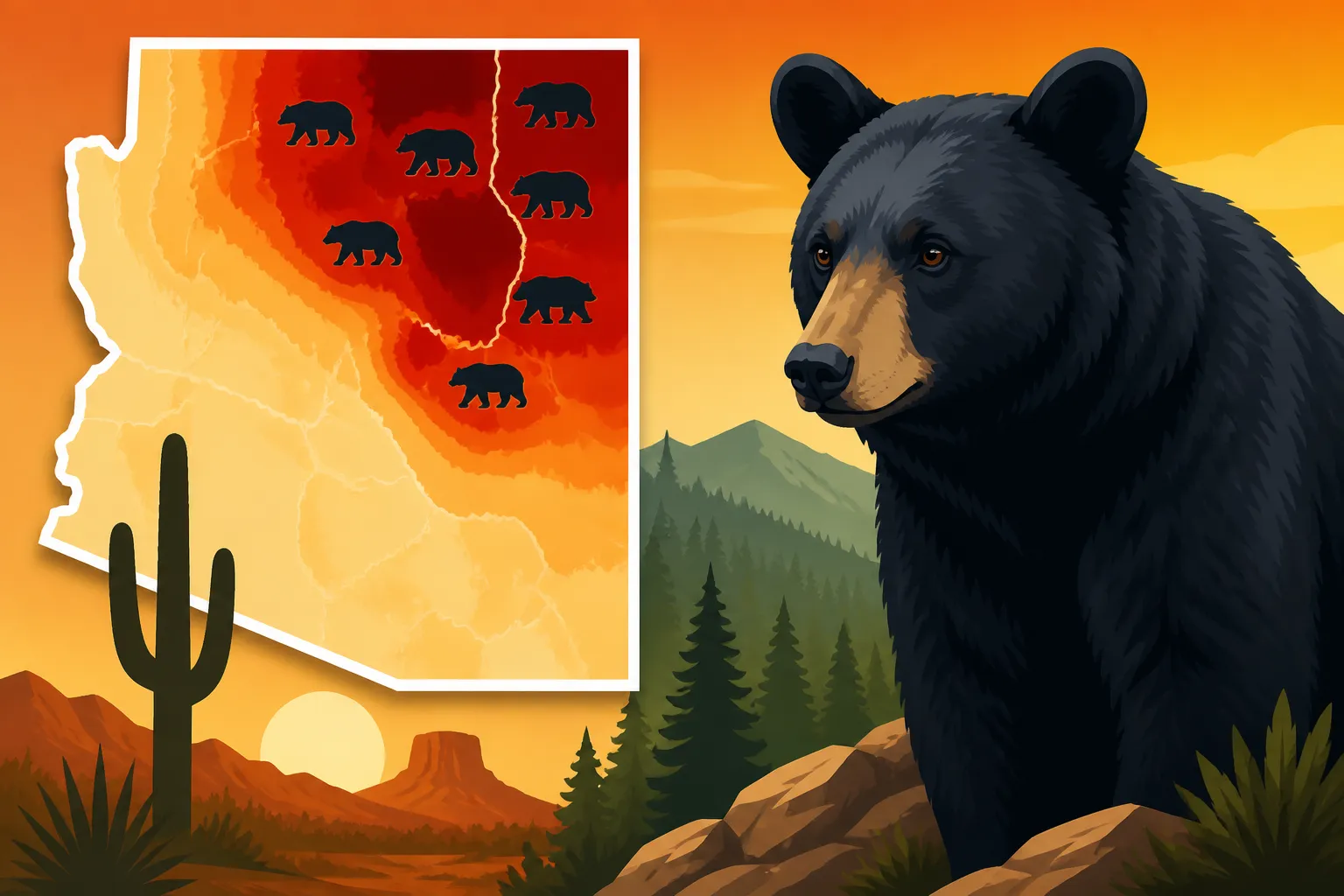
Without a doubt, the expansive high country stretching along the Mogollon Rim and into the White Mountains is Arizona's premier black bear habitat. This vast corridor of Coconino, Apache-Sitgreaves, and Tonto National Forests offers everything a bear could want: extensive mixed-conifer and ponderosa pine forests, abundant oak groves for mast crops, numerous canyons with perennial streams, and plenty of remote, rugged terrain.
Units situated directly on or adjacent to the Rim, as well as those encompassing the White Mountains, consistently report higher bear populations and harvest numbers. These areas are characterized by significant elevation changes, creating diverse microclimates and a wide array of food sources that ripen at different times throughout the season. Hunters targeting this region often find themselves in beautiful, towering timber and dark canyon bottoms. The sheer scale of these landscapes means there's ample room for bears to roam and reproduce. If you're looking for Arizona Elk on the Rim, White Mountains and Kaibab, you're very often in prime bear country too, as their preferred habitats overlap considerably. The robust ecosystems of The Mogollon Rim as Arizona Elk Country provide a perfect environment for black bears as well.
Southern Arizona's Sky Island Ranges
When you picture Arizona, you might not immediately think of towering mountain ranges rising out of the desert, but the "Sky Islands" of southeastern Arizona are truly unique and hold surprisingly strong bear populations. These isolated mountain ranges, part of the Coronado National Forest, are like biological islands surrounded by an "ocean" of desert, and they create distinct ecological zones. Ranges such as the Chiricahua Mountains, Santa Rita Mountains, and Huachuca Mountains offer essential habitat for black bears that you wouldn't expect so far south.
Within these Sky Islands, you'll find a transition from desert scrub at lower elevations to grasslands, then up through oak woodlands, juniper, and eventually pine and fir forests at the highest peaks. Bears utilize these varied elevations, moving up and down the slopes depending on food availability, often tracking the ripening of different berry crops or the fall of acorns. The ruggedness of these ranges, with their steep slopes and deep canyons, provides the critical cover and solitude bears need. While not as extensive as the Mogollon Rim, the Sky Islands represent vital habitat for black bears in a region otherwise dominated by desert, making them excellent areas to investigate if you're exploring Arizona's Sky Islands and Where Coues Live.
Northern Plateaus Beyond the Rim
While the Mogollon Rim often gets the most attention, other northern plateaus and mountain ranges in Arizona also sustain healthy black bear populations. The Kaibab Plateau, famous for its mule deer and elk, also holds a consistent number of bears, particularly in its dense forests of ponderosa pine, spruce, and fir. These bears benefit from the abundant cover and diverse food sources available in this high-elevation environment.
Similarly, other areas like the Prescott National Forest and portions of the Coconino National Forest not directly on the Rim can also be productive. These areas share many of the same habitat characteristics—timber, water, and rugged topography—though perhaps in slightly less contiguous tracts than the main Rim corridor. Bears in these regions often adapt to smaller home ranges if food and water are consistently available, and finding pockets of dense cover around reliable water sources is key to locating them. Always review Reading an Arizona Unit Boundary Before You Apply to get a clear picture of the terrain and vegetation in these northern units.
Leveraging Resources and Scouting for Bear Success
Finding where black bear density runs highest is only half the battle; the other half is putting in the work to locate an animal. Thankfully, modern resources and tried-and-true scouting methods can significantly improve your odds.
Analyzing Arizona's Bear Harvest Data
One of the most powerful tools available to hunters is historical harvest data. While individual unit performance can fluctuate year to year based on environmental factors like drought or mast crop failures, long-term trends can point you toward units that consistently produce bears. The Arizona Game and Fish Department (AZGFD) publishes harvest statistics and population estimates, which are invaluable for identifying high-density areas. You'll want to look at not just the number of bears harvested, but also the success rates and, critically, the female harvest limits for specific units. Units that maintain a healthy population despite consistent hunting pressure often indicate robust bear numbers.
Many hunting resources, including platforms like GoHunt, compile and present this data in an easily digestible format, allowing you to compare units and identify those with a history of strong bear activity. While you won't find specific unit numbers here, understanding which general regions consistently appear in these reports (like the Mogollon Rim or specific Sky Island ranges) can help narrow your focus. Remember that Arizona Bear Season and Harvest Limits are dynamic, and units can close mid-season if female harvest objectives are met, making up-to-date data absolutely crucial. Always check the official AZGFD regulations.
The Power of Pre-Season Scouting Online and On-Foot
Even with the best data, there's no substitute for thorough scouting. Bears are creatures of habit, often utilizing the same travel corridors, bedding areas, and feeding grounds year after year, especially if conditions remain favorable. Pre-season scouting, both from your computer and on the ground, allows you to identify these patterns before the season opens.
Online tools, such as satellite imagery and topographic maps, are your best friends here. Look for dark timber pockets, north-facing slopes (which hold moisture and cooler temperatures longer), dense canyons, and natural funnels created by terrain. Identify key food sources like oak stands or berry patches, and crucially, pinpoint water sources. Platforms like GoHunt offer incredible layering capabilities that allow you to overlay public land boundaries, historical burn areas (which can create new food sources), and even trails, making your e-scouting incredibly efficient. Then, take that knowledge to the field. Look for fresh bear sign: tracks in muddy areas near water, scat containing seeds or hair, claw marks on trees, and overturned rocks or logs where bears have rooted for insects. Pay attention to game trails that lead between feeding and bedding areas. The more time you spend scouting, the better your chances. For more on this, check out E-Scouting an Arizona Unit Before the Season.
Here's a quick comparison of key habitat components that contribute to high bear density:
| Habitat Component | Description | Why Bears Love It | Key Arizona Regions |
|---|---|---|---|
| High-Elevation Forests | Ponderosa pine, mixed conifer, aspen, oak woodlands (4,500-9,000 ft) | Abundant mast crops (acorns, berries), diverse forage, consistent cover, cooler temps | Mogollon Rim, White Mountains, Kaibab Plateau, Sky Islands |
| Riparian Zones | Areas along streams, rivers, springs, and stock tanks | Critical water sources, lush vegetation, shade, concentrated food variety | All forested regions, canyon bottoms, desert oases |
| Rugged Terrain | Steep canyons, rocky outcrops, dense chaparral, thick brush | Security, escape routes, bedding areas, reduced human disturbance | Throughout the Rim, Sky Islands, wilderness areas |
| Food Availability | Acorns, berries, roots, insects, grasses, carrion | Dictates movement and concentration; varies seasonally and annually | Areas with diverse plant communities, especially oaks |
Understanding Bear Behavior and Food Sources
Black bears are highly opportunistic and their movements are heavily influenced by the availability of food. This means that even in high-density areas, finding them often comes down to understanding what they're currently eating. In spring, after denning, bears are often found in lower to mid-elevations, seeking out green-up and anything edible. As summer progresses, they move to higher elevations, following the ripening berry crops. Fall is generally prime time, as bears go into hyperphagia, a period of intense feeding, to put on weight for winter. During this time, they'll concentrate heavily around areas with abundant hard mast, like oak flats or canyon bottoms loaded with acorns.
Drought years can significantly impact food availability, forcing bears to expand their ranges or concentrate more heavily around the few remaining productive areas and perennial water sources. Conversely, years with exceptional rainfall can lead to bumper crops of berries and acorns, scattering bears across a wider area but making them healthier. Understanding these seasonal and annual fluctuations is critical. For instance, How Wildfire Changes Elk Habitat can also affect bear habitat, as new growth in burned areas can initially attract them, while extensive burns might destroy mast crops for years. Staying informed on conditions like these, often reported by GoHunt or local AZGFD offices, can give you a significant advantage.
Ethical Considerations and Regulation Awareness
Hunting black bears in Arizona requires not only skillful woodsmanship but also a deep respect for the animal and strict adherence to regulations. Bear populations are carefully managed, and it's essential for every hunter to understand the rules.
Arizona's Unique Bear Management Approach
Arizona's approach to black bear management is distinct, often involving harvest limits that are specifically tied to the number of female bears taken in a unit. This is because female bears are crucial for population stability. As a result, certain units can and do close mid-season, sometimes with little notice, if the female harvest objective for that unit is met. This makes it absolutely paramount to check the official Arizona Game and Fish Department website regularly, even daily, when you are in the field.
These dynamic closures mean that hunters must be prepared to adjust their plans or even move to a different unit if their chosen area closes. This system, while sometimes challenging for hunters, is a responsible way to ensure the long-term health of Arizona's black bear populations. Always be aware of the specific unit you are hunting in and its current status, which can be found in the official regulations booklet and online. For more specific information, consult Arizona Bear Season and Harvest Limits.
Responsible Hunting Practices
Hunting black bears ethically is a cornerstone of responsible hunting. Fair chase principles are paramount. This means understanding and adhering to regulations concerning legal weapons, shooting hours, and methods of take. For example, Baiting Rules That Apply to Arizona Bears are very specific, and generally, baiting is prohibited. It's crucial to be absolutely certain of your target before taking a shot to ensure it's a legal animal and to minimize the chance of wounding. Bears can be surprisingly tough animals, and a well-placed shot is essential for a quick, humane harvest.
Once a bear is down, proper game care, especially in Arizona's often warm climate, is critical. Field dressing quickly and getting the meat cooled can prevent spoilage and ensure the meat is salvageable. You also have a responsibility to report your harvest according to AZGFD guidelines, as this data contributes directly to management decisions. Being a responsible hunter means not just taking an animal, but respecting it and the regulations designed to protect the species for future generations.
Staying Informed with GoHunt and AZGFD
In a state with dynamic regulations and diverse habitats, staying informed is non-negotiable for bear hunters. The Arizona Game and Fish Department is the primary source for all official regulations, season dates, hunt unit descriptions, and, most critically, real-time unit closure announcements. Every hunter should have access to the current regulations booklet and know how to navigate the AZGFD website.
Beyond the official sources, platforms like GoHunt provide an invaluable service by aggregating data, offering detailed unit profiles, and providing analysis that can help you plan your hunt more effectively. GoHunt's map layers, for instance, can help you visualize land ownership, water sources, and terrain features crucial for bear hunting. While GoHunt is an excellent resource for research and planning, always cross-reference any critical information, especially season dates and unit closure status, with the official AZGFD channels. Tools like these, combined with diligent scouting, will put you in the best position to find where black bear density runs highest and successfully harvest one of Arizona's most challenging and rewarding big game animals. For further research, understanding Where Arizona Publishes Unit Harvest Statistics and how to interpret them can give you a significant edge in your planning.
Disclaimer
This article is for general informational purposes only and does not constitute professional advice. Laws, prices and regulations vary by location and change over time. Consult a qualified professional for guidance on your specific situation.