Arizona Unit 23 Elk and Coues Country
Trying to figure out where to focus your efforts in a vast unit like Arizona's Unit 23 can feel like searching for a needle in a haystack, especially when it holds both big bulls and elusive "gray ghosts." It's a truly diverse unit, spanning incredible elevation changes and habitat types that challenge even seasoned hunters to understand. This guide will meticulously break down Unit 23, helping you navigate its unique landscapes, understand the distinct hunting opportunities for both elk and Coues deer, and equip you with the knowledge to strategically plan your next hunt in this multifaceted piece of Arizona.
Understanding Unit 23's Unique Landscape
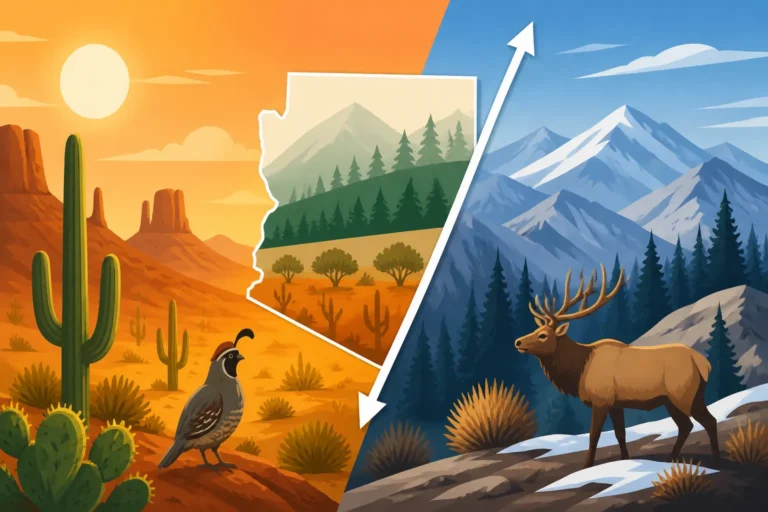
Unit 23 is a sprawling, diverse chunk of Arizona, notorious for its dramatic shifts in elevation and terrain. It's not a unit you can paint with one broad brushstroke; you've got to understand its distinct personalities from north to south and east to west. This unit embodies much of what makes Arizona hunting so fascinating yet challenging. You might start your day shivering in crisp ponderosa pine air and end it sweating in a prickly pear thicket, all within the same general area. It's this ecological melting pot that creates opportunities for a wide range of game, but it also demands a versatile and adaptive hunting strategy.
From Rim Country Peaks to Desert Canyons
The northern reaches of Unit 23 truly live up to the "Rim Country" name. Here, you'll find yourself amidst the towering ponderosa pines, mixed conifer forests, and pockets of aspen that define the Mogollon Rim. Elevations can easily climb over 7,000 feet, offering cooler temperatures and denser cover. This is classic elk country, with expansive timbered benches, deep canyons, and scattered meadows. The terrain is rugged, with steep drainages and rocky outcrops that can make for tough travel but also provide excellent sanctuary for big game. It's a place where you'll hear the wind whisper through pines and feel the chill of a pre-dawn frost, a stark contrast to the lower elevations.
As you move south through Unit 23, the landscape gradually transitions. The pines give way to juniper-pinyon woodlands, then to chaparral, and eventually, the classic Sonoran Desert cactus and mesquite flats. This southern section is characterized by smaller, more isolated mountain ranges—often referred to as "sky islands" in other parts of Arizona, though here they might be more aptly described as rugged, broken country. Deep, winding canyons with seasonal washes become prevalent, carved by centuries of flash floods. The vegetation becomes thicker and more abrasive, a challenge for both movement and visibility. This mosaic of habitat, from cool forests to arid desert, means game animals will shift with the seasons, seeking water and forage according to weather patterns and temperature. It's this dramatic change that means you can't scout the north and expect it to tell you much about the south.
The Intersection of Ecosystems
What makes Unit 23 particularly special, and sometimes frustrating, is how these different ecosystems blend. It's a convergence zone where species from the high country can sometimes be found mingling with desert dwellers. For instance, a persistent Coues deer might push further north than you'd expect into the juniper breaks, while an elk herd might drop down into lower, more open country during the winter months. This ecological intersection creates a fascinating dynamic, but it also means hunters need to be exceptionally observant and adaptable. You can't rely solely on what you might consider "typical" habitat for a species; you have to be ready for surprises.
The transition zones are often where you'll find the highest diversity of wildlife. These areas, where ponderosa meets pinyon-juniper, or chaparral meets desert wash, provide a rich buffet of food sources and cover types. Animals use these areas for travel corridors, feeding, and bedding, constantly moving between the different vegetation zones to find what they need. Understanding these transition lines, both on your map and on the ground, can be key to unlocking success in Unit 23. This is where tools like onX Hunt really shine, helping you visualize these shifts in terrain and vegetation from a bird's-eye view before you ever set foot in the unit. It's about knowing where the cool, shaded canyons meet the sun-baked ridges, and how game animals exploit those subtle differences.
Elk Hunting Opportunities in Unit 23
Unit 23 is renowned for its elk hunting, offering some fantastic opportunities, particularly in its northern reaches. The sheer vastness of the unit and its diverse topography mean that elk aren't concentrated in one spot; they spread out, utilizing the abundant feed and cover. While it might not always produce the monster bulls that some of the northern Arizona units are famous for, it consistently offers a strong chance at a quality animal, and often a truly memorable experience in beautiful country. But it demands diligent scouting and a willingness to cover ground.
Prime Elk Habitat and Movement Patterns
The prime elk habitat in Unit 23 lies primarily in the higher elevations of the Mogollon Rim and the surrounding forested plateaus. Think deep canyons like Cherry Creek, Parker Creek, and the vast expanses of the Tonto National Forest. These areas provide everything an elk needs: thick stands of ponderosa and mixed conifer for cover, ample feed from grasses, forbs, and browse, and crucial water sources in springs, seeps, and stock tanks. During the early seasons, especially archery, elk will often be higher up, seeking cooler temperatures and succulent forage. As the hunting pressure increases or temperatures drop with the approaching fall, they might move into thicker timber or descend into the canyon systems for sanctuary.
Elk movement patterns in Unit 23 are heavily influenced by water availability, forage quality, and hunting pressure. After the monsoons, lush green-ups can draw elk into areas that might otherwise be dry and barren. During drier periods, they'll congregate around reliable water sources, making these areas hotspots for scouting. Understanding how elk use elevation throughout the day is also critical. They might bed high on shaded slopes during the day and drop into lower meadows or canyon bottoms to feed during the morning and evening hours. This unit's ruggedness means elk can often escape pressure by simply moving into incredibly steep or dense areas that most hunters are unwilling to tackle. This is where physical conditioning truly pays off. Arizona Elk on the Mogollon Rim offers more insights into this type of terrain.
Rut Activity and Calling Strategies
The elk rut in Unit 23, like much of Arizona, typically peaks in mid-to-late September. This is when bulls become more vocal and less cautious, making them vulnerable to calling strategies. Early archery season (August/September) can be a bit of a gamble; sometimes the pre-rut is in full swing, and bulls are responsive, other times it's still too hot, and they're quieter. As September progresses, the bugles will echo across the canyons and timbered ridges, creating an exhilarating hunting experience. You'll hear everything from soft cow calls to aggressive chuckles and roaring challenges.
Effective calling strategies in Unit 23 depend heavily on the situation. During the peak rut, aggressive bugling can often pull a bull in, especially if you can get him to believe there's another bull challenging his cows. However, heavily pressured bulls might become "call shy," requiring a more subtle approach with cow and calf calls. Sometimes, simply setting up quietly in a travel corridor between bedding and feeding areas, with a partner doing soft cow calls 50-100 yards behind you, can be deadly. Always pay attention to the wind, as thermals can be tricky in this broken country, rising in the morning and falling in the evening. It's not just about making noise; it's about communicating effectively with the bull, mimicking their natural behavior to draw them into range.
Coues Deer: The Gray Ghosts of Unit 23
While the northern part of Unit 23 is synonymous with elk, the southern and central portions offer fantastic opportunities for Coues deer, often called the "gray ghosts" of the desert. These diminutive whitetails are masters of their environment, blending seamlessly into the scrubby hillsides and canyon bottoms. Hunting Coues deer in Unit 23 is a completely different game than chasing elk; it's a test of patience, glassing prowess, and disciplined stalking. The rewards, however, are immense when you finally spot and successfully pursue one of these wily deer.
Glassing for Coues in the Southern Portions
The lower, more arid sections of Unit 23, characterized by chaparral, juniper-pinyon, and desert scrub, are prime Coues deer habitat. Think units and areas south of the main Rim, where the land breaks into endless hills, draws, and small mountain ranges. Coues deer are incredibly well-camouflaged, and their small size means they can disappear in surprisingly sparse cover. This is why glassing is not just a tactic; it is the primary hunting method for Coues. You'll spend hours, often days, behind binoculars and spotting scopes, meticulously picking apart distant hillsides. Setting up on a good vantage point, often at first light, and methodically dissecting the terrain grid by grid is how you find these deer. Glassing Arizona's Sky Islands for Coues Deer has more detail on this essential technique.
When glassing in Unit 23's Coues country, patience is truly a virtue. Don't rush. Look for subtle movements, a flicker of an ear, a patch of antler, or the distinct shape of a deer against the background. Pay close attention to shaded areas, especially during warmer parts of the day, as deer will bed down to escape the sun. Also, focus on areas with varied topography – benches, saddles, and draws – which provide cover and travel routes. High-quality optics are not a luxury here; they are an absolute necessity. A good pair of 10x or 12x binoculars on a tripod, paired with a powerful spotting scope, will greatly increase your chances of locating a deer that would otherwise remain hidden to the naked eye. Coues Deer in the Southeastern Sky Islands describes similar habitat.
Stalking the Smaller Whitetail
Once you've spotted a Coues buck in Unit 23, the real challenge begins: the stalk. These deer have incredible eyesight and hearing, and they're notoriously skittish. Unlike elk, which might be in heavy timber, Coues are often spotted at great distances in relatively open country, forcing long, careful approaches. The broken terrain of Unit 23 can be both a blessing and a curse. It provides cover for your approach, but it also means navigating steep, rocky, and often noisy ground. Every step must be deliberate, and every gust of wind must be analyzed. Reading Wind on a Sky Island Stalk explains the importance of wind in such terrain.
A successful Coues stalk often involves using every bit of available cover: washes, ridges, thick brush, and even individual rocks. Moving slowly, stopping frequently to re-evaluate the deer's position, and adjusting your route based on terrain and wind are critical. Many stalks end with the deer simply vanishing before you can get into range. If you lose sight of the deer, don't panic. Stay put, continue glassing the area where you last saw it, and wait. Coues deer will often move a short distance and re-bed, hoping you haven't seen them. The objective is to get within comfortable shooting range, which for most rifle hunters means 200-400 yards, but remember, the closer, the better.
Navigating Unit 23: Access and Terrain Challenges
Unit 23, like many of Arizona's expansive hunting areas, offers a mix of public lands, primarily managed by the Tonto National Forest, but also includes some State Trust Land. However, "public land" doesn't always equate to "easy access." The terrain itself, from deep canyons to high peaks, creates significant challenges for travel and navigation, and understanding land ownership boundaries is absolutely paramount to a legal and ethical hunt. Hunters need to be prepared for rugged conditions and meticulously plan their routes, both on foot and with vehicles.
Road Systems and Seasonal Closures
The road system in Unit 23 is extensive, primarily consisting of Forest Service roads that spiderweb through the unit. Many of these are well-maintained main arteries, but just as many are rough, rocky, and require a high-clearance 4×4 vehicle. During the hunting seasons, especially after monsoon rains or winter snows, certain roads can become impassable. Deep ruts, mud, washouts, and fallen trees are common occurrences. It's not uncommon to find a road that looks good on a map suddenly disappear into a nearly vertical, rock-strewn track that tests your vehicle's limits.
Seasonal road closures are also a significant factor in Unit 23, particularly in the higher elevations. During the winter and early spring, many Forest Service roads are closed to protect the roadbeds from damage and to reduce disturbance to wintering wildlife. These closures can drastically limit access to certain areas, often forcing hunters to hike in much further than anticipated. Always check with the Tonto National Forest District offices for current road conditions and closure information before heading out. Tools like onX Hunt or GoHunt often show these closures on their maps, but ground-truthing and checking official sources are always wise. Ignoring these closures can lead to fines, vehicle damage, or even getting stranded. You also need to be aware of Motorized Travel Rules on Arizona Public Land to avoid issues.
Understanding Land Ownership for Access
A large portion of Unit 23 is Tonto National Forest, which is public land generally open to hunting with a valid license and tag. However, there are also significant parcels of Arizona State Trust Land scattered throughout the unit, particularly in the lower elevations. To legally hunt State Trust Land, your hunting license acts as your permit for general hunting activities. But it's crucial to understand that State Trust Land can sometimes have private leases on it, and while your hunting permit grants access for hunting, it doesn't always grant unlimited access if a lessee has erected fencing or has specific agricultural operations.
Furthermore, isolated parcels of private property exist within and adjacent to the public and trust lands. These can be ranching operations, homesteads, or mining claims. It is absolutely critical to identify these private parcels and respect their boundaries. Trespassing, even accidentally, can lead to severe penalties and give hunters a bad name. Using reliable mapping software like onX Hunt or GoHunt with property boundary layers is essential for navigating Unit 23. Always verify you're on public or legally accessible land. Getting to know Where Arizona Publishes Unit Access Maps can be a great first step in planning your hunt to avoid any surprises.
Strategic Planning for a Unit 23 Hunt
Successful hunting in Unit 23 isn't just about showing up with a weapon; it's about meticulous planning, adapting to the unique challenges of the unit, and understanding the nuances of its game populations. Given the unit's sheer size and ecological diversity, a well-thought-out strategy can make all the difference between a frustrating trip and a rewarding one. This includes everything from how you approach your pre-season scouting to understanding the intricacies of the draw system.
Pre-Season Scouting and E-Scouting Tools
Pre-season scouting is invaluable for Unit 23. If you can physically get boots on the ground, that's always the best. Focus your efforts on the specific habitat type for the species you're targeting. For elk, look for fresh sign, rubs, wallows, and high-traffic areas near water. For Coues, identify prime glassing points and areas with good feed and cover in the lower, brushier country. Pay attention to water sources, especially during dry periods, as these will concentrate animals. Note potential bedding areas, travel corridors, and escape routes.
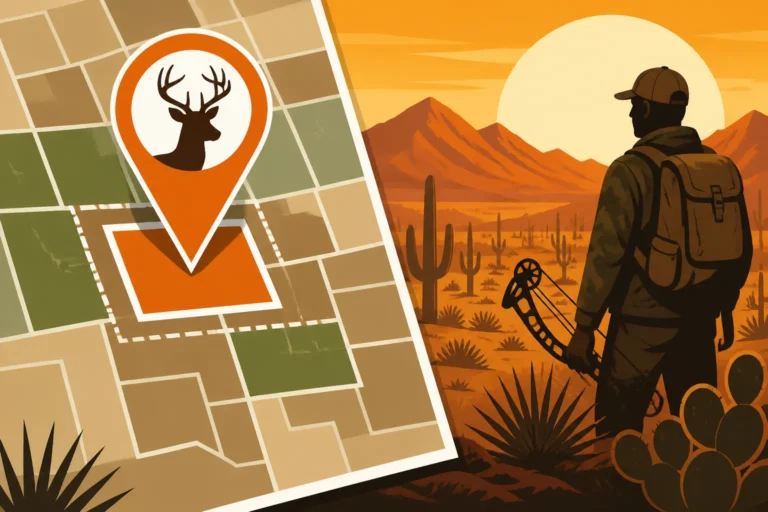
For those who can't spend endless days on the ground, e-scouting is your next best friend. Platforms like onX Hunt and GoHunt are incredibly powerful tools for dissecting Unit 23 from your computer. You can analyze topography using contour lines and 3D views, identify potential water sources (springs, tanks, washes), locate different vegetation types, and map out access roads. Use satellite imagery to spot clearings, dense timber, and potential bedding locations. Mark waypoints for glassing points, water, and areas of interest. These tools can help you formulate a solid plan before you ever leave home, drastically reducing wasted time during your actual hunt. E-Scouting an Arizona Unit Before the Season goes into detail on how to maximize these resources.
Water Sources and Game Concentration
In a semi-arid state like Arizona, water is life, and Unit 23 is no exception. Understanding the location and reliability of water sources is absolutely critical for locating game, particularly during hotter or drier periods. Elk and Coues deer will be drawn to permanent springs, man-made stock tanks, and even temporary seeps after rain. Many of the perennial streams like Cherry Creek and parts of the Verde River (though much of the Verde is outside primary hunting areas for big game) provide consistent water, but finding less obvious, remote sources can often lead you to undisturbed animals.
When e-scouting or on the ground, actively seek out these water points. Use your mapping apps to identify springs, and don't overlook areas marked as "tanks" or "wells" on older topographical maps. Game cameras can be a useful tool near these sources, but be aware of Trail Camera Rules on Arizona Public Land. Hunting near water sources, or understanding how animals move to and from water, is a fundamental strategy in Unit 23. This is especially true for early archery seasons when temperatures are high and animals need to drink frequently. Always approach water sources carefully and from downwind, as they are high-traffic areas. More information on this topic can be found in Water Sources and Ethics in Arizona Desert Hunting.
Draw Odds and Tag Strategies
Arizona's draw system is highly competitive, especially for quality elk tags in units like 23. The unit often has a variety of hunt codes for different weapons (archery, muzzleloader, general rifle) and seasons (early, late). Each of these will have different draw odds, and sometimes a specific hunt code might be more accessible than another. For instance, early archery elk tags are often coveted and hard to draw, while late rifle hunts might offer slightly better odds but present their own challenges with colder weather and often pressured animals.
Before applying, spend time researching previous draw odds for Unit 23 on resources like GoHunt. Look at the number of applicants, the number of tags issued, and the bonus points required to draw. Arizona has a bonus point system that heavily favors those with more points, particularly in the bonus point pass. If you're new to the Arizona draw, you might consider applying for a "point only" until you build up a sufficient number of points for a realistic chance at a quality tag in Unit 23. Alternatively, you can look at the over-the-counter archery deer tags for Coues deer, which are much more accessible and a great way to experience the unit. Always make sure you understand How to Read an Arizona Hunt Code before you apply. This strategic approach to the draw, informed by data and realistic expectations, is crucial for anyone hoping to hunt Unit 23.
| Feature | Elk Hunting in Unit 23 | Coues Deer Hunting in Unit 23 |
|---|---|---|
| Primary Habitat | Northern, higher elevation, ponderosa/mixed conifer forest | Southern, lower elevation, chaparral/desert scrub |
| Elevation Range | 5,000 – 8,000+ feet | 2,500 – 6,000 feet |
| Typical Method | Spot & stalk, calling (rut), sitting water | Extensive glassing, patient spot & stalk |
| Physical Demands | Very High (steep canyons, long hikes) | High (long glassing sessions, careful stalks over broken ground) |
| Key Challenge | Locating spread-out herds, navigating rugged terrain, pressure | Spotting camouflaged deer, executing precise stalks, heat |
| Best Season | September (Rut archery/early rifle) | December/January (Rut rifle) |
| Optics Focus | Mid-range binoculars (10-12x) for scanning, spotter useful | High-power binoculars (10-15x) & high-power spotter (60-80x) |
Disclaimer
This article is for general informational purposes only and does not constitute professional advice. Laws, prices and regulations vary by location and change over time. Consult a qualified professional for guidance on your specific situation.