Terrain That Hides an Approach in Desert Country
Hunting in Arizona’s vast desert country can be an incredibly rewarding experience, but anyone who has tried to close the distance on a keen-eyed Coues deer or a wary band of javelina knows the immense challenge involved. The terrain often appears wide open, leaving you feeling exposed and making those final, critical steps to get into range feel almost impossible. This guide aims to help you master the art of the desert stalk, revealing how to read and use the subtle features of the landscape to hide your approach and dramatically increase your success.
Understanding the Desert Environment and Its Challenges
When you first lay eyes on Arizona's desert landscape, it often feels like an endless expanse of low-lying brush, scattered rocks, and vast distances. This perception of openness is a major hurdle for hunters, especially those accustomed to the dense timber of other regions. However, a deeper understanding of this unique environment and the behavior of the animals within it is the first step toward a successful stalk.
The Deceptive Openness of Desert Landscapes
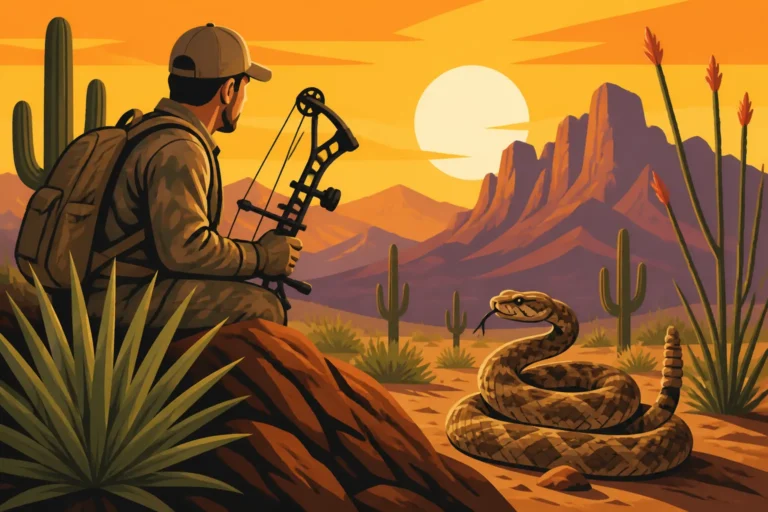
The Arizona desert, particularly the Sonoran and Chihuahuan regions, is a place of stark beauty and surprising challenges. Unlike a dense forest where vertical cover is abundant, the desert typically offers low-profile vegetation such as creosote, mesquite, and various cacti. While these plants provide some visual breaks, they rarely offer continuous, chest-high concealment for a standing hunter. This lack of consistent cover forces hunters to adapt their entire approach, often requiring them to get low, move slowly, and think creatively about every contour of the ground.
Animals like the Coues deer, mule deer, and javelina are perfectly adapted to these exposed settings. They rely heavily on their exceptional eyesight and hearing to detect predators from a distance. A Coues deer, often called the "gray ghost" of the desert, can seemingly vanish into sparse cover, making a direct approach incredibly difficult. Their ability to stand motionless and blend into the sun-dappled landscape is legendary. Hunters often find themselves glassing a hillside for hours, only to realize an animal they had been watching has subtly shifted or disappeared without a trace, highlighting just how challenging the terrain can be for close quarter movements.
Animal Behavior in Exposed Settings
Desert big game animals have evolved strategies to thrive in open country, making them acutely aware of their surroundings. Coues deer, for instance, are masters of using even the smallest washes, rock piles, and shadowed pockets to their advantage. They often bed down in locations that offer commanding views of their surroundings, allowing them to detect threats long before they become an immediate danger. Their flight zones are often much larger than those of whitetails in timbered areas, meaning they'll spook at a greater distance if they feel pressured or spotted.
Mule deer, particularly those in the lower desert regions of Arizona, also exhibit similar wariness. While larger than Coues, they are no less adept at using topography to disappear. A group of javelina might seem less cautious due to their herd dynamics, but they compensate with an incredible sense of smell and hearing, making a downwind approach crucial. Understanding that these animals are constantly evaluating the landscape for threats—both on the ground and from above—is vital. This means your approach must not only be hidden from their sight but also from their nose and ears. It's not just about what you see as cover, but what the animal perceives as a threat.
Natural Cover: Using Topography to Your Advantage
One of the biggest mistakes desert hunters make is focusing too much on vegetation for cover and not enough on the ground itself. The subtle undulations, cuts, and rises in desert topography offer far more consistent and reliable concealment than the often-sparse flora. Learning to read these features is like unlocking a secret map to a successful stalk.
The Power of Washes and Arroyos
Washes, also known as arroyos, dry creek beds, or drainages, are the desert hunter's best friend. These natural depressions, carved by seasonal rain, provide unparalleled opportunities for hidden movement. They vary in size from shallow, subtle dips in the terrain to deep, vertical-walled canyons, but all offer the chance to get below the line of sight of your quarry.
When you're planning a stalk, actively look for washes that run in the general direction of your target. Moving within the bed of a wash keeps you entirely out of sight, assuming the walls are high enough. Even shallow washes can provide crucial feet of concealment. When you need to cross a wash, do so carefully, ensuring you're not silhouetted against the sky on the far bank. Remember that washes often lead to or from water sources, making them natural travel corridors for game. Using these natural pathways to your advantage can cut significant distance off a stalk, just as we explored in depth when discussing Using Washes and Draws to Close Distance. The key is to move slowly, constantly checking for unseen animals that might also be using the wash, and anticipating where the wash might lead you out into open ground.
Utilizing Ridges, Knobs, and Benches
Beyond washes, the desert is sculpted with an endless array of ridges, small hills (often called "knobs"), and flat benches on hillsides. These features, even if only a few feet high, can be game-changers for a stalk. The fundamental principle here is to stay below the skyline. Any time you expose yourself against the horizon, you become a stark, easily detectable silhouette.
When planning an approach, identify ridges or knobs that lie between you and the animal. Your goal is to navigate from one piece of cover to the next, always using the high ground to shield your movement. Side-hilling, where you move horizontally along a slope, can keep you just below the crest of a ridge, using the earth itself as a shield. Benches or terraces on steeper slopes can also provide a momentary flat spot for a quick break or a chance to re-evaluate your next move, all while remaining concealed. It requires a slow, calculated approach, evaluating every step. As we often discuss when getting ready for a hunt, being able to Reading Terrain Before You Pick a Camp is a skill that translates directly to stalking, helping you understand the contours and natural hiding spots.
Rock Formations and Boulders as Shields
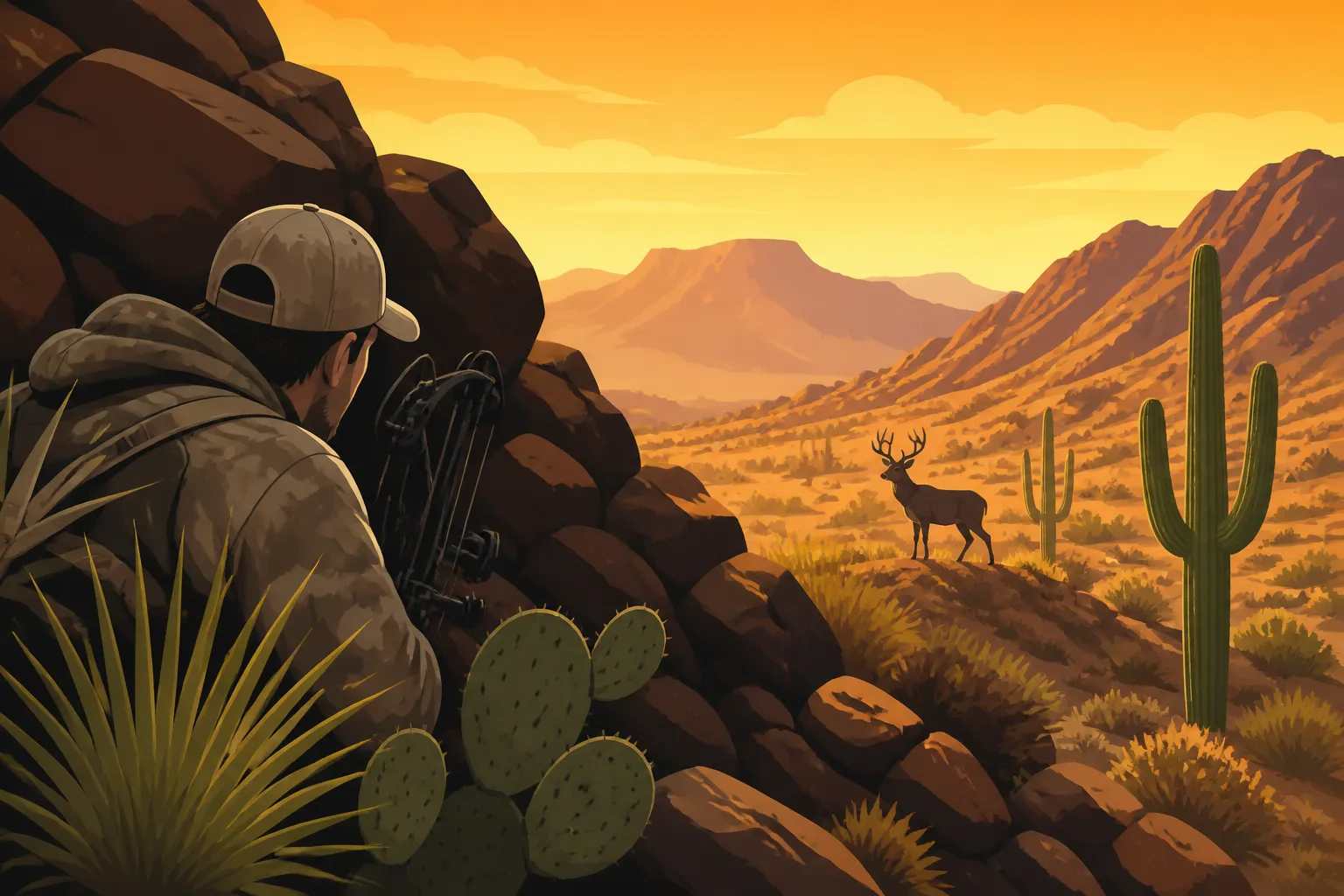
Arizona's desert landscape is often littered with incredible rock formations, from volcanic outcroppings to massive standalone boulders. These geological features are natural fortresses of concealment. A large boulder can completely obscure your presence, allowing you to move from one to the next, piece by piece, closing the gap on an unsuspecting animal.
The shadows cast by these rocks can also be incredibly effective, especially in the harsh desert sun. Moving within a rock's shadow can break up your outline and make you less conspicuous, particularly at longer distances where an animal might only perceive a slight distortion. Before using a rock for cover, always check the far side to ensure you won't suddenly appear within an animal's line of sight or inadvertently spook another hidden animal. This type of cover is particularly valuable in the most exposed areas, providing absolute visual breaks where vegetation fails.
Vegetative Disguise: Blending with the Flora
While topography offers the most consistent cover, the unique plant life of the Arizona desert plays a crucial role in breaking up your outline and providing additional concealment. Understanding the different types of vegetation and how to move through them effectively is another layer to master in the art of the desert stalk.
Dense Mesquite Thickets and Cactus Patches
Arizona's deserts are home to surprisingly dense patches of vegetation, particularly along washes or in areas with slightly more moisture. Mesquite thickets can form impenetrable tangles of thorny branches, offering excellent visual cover. Similarly, dense stands of prickly pear cactus, cholla, or even saguaros can create a formidable barrier that, while challenging to navigate, can completely hide a hunter's movement.
The challenge, of course, is moving through these areas quietly and without getting impaled. It requires extreme patience, slow steps, and careful observation. You'll need to pick your path meticulously, stepping over or around thorns rather than through them. While the noise can be an issue, the visual screen these thickets provide is often worth the effort, especially when trying to get close to animals like javelina that frequent these dense areas. We've certainly learned this lesson firsthand when it comes to Tracking Javelina Through Prickly Pear – the cover is there, but you pay for it! Use them to your advantage, but be prepared for a slow, deliberate crawl or sidle.
Scattered Juniper and Pinon Woodlands
As you gain elevation in Arizona, the desert gradually transitions into a more open woodland habitat dominated by juniper and pinon pine trees. While not as dense as a Ponderosa forest, these scattered trees offer a different kind of cover: vertical breaks in the landscape. Each tree, though perhaps standing alone, can be used to hide your form as you move from one to the next.
The strategy here is similar to using rocks or small ridges: use the trunk and canopy of each tree to break your silhouette. Move while hidden by one tree, then freeze, assess, and plan your move to the next. The understory in these areas is often relatively open, so stealthy foot placement is critical. Always be aware of shadows, using them to further obscure your movement. It's a bit like still-hunting, where every tree becomes a temporary blind, similar to the techniques employed when Still Hunting Oak Brush for Coues in slightly higher elevations.
Leveraging Shadows and Light
Light and shadow are powerful, yet often overlooked, elements of concealment in the desert. The harsh Arizona sun creates strong contrasts, and understanding how to use these to your advantage can be a game-changer. Stalking with the sun directly in the animal's eyes, especially in the early morning or late evening, can significantly reduce their ability to pick you out. The glare can obscure your movement, making you just another part of the shimmering landscape.
Conversely, using shadows cast by terrain features or vegetation can provide excellent cover. Moving in the shade breaks up your outline and makes you less noticeable. This is particularly effective during midday when shadows are shorter and more distinct. However, be mindful that as the sun moves, so do the shadows, requiring constant adaptation. The goal is to make yourself as indistinct as possible, using the natural light conditions to your advantage rather than letting them expose you.
Reading the Wind and Sun for a Stealthy Approach
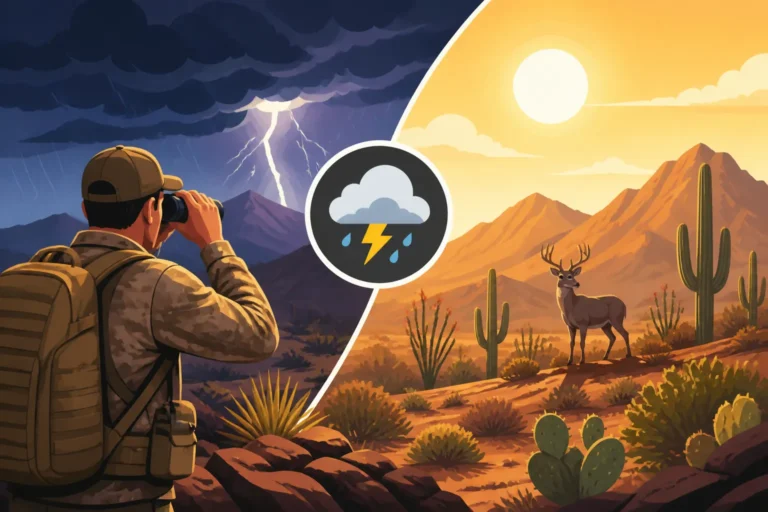
The desert air, often still and dry, can be deceptively tricky. Wind currents, thermals, and the sun's position are not static elements; they shift and change throughout the day, directly impacting your scent and visibility. Mastering these atmospheric factors is just as critical as understanding the physical terrain.
Predicting and Using Desert Air Currents
In the desert, wind is your master. Even a slight breeze can carry your scent for hundreds of yards, instantly blowing your stalk. The challenge is that desert winds are often unpredictable, influenced by topography and temperature changes. Early mornings usually see thermals dropping, meaning cooler air flows downhill into valleys and washes. As the sun rises and warms the land, thermals reverse, carrying warmer air uphill.
This daily shift is crucial. Always carry a wind checker, like a small bottle of powder or milkweed fluff, and use it constantly. Before every movement, verify the wind direction, not just at your location, but try to gauge what it's doing near your target. If you're stalking a Coues deer bedded on a hillside, you need to understand if the wind is carrying your scent up, down, or across to them. Understanding how air currents can be channeled by canyon walls or even large washes is a specialized skill that truly comes into play when you're Playing Thermals on a Canyon Stalk. Your goal is to keep the wind consistently in your favor, or at least neutral, to avoid broadcasting your presence.
Minimizing Scent and Sound Signature
With open spaces and often minimal vegetative cover, reducing your scent and sound is paramount. Scent control in the dry desert air is arguably more important than in humid, timbered environments because there's less moisture to trap your scent on vegetation. While no hunter can eliminate scent entirely, wearing clean hunting clothes, showering with scent-eliminating soap, and storing gear in scent-free containers can help. Focus on keeping the wind in your face or crosswind, making it your primary scent barrier.
Sound, too, travels far in the quiet desert. Every snapped twig, every scuff of a boot, can alert animals from a surprising distance. Footwear choice is critical; soft-soled boots or even moccasins can help you move quietly over crunchy gravel, dry leaves, and prickly debris. When moving, lift your feet rather than dragging them. Step over small obstacles like branches or cacti rather than on them. Take a lesson from the animals themselves: pause, listen, and then move, making each step deliberate and silent. Think about the subtle shifts in sound that a slight change in terrain can create.
Understanding Sun Angle for Concealment
We touched on this briefly, but the sun's angle is a tactical weapon you can wield. Stalking with the sun at your back, shining into the animal's eyes, puts them at a distinct disadvantage. Not only does it create glare, but it also casts a long shadow from you directly toward them, potentially confusing their depth perception or making you blend into the general shadows more effectively. This technique works best during low-angle sun periods: early morning and late afternoon.
Conversely, avoid stalking with the sun behind the animal and directly in your eyes. This will create extreme glare, making it difficult for you to see the animal clearly, let alone judge your approach. It also turns you into a clear silhouette against the bright sky from the animal's perspective. Being aware of the sun's position relative to both you and your quarry at all times allows you to pick the most advantageous approach vector and maximize your natural concealment.
Strategic Movement and Patience in Open Country
Ultimately, successful desert stalking boils down to your movement. It's a game of inches, often measured in minutes of motionless waiting for every few steps taken. This requires immense patience, meticulous planning, and the ability to adapt on the fly.
The Art of the Slow, Deliberate Stalk
There's a saying in Coues deer hunting: "If you think you're going slow enough, go slower." This adage applies to all desert big game. A successful stalk is less about speed and more about calculated, almost imperceptible movement. After identifying your target and a general approach route, break your movement down into tiny segments. Move a few steps, then freeze. Scan for the animal, re-check the wind, and assess for any new threats.
Many experienced desert hunters utilize a "Coues crawl" or belly crawl for the final stages of a stalk, especially when the cover is minimal. This means literally getting on your hands and knees, or even flat on your stomach, and inching your way forward. This low profile reduces your visibility dramatically. This level of dedication is often the only way to get within bow range on animals like Coues deer. It’s a testament to the fact that How Far to Stalk a Bedded Coues Buck often dictates this extremely slow and methodical approach. Remember, it's about being seen as little as possible, which often means moving only when the animal is looking away, has its head down, or is otherwise distracted.
Planning Your Approach: Reconnaissance is Key
Before you take a single step towards a spotted animal, commit to a thorough reconnaissance of the entire approach. This means meticulously glassing not only the animal but also every inch of the ground between you and it. Identify all potential cover—every wash, every rock, every thicket—and mentally map out a primary and secondary route. Look for pinch points where you might be forced into the open or where another animal might be bedded.
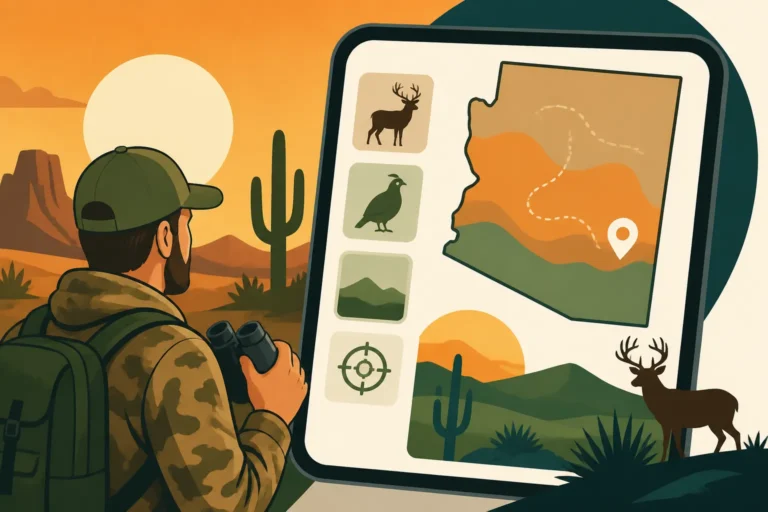
Modern hunting tools like mapping apps can be incredibly valuable for this pre-stalk planning. Many hunters use platforms like GoHunt, for example, to layer topographical maps with satellite imagery, identifying potential routes, checking terrain features, and even marking key points of concealment before they ever set foot on the ground. This kind of E-Scouting an Arizona Unit Before the Season is a skill that translates perfectly to real-time stalk planning, allowing you to visualize elevation changes, locate hidden draws, and confirm ownership boundaries. Taking the time to plan your entire approach, rather than just reacting, is a critical step in mitigating exposure and maximizing your chances.
Dealing with Unexpected Obstacles and Adjusting Your Plan
No matter how well you plan, the desert will inevitably throw curveballs. The animal might move from its bedded position, another animal might appear seemingly out of nowhere, or a wind shift could suddenly compromise your scent cone. The mark of an experienced desert stalker is not the ability to avoid these issues, but the ability to adapt.
When an unexpected obstacle arises, avoid the urge to push forward recklessly. This is where patience is your most valuable virtue. If the animal moves, immediately get down and reassess. Can you adjust your route to intercept its new position? Is the wind still good? Sometimes, the best decision is to retreat, circle widely, and restart the stalk from a new, more advantageous position. Forcing an approach that is no longer viable often leads to spooking the animal and blowing the entire hunt. Remember, Why Coues Deer Reward Patience Over Movement is more than just a catchy phrase; it's a fundamental truth of desert hunting. Being flexible and having a backup plan—or even a third plan—is essential for success in these challenging environments.
Comparing Desert Cover Options for Stalking
To give you a clearer picture of how different types of desert cover stack up, here’s a quick comparison. Each has its strengths and weaknesses, and combining them strategically is the ultimate goal.
| Cover Type | Pros | Cons | Best Use Case |
|---|---|---|---|
| Washes/Arroyos | Excellent concealment, natural travel corridors | Can be noisy (gravel), unexpected turns, potential for other game | Long-distance approaches, travel between larger features |
| Ridges/Knobs/Benches | Uses natural elevation, avoids skylining | Requires careful movement to stay below crest, often exposed | Mid-range approaches, breaking line of sight, side-hilling |
| Rock Formations/Boulders | Complete visual blockage, strong shadows | Isolated, can create dead ends, limited continuous cover | Short-range concealment, final approach, observation points |
| Dense Mesquite/Cactus | High visual density, good scent break | Very noisy, painful, slow movement, difficult to see through | Close-range infiltration, leveraging animal travel corridors |
| Scattered Juniper/Pinon | Vertical cover, breaks outline | Open understory, less continuous, still visible from distance | Higher elevation stalks, breaking up silhouette |
| Shadows (Sun Angle) | Free, effective if used correctly | Changes with time/sun, requires constant awareness, less absolute | Anytime sun is low, breaking up outline, confusing vision |
Disclaimer
The information provided in this guide is for general educational purposes only and is not a substitute for official hunting regulations. Always consult the latest Arizona Game and Fish Department regulations before planning any hunting activity. Hunting is subject to change based on current laws and conditions.