Tracking Arizona Javelina Through Prickly Pear
Trying to track Arizona javelina through dense prickly pear cactus can feel like a fool's errand. It's a frustrating, often painful endeavor that leaves you with more punctures than prospects. This comprehensive guide is here to untangle the challenges of pursuing these elusive creatures in their thorny strongholds, offering practical strategies and insights to help you effectively track javelina and increase your chances of success, even when the desert seems to be fighting against you.
Understanding Javelina Behavior in Prickly Pear Habitat
If you've spent any time hunting javelina, you know they aren't just in the prickly pear; they are the prickly pear. Their lives are intimately tied to this thorny plant, and understanding this relationship is the first step to successful tracking. It's not just about finding tracks, it's about predicting where they'll be next.
Why Javelina Love Prickly Pear
Prickly pear cactus offers javelina a multi-faceted haven in the harsh Arizona desert. First and foremost, it's a critical food source. These tough little animals can consume the pads, fruit, and even the roots of prickly pear, providing essential moisture and nutrients. They are surprisingly well-adapted to dealing with the spines, often using their tough snouts and thick hides to simply push through. Beyond sustenance, the dense, interlocking pads create an impenetrable fortress, offering incredible cover from predators, including mountain lions, coyotes, and even overhead raptors. This makes it a prime bedding area, a place where a herd can feel relatively safe from detection. Think of it as their natural, spiky fortress. This reliance means that if you're not looking in areas with significant prickly pear presence, you're likely looking in the wrong spots.
Daily Movements and Activity Patterns
Javelina, also known as collared peccaries, are creatures of habit, though their habits shift with the seasons and daily temperatures. During cooler months, or in the early mornings and late afternoons during hotter periods, you'll often find them actively foraging. They'll root around for tubers, munch on prickly pear, or browse other desert vegetation. Midday, especially when the Arizona sun is at its fiercest, they typically bed down deep within the densest cover they can find – and yes, that's usually a prickly pear thicket. Their activity can also be influenced by factors like recent rainfall, which can spur new growth and make certain areas more attractive. A crucial element to their daily rhythm is water. While they get a lot of moisture from their diet, they will visit water sources, especially during dry spells. Understanding this can help you predict travel corridors.
Herd Dynamics and Scent Communication
Javelina are highly social animals, living in herds that can range from a few individuals to more than a dozen. This herd dynamic is a major factor in how they move and communicate, and it's something you can use to your advantage. Each javelina has a scent gland on its back, and they frequently rub these glands on rocks, trees, and other objects to mark their territory and communicate with other herd members. This is why when you jump one javelina, you often jump an entire group – they like to stick together. These scent markings can be a valuable indicator of recent activity, even if you don't find fresh tracks. If you encounter an area permeated with that distinct, musky javelina odor, you're definitely in their neighborhood. Being aware of these behaviors helps tremendously when trying to understand what the sign you're finding actually means. Learning about these intricate group interactions can provide valuable clues when you're trying to figure out where they are headed next, much like understanding the larger context of Javelina Herd Behavior and Scent.
Essential Gear for Tracking Javelina Through Dense Cover
Navigating prickly pear country without the right gear isn't just uncomfortable; it's a recipe for a miserable, cut-up hunt. The right equipment won't guarantee a javelina, but it will certainly make the pursuit more tolerable and increase your endurance.
Protective Clothing and Footwear
Forget your lightweight mesh hunting pants for this one. When you're pushing through prickly pear, you need serious protection. Think thick, durable canvas or even specialized briar-proof chaps or pants. Brands like Filson or heavier-duty hunting pants designed for upland bird hunting can be excellent choices. The goal is to create a barrier that those nasty spines can't penetrate easily. Your legs and lower body will take the brunt of the abuse. For footwear, a sturdy, high-ankle boot is non-negotiable. Not only do you need ankle support on the rocky, uneven desert terrain, but a thick leather or synthetic upper will offer crucial protection against cactus spines. I've seen more than one hunter regret choosing their comfortable but thin-sided boots after a day spent in dense javelina habitat. Consider boots with robust, non-slip soles, as you'll be traversing loose rock and potential slick patches, especially if you're near a wash.
Optics for Spotting and Tracking
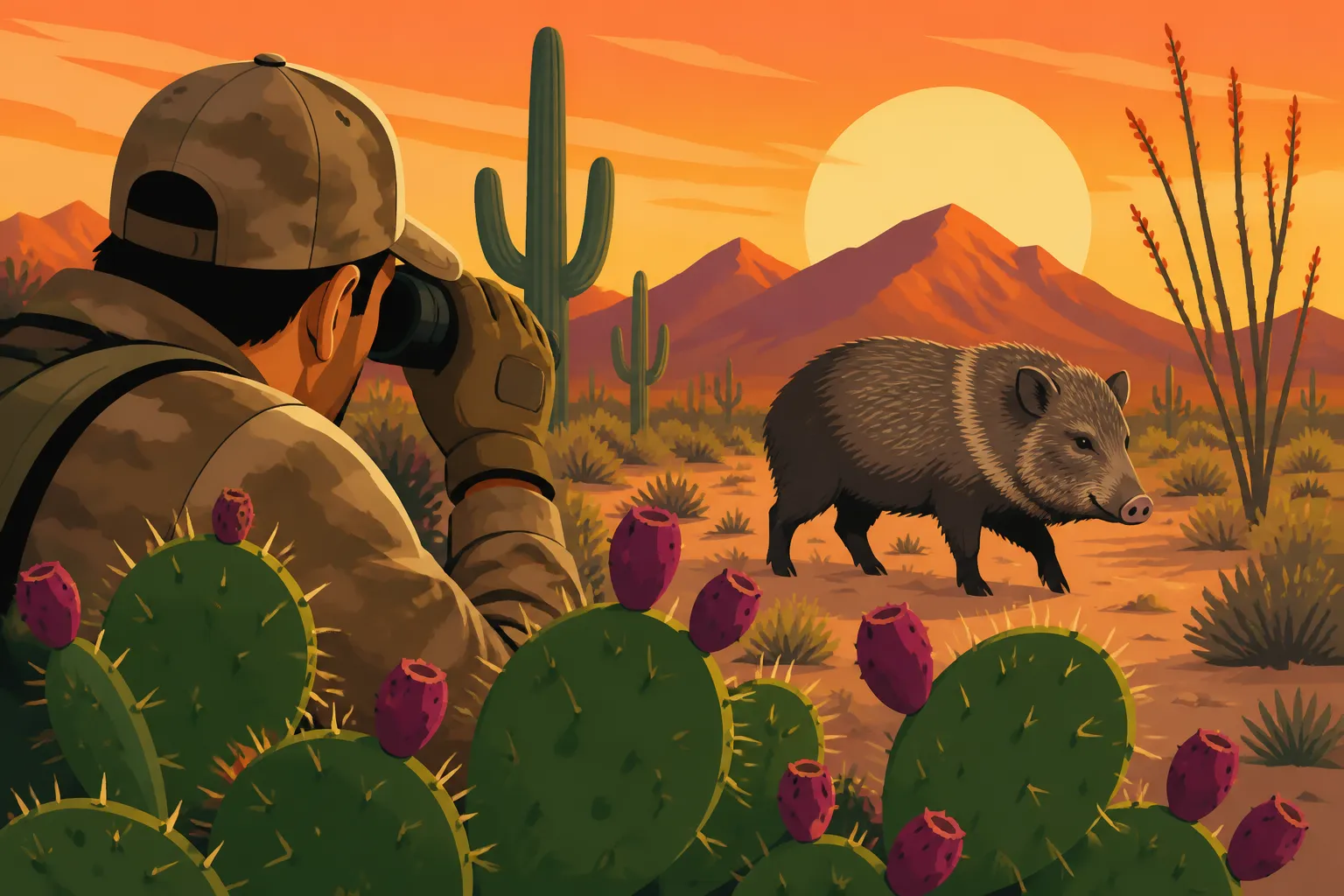
While this article focuses on tracking, the reality of javelina hunting in Arizona often starts with spotting. High-quality binoculars are your best friend. A 10×42 or even 12×50 power is ideal for picking apart the subtle movements or the tell-tale grayish hide of a javelina against the desert backdrop. They blend in remarkably well, especially when bedded. A good pair of binos will save your legs by helping you spot from a distance, reducing the need to blindly push through every thicket. When you do get on a track, binoculars can help you scan ahead, looking for breaks in the cover or the animals themselves. Sometimes, a javelina will stand still, thinking it's hidden, and good glass can reveal them. While a spotting scope isn't usually a primary tracking tool for javelina, it can be invaluable for initial location, especially if you're glassing from a high point before dropping into thick cover. Using tools like the GoHunt platform's mapping features can help you identify potential travel corridors and dense bedding areas from afar, making your initial glassing efforts more efficient.
Navigation and Communication Tools
The desert can be disorienting, and dense prickly pear thickets only make it worse. A reliable GPS device or a mapping app on your smartphone (like onX Hunt, which also integrates well with insights from GoHunt for planning) is absolutely essential. Mark your truck, key terrain features, and any sign you find. This helps you stay oriented and avoids getting turned around in the featureless-looking scrub. If you're hunting with a partner, two-way radios can be a lifesaver, allowing you to communicate silently and efficiently, especially when trying to coordinate a stalk or if one of you spots the herd. Remember that cell service is often nonexistent in remote Arizona hunting units. Always carry a physical map and compass as a backup, and know how to use them. Being prepared for the unexpected is paramount; Water You Must Carry on a Day Hunt is an excellent example of vital preparation for any desert hunting trip.
The Art of Reading Sign in Prickly Pear
Tracking javelina through prickly pear isn't about perfectly clear footprints in soft mud. It's a nuanced skill that requires keen observation and an understanding of how these animals interact with their challenging environment. You're often looking for disturbed vegetation as much as actual tracks.
Identifying Tracks and Scat
Fresh javelina tracks are distinctive: a small, cloven hoof print, often showing two small dewclaws behind the main hooves, especially in softer ground. However, in rocky, hard-packed desert terrain, a clear track can be a rarity. You'll more often find scuff marks, displaced pebbles, or impressions in dust. The key is freshness. Look for sharp edges, undisturbed dust in the depressions, and clarity. Follow a general direction, even if individual tracks are hard to discern. Scat is another excellent indicator. Javelina droppings are typically small, pellet-like, and found in clusters. Again, freshness is key. Dark, moist scat indicates very recent activity, while dry, faded pellets mean the javelina passed through hours or days ago. Often, you'll find scat right where they've been feeding or bedding. Don't be afraid to get down on your hands and knees to really inspect the ground. The more you practice, the better you'll become at recognizing these subtle cues.
Interpreting Feeding and Bedding Areas
Javelina are messy eaters, especially when it comes to prickly pear. Look for torn or chewed prickly pear pads, often with tell-tale tooth marks. You might find pieces of prickly pear on the ground, or even areas where the ground has been rooted up, indicating they've been digging for tubers or roots. These feeding areas will often have a strong javelina scent. Bedding areas, on the other hand, are typically well-concealed within the densest part of a prickly pear thicket or under a large mesquite tree. Look for flattened vegetation, fresh scat nearby, or areas where the ground is disturbed but without obvious feeding signs. Sometimes, you'll find individual spines from prickly pear stuck to nearby vegetation where they've pushed through. These areas are where they feel safe and where they will spend the hottest parts of the day. Pinpointing these spots, particularly those on north-facing slopes for shade, can be crucial.
Visual and Olfactory Cues
Beyond tracks and scat, there are other, more subtle signs to watch and smell for. As mentioned, javelina have a very distinct, musky odor from their scent glands. If you catch a whiff of it on a still morning, you are undoubtedly close. This smell is especially potent in bedding areas or where a herd has recently passed. Visually, look for rubs on low-hanging branches or rocks where they've marked their territory. Also, keep an eye out for disturbed low-lying vegetation or small trails pushed through otherwise dense brush. Javelina are relatively small, but a herd can leave a noticeable path through thickets. These "javelina highways" are fantastic places to set up and wait or to follow, as they usually lead to food, water, or bedding. Using mapping tools from platforms like GoHunt can help you identify these natural travel corridors and potential ambush points by overlaying terrain features with known javelina habitat. Learning to effectively identify these signs is part of the broader skill set of Tracking Javelina Through Thick Cover.
Tactical Approaches to Tracking and Stalking Javelina
Once you've found fresh sign and have a general idea of where the javelina might be, the real challenge begins: turning that sign into a successful stalk. This is where patience, stealth, and a deep respect for the desert environment come into play.
Slow and Deliberate Tracking Techniques
Aggressively crashing through prickly pear will accomplish nothing but scaring off any javelina within a mile. Slow and deliberate is the mantra. Move at a snail's pace, pausing frequently to scan, listen, and smell. Javelina have excellent senses of smell and hearing, and their eyesight, while not exceptional, is certainly good enough to pick up movement. When you find a track, rather than immediately following it, take a moment to look ahead. Can you see where the animal might have gone? Is there a subtle break in the brush, or a low point in a ridge that offers a vantage? This "reading ahead" technique is critical, especially in thick cover. Walk with your head up as much as down, always scanning for movement or a patch of grey that doesn't quite look like a rock. If you lose the track, fan out in small circles from the last confirmed sign. It's often easier to relocate the trail by widening your search than by meticulously picking apart every single inch of ground.
Using Wind and Thermals to Your Advantage
In javelina hunting, wind direction is paramount. Their nose is their most powerful defense. Always try to approach with the wind in your face or quartering into you. This means the wind is carrying your scent away from where you expect the animals to be. Ignore this, and your hunt will be over before it truly begins. In desert environments, thermals also play a significant role. As the sun rises and heats the ground, air currents (thermals) tend to rise, carrying scent uphill. Conversely, as the sun sets and the ground cools, thermals reverse and carry scent downhill. This means that in the mornings, an uphill approach is generally safer, and in the evenings, a downhill approach is better. Always be mindful of shifting winds throughout the day, as they can change rapidly and unexpectedly in canyon country or along ridges. Paying attention to these subtle changes in air movement is as important as understanding the terrain itself, much like Reading Wind on a Sky Island Stalk.
Mastering the Final Approach in Thick Brush
This is often the most challenging part of the hunt. You're close, the adrenaline is pumping, but you're still facing a wall of thorns. The key here is extreme stealth and exploiting every bit of cover. Use washes, dry creek beds, or natural depressions to minimize your profile. Move when the wind is gusting or when other sounds might mask your movement. Prioritize visual confirmation before taking another step. If you can see the javelina, or at least a portion of the herd, try to gauge their direction of travel and get ahead of them, or position yourself for a clear, ethical shot. Don't be afraid to crawl if necessary. Remember, the goal isn't just to get close, but to get close enough for a clean shot without spooking the entire herd. In this terrain, a good shot opportunity might be fleeting. Consider your weapon and its capabilities; for archers, closing that last bit of distance is crucial, as described in How Close a Bowhunter Needs to Get on Coues, which applies to javelina in dense cover as well.
Safety and Ethics When Hunting Javelina in Tough Terrain
Hunting in Arizona's javelina country, especially through prickly pear, comes with inherent risks. Prioritizing safety and upholding ethical hunting practices are non-negotiable. The challenges of the terrain amplify the need for preparedness and responsible behavior.
Navigating Hazardous Terrain Safely
Beyond the obvious hazard of cactus spines, Arizona's desert terrain presents numerous other dangers. Rattlesnakes are common, especially during warmer months, and their camouflage makes them incredibly difficult to spot in the dense undergrowth. Always be aware of where you place your hands and feet. Sturdy boots and gaiters can offer some protection, but vigilance is your best defense. The ground itself can be treacherous, with loose rocks, eroded washes, and steep, unstable slopes. A twisted ankle is a common injury. Carry enough water – far more than you think you'll need – as dehydration can quickly become a serious issue in the dry, hot climate. Heat Management on an Arizona Early Season Hunt is an important read for preparing for these conditions. Always let someone know where you are going and when you expect to return. In remote areas, a satellite messenger or personal locator beacon is a wise investment.
Ethical Shot Placement and Recovery
Javelina are tough animals, and dense cover makes recovery challenging. A clean, ethical shot is paramount. Aim for the vitals, typically a broadside shot behind the shoulder. Avoid questionable shots that might wound an animal and make recovery in thick prickly pear an absolute nightmare. After the shot, take note of where the animal was standing, its reaction, and its direction of travel. Even if it looks like a clean hit, give the animal some time before beginning your recovery, especially if it ran into thick cover. If the blood trail is sparse or non-existent, grid search the area systematically. Having a partner can be immensely helpful for tracking a wounded animal. Losing an animal in thick prickly pear is a deeply frustrating experience, but diligent tracking and an ethical approach will minimize this risk.
Post-Harvest Care in Desert Conditions
Once you've successfully harvested a javelina, the work isn't over. Arizona's desert heat means you need to field dress the animal quickly to prevent spoilage. Javelina are smaller, making them easier to handle than a deer, but the principle is the same. Get the guts out, open the body cavity for air circulation, and get the animal cooled down as fast as possible. If you're far from your vehicle, consider using a game bag and a backpack to quarter the animal out and pack it back. Even in cooler months, temperatures can rise quickly during the day. Having a plan for meat care before you even start hunting is crucial. This might include carrying a cooler with ice in your vehicle, especially if you're not heading straight home. Remember, the goal is to utilize the animal you've taken responsibly, and that includes proper meat care, a topic covered more broadly in Field Dressing in Desert Heat.
Understanding Arizona's Javelina Seasons and Regulations
Arizona offers varied opportunities for hunting javelina, from over-the-counter archery seasons to draw-only rifle and handgun-archery-muzzleloader (HAM) hunts. Knowing the regulations is critical.
Arizona's javelina seasons are designed to provide ample opportunity, but they come with specific rules you need to understand. The archery season, in particular, is very popular because it's an over-the-counter tag, meaning you don't have to go through the draw. This accessibility is why Javelina Is Arizona's Most Accessible Big Game. These seasons often run for several weeks in January and February, sometimes extending into early March, providing a great opportunity to get out in the field. Rifle and HAM hunts, however, require you to apply through the draw process, usually in October for the following spring.
Here's a quick overview of some key aspects:
| Season Type | Tag Type | Application Method | Typical Timing | Weapon Restrictions |
|---|---|---|---|---|
| Archery-Only (OTC) | Over-the-Counter | Purchase online or licensed dealer | Jan-Feb/Early March | Vertical bow, Crossbow |
| Rifle/Shotgun | Draw Hunt | Apply in Oct/Nov for Spring | Feb-March | Rifle, Shotgun |
| Handgun-Archery-Muzzleloader (HAM) | Draw Hunt | Apply in Oct/Nov for Spring | Feb-March | Handgun, Archery, Muzzleloader |
It's important to note that specific season dates and unit designations change annually, so always consult the latest Arizona Game and Fish Department (AZGFD) regulations booklet before planning your hunt. The Arizona hunting license year begins in January, so ensure your license is current.
The bag limit for javelina is generally one per calendar year, but check the regulations carefully as some specific units might have different rules. Make sure you understand the tag requirements and how to properly validate and attach your tag immediately after harvest. For more detailed information, the AZGFD website is always your go-to resource.
Navigating Public Land and Access for Javelina
Arizona offers vast amounts of public land perfect for javelina hunting, but understanding land designations and access rules is crucial to staying legal and finding productive ground.
Much of Arizona is public land, managed by agencies like the Bureau of Land Management (BLM) and the U.S. Forest Service (USFS). These lands are generally open to hunting without additional permits beyond your valid hunting license. This means acres upon acres of prime javelina habitat are available to the public. However, there are nuances. Some areas might have seasonal road closures, especially in higher elevations or during wet periods. Always check Motor Vehicle Use Maps (MVUMs) for Forest Service lands and maps for BLM areas to ensure you're driving legally and not trespassing.
Arizona also has State Trust Land, which makes up a significant portion of the landscape. While a recreational permit is typically required for activities on State Trust Land, your valid Arizona hunting license often serves as this permit for hunting purposes. Still, it's wise to double-check the latest AZGFD regulations regarding State Trust Land access. Arizona State Trust Land Needs a Permit, and Your License Counts is a helpful guide on this specific topic.
Private land is, of course, off-limits without explicit permission from the landowner. Always be respectful of private property boundaries, even if a javelina runs onto it after you've shot it. Trespassing can result in citations and loss of hunting privileges. Tools like onX Hunt or GoHunt maps are invaluable for identifying land ownership boundaries, helping you avoid accidental trespass and locate accessible public ground. Many successful javelina hunts happen on ground that isn't particularly remote, so don't overlook areas closer to developed areas that might still hold good numbers of animals in suitable habitat.
Disclaimer
Hunting is an inherently dangerous activity. This guide provides general information and recommendations. Always consult the most current Arizona Game and Fish Department regulations, obtain proper licenses and tags, and prioritize safety above all else. Hunt ethically, responsibly, and with respect for the wildlife and the land.