OTC Bear Tags in Arizona Units
If you're like many hunters, the idea of pursuing a black bear in Arizona without navigating the complexities of a draw sounds incredibly appealing. It’s easy to get excited about an over-the-counter (OTC) tag, picturing yourself wandering through the pine forests or rugged canyons, tracking a bruin. But the reality of Arizona's OTC bear season comes with a unique set of challenges and responsibilities, particularly the dynamic unit closures. This guide will walk you through the nuances, regulations, and best practices to help you successfully plan and execute an Arizona OTC bear hunt, ensuring you're prepared for what truly sets these seasons apart.
Understanding Arizona's Over-the-Counter Bear Tag System
When Arizona offers an "over-the-counter" bear tag, it sounds straightforward – just walk into an authorized dealer or go online, purchase your tag, and you're good to go, right? Well, yes, but also a very big no. While the purchase of the tag itself is simple, the hunting of bear in Arizona, even with an OTC tag, is far from a "set it and forget it" affair. It requires constant vigilance and an understanding of dynamic management strategies that are unique to bear hunting in the state.
What "Over-the-Counter" Truly Means for Bear
Unlike species such as deer or elk, where a general OTC archery tag might mean a long, defined season, Arizona bear tags operate under a more fluid system. You can indeed purchase your tag at any license dealer, Arizona Game and Fish Department office, or even through their online portal. This immediate availability is what makes it "over-the-counter." However, the catch, and it's a significant one, is that these seasons are not static. They are subject to immediate, unit-specific closures based on harvest quotas set by the department. This means that while you have a tag, you might not be able to hunt if your chosen unit has already met its harvest limit for the season, or, more specifically, its female harvest limit. It's a system designed to manage bear populations effectively, ensuring sustainable numbers while providing hunting opportunities.
This dynamic nature often frustrates hunters accustomed to more predictable seasons. Imagine driving hours to your hunt unit, only to find out it closed a few hours before you arrived. It's a real and common scenario for bear hunters in Arizona. Therefore, understanding that the purchase of the tag is merely the first step, and daily monitoring of the season status is the actual cornerstone of an Arizona OTC bear hunt, is absolutely essential.
Why Arizona Bear Hunts are Different
Arizona's bear management strategy is designed to be highly responsive to population data, harvest rates, and public input. This means that, unlike many other big game species, bear seasons are opened and closed on a unit-by-unit basis, often with very little warning. The Arizona Game and Fish Department (AZGFD) employs specific harvest objectives and limits, particularly focusing on the number of female bears taken. This focus on female harvest is a critical component of conservation efforts, as the reproductive rate of a bear population directly correlates to the number of breeding females.
The challenge for hunters, then, is to stay constantly informed. This isn't just a recommendation; it's a mandatory part of the hunt. You can't simply consult a printed regulation booklet from months ago and assume it's still current. You need to be checking the AZGFD website's "Hunt and Fish" section or their dedicated hotline daily, sometimes even multiple times a day, especially as seasons progress and harvest numbers climb. This vigilance is what truly differentiates an Arizona OTC bear hunt from almost any other big game pursuit. It places a significant responsibility on the hunter to be proactive and informed, which can be a steep learning curve for those new to the system.
Navigating Unit-Specific Closures and Harvest Limits
The heart of Arizona's OTC bear hunting system lies in its unit-specific closures and harvest limits. This isn't just bureaucratic red tape; it's a scientifically-driven approach to ensure healthy bear populations for the future. As hunters, understanding and adhering to these rules is paramount to ethical and legal hunting.
The Critical Role of Zone and Gender Quotas
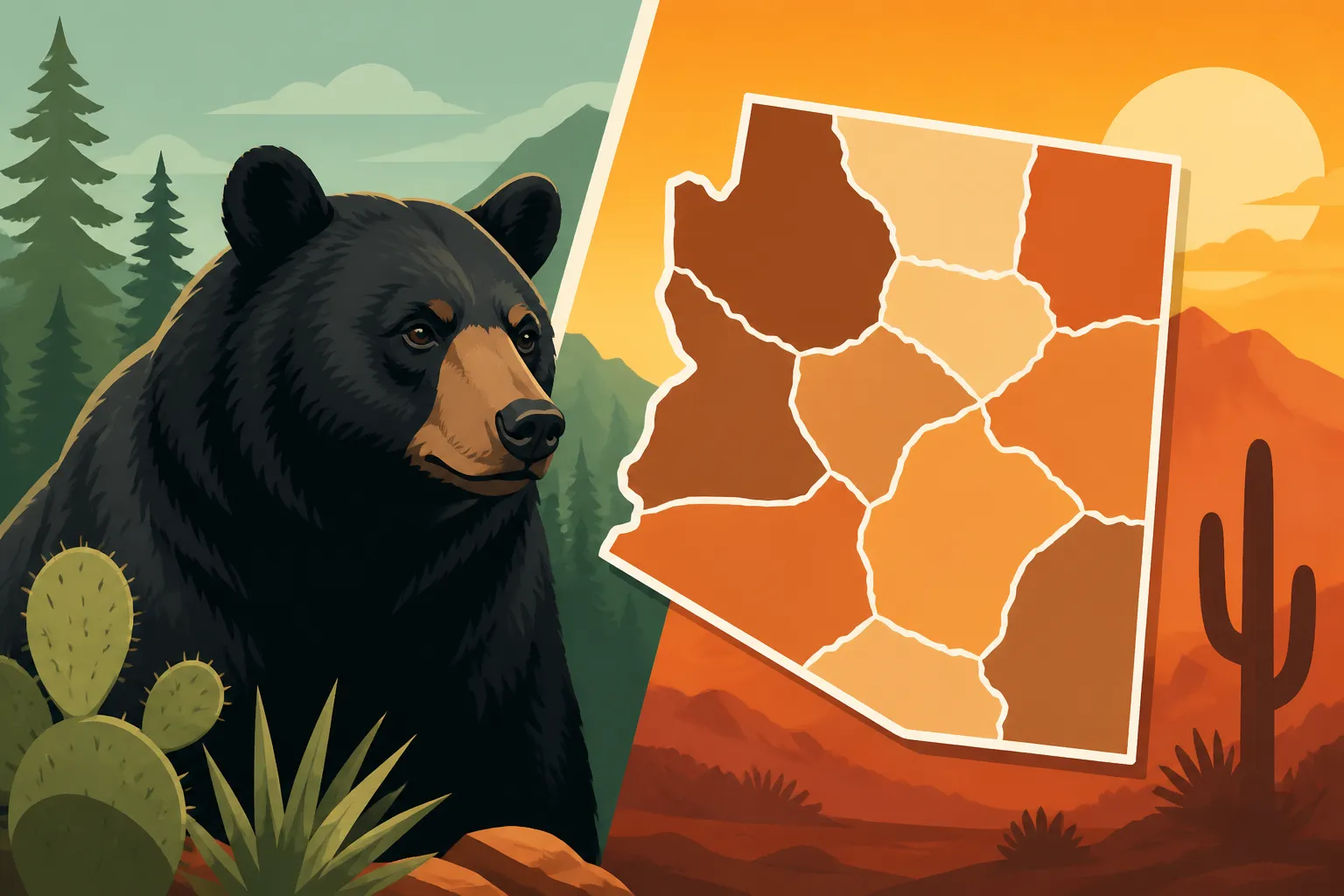
Arizona manages its black bear population through a combination of game management units (GMUs) and regional zones. Each of these units or zones is assigned a specific harvest limit for both total bears and, more critically, for female bears. These quotas are not arbitrary; they are determined based on population estimates, habitat conditions, and historical harvest data. When the harvest in a particular unit or zone approaches or meets these limits, especially the female limit, that unit's bear season will close immediately. The reason for the intense focus on female harvest limits, as discussed in detail in Female Harvest Limits on Arizona Bears, is simple: a healthy female population ensures a strong reproductive base for future generations of bears. Taking too many sows can quickly decimate a local population, and AZGFD is very careful to avoid that.
This means you could be hunting in Unit 23, for example, which might have a total quota of 15 bears and a female quota of 5 bears. If five female bears are harvested and reported in that unit, the season will close, regardless of whether the total harvest of 15 bears has been met. This is why knowing the specific unit you plan to hunt, and its current harvest status, is absolutely non-negotiable. Many hunters find tools like GoHunt invaluable for quickly checking these unit-specific stats and recent harvest reports, making it easier to track which units are still open and which are nearing their limits.
Real-Time Closure Monitoring: Your Daily Duty
I cannot stress this enough: You must check the AZGFD website or hotline every single day you intend to hunt, and even the day before. Many seasoned Arizona bear hunters check multiple times a day when they are actually in the field, particularly during prime hunting periods or late in a season. The department typically updates its website daily, often by late afternoon, with the previous day's harvest numbers. However, during periods of high harvest, or if a critical female quota is reached, a unit could close with very little notice. This is why How Arizona Closes a Bear Unit Mid-Season is such an important topic to understand.
Imagine driving for hours, setting up camp, and waking up before dawn, only to find out via satellite communication (or a cell signal you might or might not have) that your unit closed yesterday afternoon. It's happened to many frustrated hunters. To avoid this heartache, dedicate time each evening or morning to verify the status of your chosen unit. The AZGFD provides a dedicated web page and a phone hotline (1-800-970-BEAR) for this purpose. Bookmark the page on your phone, download relevant data offline, or have the number ready. Being proactive and responsible in this regard is not just about avoiding a wasted trip; it's about respecting the regulations and the game management efforts that keep Arizona's bear populations healthy.
Finding the Best Units for Over-the-Counter Bear Hunting
With the complexities of OTC bear tags in Arizona, choosing the right unit becomes even more crucial. It's not just about finding bears, but finding bears in a unit that is likely to remain open long enough for you to hunt. This requires a blend of habitat knowledge, data analysis, and an understanding of hunting pressure.
Researching High-Potential Bear Habitat
Arizona's black bear populations are spread across a diverse range of habitats, from dense conifer forests at higher elevations to riparian areas and scrub oak thickets in the lower Sonoran Desert. Generally, you'll find higher concentrations of bears in areas that offer good cover, abundant food sources, and reliable water. Think about the extensive Mogollon Rim, the White Mountains, or the various Sky Island mountain ranges in the southeastern part of the state, such as the Chiricahuas or Pinalenos. These areas often feature Ponderosa pine, oak, juniper, and chaparral, which provide excellent forage like acorns, berries, and grubs, as well as crucial escape cover.
When E-Scouting an Arizona Unit Before the Season, look for rugged, remote country with north-facing slopes that hold moisture, dense pockets of vegetation, and consistent water sources. Bears are often found near riparian corridors in canyons and washes, especially during hotter parts of the season or dry periods. Utilizing satellite imagery to identify these features and then cross-referencing with public land maps can give you a significant advantage. Remember, bears are opportunists, so also consider areas that might have recent natural disturbances, like wildfires, which can create new growth and attract bears feeding on forbs and berries in the following seasons.
Utilizing Data and Local Knowledge
To identify units with good bear potential, you'll want to dig into historical harvest data. The AZGFD publishes annual harvest reports and draw odds, and while OTC bear isn't a draw, these reports often include Where Arizona Publishes Unit Harvest Statistics and success rates that can point you toward productive areas. A unit with consistently higher bear harvests over several years might indicate a healthy population, but also potentially higher hunting pressure and faster closures. Conversely, a unit with lower harvest might mean fewer bears or simply less hunting pressure, potentially keeping the season open longer.
Online platforms like GoHunt's Insider service can offer valuable insights, consolidating data and even predicting potential closure dates based on historical trends and current harvest rates. This kind of tool can be a game-changer for OTC bear hunting, providing real-time data integration that goes beyond simply Reading the Arizona Hunt Regulations Booklet. Don't underestimate the power of local knowledge, either. A respectful conversation with a local AZGFD biologist, game warden, or even an established local hunter, can yield invaluable insights into specific areas, recent bear activity, or particular challenges within a unit. Always be polite, succinct, and ready to listen. They are often willing to share general information, though specific "honey holes" are usually kept under wraps. Also, when you're looking at any unit, make sure you understand How Arizona Numbers Its Game Management Units so you can accurately pinpoint areas for research.
Essential Regulations and Ethical Considerations
Beyond the dynamic season closures, there are fundamental regulations and ethical considerations that every bear hunter in Arizona must understand and adhere to. A responsible hunter is not only legal but also deeply committed to the fair chase and ethical treatment of wildlife.
Key Rules Beyond the Tag Itself
First and foremost, you must possess a valid Arizona hunting license in addition to your OTC bear tag. If you were born on or after January 1, 1967, Hunter Education Is Required Under 14 in Arizona (or for any big game license) you must also have completed an Arizona Hunter Education course or an approved equivalent from another state. Ignorance of the law is never an excuse, so carry your license and tag at all times while hunting.
Other critical regulations include Arizona Legal Shooting Hours for Big Game, which apply to bear and dictate when you can legally hunt. You also need to be aware of Baiting Rules That Apply to Arizona Bears – in Arizona, baiting for bear is generally prohibited on public land, and specific rules apply to private land. Similarly, Trail Camera Rules on Arizona Public Land are strict and must be followed. It's illegal to use trail cameras or other electronic devices to locate or aid in the take of big game animals in real-time. This means no cellular-enabled trail cameras transmitting images directly to your phone while hunting. When you harvest a bear, you are required to immediately punch and attach your tag. You also must Mandatory Reporting After an Arizona Harvest. This includes sealing the hide at an AZGFD office within 10 days of harvest, and often providing skull and sex identification. This reporting is critical for management and directly impacts the unit closures, so it’s a non-negotiable step.
Responsible Bear Hunting Practices
Ethical bear hunting goes beyond just following the law; it involves a deep respect for the animal and the hunting tradition. One of the most important ethical considerations for bear is confirming the sex of the animal. It is illegal to harvest a sow with cubs, and actively avoiding such a situation requires careful observation. Take your time to identify the bear clearly. Look for visual cues like body shape, behavior, and the presence of cubs, even if they are yearlings. If there's any doubt, don't take the shot. Bears also offer challenges when it comes to shot placement, given their thick hide and dense bone structure. Practice extensively with your chosen weapon to ensure you can make a clean, humane shot, and be prepared for potential follow-up shots.
Furthermore, The Meat Salvage Requirements for Big Game in Arizona apply to bears. This means you are legally obligated to retrieve all edible portions of meat. In the often-hot Arizona environment, especially during early seasons, Field Dressing in Desert Heat quickly and getting the meat cooled is crucial to prevent spoilage. Have a plan for recovery, field dressing, and transport, particularly in rugged terrain. Bears are tough animals, and a wounded animal can travel a long way. Always make every effort to track and recover a wounded bear, even if it means long hours on the trail. This commitment is a fundamental part of ethical hunting and showing respect for the animal you pursue. Finally, be mindful of water sources, especially during dry periods. Finding Water in Arizona's Dry Country is not only essential for wildlife but also a common place to encounter game, requiring extra diligence to avoid disturbing animals or making unethical approaches.
Understanding Arizona Bear Season Structure
Arizona's bear season is typically divided into spring and fall hunts, with specific dates varying by unit and weapon type (archery, general firearm). These seasons are all subject to the aforementioned harvest limits, making them inherently dynamic.
| Season Type | Typical Dates (Approx.) | Weapon Type | Harvest Limit Considerations | Reporting Requirements |
|---|---|---|---|---|
| Spring Bear | Mid-April to Mid-May | Archery/General | Low quotas, highly dynamic; often closes early if female quota is met quickly. | Mandatory hide/skull seal within 10 days. |
| Fall Archery Bear | Late August to Mid-September | Archery | Moderate quotas; dependent on early season pressure and harvest. | Mandatory hide/skull seal within 10 days. |
| Fall General Bear | Early October to Late December | General | Higher quotas, but units still close independently based on female harvest. | Mandatory hide/skull seal within 10 days. |
Note: These dates are approximations. Always consult the current Arizona Game and Fish Department regulations for exact dates and unit-specific rules.
As you can see, regardless of the season, the underlying principle of dynamic closure based on harvest limits remains paramount. The fall general season often has more opportunity due to higher quotas and less concentrated hunting pressure compared to the shorter spring season, but vigilance is still key.
Disclaimer
Please remember that hunting regulations, season dates, and unit-specific closures can change. It is every hunter's responsibility to consult the most current Arizona Game and Fish Department regulations and check for real-time season closures before heading afield. The information provided in this article is for general guidance only and should not be considered legal advice.