How Javelina Use Scent to Communicate
Hunting javelina in Arizona can be a truly unique challenge, often frustrating for even seasoned hunters who are used to tracking larger game. These "desert pigs" have a notoriously keen sense of smell and a complex world of scent communication that many of us simply don't understand, leading to busted stalks and empty game bags. This guide will dive deep into the fascinating olfactory world of the javelina, explaining how they use scent to navigate, communicate, and survive, and how understanding these subtle cues can dramatically improve your hunting success in the Arizona backcountry.
The Secret Language of Scent Glands: How Javelina Communicate
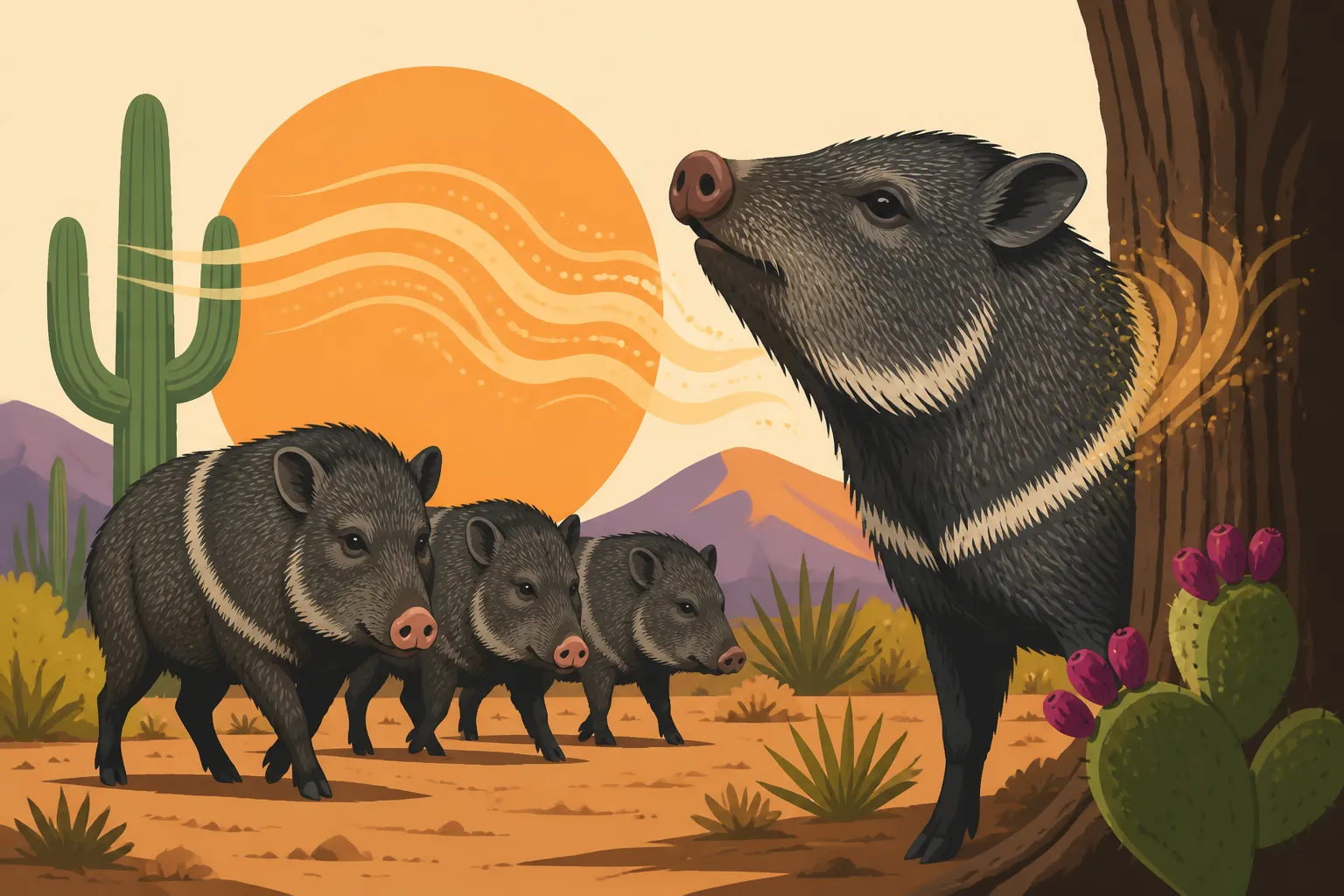
Javelina, or collared peccaries, don't just rely on grunts and clacks; their primary language is an intricate network of scent. Unlike true pigs, javelina possess several specialized glands that produce powerful, distinct odors, acting as their personal communication system. This constant exchange of information helps them manage their herds, warn of danger, and even find mates. For us hunters, recognizing the presence and purpose of these glands is the first step to unlocking their secrets.
The Dorsal Gland: The Herd's Signature Scent
The most prominent and well-known scent gland on a javelina is the dorsal gland, located on their lower back, just in front of the tail. This gland produces a musky, sometimes pungent, odor that's highly characteristic of javelina. Imagine a family having a unique perfume that only they use – that's essentially what the dorsal gland creates for a javelina herd.
Each herd has its own slightly distinct "signature" scent, a sort of family identifier that helps members recognize each other and maintain group cohesion. When you see javelina rubbing their backs against trees, rocks, or even other herd members, they're actively deploying this scent. This communal scent-marking reinforces their bond and helps to create a shared "odor blanket" over their territory. For a hunter, catching a whiff of this strong, musky smell is often the first undeniable sign that javelina are in the vicinity, long before you see or hear them. It tells you, unequivocally, that you're in active javelina country.
Other Important Scent Glands and Their Uses
Beyond the powerful dorsal gland, javelina have several other scent glands, each playing a crucial role in their communication. These aren't always as obvious to us, but they contribute significantly to the rich tapestry of odors that define their world.
- Preorbital Glands: Located in front of their eyes, these glands are used for close-range communication and individual recognition. Think of it as a subtle hello or a personal signature. When javelina greet each other, they often nuzzle heads, exchanging these unique scents. This allows them to quickly identify herd members, assess their status, and reinforce social bonds without needing a vocal exchange. For a hunter, understanding the importance of these subtle cues means recognizing that javelina are constantly aware of each other's presence, even when visually obscured.
- Pedal Glands: Situated between their hooves, these glands leave scent trails as the javelina move. Every step they take deposits a tiny bit of their personal essence onto the ground. This acts as a roadmap for other javelina, indicating recent travel paths and contributing to the overall scent saturation of their territory. It's like leaving a breadcrumb trail made of perfume. This is particularly important for lost individuals trying to rejoin their herd or for solitary boars seeking out sows during the breeding season.
- Glands Around the Mouth and Chin: While less studied, it's believed that javelina also have scent glands around their mouth and chin. These likely play a role in foraging and identifying food sources. As they root through the soil for tubers, prickly pear pads, and other vegetation, they deposit scent, possibly indicating a good feeding spot to other herd members or marking a patch as "claimed."
The Daily Olfactory World of Arizona Javelina
Scent isn't just for special occasions in the javelina world; it's a constant, pervasive element of their everyday existence. From navigating their home range to warning of lurking dangers, their noses are always working overtime. Understanding this constant sensory input helps us appreciate the challenges of still hunting or stalking these animals effectively. If you're wondering How Javelina Differ From Wild Pigs, this constant scent communication is one key aspect.
Marking Territory and Herd Cohesion
For a javelina herd, territory is everything, and scent is the invisible fence they erect. The musky scent from their dorsal gland is routinely applied to boundary markers like prominent cacti, rocks, and bushes. This isn't just about saying "we were here"; it's a declaration of ownership and a warning to rival herds to keep their distance. Imagine walking through your neighborhood, and every mailbox, fire hydrant, and lamppost had a sign saying "The Smith Family lives here!" but only detectable by smell.
Within the herd itself, this communal scent fosters incredible cohesion. Each individual contributes to the overall herd smell, creating a uniform identity. This helps them stay together as a unit, especially in dense brush or low light conditions where visual contact might be lost. If a javelina gets separated, that familiar herd scent acts as a beacon, guiding them back to their family. This is why when you approach a herd, they often seem to move as one, a tightly knit group responding to both visible and invisible cues. When considering Javelina Herd Behavior and Scent, this deep integration of scent is paramount.
Warning Signals and Alarm Scents
Javelina are constantly on alert for predators, from mountain lions to coyotes, and scent plays a critical role in their early warning system. While the dorsal gland's scent generally signals presence, alarm pheromones can be released when a javelina is startled or feels threatened. These specialized scents act as an immediate distress signal, alerting the entire herd to danger.
Imagine a javelina suddenly catching the faint scent of a predator or seeing a suspicious movement. Its body might involuntarily release these alarm scents, causing a cascade effect through the herd. Other javelina, upon detecting this specific odor, instantly go on high alert, often freezing, grunting, or scattering. This lightning-fast communication, often faster than a vocal warning, gives the herd a crucial edge in avoiding threats. For hunters, this means that even if you're perfectly quiet and unseen, your own scent, or any sudden movement that causes a javelina to perceive danger, can trigger an invisible alarm that clears the entire area in seconds.
Reproductive Scent Signals
Beyond daily survival, scent is indispensable for reproduction. During the breeding season, sows in estrus release specific pheromones that signal their receptiveness to boars. These chemical messages are potent and can travel a considerable distance, drawing in potential mates.
Boars, driven by these irresistible scent trails, will actively seek out receptive females, relying almost entirely on their sense of smell to locate them. They'll follow pedal gland scents and test the air for the specific estrus signals. This intense focus on scent explains why boars can be found wandering a bit more widely during these periods, sometimes even venturing temporarily from their primary herds in search of a breeding opportunity. Understanding the timing of the rut and the role of these reproductive scents can be particularly helpful for hunters targeting larger boars, as they become more predictable in their search patterns.
Hunting Implications: Deciphering Javelina Scent for Success
So, how do we, as hunters, translate this deep understanding of javelina scent into a more successful hunt? It's all about playing detective, using our knowledge to read the landscape, predict their movements, and, perhaps most importantly, minimize our own olfactory footprint. Finding a good spot to intercept a herd requires this kind of strategic thinking. Many hunters use tools like GoHunt to research units and plan out their approach, cross-referencing public land maps with potential javelina habitat.
Locating Javelina by Scent
One of the most immediate ways to use scent is simply by detecting it. That musky, unmistakable javelina odor is a tell-tale sign that you are in the right neighborhood.
Table: Javelina Scent Indicators for Hunters
| Scent Type | Source | What it Indicates | Hunter's Action |
|---|---|---|---|
| Strong Musky Odor | Dorsal Gland | Active javelina presence, possibly a herd close by. | Slow down, glass intensely, listen for grunts/clacks. |
| Faint Earthy Musk | Dorsal Gland | Javelina recently passed through or are in the area. | Follow scent trail carefully, look for fresh sign (tracks, digs). |
| Disturbed Vegetation | Pedal Glands, Rubs | Recent javelina activity, likely a travel corridor. | Check for rubs on bushes/rocks, assess direction of travel. |
| "Fresh Dirt" Odor | Foraging, Mouth Glands | Active feeding area, especially after recent rain. | Investigate for digs, analyze vegetation types they prefer. |
| Alarm Scent (subtle) | Various Glands | Javelina recently spooked or alerted, likely scattered. | Back off slowly, regroup, come back later, or make a wide circle. |
If you're walking through thick mesquite or prickly pear patches and suddenly catch a strong whiff of that distinct javelina musk, stop immediately. Don't push forward blindly. Instead, use your binoculars or spotting scope to slowly pick apart the cover ahead. Look for movement, subtle shapes, or even just the flick of an ear. That scent confirms they're close, and the next few minutes are critical. Sometimes, you'll smell them before you ever see tracks or hear their characteristic grunts. This is especially true in areas where they've recently rubbed their dorsal glands on bushes or rocks.
Reading Scent Trails and Sign
Javelina leave a literal breadcrumb trail of information with their pedal glands and dorsal gland rubs. Learning to read this sign, in conjunction with other tracks and feeding areas, can help you piece together their movements. When you're trying to figure out Tracking Javelina Through Thick Cover, these scent clues are invaluable.
Look for areas where bushes or low-hanging branches show signs of frequent rubbing, often with a darker, oily residue. This indicates a well-used travel corridor or a favored bedding area. The scent will linger longer in cooler, shaded conditions. While difficult for the human nose to differentiate, javelina can tell if a scent trail is fresh or old, and if it belongs to their herd or another. When e-scouting an area, perhaps with the help of a tool like GoHunt, remember to consider not just water sources and food but also dense cover that would be ideal for bedding and rub lines.
Minimizing Your Own Scent Profile
This is arguably the most crucial takeaway for hunting javelina: they have an incredible sense of smell, far superior to ours. Your scent, even after showering and using scent-reducing products, is a blaring siren in their world. If you're wondering How Close a Bowhunter Needs to Get on Coues, you can bet it's even closer for javelina, and scent control is paramount.
Always, and I mean always, hunt the wind. This isn't just a suggestion; it's a non-negotiable rule when pursuing javelina. A slight shift in wind can carry your scent directly to a herd, scattering them instantly. Before you even step foot in a unit, check the prevailing wind patterns for the day and plan your approach accordingly. If the wind is swirling or unpredictable, especially in hilly or canyon country, it's often better to wait for more stable conditions or choose a different area to hunt.
Dress in clean hunting clothes, use scent-eliminating sprays, and avoid strong-smelling foods or colognes. Even the faint smell of gasoline from your vehicle or morning coffee can be enough to alert these animals. When stalking, be mindful of any strong gusts that could carry your scent around a ridge or through a wash. Patience and a meticulous approach to scent control will dramatically increase your chances of getting close enough for a shot.
Mastering Scent Control for Javelina Encounters
Effective scent control isn't just about masking your odor; it's about eliminating it as much as possible, or at least preventing it from reaching the javelina's incredibly sensitive nose. It's a multi-faceted approach that starts long before you ever leave your truck. Neglecting this crucial aspect is why many hunters experience repeated failures when pursuing these wily desert dwellers.
Pre-Hunt Preparation: Building a Clean Slate
Your scent control regimen begins long before you hit the field. Think of it as creating a "clean slate" for your hunting trip.
Start by washing all your hunting clothes in a scent-free detergent. Don't use your regular laundry detergent, no matter how "unscented" it claims to be for household use; it still contains brighteners and subtle odors that javelina can detect. After washing, hang your clothes outdoors to air dry, ideally in a breezy, sunny spot, to remove any lingering chemical odors. Store them in scent-proof bags or containers, away from anything that carries artificial smells, like your garage or car interior. This includes your backpack, hat, gloves, and even your boot insoles. Remember, every item you bring into the field has the potential to carry human odor.
Your personal hygiene also plays a role. Shower with scent-free soap and shampoo before each hunt. Avoid deodorants, colognes, or aftershaves. While you can never be entirely scent-free, these steps significantly reduce your overall odor signature, making it less likely to be detected at a distance. Don't forget your mouth either; avoid strong breath mints or chewing gum with artificial flavors. Sometimes, finding Water Sources and Ethics in Arizona Desert Hunting will bring you close to areas javelina frequent, so being scent-free around these key spots is vital.
During the Hunt: Dynamic Scent Management
Even with meticulous pre-hunt preparation, scent management is an ongoing task in the field. The desert environment, with its changing thermals and shifting winds, presents continuous challenges.
Always check the wind. Carry a small bottle of scent-checker powder or a lightweight indicator that allows you to see the wind's direction and any subtle swirling. Before moving into a new area or initiating a stalk, pause, observe, and confirm the wind. If the wind is inconsistent, or if you suspect it might swirl and carry your scent to where you expect javelina to be, hold tight or adjust your route. There's no point in making a perfect stalk if your scent arrives before you do. Remember that thermals often drop in the morning and rise in the afternoon, meaning scent travels downhill in the cool hours and uphill as the day warms. Plan your approaches accordingly, utilizing natural terrain features to keep the wind in your favor.
Use natural cover to your advantage, not just for concealment, but also for its ability to absorb and break up scent. Walking through dense brush can sometimes help scrub off some of your odor, but it's not a substitute for proper wind management. Avoid touching too many surfaces, as human oils can easily transfer and leave a lingering scent trail. If you do need to sit for an extended period, try to choose a spot that offers a clear shot while keeping the wind blowing your scent away from potential javelina routes. Even when Sitting Water for Javelina and Deer, the wind is still king.
Leveraging the Wind: Your Best Friend
The wind isn't just something to avoid; it's your most powerful tool in the javelina hunter's arsenal. Learning to read the wind and use it to your advantage is a skill that will pay dividends.
Instead of fighting the wind, embrace it. Plan your hunting routes to approach potential javelina bedding or feeding areas into the wind. This means your scent is being carried behind you, away from the animals you're pursuing. If you're on a ridge and the wind is blowing upslope, you might need to come around and approach from the other side, or wait until the thermals shift. GoHunt's mapping tools can often provide wind direction overlays, helping you plan your exact approach path with maximum stealth.
When still hunting, take frequent pauses to re-evaluate the wind. A subtle eddy can suddenly push your scent in an unexpected direction. If you see javelina and realize the wind is wrong, sometimes the best move is to back out quietly, reassess, and try a different approach later or even the next day. A successful javelina hunt often hinges on patience and an unwavering commitment to controlling your scent, allowing you to slip into their world undetected and get within range of these incredibly scent-sensitive creatures.
Disclaimer
This article is for general informational purposes only and does not constitute professional advice. Laws, prices and regulations vary by location and change over time. Consult a qualified professional for guidance on your specific situation.