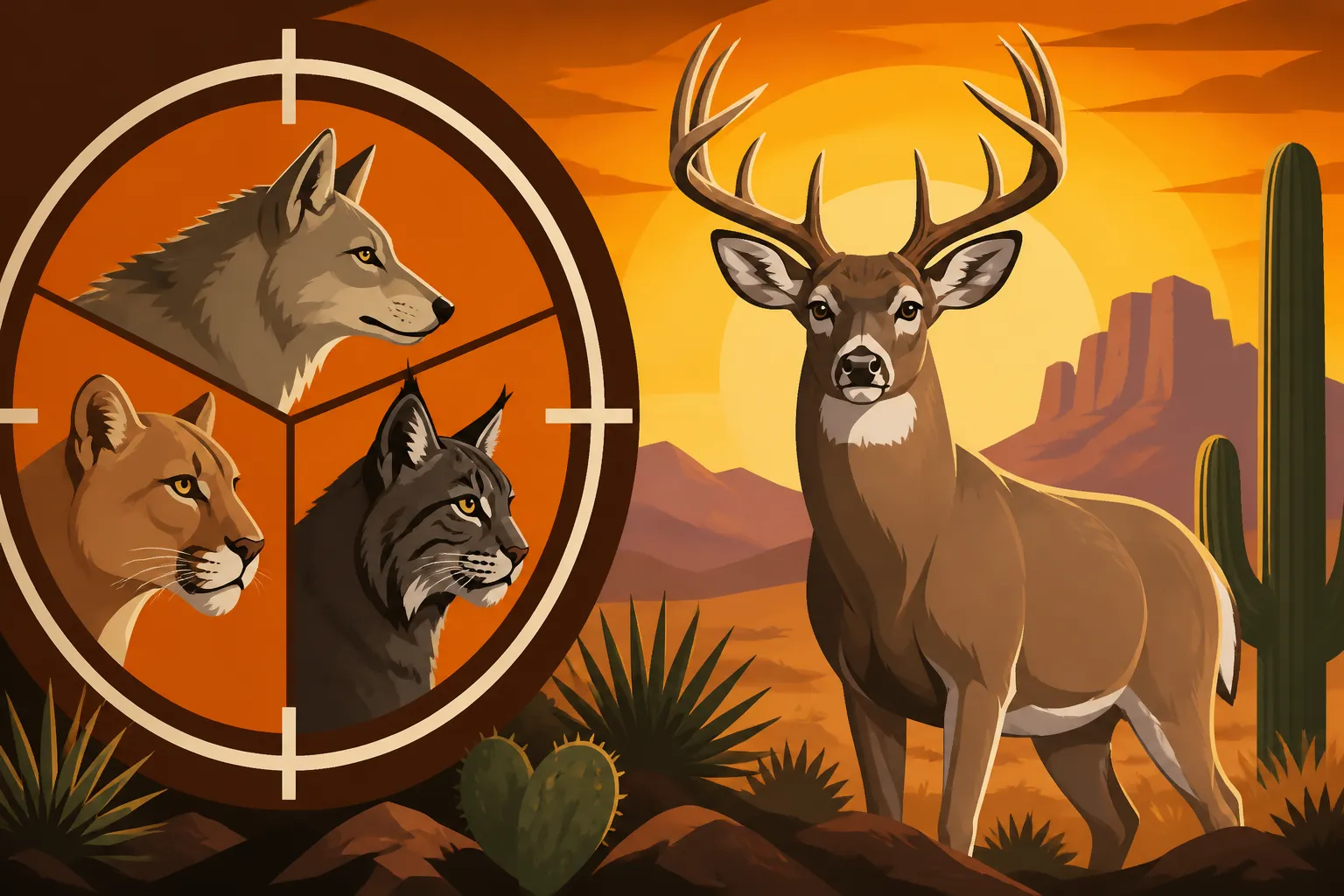
Predator Management and Arizona Deer
It’s a conversation that echoes across every hunting camp in Arizona, from the pine-studded Mogollon Rim to the saguaro-filled Sonoran Desert: What about the predators? Many of us have spent countless hours scouting, drawn hard-earned tags, and then come up empty-handed, and it's easy to look at the increasing numbers of coyotes or the silent presence of mountain lions and wonder if they're directly impacting our deer herds. This guide aims to pull back the curtain on how predator management fits into the much larger, incredibly complex puzzle of Arizona deer conservation, and what hunters can realistically expect and contribute.
The Complex Relationship Between Predators and Prey in Arizona
When you spend enough time in Arizona's diverse landscapes, you quickly realize that nothing operates in a vacuum. Every animal plays a role, and the relationship between predators and prey is a dance that's been happening for millennia. It's not as simple as "more predators equals less deer," though that's certainly a valid concern in certain circumstances.
Natural Cycles and Ecosystem Balance
Arizona's wild country is home to an incredible array of predators, each with its own niche. You've got everything from the ever-present coyote, masters of adaptability, to the elusive mountain lion, the apex hunter of our mountains and deserts. Black bears also play a role, especially when it comes to opportunistic predation on fawns in their range. These animals are a natural and integral part of the ecosystem. They help cull the weak and the sick, keeping prey populations healthier and more resilient in the long run.
Think about it: if there were no predators, deer populations would boom unchecked until they outstripped their food supply, leading to mass starvation and disease. Predators, in a natural, balanced system, help prevent that. They exert a constant pressure that keeps prey animals alert, strong, and in tune with their environment. The deer you see surviving in Arizona are often the most cunning and physically capable, precisely because they've had to contend with natural threats.
When Predator Pressure Becomes a Concern for Deer
While predators are essential, it's also true that their impact isn't always perfectly balanced, especially when other factors come into play. Many hunters notice that deer numbers in certain units seem to be down, and their immediate thought turns to predators. This concern is absolutely valid, particularly when it comes to fawn recruitment – the number of fawns that survive to adulthood. If predators are taking a disproportionate number of fawns, or if the deer herd is already stressed, their impact can be magnified.
Factors like prolonged drought, widespread habitat loss due to development or intense wildfires, and even localized over-harvest by humans can weaken a deer population's ability to withstand natural predator pressure. If a doe is underfed due to poor habitat conditions, she might have fewer fawns, or fawns that are less robust and more susceptible to predation. A hunter might see a healthy adult buck, but not notice the critical lack of fawns, which directly impacts future herd numbers. This is where the debate often heats up, and where the line between natural balance and excessive pressure becomes blurry.
Arizona's Approach to Predator Management
So, what does Arizona actually do about predator management? It’s not a simple switch you flip. The state's approach is nuanced, recognizing the ecological importance of predators while also understanding the concerns about prey populations and hunter opportunity. It's a continuous balancing act, driven by science, public input, and the realities on the ground.
Diverse Strategies for a Diverse State
Arizona is a vast state, from the high, cool forests of the north to the scorching deserts of the south, and a one-size-fits-all approach to predator management simply wouldn't work. The state's management philosophy centers on maintaining healthy wildlife populations and habitats, which includes both predator and prey species. This means a blend of strategies, from regulated hunting seasons to research, habitat improvement, and in some cases, targeted removal where specific issues arise.
The foundation of management for many species is rooted in data collection. Wildlife biologists constantly monitor populations through surveys, track harvest data from hunters, and conduct research to understand birth rates, survival rates, and causes of mortality. This scientific understanding informs the regulations, making them adaptable to changing conditions. You might notice, for example, that Reading an Arizona Hunt Success Report offers valuable insights into the health of various units.
Mountain Lions and Black Bears
For larger predators like mountain lions and black bears, regulated hunting seasons are a primary management tool. These seasons are designed to manage populations, provide recreational opportunity for hunters, and in some areas, address concerns about livestock depredation or human safety.
Mountain lion management, for instance, involves setting harvest limits in specific units. Hunters pursuing lions must possess the appropriate tag and are often required to report their harvest within a very short timeframe to ensure these limits aren't exceeded. This real-time reporting helps biologists track the population and make adjustments. If you're looking into hunting lions, you'll find that Arizona Manages Mountain Lion With Harvest Limits lays out some of these details. Similarly, black bears are managed through hunting seasons with specific guidelines, including restrictions on female harvest. The goal is to control numbers while ensuring the sustainability of the population. Understanding the Female Harvest Limits on Arizona Bears is critical for any bear hunter. These regulations are based on ongoing studies of Black Bear Density Across Arizona and their reproductive rates.
Coyotes and Other Smaller Predators
Coyotes are a different beast entirely. They are incredibly adaptable, prolific breeders, and found in nearly every habitat type across Arizona, from urban fringes to remote wilderness. Their management is primarily through opportunistic hunting and trapping, with no closed season or bag limits in most areas. Hunters are permitted to take coyotes year-round, which is why Hunting Coyotes Year Round in the Desert is a common activity for many.
The impact of coyotes on deer populations, especially fawns, is a topic of ongoing study and debate. While coyotes are known to prey on fawns, their sheer numbers and adaptability make broad, landscape-level population control incredibly challenging and often ineffective in the long term. Their numbers can rebound quickly, and efforts to significantly reduce them in one area can sometimes lead to an influx from surrounding areas. Thus, while individual coyotes may be taken, the statewide deer management strategy rarely hinges solely on widespread coyote eradication programs. Instead, it’s about understanding their role within the broader ecosystem and how other factors like habitat and disease might influence their impact on deer.
| Predator Species | Primary Management Tool | Typical Impact on Deer (General) | Notes on Arizona Strategy |
|---|---|---|---|
| Mountain Lion | Regulated Hunting | Direct predation on all deer ages | Unit-specific harvest limits, rapid reporting required, often hound hunting. |
| Black Bear | Regulated Hunting | Opportunistic predation on fawns | Season structures, female harvest limits, based on population science. |
| Coyote | Opportunistic Hunting/Trapping | Significant predation on fawns | Year-round hunting in most areas, highly adaptable, population control is challenging. |
| Bobcat / Fox | Regulated Trapping/Hunting | Minor predation on fawns, small game | Managed for fur/recreation, generally minimal direct impact on healthy adult deer populations. |
Beyond Predator Control: A Holistic View of Deer Health
While predator management certainly plays a role, it’s just one piece of a much larger, more intricate puzzle when we talk about healthy deer populations. Focusing solely on predators can sometimes distract from other, often more significant, factors that truly dictate whether deer numbers are thriving or struggling. It’s like trying to fix a leaky faucet when your entire plumbing system is failing; you need to look at the whole picture.
The Overriding Importance of Habitat
I can't stress this enough: habitat is king. The quality and quantity of food, water, and cover available to deer are the primary drivers of their overall health, reproductive success, and ultimately, their population numbers. If deer don't have enough nutritious forage, access to reliable water, and secure bedding and fawning areas, they will struggle, regardless of predator numbers.
Arizona's landscapes are often harsh, defined by extremes of heat and cold, and critically, by cycles of drought. When severe drought hits, as it frequently does in the desert and even in the high country, forage becomes scarce and water sources dry up. This directly impacts doe body condition, leading to fewer fawns born, and those fawns that are born are often weaker and less likely to survive. How Drought Affects Desert Deer Numbers can be a much bigger factor than any predator in a given year. Similarly, massive wildfires can devastate large swathes of deer habitat, although in the long term, they can also create new, rich forage. Understanding How Wildfire Changes Elk Habitat gives insight into similar dynamics for deer. Conservation efforts often focus heavily on habitat projects, such as Water Development Projects Built for Wildlife, because these provide fundamental support for all wildlife.
Disease, Nutrition, and Climate
Beyond immediate habitat, other environmental stressors profoundly affect deer. Disease, while not always as dramatic as a sudden die-off, can silently weaken a herd. While Chronic Wasting Disease (CWD) is a major concern in other states, Arizona actively monitors for it and has robust protocols in place. Understanding How Chronic Wasting Disease Testing Works is important, even if it hasn't had a major impact on Arizona deer herds yet.
Nutrition is intrinsically linked to habitat but also to annual climatic patterns. Lush monsoon rains can lead to an explosion of browse and forbs, providing crucial nutrients for does during gestation and lactation, and for bucks growing antlers. How Monsoon Rain Affects Antler Growth is a perfect example of how weather directly influences a buck’s potential. Conversely, a poor rain year can mean fewer quality food sources, leading to a weaker herd overall, making them more susceptible to disease, parasites, and, yes, predation.
Hunter Harvest and Management
Hunters are a part of the management equation, too. The number of tags issued, the length of seasons, and the specific regulations (like antler point restrictions or general versus archery seasons) are all tools used to manage deer populations. These regulations aim to achieve specific buck-to-doe ratios and maintain healthy age structures within the herd.
Every hunter who fills their tag contributes valuable data through mandatory reporting. This harvest data, combined with population surveys, helps biologists fine-tune future regulations. When you look at Reading an Arizona Hunt Success Report, you're seeing a direct result of this data collection. It helps managers understand where populations are healthy, where they might be declining, and how hunting pressure influences these trends. Our license and tag fees also directly fund the wildlife management efforts that benefit deer and all other species, making hunters crucial conservation partners.
How Hunters Can Engage and Support Deer Conservation
It's easy to feel frustrated when deer numbers seem low, or when you hear the familiar howl of a coyote at dawn. But as hunters, we have a vital role to play in conservation, and that extends beyond just buying a tag. Our engagement, our knowledge, and our support can make a tangible difference in the health and future of Arizona's deer herds.
Staying Informed and Participating
One of the most powerful things any hunter can do is simply stay informed. The Arizona Game and Fish Department publishes comprehensive hunt regulations every year, and taking the time to truly understand Reading the Arizona Hunt Regulations Booklet is invaluable. These booklets aren't just about what's legal; they often contain information about population trends, management goals, and important changes.
Beyond the regulations, get involved in the conversation. Attend public meetings if you can, or submit comments on proposed rule changes. Your voice, backed by your observations from the field, is important. Websites like GoHunt also offer a wealth of data and analytical tools that can help you understand unit-specific harvest success, draw odds, and even population estimates. This kind of platform can really help you dig into the numbers and see the bigger picture. When you’re trying to understand Where Arizona Publishes Population Estimates, these resources are incredibly helpful.
Supporting Conservation Efforts
Beyond individual knowledge, collective action is where real change happens. Consider joining and supporting conservation organizations that are actively working on habitat improvement projects in Arizona. Groups dedicated to wildlife habitat often focus on water development, range restoration, and improving forage – all things that directly benefit deer. These efforts create more resilient populations that can better withstand natural pressures, including predation.
Practicing The Ethically Hunting Arizona Course Explained principles isn't just about following the rules; it's about being a responsible steward of the resource. This includes accurate harvest reporting, which provides crucial data, and ensuring you're doing everything you can to minimize impact on the land and the animals. Our dollars, through licenses and tags, directly fund these conservation programs, making every hunter a direct contributor to the health of Arizona's wildlife.
Ultimately, managing Arizona's deer populations is a delicate balance. It involves understanding the role of predators, but also acknowledging the far-reaching impacts of habitat, disease, and climate. By staying informed, participating thoughtfully, and supporting broader conservation efforts, we as hunters can ensure that the "gray ghosts" and our iconic mule deer continue to thrive for generations to come.
Disclaimer
This article is for general informational purposes only and does not constitute professional advice. Laws, prices and regulations vary by location and change over time. Consult a qualified professional for guidance on your specific situation.