How an Outfitter Opens Private Arizona Ground
One of the most persistent frustrations for hunters in Arizona, especially those coming from out of state or new to the area, is navigating the complex mosaic of public and private lands. While Arizona boasts vast tracts of public ground, finding unpressured game, or even simply securing consistent access to prime habitat, can feel like an impossible puzzle. This guide will peel back the curtain on how reputable outfitters often hold the key to unlocking exclusive private land opportunities, offering a different and often less competitive hunting experience than solely relying on public access.
The Challenge of Finding Huntable Private Land in Arizona
Arizona's landscape is breathtakingly diverse, from scorching low deserts to high-elevation pine forests, but its land ownership can be a headache for the uninitiated hunter. Unlike some states with large, contiguous blocks of private agricultural land that are easily leased, Arizona's private holdings are often scattered, intermingled with state trust land, tribal lands, and federal public lands. This creates unique challenges and opportunities, particularly when trying to find consistent, quality hunting without the crowds.
Why Private Land is Appealing
There’s a reason hunters often dream of private land access. For starters, it generally means significantly less hunting pressure. Imagine slipping into a prime glassing point at dawn, knowing you won't bump into another hunter making their way to the same spot. This reduced pressure can lead to animals establishing more predictable patterns, feeling safer, and potentially growing larger due to less disturbance. It’s also about the overall experience; a more serene and focused hunt, where the only competition you're truly facing is the wits of the animal itself, is incredibly appealing. Hunters often find that the quest for private land is driven by the desire for a higher-quality experience and a greater chance at success, rather than constantly scouting for Finding Low Pressure Ground on Opening Weekend among a crowd of other eager hunters.
The Scarcity and Complexity of Arizona Private Land
While private land exists, the sheer scale of it isn't comparable to, say, Texas or Kansas. Arizona's private ground is frequently associated with large ranches, agricultural operations, or mining claims. These tracts are often integral to the livelihoods of their owners, who may not be accustomed to, or interested in, granting hunting access to strangers. The land tenure map can be a confusing quilt of different designations, making it difficult for an individual hunter to even identify potential private land, let alone figure out who owns it. This is especially true when you consider Where Private Ground Dominates in Arizona, which tends to be specific, localized areas often already spoken for or under long-term agreements.
Why Direct Landowner Approach Can Be Tough
For an individual hunter, directly approaching a landowner for access can be an uphill battle. Landowners often have valid concerns about liability, property damage, fire risk, and simply managing the sheer volume of requests they might receive. Many prefer to avoid the hassle altogether or only work with a select few individuals they know and trust. It takes time, effort, and often years to build those relationships. Furthermore, for a hunter arriving from out of state, making those personal connections is practically impossible. This is where the value of a reputable outfitter truly shines, as they've typically already done the groundwork over many years.
How Outfitters Secure Private Land Access
Outfitters, by their very nature, are in the business of facilitating hunting experiences, and a significant part of that involves securing access to desirable hunting grounds. For many Arizona outfitters, this means forging long-standing relationships with private landowners. These connections aren't built overnight; they're the result of years of trust, reliable conduct, and a clear understanding of the landowner's needs and concerns.
Establishing Relationships and Leases
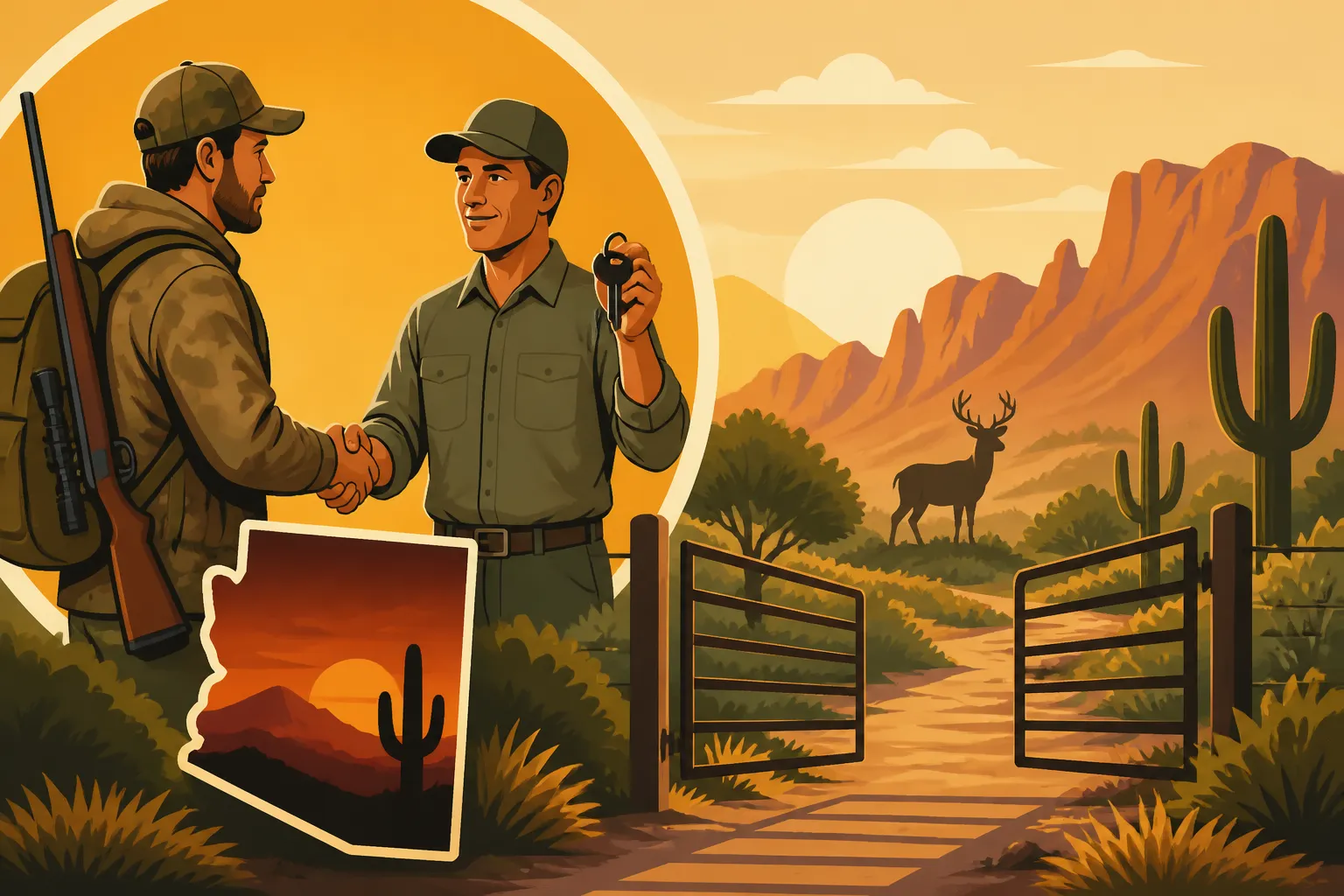
The most common way an outfitter gains access to private ground is through formal leasing agreements. These aren't just handshake deals; they are typically detailed contracts that outline everything from the specific hunt units covered to the species, the number of hunters allowed, and the exact season dates. An outfitter might pay a rancher an annual fee for exclusive hunting rights across several thousand acres, particularly if that ranch holds a population of elk that impact grazing or coues deer that are a valuable resource.
Think about a sprawling cattle ranch in southeastern Arizona. The rancher might see elk or deer as a nuisance to fences or forage, but also recognize the economic value they represent. An outfitter steps in, offering a consistent income stream through a lease. This provides a win-win: the rancher gets paid, and the outfitter secures exclusive hunting access for their clients. These relationships are critical, and a good outfitter maintains them by ensuring their clients respect the land, gates, livestock, and all rules. You can explore more about these arrangements in Leasing Hunting Ground in Arizona.
Trespass Fee Arrangements
Another common method, especially for specific trophy opportunities or shorter hunts, is a trespass fee arrangement. Instead of a blanket annual lease, the outfitter pays the landowner a fee per hunter, or even per animal harvested, for access to their property during a specific timeframe. This model is often used when a landowner might only have a limited number of animals they're comfortable having harvested or if they want to retain more control over access.
For instance, a smaller parcel of private land might hold a few outstanding mule deer bucks. The landowner might not want to lease the entire property, but they are willing to accept a "trespass fee" for an outfitter to bring in one or two clients for a high-value hunt. This provides the landowner with income without the long-term commitment of a lease, and it gives the outfitter the flexibility to offer targeted hunts. Understanding How Trespass Fee Arrangements Work can help hunters appreciate the financial dynamics behind these unique opportunities.
Conservation and Special Tags
Arizona also has programs where landowners, under specific circumstances, can receive Arizona Landowner Tag Programs or Arizona Special Big Game License Tags. These are often tied to specific conservation efforts or property management goals. An outfitter might work closely with a landowner who has received one of these tags, guiding clients who purchase or draw these highly coveted permits.
These tags exist outside of the general draw system and often provide access to areas that would otherwise be extremely difficult to hunt or have very low draw odds. For example, a landowner might be granted a limited number of elk tags to help manage a population on their property. An outfitter can then facilitate a hunt for a client using one of these special tags, opening up private ground that isn't typically available to the general public. These hunts often command a premium due to their exclusivity and the quality of the animals they often produce.
What an Outfitter's Private Land Access Means for Hunters
For the hunter seeking a unique and often more successful experience in Arizona, understanding how outfitters gain private land access is crucial. It changes the entire dynamic of the hunt, offering advantages that public land simply cannot always match, while also coming with its own set of considerations, particularly financial ones.
Enhanced Hunting Opportunities and Success
The primary benefit of hunting private land with an outfitter is the potential for enhanced opportunities and higher success rates. Less hunting pressure often means animals are less skittish, more visible, and can follow their natural patterns without constant human disturbance. This can translate to more encounters, better shot opportunities, and a greater chance of filling your tag. You might also find that the animals on well-managed private ranches are simply larger, as they haven't been subjected to the same level of hunting pressure as those on heavily-hunted public ground.
When you're not battling other hunters, you can focus on the actual act of hunting. An outfitter with private access has usually done extensive How Outfitters Scout Before Your Arrival, understands the terrain, knows where the game patterns, and can guide you to spots that are simply off-limits to others. This level of access and preparation often leads to impressive Arizona Outfitter Success Rates for Elk or, for those smaller, elusive deer, strong Arizona Outfitter Success Rates on Coues Deer, compared to the often-lower averages on public land.
The Costs Involved
It's no secret that private land hunting, especially with a reputable outfitter, comes at a significantly higher cost than a do-it-yourself public land hunt. The outfitter has invested heavily in establishing and maintaining those landowner relationships, covering lease fees, trespass fees, and the overhead of running a professional guiding business. These costs are then passed on to the client.
A private land hunt will typically involve a base outfitter fee, which covers the guide's time, camp logistics, and possibly meals and lodging. On top of that, there's often a separate fee specifically for the private land access itself, or it's simply baked into a higher overall price. While we can't give specific figures, the What Ranch Access Typically Costs can vary wildly depending on the species, the quality of the animals, the duration of the hunt, and the exclusivity of the land. It's vital to have a clear understanding of what's included and what isn't. For example, Are Tags Included in Outfitter Prices? is a common question, and almost always the answer is no; you'll need to secure your Arizona hunting license and tags separately.
Ethical Considerations and Respect for Property
When hunting on private land through an outfitter, maintaining excellent ethical conduct and showing immense respect for the property is paramount. The outfitter's reputation and continued access depend on it. This means meticulously following all instructions from your guide regarding property boundaries, gates, livestock, and any specific rules the landowner has in place. Leaving gates as you found them – open if open, closed if closed – is a cardinal rule.
It also extends to broader hunting ethics. This isn't just about legality, but about the spirit of the hunt. Ensuring clean kills, practicing proper game retrieval, and minimizing any impact on the land helps maintain the positive relationship between the outfitter and the landowner. The outfitter often serves as a steward of these lands, managing wildlife populations and ensuring sustainable practices. Your behavior as a client directly reflects on them, and a careless mistake could jeopardize future access for other hunters. This is closely related to general principles of Water Sources and Ethics in Arizona Desert Hunting, emphasizing responsible behavior in fragile desert ecosystems.
Choosing an Outfitter with Private Land Access
Deciding to hunt private land with an outfitter in Arizona is a significant investment, both financially and in your hunting aspirations. Therefore, choosing the right outfitter is crucial. Not all outfitters operate on private land, and those who do have varying levels of access and different types of agreements. Diligence in your research and asking the right questions will pay dividends.
Researching Outfitters and Their Agreements
Start your research by looking for outfitters who explicitly market private land hunts in Arizona. Many will highlight this as a key advantage. Don't be afraid to ask direct, pointed questions about the nature of their private land access. Ask about the specific properties, the length of their agreements with landowners, and what species are typically hunted there. Reputable outfitters should be transparent about their operations, even if they can't reveal exact locations due to privacy concerns.
Websites like BookYourHunt or GoHunt can be valuable resources for initial research, as they often list outfitters and detail their offerings. However, always follow up with direct communication. When you're Vetting an Arizona Outfitter Before You Send a Deposit, insist on references from past clients who have hunted on their private ground. Ask those references about their experience, the quality of the land, and the outfitter's management of the property.
Understanding What's Included
Before signing any contract or sending a deposit, ensure you have a crystal-clear understanding of what your private land hunt includes. This goes beyond just access to the land itself. Does the price cover a guide, lodging, meals, field transportation, and trophy care? What Outfitter Prices Almost Never Include are your state hunting license and species-specific tags, meat processing, taxidermy, and often gratuities for your guide and camp staff.
It’s also important to clarify the exact boundaries of the private land you'll be hunting and any specific regulations unique to that property. For example, are there certain areas that are off-limits, or restrictions on vehicle use? A good outfitter will provide a detailed contract that outlines all inclusions and exclusions, helping you avoid any surprises down the road.
Here’s a quick comparison of what you might expect from a private land outfitter versus a self-guided public land hunt:
| Feature | Outfitter-Facilitated Private Land Hunt | Self-Guided Public Land Hunt |
|---|---|---|
| Land Access | Exclusive, secured private ground; less pressure. | Public land, potentially shared with many other hunters. |
| Scouting & Knowledge | Outfitter handles pre-scouting; deep local knowledge. | Hunter's responsibility; requires significant time/effort. |
| Success Potential | Often higher due to less pressure and expert guidance. | Varies greatly; depends on hunter skill, luck, pressure. |
| Cost | Higher upfront investment, covers access, guide, logistics. | Lower upfront cost for licenses/tags; equipment costs. |
| Effort & Logistics | Outfitter manages most logistics (camp, food, transport). | Hunter manages all logistics (camping, food, packing). |
| Specialized Equipment | Outfitter may provide some gear (optics, calling). | Hunter provides all personal and hunting equipment. |
| Meat/Trophy Care | Often assisted by guides in the field, transport to processor. | Hunter's responsibility for field dressing and packing out. |
| Flexibility | Fixed dates, guided by outfitter's schedule. | More flexibility in hunt dates and approach. |
Booking Your Private Land Hunt
Once you've chosen an outfitter, be prepared to book well in advance, especially for highly sought-after private land hunts for species like elk or mule deer. Many top outfitters book out years in advance due to the demand for their exclusive access. You'll likely be required to pay a deposit, and it's essential to understand the outfitter's cancellation and refund policy, particularly if your hunt depends on drawing a specific tag. Understanding Whether You Get a Refund If You Fail to Draw is a critical detail that needs to be clarified upfront.
It's also worth asking about payment schedules and any options for payment plans. Most outfitters require the full balance to be paid before the hunt begins. With proper research and clear communication, an outfitter-facilitated private land hunt in Arizona can be an incredibly rewarding experience, opening doors to opportunities you might never find on your own.
Disclaimer
This article is for general informational purposes only and does not constitute professional advice. Laws, prices and regulations vary by location and change over time. Consult a qualified professional for guidance on your specific situation.