Two-Hunter Calling Setups That Actually Work
It’s a common scenario for many Arizona hunters: you've set up, you've started calling, and that bull or buck is hanging up just out of range, unwilling to fully commit. It's incredibly frustrating when an animal skirts around your position, circling downwind or simply stopping in thick cover, leaving you with no shot opportunity. Trying to draw in wary, pressured big game on your own can feel like an impossible task. This guide is all about equipping you and a hunting partner with effective two-hunter calling setups, exploring the specific strategies and roles that can turn those frustrating hang-ups into successful harvest opportunities across Arizona's diverse landscapes.
The Undeniable Edge of a Two-Hunter Calling Strategy
Hunting with a partner offers a significant advantage when it comes to calling setups, moving beyond just having an extra set of hands or eyes. It fundamentally changes the dynamics of the interaction with the animal, creating a more realistic and often more convincing scenario that solitary callers simply can't replicate. This isn't about being louder; it's about being smarter, more adaptable, and presenting a more believable illusion to the game you're pursuing.
Amplifying Sound and Directional Deception
When you're calling solo, the sound always originates from one spot. Savvy animals, especially older bucks and bulls, quickly pinpoint that single source and often circle downwind to get a scent check, busting you in the process. With two callers, you can create a much more convincing auditory illusion. Imagine a cow elk bugling from one position while a satellite bull chips in from another, or a herd of javelina vocalizing from slightly different angles. This dual-source sound not only seems more natural to the approaching animal, suggesting multiple individuals, but also makes it incredibly difficult for them to pinpoint your exact location. The animal is drawn to the perceived "herd," not a lone, isolated sound. This directional deception is critical in minimizing those frustrating moments when an animal hangs up just out of range, trying to get a better read on the situation.
This layered soundscape allows you to mimic the movement and interaction of an actual group of animals. For instance, if one caller lets out a few soft cow mews, and then the other caller responds with a slightly different tone or from a slightly different position, it immediately creates a mental image for the approaching animal of a small group of elk. This subtle difference is often all it takes to calm their nerves and draw them in closer, rather than having them focus on a singular, potentially suspicious sound.
Enhanced Situational Awareness and Adaptability
Two sets of eyes and ears are always better than one, especially when you're trying to fool an animal with calls. In a two-hunter setup, one person can be dedicated primarily to calling, focusing on the sounds and the rhythm of the interaction, while the other maintains a broader view, scanning for movement and predicting the animal's approach. This division of labor drastically improves your situational awareness. The designated shooter, for example, isn't distracted by needing to manipulate a call or watch for their own scent cone; they can be entirely focused on scanning the terrain and getting ready for a shot.
Moreover, having two hunters allows for quicker adaptation to the animal's behavior. If the animal hangs up, the caller can subtly shift their position, or change the type of call, while the shooter remains stationary, ready. This adaptability is key in unpredictable environments like Arizona, where terrain can funnel animals in unexpected ways, or where an animal might suddenly decide to move through thick oak brush instead of open pinyon-juniper. One hunter might spot a subtle ear flick or a flash of antler that the other, focused on calling, might miss. This combined vigilance allows for more effective decision-making in the moment, increasing the odds of success rather than simply reacting when the animal is already too close or too far away to do anything about. Utilizing mapping tools like those offered by GoHunt during your e-scouting can also help you identify ideal setup locations where you can leverage terrain for sound travel and concealed approaches. This foresight becomes a critical advantage for effective two-hunter setups.
Essential Roles and Responsibilities in a Two-Hunter Setup
Success with two-hunter calling isn't just about showing up with a buddy; it’s about clearly defined roles, mutual understanding, and constant, albeit subtle, communication. When both hunters know exactly what their job is and how they fit into the overall strategy, the setup functions like a well-oiled machine. Without this clarity, you risk confusion, missed opportunities, or even spooking game.
The Caller's Crucial Role
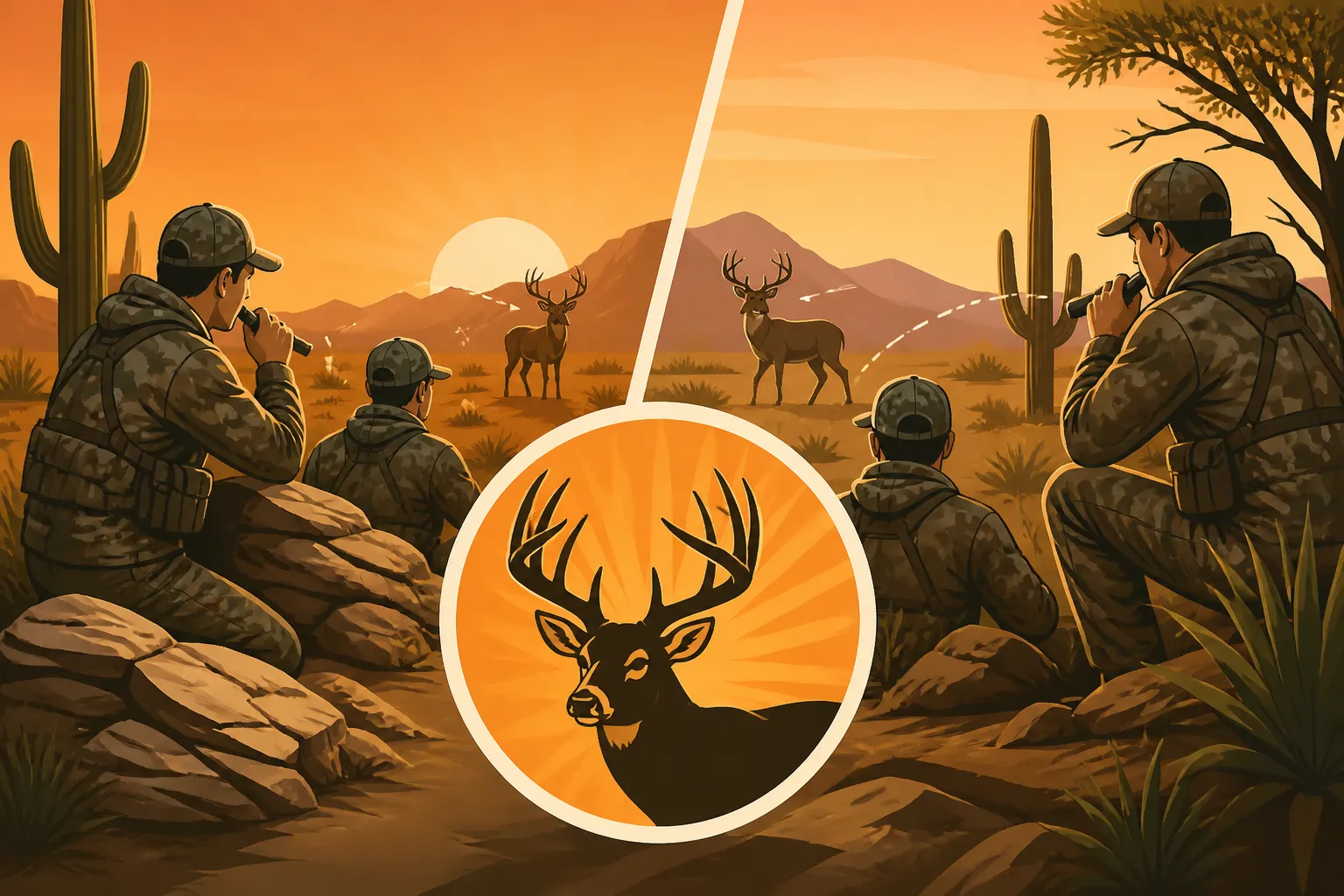
The caller is the conductor of the orchestra, responsible for creating the illusion that draws the animal in. Their primary job is to focus on the cadence, volume, and type of calls, adapting them in real-time based on the animal's responses. They need to be keenly aware of their surroundings but can afford to be slightly less fixed on a single shot lane, as their main task is to keep the animal interested and moving in the right direction. Often, the caller will position themselves slightly behind and to the side of the shooter, maybe 30 to 60 yards away, and slightly uphill if possible, to give the illusion that the animal is trying to get to the "source" of the call. This position often draws the animal past the shooter, offering a clean shot.
For elk, the caller might be mimicking a lovesick cow or a challenging satellite bull. If the bull hangs up, the caller might increase the intensity, or offer a soft chuckle, trying to tempt him into range. For deer, subtle bleats and grunts, combined with realistic antler rattling, might be the ticket. The caller's location is also crucial; they should position themselves so the approaching animal must expose itself to the shooter before reaching the caller's perceived location. This provides a natural shooting lane. The caller must also understand the implications of their own movement, remaining concealed and minimizing any sounds that aren't part of the calling sequence.
The Shooter's Primary Focus
The shooter has one job: be ready to take the shot when the opportunity arises. This means being absolutely motionless, concealed, and focused intently on the likely avenues of approach. They should position themselves downwind or crosswind from the caller, typically 30-60 yards ahead, in a spot that offers clear shooting lanes but also good concealment. The shooter needs to identify potential shooting windows and prepare for them well in advance, whether that means steadying their rifle on shooting sticks or ranging distances with their bow.
The shooter's gaze should be broad but concentrated. They are looking for movement, for a flicker of an ear or tail, or the distinct outline of an animal against the brush. They aren't worrying about the call, but rather the response. If the bull comes in hard, the shooter needs to remain calm, let the animal move into a comfortable range, and wait for a broadside shot. If it's a Coues deer, known for their elusive nature, the shooter must be ready to quickly shoulder their rifle or draw their bow as soon as it steps into an opening. The shooter's discipline in remaining absolutely still and quiet is paramount. Any fidgeting or unnecessary movement can blow the entire setup.
Communication Is Key
Effective communication between two hunters is the glue that holds these setups together. However, "communication" doesn't always mean talking. In many cases, it means pre-hunt planning, hand signals, or even subtle eye contact. Before the hunt, you and your partner should discuss potential setup locations, anticipated animal approaches, and fallback strategies. You might use specific hand signals to indicate an animal is approaching, its size, or its direction of travel. Knowing what those signals mean without a word can be the difference between success and failure.
| Role | Primary Responsibility | Secondary Focus | Typical Position Relative to Partner | Key Skills |
|---|---|---|---|---|
| Caller | Mimic animal sounds, create realistic illusion | Monitor animal response, adapt calling strategy | 30-60 yards behind/to side of shooter | Sound imitation, patience, terrain awareness |
| Shooter | Remain concealed, prepare for shot, identify lanes | Scan for animal movement, anticipate approach | 30-60 yards ahead of caller | Stillness, shot placement, quick acquisition |
In scenarios like calling in a bull on the Mogollon Rim, where the timber can be dense, a clear line of sight between caller and shooter might be difficult. This is where pre-determined hand signals or subtle vocalizations (like a barely audible cough or whistle) become vital for communicating an incoming animal. Remember, in Arizona's rugged and expansive units, good communication ensures both hunters are on the same page, maximizing the chances of a successful outcome. E-scouting platforms like GoHunt can be incredibly useful here, allowing you to mark potential setups and discuss approaches with your partner digitally before you even set foot in the field, visualizing where the shooter and caller might be positioned.
Proven Calling Setups for Arizona's Big Game
Arizona offers a thrilling array of big game hunting opportunities, each with its own unique challenges and calling strategies. What works for a screaming elk might not even get a glance from a wary Coues deer. Adapting your two-hunter setup to the specific species and their typical behavior is crucial for success. These proven tactics leverage the advantages of a two-person team to maximize your chances in the field.
Elk Calling: The Deadly Triangle
Calling in an Arizona elk, particularly a mature bull, often requires a delicate balance of aggression and deception. The "deadly triangle" setup is a go-to for many experienced hunters. Here, the shooter is positioned at one point of the triangle, typically downwind of where you expect the bull to appear. The primary caller, acting as a "cow," sets up 30-50 yards behind the shooter, providing the alluring bugles or mews that draw the bull in. A third point, often another caller or even just an additional hunter creating subtle background noise (like light footsteps or brush scrapes), can be positioned off to the side, completing the illusion of a small herd.
The goal is to draw the bull past the shooter, who is silently waiting. The caller's job is to keep the bull focused on their position, making him believe he's approaching a single, vocal cow, or a small group. If the bull hangs up, the caller might increase the urgency of their calls, or even let out a soft chuckle to mimic a bull moving in. If you're on a unit like those found in The Mogollon Rim as Arizona Elk Country, remember that elk will often try to circle downwind to scent check. This is precisely why the shooter needs to be positioned for a shot as the bull attempts this maneuver, often exposing themselves as they move around the primary calling source. Using a secondary caller to emit soft cow calls or satellite bull chirps can also convince a bull that there’s more than just one elk, making him less cautious. When you’re Calling Bulls on Arizona's Mogollon Rim, knowing when to be aggressive and when to be subtle is key, and a two-man setup provides that flexibility. Don't underestimate the power of Locator Bugles for Finding Bulls at Dawn when executed with a partner who can then set up for the shot while you focus on drawing the bull in.
Desert Deer: Drawing Them Close Without Spooking
Coues deer and mule deer, particularly in Arizona's more open desert terrain or the dense brush of the Sky Islands, are notoriously difficult to call in. They are masters of using cover and wind to their advantage. For these wary critters, a more subtle and patient two-hunter approach is usually best. The "leapfrog" or "ambush" setup works well. The primary hunter (caller) moves cautiously ahead, using soft bleats or subtle rattling to pique curiosity. The second hunter (shooter) moves slowly behind, staying concealed, ready to capitalize if a deer responds to the calls and tries to circle or peek out from cover.
For Coues deer in the "Sky Islands" like those in Arizona's Sky Islands and Where Coues Live, one hunter might position themselves on a ridge overlooking a wash or saddle, glassing intently, while the other moves into a calling position a few hundred yards away. The caller uses soft, intermittent calls, like a fawn bleat or a short, pleading doe bleat, to draw attention without alarming. The shooter watches closely, because a Coues will often sneak in silently, only revealing itself briefly. The challenge here is How Close a Bowhunter Needs to Get on Coues, which means the caller must truly convince the deer to close the final distance. When Reading Wind on a Sky Island Stalk, always ensure the shooter is positioned to take advantage of the prevailing wind, while the caller can provide a distraction. Sometimes, using the terrain to hide an approach, as discussed in Terrain That Hides an Approach in Desert Country, means one hunter is moving while the other is set and ready.
Javelina: Pinpointing the Herd
Javelina, while not as wary as deer or elk, are still challenging to hunt with calls due to their herd dynamics and preference for thick, thorny cover. For javelina, the goal isn't just to call one in, but to locate the entire herd and get a shot opportunity before they melt back into the brush. A two-hunter "pincer" or "spot-and-call" strategy is highly effective. One hunter acts as the "spotter/caller," often from a high vantage point, scanning for movement or listening for their distinctive "woofing" or "chattering" sounds. Once located, the spotter uses javelina-specific calls (like distress calls or social grunts) to keep the herd active and visible. The second hunter, the "stalker/shooter," then works their way in, using the calls as a guide to approach the herd for a shot.
This strategy capitalizes on javelina's curious nature and herd instinct. If the herd sounds off, the caller can use those calls to draw specific individuals out from cover. This is especially useful when Javelina Is Arizona's Most Accessible Big Game, and you’re trying to pinpoint a group in dense cholla. The spotter might use calls that mimic a lost piglet to draw the whole herd into a more open area, allowing the stalker to get a clear shot. This is where Hunting a Stock Tank During Early Archery can also be highly effective, with one hunter calling from a concealed position near the tank, drawing javelina in for the other hunter to ambush. Remember, with GoHunt's detailed satellite imagery, you can identify these stock tanks and high vantage points for spotting and calling before you even leave home.
Common Pitfalls and How to Avoid Them
Even with a well-intentioned partner and a solid strategy, two-hunter calling setups can go wrong. Miscommunication, failing to account for environmental factors, or underestimating the animal's intelligence can quickly turn a promising situation into a bust. Avoiding these common pitfalls is as important as mastering the calling techniques themselves.
Managing Wind and Terrain Effectively
One of the most frequent mistakes in any calling setup, but especially with two hunters, is neglecting the wind. Animals, particularly in Arizona where scent travels far in arid conditions, will almost always try to get downwind to scent-check the source of a call. If both hunters are positioned directly upwind, or if the shooter's position isn't accounting for swirling thermals, the gig is up before the animal even comes into view. You can spend all day Reading Wind on a Sky Island Stalk, but if your setup doesn't respect it, you're out of luck.
To avoid this, always aim to have the shooter positioned downwind or crosswind of the animal's expected approach, while the caller creates the illusion of sound originating from a slightly different, typically more upwind, direction. This forces the animal to walk past the shooter to get a scent check on the caller. Pre-scouting with topographic maps, like those available on GoHunt, helps you understand how terrain features will influence wind currents and thermals throughout the day, allowing you to choose better setup locations. Also, actively check the wind throughout your setup, using a wind checker or even a handful of dust, and be prepared to adjust positions if it shifts. For example, if you're trying to call in a bull that's Cow Calling Pressured Arizona Bulls, a slight shift in wind could send your scent right to him, making him wary and hard to close the distance on.
Overcoming Pressured Animals
Arizona's public lands see a fair amount of hunting pressure, and animals quickly become educated. Loud, aggressive, or unrealistic calling often spooks these wary deer and elk. For pressured animals, a two-hunter setup shines because it allows for more subtle, nuanced calling and greater patience. Instead of trying to aggressively pull an animal in, think about creating a convincing, low-stress scenario.
This means less volume and more realism. For elk, instead of roaring challenges, focus on soft cow mews and chirps, perhaps accompanied by light antler rubbing sounds created by the second hunter. The caller might be 50 yards away, making quiet cow calls, while the shooter is dead silent, camouflaged perfectly in the brush. The key is to make the animal feel safe enough to investigate. If a bull hangs up, don't immediately blast another loud bugle. Instead, be patient. Let the woods be silent for a few minutes, then offer a very soft, enticing mew. Sometimes, the best call is no call at all, letting curiosity draw the animal the rest of the way. Understanding the subtle cues animals give when they are pressured can prevent you from overcalling and blowing the opportunity. Patience is often the biggest factor in success when dealing with a smart, educated animal.
Practice Makes Perfect
Like any skill, effective two-hunter calling requires practice. Don't wait until opening day to try out a new setup. Spend time in the off-season practicing with your partner. Go to a local park or a quiet area of public land and try out different positions, distances, and calling sequences. Have one person be the "animal" and try to approach the callers, seeing how well the illusion holds up. This not only builds proficiency with the calls but also strengthens the non-verbal communication between you and your partner.
During these practice sessions, experiment with different calls and scenarios. How does your setup work if the animal approaches from an unexpected angle? What are your pre-arranged signals if a shot opportunity presents itself? What if the caller needs to move slightly to maintain the illusion? These dry runs will identify weaknesses in your strategy and allow you to fine-tune your roles and communication before you’re in a live hunting situation. It’s also an excellent time to test new gear, like different calls or rangefinders, ensuring everything is working smoothly. The more you and your partner practice together, the more instinctively you'll operate as a team, and the higher your chances of filling that tag when it really counts, especially in expansive units where you need to coordinate effectively, such as when studying How Arizona Numbers Its Game Management Units and planning your approach.
Disclaimer
Please note that hunting regulations, seasons, and permit requirements can change. Always consult the latest Arizona Game and Fish Department regulations booklet and any specific hunt special conditions before planning your trip. This content is for informational purposes only and does not supersede official legal requirements.