Coues Deer Are Arizona’s Signature Whitetail
Hunting Coues deer in Arizona can be one of the most rewarding, yet frustrating, pursuits in the West. Many hunters arrive in the arid, broken country expecting a typical whitetail experience, only to find themselves baffled by the seemingly empty landscapes and the deer's uncanny ability to vanish into thin air. If you've ever felt like you're chasing ghosts, struggling to spot even a single deer, or wondering if you're using the right tactics, this comprehensive guide is for you. We're going to break down everything you need to know about Arizona's signature whitetail, from their unique biology to advanced hunting strategies, ensuring you're well-equipped for your next desert adventure.
Understanding the "Gray Ghost": What Makes Coues Deer Unique?
The Coues whitetail, often affectionately called the "gray ghost of the desert," is a captivating and challenging quarry. Native to the southwestern United States and parts of Mexico, these deer are a distinct subspecies of the white-tailed deer, perfectly adapted to their rugged, arid environments. Forget everything you know about whitetails from the Midwest or East Coast; Coues deer play by an entirely different set of rules.
Their Distinctive Size and Physical Traits
One of the first things that strikes hunters new to Coues deer is their diminutive size. These are not your average 200-pound Midwestern bruisers. A mature Coues buck typically weighs between 100 to 120 pounds live weight, with does often considerably smaller. Their compact body size is an adaptation to their harsh environment, requiring less forage and allowing them to navigate dense brush and rocky terrain with incredible agility. This small stature also contributes to their elusiveness, making them incredibly difficult to spot, even at relatively close range.
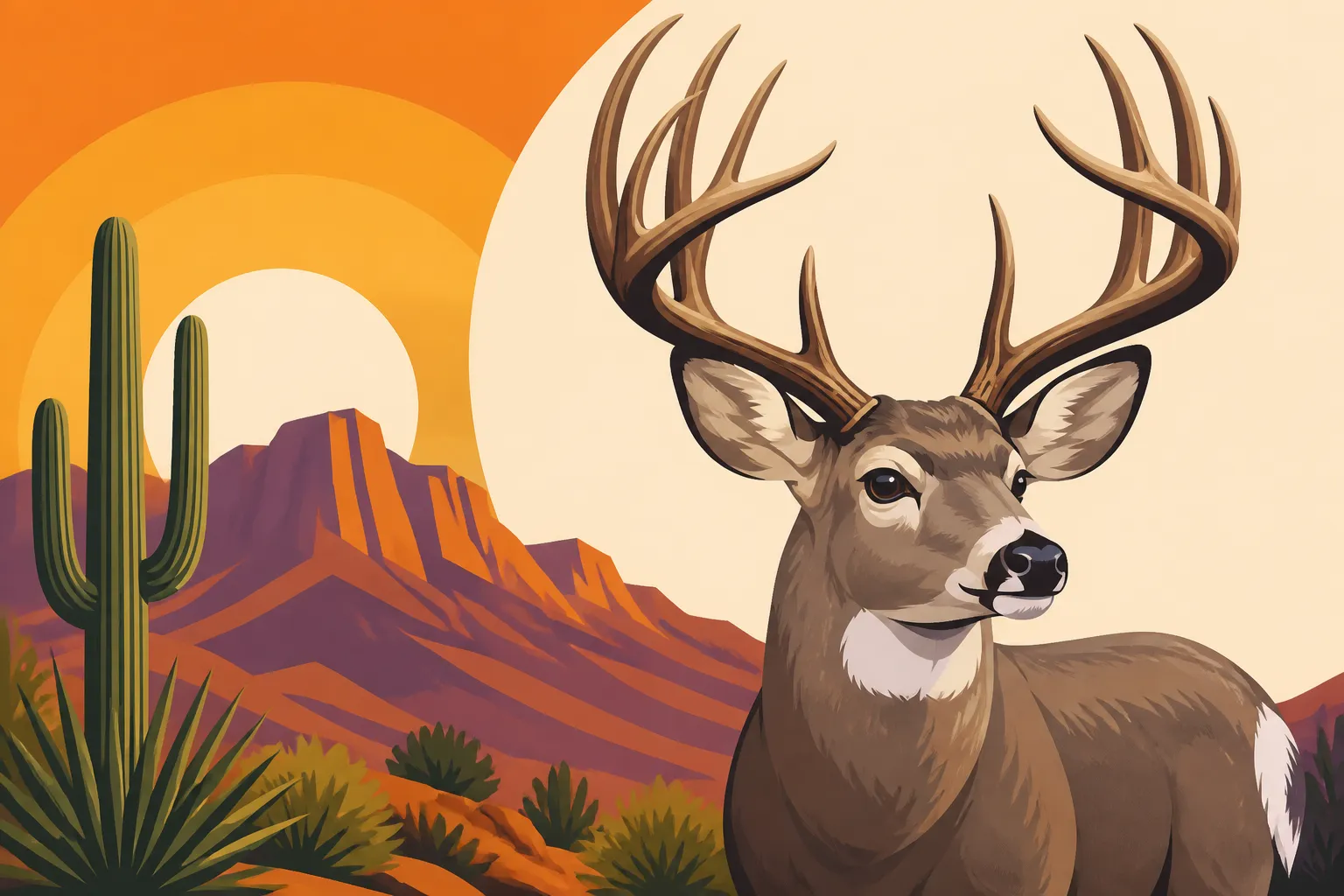
Beyond their size, Coues deer possess specific physical traits that distinguish them. Their coat, a grayish-brown hue that blends seamlessly with the desert scrub and rocky slopes, gives them their "gray ghost" moniker. They have large ears, disproportionately big for their head size, which are excellent at detecting subtle sounds in the quiet desert. Their antlers, while often modest in size compared to other whitetails, can be remarkably dense and symmetric, with typical racks having five points per side. A buck that scores over 100 inches Boone and Crockett is considered a true trophy, a testament to the challenge of growing substantial bone in such a tough habitat.
Why They Earned the "Gray Ghost" Moniker
The nickname "gray ghost" isn't just about their coat color; it perfectly encapsulates the Coues deer's uncanny ability to appear and disappear as if by magic. One moment you might spot a deer, only to look away for a second and find the spot empty upon your return. This mastery of camouflage and movement is a primary defense mechanism in their open, unforgiving habitat. They are masters of using every contour, every patch of brush, and every shadowed rock to their advantage.
Their evasive behavior is further enhanced by their acute senses. Their eyesight is legendary, rivaling that of an antelope, allowing them to spot predators or hunters from vast distances. Their hearing, aided by those large ears, picks up the slightest twig snap. And their sense of smell, while perhaps less discussed than their sight, is equally impressive, allowing them to detect human scent carried on the unpredictable desert thermals. Hunting Coues deer is a constant battle against these heightened senses, making the experience one of intense focus and extreme patience. If you want to dive deeper into what makes them so special, check out this guide on What Makes a Coues Deer Different.
Comparing Coues to Other Whitetail Subspecies
For hunters accustomed to Eastern whitetails, the transition to Coues deer hunting can be a bit of a shock. Eastern whitetails often thrive in dense timber, relying on thick cover and nocturnal movement, whereas Coues deer are products of the wide-open, broken country. Their survival hinges on early detection and rapid, often uphill, escape into dense, thorny thickets. Unlike their larger cousins, Coues deer are less likely to "hide" in a small patch of woods and more likely to melt into the vast, undulating landscape.
Their smaller size isn't just about weight; it also impacts their behavior and metabolism. They often move more efficiently across rugged terrain, and their shorter legs make them adept at maneuvering through low-lying brush. While many whitetail subspecies share the same genetic blueprint, the environmental pressures on Coues deer have sculpted them into a truly unique animal, demanding specialized hunting approaches and a deep respect for their desert home.
Where Coues Deer Roam: Their Arizona Habitat
To successfully hunt Coues deer, you need to understand their home. These deer are not found just anywhere in Arizona; they inhabit specific, often challenging, ecosystems that dictate their movements and habits. Understanding these habitats is the first step in unlocking the secrets of the gray ghost.
The Iconic Sky Islands Ecosystem
The most renowned habitat for Coues deer in Arizona is found within the "Sky Islands." These are isolated mountain ranges that rise dramatically from the surrounding desert lowlands, forming unique ecological islands. Think of places like the Chiricahua Mountains, Huachuca Mountains, Santa Rita Mountains, and Galiuro Mountains in southeastern Arizona. These ranges are often clothed in oaks, junipers, pines, and even firs at higher elevations, providing a stark contrast to the cacti and scrub of the desert floor. This is where you'll find the highest densities of Coues deer, thriving in the mosaic of cover and open slopes.
These Sky Islands offer varied terrain, from steep, rocky canyons to more gentle, oak-covered hillsides. The elevation changes create diverse microclimates, providing crucial forage and water sources throughout the year. As you climb higher, the vegetation transitions, offering different food sources and types of cover. This vertical stratification is key to Coues deer survival and why they thrive in these specific mountain ranges. If you're curious about their general distribution, learn more about Where Coues Whitetail Live in Arizona, and specifically about Coues Deer in the Southeastern Sky Islands.
Preferred Cover and Terrain Features
Coues deer are masters of utilizing terrain and vegetation to their advantage. They prefer areas with a mix of open glassing opportunities and dense, thorny cover, often referred to as "chaparral" or "oak brush." This combination allows them to feed in more open areas during low-light conditions and quickly retreat to impenetrable thickets when threatened. You'll often find them on steep, rocky slopes, utilizing the broken ground for concealment, or along canyon rims and benches where they can survey their surroundings from above.
When scouting a unit, pay close attention to south-facing slopes in winter, which receive more sunlight and hold early green-up. In warmer months or during mid-day, they often bed on north-facing slopes or in dense, shaded canyons to escape the brutal Arizona sun. Identifying these preferred cover types and terrain features on a map or satellite imagery (like those available through GoHunt's mapping tools) before you ever set foot in the field is crucial for narrowing down your search.
Water Sources and Their Importance in Desert Environments
In an arid state like Arizona, water is life, and this is especially true for Coues deer. While they are incredibly adapted to dry conditions, utilizing moisture from the plants they eat, readily available water sources are still critical. During the hotter months and droughts, deer will often concentrate around natural springs, seeps, and man-made stock tanks. These areas act as magnets, drawing in wildlife from miles around.
Identifying water sources on a map is a vital part of your scouting process. However, be aware that many desert water sources are seasonal, so recent rainfall can dramatically change their availability. During an early season hunt, for instance, knowing where to find water can be the key to locating deer. Remember, ethical hunting dictates respecting water sources; never camp directly on top of a spring or tank, and always be mindful of other wildlife that depend on these precious resources.
The Annual Cycle: Coues Deer Behavior Through the Seasons
Understanding how Coues deer behave throughout the year, from spring to winter, provides critical insights into their patterns and vulnerabilities. Their lives are intimately tied to the climate and available resources, dictating where they'll be and what they'll be doing.
Spring Green-Up and Summer Patterns
As the desert awakens in spring, Coues deer begin to rebound from the lean winter months. The spring green-up brings new, nutritious forage, and does are preparing to fawn. During this time, deer will often be found in areas with fresh growth, sometimes moving to lower elevations or sunnier slopes where vegetation appears first. This is a time of rebuilding for the deer, focusing on nutrition and fawn rearing.
Summer in Arizona is brutal, with scorching temperatures. During these months, Coues deer become largely nocturnal, moving in the cooler hours of dawn and dusk, and often bedding down in thick, shady cover during the heat of the day. They will stay close to reliable water sources, making these areas key for early season scouting or hunting. Scouting in the summer can give you a good indication of general deer presence and movement patterns, particularly around perennial water. However, keep in mind that their daytime activity will be minimal.
Pre-Rut and Rut Dynamics
The Coues deer rut is a highly anticipated period for hunters, injecting an element of predictability into their otherwise elusive nature. While the exact timing can vary slightly by unit and year, the pre-rut typically begins in mid-December, leading into the peak rut in late December and January. During the pre-rut, bucks start to become more active, rubbing antlers, making scrapes, and scent-checking does. They begin to push into new areas, searching for receptive does.
The peak rut is when bucks are most vulnerable, their focus shifting from survival to breeding. This is when you'll see bucks actively chasing does, often disregarding their usual caution. They might cover significant ground, moving across open slopes in pursuit of a doe, or standing exposed for longer periods. This is often when the biggest bucks are seen during daylight hours, making January hunts particularly coveted. For detailed information, consider reading When the Coues Rut Peaks.
Winter Survival Strategies
Following the rut, Coues deer face the challenges of winter. While Arizona winters are generally milder than in many other hunting states, higher elevations can receive significant snowfall, pushing deer to lower, more accessible ranges. Food sources become scarcer, and deer must conserve energy. They often form small bachelor groups (bucks) or doe-fawn groups, relying on stored fat reserves.
During winter, deer tend to concentrate in areas that offer both thermal cover and available forage, often favoring south-facing slopes that warm quickly in the sun. Their movements will be primarily dictated by the need to find food and shelter from the elements. While the hunting seasons usually conclude before the deep winter months, understanding these survival strategies helps in planning future hunts and recognizing the resilience of these amazing animals.
Hunting the Elusive Coues Deer: Strategies and Techniques
Hunting Coues deer is a mental game as much as a physical one. It demands patience, keen observation skills, and a willingness to adapt. Unlike hunting in dense timber, successful Coues hunting hinges on finding the deer before it knows you're there, often at great distances.
The Art of Glassing in Coues Country
Without a doubt, glassing is the most critical skill for hunting Coues deer. You simply cannot walk them up like other deer. The terrain is too vast, the cover too thick in spots, and the deer too good at vanishing. The process involves patiently scanning large swaths of country with high-quality optics, searching for small details that betray a deer's presence. This could be the flick of an ear, a patch of gray that doesn't quite match the rock, or the horizontal line of a deer's back in a vertical landscape.
Start your glassing sessions early, even before first light, focusing on the edges of shadows as the sun begins to creep across the hillsides. Divide the landscape into grids and systematically search each section. Don't just look for an entire deer; look for pieces: an ear, a leg, an antler tip. Utilize a spotting scope (15-60x or 20-70x power is ideal for Optics Power for Arizona's Long Desert Sightlines) on a sturdy tripod, and pair it with quality binoculars (10x-15x) for initial scans. Many successful Coues hunters spend 90% of their time behind glass. If you're serious about mastering this, definitely check out The Grid Glassing Method, Step by Step and Glassing Arizona's Sky Islands for Coues Deer. GoHunt's mapping tools can help you identify prime glassing points and plan your approach to them.
Mastering the Stalk in Open Terrain
Once you've spotted a buck, the real challenge begins: the stalk. This is where many hunts fall apart. Coues deer country is often open, steep, and noisy with loose rocks and thorny brush. A successful stalk requires meticulous planning, extreme stealth, and an understanding of wind and thermals. The general rule is to take your time, move slowly, and constantly use terrain features for concealment. You'll want to plan your route to stay out of sight, downwind, and ideally, approach from above.
Always consider the wind direction, which can be fickle in canyon country. Learn to read the thermals—warm air rising in the morning, cool air descending in the evening—and plan your stalk accordingly. A good tip is to approach your intended target from the side, rather than straight at it, to give yourself more options if the deer moves. Remember, the goal is often to get within shooting range, not necessarily on top of the deer. Sometimes, waiting for the deer to move into a more favorable position is the best "stalk." Patience is truly rewarded when hunting these deer; explore Why Coues Deer Reward Patience Over Movement and How Far to Stalk a Bedded Coues Buck for more insights. Don't forget to consider how to navigate those unpredictable air currents; Playing Thermals on a Canyon Stalk offers vital tips.
Calling and Other Less Common Tactics
While glassing and stalking are the bread and butter of Coues deer hunting, other tactics can sometimes play a role, especially during the rut. Deer calls, such as fawn bleats or aggressive buck grunts, can occasionally pique a buck's interest, though they are less consistently effective than for other whitetail subspecies. During the rut, rattling can sometimes draw in a curious buck, particularly if combined with a visual decoy (where legal and ethical).
Another tactic, though less prevalent, is still-hunting, especially in areas of dense cover where visibility is limited, or during inclement weather that might make deer move more. This involves moving incredibly slowly, stopping frequently to look and listen, essentially becoming part of the landscape. However, due to the deer's senses and the openness of much of their habitat, still-hunting is often a lower-percentage play compared to dedicated glassing. These tactics are often best employed as secondary methods, used to complement your primary glassing and stalking efforts.
Essential Gear for Coues Deer Hunting
Success in Coues deer country isn't just about skill; it's also about having the right tools for the job. The rugged terrain, extreme temperatures, and long distances demand specialized gear that can stand up to the challenge.
Optics: Your Most Critical Tool
As emphasized, optics are paramount. This isn't just a suggestion; it's a necessity. Your setup should include:
- High-Quality Binoculars (10x-15x): These are for your initial scanning and general observation. Look for models with excellent light transmission and comfortable ergonomics for long hours of glassing. Brands like Swarovski, Zeiss, Leica, and Vortex are popular among serious Coues hunters.
- Spotting Scope (15-60x or 20-70x): This is your detail machine. Once you spot something with your binoculars, the spotting scope allows you to confirm if it's a deer, judge its size, and determine its exact location. A good spotting scope is critical for counting points and making ethical shot decisions from afar.
- Sturdy Tripod: Both your binoculars (with an adapter) and spotting scope need to be mounted on a rock-solid tripod. A shaky tripod will lead to eye strain and missed details. Stability is key for long glassing sessions, especially on windy ridge tops.
- Rangefinder: With shots often extending beyond 300 yards, an accurate rangefinder with angle compensation is non-negotiable. Knowing the exact distance is crucial for ethical shot placement.
Investing in the best optics you can afford will significantly increase your success rates. Many seasoned Coues hunters prioritize optics over almost any other piece of gear.
Rifles, Ammunition, and Ballistics for Long Shots
Coues deer hunting often involves long shots across canyons or open slopes. This means your rifle and ammunition setup needs to be up to the task. Flat-shooting calibers with good downrange energy retention are preferred.
- Calibers: Popular choices include .270 Win, 6.5 Creedmoor, 7mm-08 Rem, and .308 Win. Some hunters opt for magnum calibers, but recoil can be an issue for consistent accuracy, and modern bullets in standard calibers are highly effective. The key is accuracy and confidence.
- Ammunition: Choose high-quality, boat-tail or ballistic-tipped bullets designed for controlled expansion at various ranges. Practice extensively with your chosen load, understanding its ballistic trajectory out to ethical hunting distances.
- Rifle Setup: A lightweight, accurate rifle with a quality scope (4-16x or 5-20x magnification is common) is ideal. Get comfortable with dialing turrets or using holdovers for different ranges. A solid rest, whether from shooting sticks, a bipod, or a backpack, is essential for stability. For a discussion on general rifle setup, you might find useful tips in Rifle Zero Distance for Open Desert or Holding for Wind Across a Wide Canyon.
Backpacking, Clothing, and Water Management
Coues deer hunting often means covering miles of rugged, steep country, often as a solo hunter or with a small group. Your physical fitness and gear choices for personal comfort and survival are critical.
- Backpack: A comfortable, durable daypack or multi-day pack (if you plan to spike camp) is essential. It needs to carry your optics, water, food, and emergency supplies. Look for packs with good weight distribution and breathability.
- Clothing: Layering is key in the desert. Mornings can be freezing, mid-day scorching. Lightweight, breathable, moisture-wicking layers are crucial. Camouflage patterns that blend with the grays and browns of the desert are effective. Don't forget a wide-brimmed hat for sun protection.
- Footwear: Sturdy, broken-in hiking boots with good ankle support are a must for navigating rocky, uneven terrain. Consider gaiters to keep thorns and debris out of your boots.
- Water Management: This is perhaps the most overlooked aspect for hunters new to Arizona. You will need more water than you think. Plan to carry at least 1-2 gallons per person per day for an active hunt, especially in warmer seasons. Hydration bladders, Nalgene bottles, and even a water filter for emergency refills at springs are smart additions. Dehydration is a real and dangerous threat in the desert.
Arizona Regulations and Draw Considerations for Coues Deer
Before you even step foot in the field, understanding Arizona's complex draw system and hunting regulations is paramount. The Arizona Game and Fish Department (AZGFD) manages Coues deer through limited-entry draws, which can be competitive, especially for prime units and seasons.
Understanding Tags and Seasons
Arizona offers different types of Coues deer tags:
- General Draw Tags: These are the most common, allocated through a lottery system for specific units, weapons (archery, muzzleloader, rifle), and seasons. The seasons typically run from late October through January, with the most popular (and highest success) rifle hunts often falling in late November/early December and the coveted rut archery hunts in January.
- Over-the-Counter (OTC) Archery Tags: Arizona uniquely offers a five-month-long OTC archery deer season, split into multiple periods (August/September and December/January). This allows hunters to purchase a tag without going through the draw, making it highly accessible. While challenging, the late season OTC hunt can coincide with the early stages of the rut, offering a unique opportunity. For more details on this, look into How to Hunt Arizona's Five-Month OTC Archery Deer Season or Arizona's Over-the-Counter Archery Deer Tag Explained.
Always check the current year's Arizona hunting regulations booklet, as rules and season dates can change annually. Pay close attention to unit boundaries, legal shooting hours, and tag validation requirements.
Draw Odds and Bonus Points
Getting a coveted Coues deer tag, particularly a rifle tag in a good unit, often requires navigating Arizona's bonus point system. Here’s a quick overview:
- Bonus Points: You earn a bonus point each year you apply for a species and are unsuccessful. These points essentially give you extra chances in the draw. They are species-specific, meaning your elk points won't help you draw a deer tag. Arizona has a "Bonus Point Pass" system, where a percentage of tags (20%) are allocated based on points, and then a "Random Pass" for the remaining tags.
- GoHunt: Resources like GoHunt are invaluable for researching draw odds, unit statistics, and applying strategies. They provide detailed data that can help you decide which units to apply for based on your point total and success objectives.
- Application Strategy: Many hunters build points for several years, hoping to draw a premium tag. Others prefer to apply for units with slightly better odds, aiming to hunt more frequently. Researching Best Units to Draw for Coues Deer is a critical step in building your application strategy. Be aware that non-residents face a 10% tag cap, making the draw even more challenging.
Ethical Considerations and Fair Chase
Hunting Coues deer comes with specific ethical responsibilities due to their environment and challenging nature.
- Shot Placement: With potentially long shots, ensuring you can make an ethical, clean kill is paramount. Practice at extended ranges and know your limitations. If the shot isn't right, don't take it.
- Game Recovery: The desert can be unforgiving. A wounded animal can quickly disappear into thick brush or cover significant ground, making recovery difficult. Always track thoroughly, and be prepared for potentially difficult recoveries in steep, rocky terrain.
- Respect for the Land: Pack out everything you pack in. Leave no trace. Respect private property boundaries and always close gates. Adhering to these principles ensures hunting opportunities for future generations and maintains a positive image for hunters.
Field Care and Trophy Management
After the shot, the work isn't over. Proper field care is essential to preserve the meat and, if applicable, the cape and antlers for a trophy. The hot Arizona climate adds an extra layer of urgency to this process.
Field Dressing in Warm Desert Conditions
In Arizona, especially during early seasons or warmer periods, getting the deer field dressed quickly is critical to preventing meat spoilage.
- Immediate Field Dressing: As soon as you've confirmed the animal is down and safe to approach, begin field dressing. Remove the guts promptly to allow the body cavity to cool.
- Cooling the Carcass: Prop the carcass open, ideally in the shade, to facilitate airflow and cooling. If you're far from your vehicle, consider skinning the deer in the field to allow for even faster cooling. This might seem extreme, but desert heat can ruin meat surprisingly fast.
- Keep it Clean: Use clean knives and gloves. Avoid contaminating the meat with dirt, hair, or stomach contents. Wipe the cavity dry with paper towels or a clean cloth, rather than rinsing with water, which can encourage bacterial growth.
Caping and Transporting Your Trophy
If you've harvested a buck and plan to get it mounted, careful caping is essential.
- Caping: For a shoulder mount, you'll need to cape the deer down to the chest, leaving plenty of hide. Make sure to take the entire brisket. It's often best to watch a few online tutorials or consult with your taxidermist beforehand if you're unsure. The skin around the head and neck is relatively thin on Coues deer, so proceed with caution.
- Cooling the Cape: The cape also needs to be cooled rapidly. If possible, get it to a freezer or taxidermist as soon as possible. In the field, you can salt the cape generously if it will be a day or more before you can refrigerate it, but immediate cooling is always best.
- Transport: When transporting your deer, keep it as cool as possible. During the day, cover the carcass with a game bag (to protect from flies and dirt) and a tarp or reflective blanket to shield it from direct sunlight. If you can, get ice into the body cavity for the drive back to camp or home.
Maximizing Meat Quality
Coues deer meat is lean and delicious, but its quality can be compromised by heat and improper handling.
- Cleanliness and Speed: The two most important factors for good meat quality are cleanliness and speed. The faster you can cool the meat and the cleaner you keep it, the better it will taste.
- Aging: If conditions allow and you have access to a walk-in cooler or butchering facility, aging the meat for a few days (typically 3-7 days at around 35-40°F) can significantly improve tenderness and flavor.
- Professional Processing: Many hunters opt to take their deer to a professional meat processor. They have the equipment and expertise to properly cool, cut, and package the meat, ensuring you get the best possible return from your harvest. For those early season hunts, planning for immediate processing is key for Field Dressing in Desert Heat and Getting Meat Cooled on an Early Season Hunt.
| Aspect | Coues Deer | Eastern Whitetail | Mule Deer |
|---|---|---|---|
| Average Weight | 100-120 lbs (buck) | 150-250 lbs (buck) | 150-300 lbs (buck) |
| Primary Habitat | Desert Sky Islands, Chaparral | Dense Forests, Farmland | Open Mountain, Foothills |
| Key Hunting Skill | Glassing, Long-range stalking | Still-hunting, Stand hunting | Spot & stalk, Glassing |
| Antler Size | Smaller, dense, often symmetrical | Larger, typical or non-typical | Wider, forked, often symmetrical |
| Rut Timing | Late Dec – Jan | Oct – Dec | Nov – Dec |
| Elusiveness | Extremely high ("Gray Ghost") | Moderate to high | High |
Disclaimer
The information provided in this guide is for general informational purposes only and is not intended as legal advice. Hunting regulations in Arizona are subject to change by the Arizona Game and Fish Department. It is the responsibility of every hunter to consult the most current official Arizona Hunting Regulations and all applicable federal, state, and local laws before planning or engaging in any hunting activities. Always prioritize safety, ethical hunting practices, and respect for wildlife and the environment.