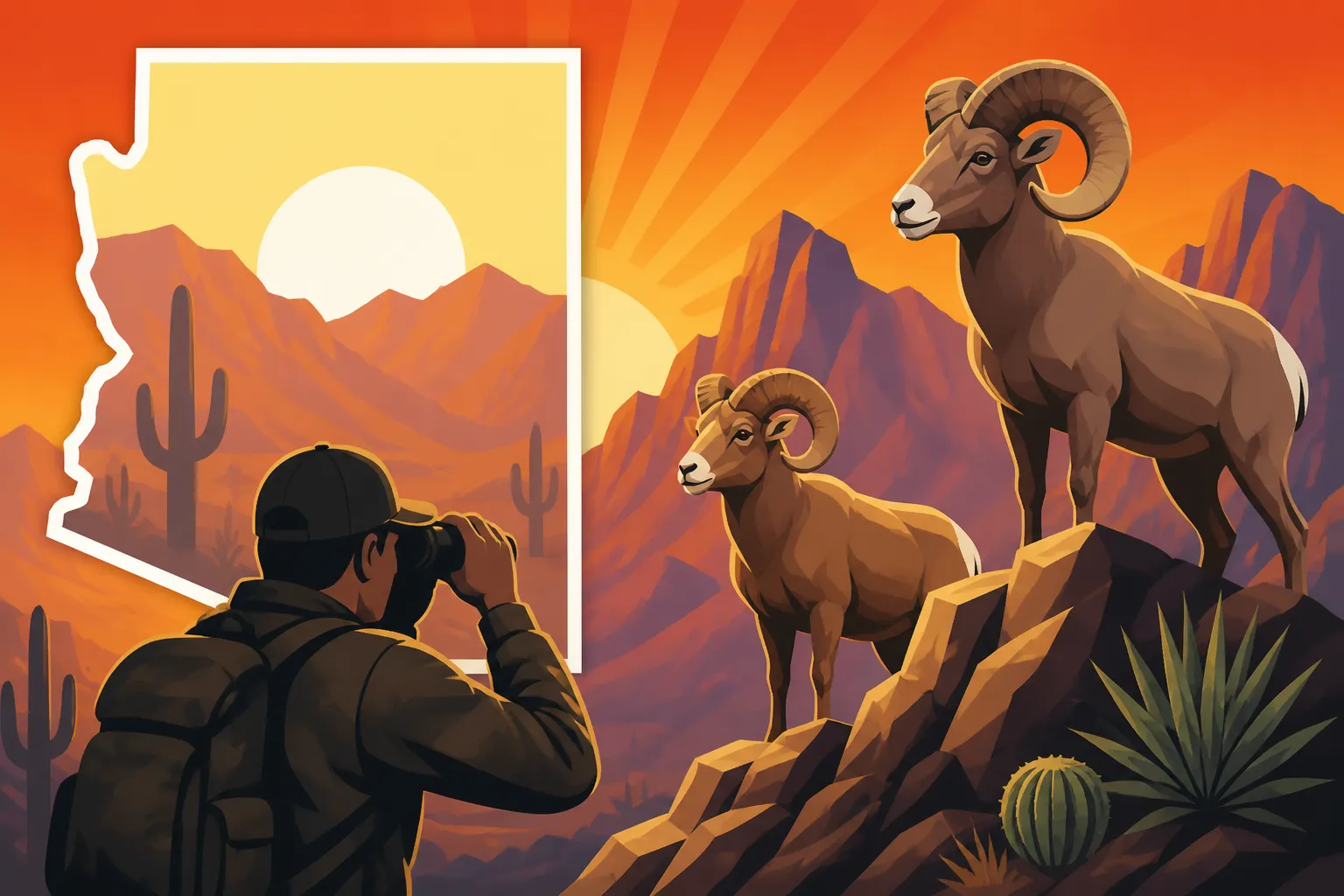
Arizona Holds Desert and Rocky Mountain Bighorns
For many hunters, the very thought of drawing an Arizona bighorn sheep tag feels like an impossible dream, a once-in-a-lifetime lottery that rarely pays out. The odds are notoriously stacked against you, and the sheer challenge of pursuing these incredible animals in some of the state's most rugged terrain can be daunting. But the allure is undeniable, and for those dedicated enough to play the long game, a bighorn hunt represents the pinnacle of Western hunting. This guide will meticulously break down everything you need to know about Arizona's bighorn sheep, from their distinct subspecies and habitats to the intricate draw process, hunting strategies, and the vital conservation efforts that keep these magnificent creatures thriving.
Understanding Arizona's Bighorn Sheep Populations
Arizona is truly unique in that it's home to two distinct subspecies of bighorn sheep: the Desert Bighorn and the Rocky Mountain Bighorn. While both are incredibly hardy animals adapted to harsh environments, their specific habitats and some subtle physical characteristics set them apart. It's not just a biological distinction; it's a difference in the landscapes they call home and the hunting experiences they offer. Understanding these differences is key to appreciating the management strategies and the unique challenges each presents to wildlife biologists and hunters alike.
The Two Distinct Subspecies
When we talk about bighorn sheep in Arizona, we're typically referring to either Ovis canadensis nelsoni, the Desert Bighorn, or Ovis canadensis canadensis, the Rocky Mountain Bighorn. The Desert Bighorn is by far the more prevalent and iconic of the two, embodying the rugged spirit of the Sonoran and Mojave deserts. These sheep are perfectly adapted to extreme heat and sparse water sources, thriving in some of the most unforgiving mountain ranges across the state. They have lighter coats, often a tan or brownish-gray that blends seamlessly with the desert rocks, and their horns tend to be lighter in color as well.
Rocky Mountain Bighorns, on the other hand, are a smaller, more localized population in Arizona, primarily found along the rugged canyons of the Salt River. Their presence here is a testament to successful transplant programs and a unique riverine habitat that mimics the more temperate, mountainous regions they typically inhabit further north. These sheep usually have darker, thicker coats and heavier, darker horns, better suited for the cooler, higher elevations and riparian zones they prefer. The fact that Arizona hosts both subspecies adds a layer of biological richness and diversity that is cherished by wildlife enthusiasts and hunters alike. You can learn more about Why Arizona Counts the Bighorns Separately.
Historical Context and Recovery Efforts
The story of bighorn sheep in Arizona, particularly the Desert Bighorn, is one of dramatic decline and remarkable recovery. In the late 19th and early 20th centuries, unrestricted hunting, disease outbreaks from domestic livestock, and habitat encroachment pushed bighorn populations to critically low numbers. There were legitimate fears that these incredible animals might disappear entirely from the Arizona landscape. It was a stark reminder of how fragile these ecosystems can be and how human activities can have profound impacts.
Thankfully, dedicated conservation efforts, primarily spearheaded by the Arizona Game & Fish Department (AZGFD) and various conservation organizations, began to reverse this trend. Strict hunting regulations were implemented, habitat was protected, and, crucially, extensive Transplant Programs That Rebuilt Herds were undertaken. Biologists would capture bighorns from healthy populations and relocate them to historic ranges where sheep had been extirpated. These efforts, spanning decades, have slowly but surely brought bighorn numbers back to healthy, sustainable levels, allowing for limited hunting opportunities today, which are themselves a vital part of funding ongoing conservation.
Desert Bighorn Sheep: Masters of Arid Landscapes
The Desert Bighorn sheep is arguably the quintessential symbol of Arizona's rugged, untamed wilderness. These animals don't just survive in the harsh, sun-baked mountains; they thrive, demonstrating an incredible array of physical and behavioral adaptations that allow them to endure conditions that would quickly defeat most other large mammals. Their world is one of sheer cliffs, rocky washes, and relentless sun, where every drop of water is precious and every shadow a potential hiding spot.
Habitats and Range Across Arizona
Desert Bighorn sheep are perfectly named, as their primary habitat is the vast, arid mountain ranges that rise like islands from Arizona's desert floor. You'll find them scattered across the southern and western portions of the state, from the iconic mountain ranges surrounding Phoenix and Tucson to the remote, craggy peaks along the Colorado River. Specific strongholds include the Kofa Mountains, Plomosa Mountains, Castle Dome Mountains, and the desert ranges within the Cabeza Prieta National Wildlife Refuge. These areas are characterized by steep, rocky terrain, sparse vegetation, and extreme temperatures, making them challenging for humans to navigate but ideal for bighorns seeking refuge from predators and accessible escape routes.
Their survival hinges on their ability to navigate this treacherous terrain with unparalleled agility and find isolated water sources. They prefer areas with a mix of steep slopes for bedding and escape, combined with lower benches and washes where they can browse on desert plants. The solitude and inaccessibility of these mountain ranges are their greatest allies, allowing them to remain largely undisturbed by human activity, aside from the most determined hunters and researchers. Getting into these remote areas to even scout for sheep is a monumental task, demanding peak physical condition and a deep understanding of desert navigation. More specific locations can be found when discussing Desert Bighorn in Arizona's Mountain Ranges.
Adaptations for Desert Survival
The Desert Bighorn's adaptations to its extreme environment are nothing short of remarkable. Physiologically, they can withstand significant dehydration, often going days without drinking directly, instead deriving moisture from the vegetation they consume. Their bodies are efficient at cooling, with specialized nasal passages that aid in evaporative cooling and a relatively light-colored coat that reflects solar radiation. Their hooves are incredibly specialized, featuring a hard outer rim and a soft, pliable sole that acts like a natural climbing shoe, providing superior grip on slick rock surfaces and the ability to scale steep, uneven terrain with ease.
Behaviorally, bighorns are masters of their environment. They are highly attuned to their surroundings, constantly scanning for threats. Their keen eyesight is legendary, allowing them to spot predators or distant water sources from incredible distances. They are most active during the cooler parts of the day – dawn and dusk – often bedding down during the scorching midday sun in shaded rock crevices. Their movements are often dictated by the availability of water, and during prolonged dry spells, they may travel considerable distances between water sources, relying on their exceptional memory and knowledge of their home range. This constant movement and preference for the steepest, most inaccessible terrain make them incredibly difficult to locate and pursue, even for experienced hunters armed with top-tier optics.
Rocky Mountain Bighorn Sheep: Riverine Adaptations
While the Desert Bighorn rules the parched peaks, Arizona also nurtures a distinct population of Rocky Mountain Bighorn sheep, a testament to successful wildlife management and the incredible adaptability of these animals. These majestic creatures carve out a living in a very different type of rugged terrain, primarily within the dramatic canyon country formed by Arizona's major river systems. Their presence along the Salt River, in particular, offers a unique glimpse into how a species can thrive in an environment that deviates from its typical high-mountain domain.
The Salt River and Other Riverine Habitats
Arizona's Rocky Mountain Bighorns are predominantly found in the steep, often heavily vegetated canyons of the Salt River, east of Phoenix. This isn't their typical mountain range habitat; instead, they navigate a world of eroded cliffs, deep gorges, and riparian zones sustained by the river's flow. While still incredibly rugged and challenging, this habitat offers more consistent water sources and different types of forage compared to the true desert ranges. The relative humidity is higher, and the ambient temperatures can be slightly moderated by the river itself, creating a microclimate that allows this subspecies to persist.
You might also find smaller, more isolated populations in other river canyons, such as sections of the Verde River, but the Salt River corridor remains their most significant stronghold. Their survival in these areas highlights the importance of protecting these unique riparian ecosystems within the broader desert landscape. Hunters pursuing Rocky Mountain Bighorns here face challenges distinct from their desert counterparts, dealing with denser vegetation, more broken visibility, and the complexities of hunting alongside a major waterway. This unique habitat is extensively discussed in articles about Rocky Mountain Bighorn Along the Salt River.
Behavioral Differences and Physical Traits
Given their distinct habitat, Rocky Mountain Bighorns in Arizona exhibit some subtle behavioral and physical differences from their desert cousins. As mentioned, their coats tend to be darker, a deeper brown or gray, often appearing thicker and shaggier, which is characteristic of bighorns found in cooler, higher elevations across the continent. Their horns also tend to be darker and might appear more robust, though the exact size and curl can vary greatly based on genetics and nutrition.
Behaviorally, while still incredibly wary and agile, their movements might be influenced by the availability of denser cover provided by the riparian vegetation. They might be found browsing closer to the riverbanks, particularly in the cooler months, and utilizing the steep canyon walls for escape. Their keen eyesight remains a primary defense, but navigating through thicker mesquite and acacia stands, or the dense oak brush higher up, demands different foraging and evasion tactics. These sheep are less reliant on infrequent desert tanks and springs, having access to the perennial flow of the river, which simplifies one aspect of their survival but introduces others, such as potential human disturbance from river recreationists.
The Allure of an Arizona Bighorn Tag
For hunters, drawing an Arizona bighorn sheep tag is the ultimate achievement, a hunt often considered the pinnacle of North American big game hunting. It's not just about the trophy; it's about the challenge, the remoteness, the sheer difficulty of the endeavor, and the privilege of pursuing one of the continent's most majestic animals in its native, rugged habitat. The journey to even apply for a tag is a test of patience, and securing one is akin to winning the lottery.
The Extreme Difficulty of Drawing a Tag
Let's not sugarcoat it: drawing a bighorn sheep tag in Arizona is incredibly difficult. We're talking about odds that are often in the low single digits, or even fractions of a percent, especially for non-residents. These are truly once-in-a-lifetime tags for many hunters, some of whom apply for decades without success. The Arizona Game & Fish Department (AZGFD) issues a very limited number of tags each year, carefully calculated to ensure sustainable populations while providing a high-quality hunting experience. This scarcity is what makes the tags so coveted and drives the long odds.
The draw system involves a bonus point system, where applicants accrue points for each year they apply and are unsuccessful. These points increase your chances in the "bonus point pass," which allocates a certain percentage of tags to the applicants with the most points. However, even with maximum points, it's still largely a game of chance. For specific insights into your chances, you can always check the Arizona Desert Bighorn Draw Odds on the AZGFD website or through a service like GoHunt, which compiles and analyzes this data, making it easier for hunters to strategize their applications. GoHunt's detailed draw odds can be an invaluable tool for understanding the landscape of these elusive tags.
Permit and Tag Allocation System
Arizona's permit allocation system for bighorn sheep is meticulous. Like other limited-entry species, bighorn tags are distributed through the annual draw, with specific hunt codes for various units and subspecies. There's usually a small percentage of tags allocated to non-residents, typically capped at 10% of the total tags for any given species, which further compounds the difficulty for out-of-state hunters. The remaining tags are distributed among residents.
The bonus point system ensures that long-time applicants have a slightly better chance, recognizing their continued dedication. However, a significant portion of tags is still allocated in a "random pass" where every applicant has an equal chance, regardless of points. This hybrid system aims to reward loyalty while still offering a glimmer of hope to new or low-point applicants. It's also important to note that Arizona treats the two bighorn subspecies, Desert and Rocky Mountain, as separate for draw purposes. This means you can apply for both, and theoretically, Can You Draw Both Bighorn Species in Arizona?, though the odds of drawing either are minuscule.
The Financial Investment of a Bighorn Hunt
Beyond the cost of the application itself, which is relatively modest, the financial investment in an Arizona bighorn hunt, if you're lucky enough to draw a tag, can be substantial. The tag fee alone for a non-resident is typically in the thousands of dollars, plus the cost of a hunting license. This doesn't even begin to cover the actual hunt itself. Bighorn hunts are physically demanding and often require specialized gear, significant travel, and sometimes, the assistance of an outfitter.
Guided hunts for bighorn sheep are among the most expensive in North America, often ranging from tens of thousands of dollars to upwards of $70,000 or more for a fully outfitted expedition. This cost covers experienced guides, pack animals (if needed), specialized optics, logistical support, and the deep knowledge of the terrain and animal behavior that can be critical to success. Even a do-it-yourself (DIY) hunt will entail considerable expenses for optics, mapping software, fuel, food, and emergency equipment. Understanding the Cost Expectations for an Arizona Desert Bighorn Hunt is crucial for anyone dreaming of this experience, as it's truly a significant investment in time, effort, and money.
Hunting Bighorn Sheep in Arizona: Strategy and Ethics
Congratulations, you've drawn the tag of a lifetime! Now the real work begins. Hunting bighorn sheep in Arizona is an arduous endeavor, demanding peak physical conditioning, mental fortitude, and a deep understanding of the animal and its environment. This isn't a hunt for the faint of heart; it's a marathon of glassing, hiking, and strategic decision-making, often under unforgiving conditions. Ethical considerations are paramount, given the rarity of the tag and the majesty of the animal.
Scouting and Preparation are Paramount
With a bighorn tag in hand, your success will hinge almost entirely on meticulous scouting and preparation. This isn't a hunt you just show up for. Most successful bighorn hunters dedicate weeks, if not months, to preseason scouting. This involves countless hours behind powerful spotting scopes and binoculars, meticulously dissecting every rock face, canyon, and ridge in your assigned unit. You'll be looking for historical sheep ranges, bedding areas, water sources, and, most importantly, the sheep themselves. Tools like GoHunt's mapping services can be incredibly helpful for e-scouting and planning your physical scouting trips. They provide detailed topographic maps, public land ownership data, and historical hunt boundaries, allowing you to identify potential access points and terrain features from the comfort of your home before ever setting foot in the unit.
Physical conditioning cannot be overstated. You will be hiking up and down incredibly steep, unstable terrain, often in extreme heat, carrying heavy packs. A rigorous training regimen focused on endurance, strength, and acclimation to heat and elevation is essential. You need to be prepared to spend full days glassing, followed by strenuous stalks that could cover miles of treacherous ground. Remember, these animals live in places most other creatures can't easily reach, and you'll have to follow them there.
Glassing for "White Spots" and Strategic Stalks
Bighorn hunting is, at its core, a glassing game. You're looking for movement, a subtle flash of white rump patch, or the distinctive curl of a ram's horn against a distant rock face. Hunters often use the "grid glassing method" to systematically cover vast expanses of terrain, a technique also useful for other desert species like Coues deer. This involves setting up in a high vantage point, preferably with shade, and using high-magnification optics (15x binoculars on a tripod, backed up by a 60x or 80x spotting scope) to meticulously scan every inch of a mountain. Many experienced bighorn hunters spend 10-12 hours a day behind glass, only getting up to reposition or make a move on a spotted ram.
Once a ram is located, the real challenge of the stalk begins. This often involves planning a route that utilizes every bit of available cover, considering thermals, wind, and the sheep's likely escape routes. Bighorns have incredible eyesight, so staying out of sight is critical. Stalks can be long, grueling, and often involve significant elevation changes, requiring hunters to be patient, deliberate, and sometimes, willing to wait for hours for the perfect moment. Ethical shot placement at varying distances, often in challenging positions, is also a key consideration.
Ethical Considerations and Ram Curl Requirements
Given the rarity and prestige of a bighorn tag, ethical hunting practices are absolutely paramount. This includes ensuring a clean, humane kill and strict adherence to all regulations. One specific regulation unique to bighorn sheep in Arizona, and many other states, is the Ram Curl Requirements Arizona Enforces. This rule dictates the minimum horn development a ram must possess to be legally harvested, typically a 3/4 curl or better. This regulation is in place to protect younger rams, allowing them to breed and contribute to the population's genetic health before being harvested.
Hunters must be able to accurately judge a ram's horn curl at a distance, often under challenging optical conditions, before committing to a stalk. Misjudging the curl can lead to an illegal harvest, with severe penalties. Furthermore, hunters are responsible for retrieving all harvested game, no matter how difficult the terrain. This can mean packing out hundreds of pounds of meat, hide, and skull from extremely remote and rugged locations, often requiring multiple trips or the assistance of a sturdy pack frame and dedicated partners. Remember, What Happens After You Take an Arizona Bighorn is just as important as the hunt itself.
Conservation Efforts and Management
The existence of robust bighorn sheep populations in Arizona is not a given; it's the result of continuous, dedicated conservation and management efforts by the Arizona Game & Fish Department (AZGFD) and their partners. These efforts go far beyond just setting hunting seasons and drawing tags; they involve comprehensive scientific research, habitat improvement, disease monitoring, and public engagement to ensure the long-term health of these magnificent animals.
Arizona Game & Fish Department's Role
The AZGFD plays the central role in bighorn sheep conservation in Arizona. Their responsibilities are vast, encompassing population surveys, habitat management, disease control, and the administration of hunting seasons. Biologists regularly conduct aerial surveys to count sheep, assess herd health, and determine ram-to-ewe and lamb-to-ewe ratios. This data is critical for understanding population trends and setting harvest recommendations. Learning How Biologists Count a Desert Big Game Herd reveals the innovative and often challenging methods employed to monitor these elusive animals.
Furthermore, AZGFD is responsible for managing water sources in bighorn habitats. In the arid desert, man-made water catchments, often called "guzzlers," are vital lifelines for bighorns, particularly during prolonged droughts. The department maintains and constructs these guzzlers, ensuring sheep have access to water in critical areas. They also work to mitigate human-wildlife conflicts and educate the public about the importance of bighorn conservation.
Disease Monitoring and Habitat Enhancement
Disease is a constant threat to bighorn sheep populations, with domestic sheep and goats posing a particular risk through the transmission of respiratory diseases like Mycoplasma ovipneumoniae (Movi). AZGFD conducts ongoing disease surveillance, testing bighorns for various pathogens and implementing measures to prevent contact between wild and domestic sheep. Major die-offs, such as those caused by pneumonia, can decimate bighorn herds and set back recovery efforts by years. Understanding Bighorn Sheep Disease Die-Offs Explained is crucial for appreciating this ongoing threat.
Habitat enhancement projects are another cornerstone of conservation. This includes prescribed burns to improve forage quality, removal of invasive plant species that compete with native vegetation, and creation of escape terrain where necessary. Collaborative efforts with land management agencies like the Bureau of Land Management (BLM) and the U.S. Forest Service are essential for implementing these large-scale habitat projects across public lands. These efforts not only benefit bighorns but also contribute to the overall health of the desert ecosystem.
Funding Conservation Through Hunting
It's a common misconception that hunting harms wildlife populations. In reality, regulated hunting is a powerful conservation tool, and bighorn sheep hunting in Arizona is a prime example. The substantial revenue generated from bighorn tag fees, hunting licenses, and excise taxes on hunting equipment (through the Pittman-Robertson Act) directly funds AZGFD's conservation programs. This money is used for research, habitat improvement, law enforcement, and the very transplant programs that brought bighorns back from the brink.
Conservation organizations like the Arizona Desert Bighorn Sheep Society also play a vital role, using funds raised through auctions of special bighorn tags and member donations to directly support AZGFD projects. So, while drawing a bighorn tag is a personal achievement, every hunter who applies or buys one contributes to the ongoing health and abundance of these magnificent animals for future generations.
Overcoming the Challenges of a Bighorn Hunt
A bighorn hunt is not merely a physical challenge; it's a test of mental endurance, logistical planning, and unwavering determination. The environment itself is often an adversary, and the pursuit of these elusive animals pushes hunters to their absolute limits. Recognizing and preparing for these challenges is essential for anyone who aims to embark on this ultimate hunting adventure.
Physical and Mental Fortitude
We've touched on the physical demands, but it truly bears repeating: a bighorn hunt requires peak physical conditioning. Imagine scrambling up loose scree slopes, navigating sheer rock faces, and enduring mile after mile of rugged, uneven terrain, all while carrying a pack that feels heavier with every step. This isn't just a day hike; it could be days or even weeks of continuous exertion, often at elevation and under the scorching Arizona sun. Preparing for this means months of dedicated training: hiking with a weighted pack, stair climbing, and cardiovascular workouts. Don't underestimate the heat, especially during early season hunts. Proper hydration and heat acclimatization are critical for avoiding serious medical issues. Many of the same principles of Physical Conditioning for a Sky Island Hunt apply equally to a bighorn hunt.
Beyond the physical, the mental game is equally challenging. You will spend countless hours glassing, often seeing nothing but rocks. You will embark on grueling stalks that end in failure, either because the ram moved, spotted you, or simply vanished into the vastness. There will be moments of doubt, frustration, and exhaustion. Maintaining a positive attitude, staying focused, and having the perseverance to keep pushing, day after day, is what separates successful bighorn hunters from those who give up. This hunt will test your patience like no other.
Logistics and Gear Essentials
The logistical planning for an Arizona bighorn hunt is extensive. You're often operating in extremely remote areas with no cell service, limited access, and potentially long distances from the nearest town or paved road. This means self-sufficiency is key. You'll need reliable vehicles, detailed maps (both digital like those offered by GoHunt, and physical backups), and an emergency communication device like a satellite messenger. Water planning is paramount; you'll need to carry significant amounts of water or have a plan for caching it or locating reliable sources, especially in desert units.
Your gear needs to be top-notch and rigorously tested. This includes a lightweight yet durable pack, high-quality hiking boots that are well broken in, and clothing suitable for extreme temperature swings. But perhaps most critical are your optics. Forget average binoculars; you need the best quality 15x binoculars you can afford, mounted on a sturdy tripod, paired with a powerful spotting scope (60-80x) and a solid tripod for that as well. A good rangefinder is also non-negotiable. Every piece of gear must be lightweight, reliable, and serve a specific purpose, as you'll be carrying it all.
| Aspect | Desert Bighorn Hunt | Rocky Mountain Bighorn Hunt |
|---|---|---|
| Primary Habitat | Arid mountain ranges, rock outcrops, sparse vegetation | Steep river canyons, riparian zones, denser vegetation |
| Terrain | Extreme heat, loose scree, exposed rock, steep cliffs | Humid canyons, thick brush, eroded cliffs, river access |
| Water Source | Infrequent springs, desert tanks, man-made guzzlers | Perennial rivers (e.g., Salt River) |
| Glassing | Very long distances, open country, looking for "white spots" | Shorter distances, often broken by vegetation, looking for movement |
| Physical Demands | Extreme heat, prolonged dehydration, exposed climbs | Steep ascents/descents, denser cover, navigating river access |
| Common Predators | Mountain lions, coyotes | Mountain lions, coyotes |
| Ram Curl Rules | Strict minimum curl requirements | Strict minimum curl requirements |
| Overall Difficulty | Extremely high, remote, physically grueling | Extremely high, rugged, unique riverine challenges |
Navigating the Wilderness Safely
Safety should always be your top priority. Hunting bighorns often means venturing into truly wild and unforgiving country where help is hours away at best. You should always hunt with a partner or at least inform multiple people of your exact itinerary, including entry and exit points and expected return dates. A well-stocked first aid kit, knowledge of wilderness first aid, and emergency signaling devices are essential.
Be aware of the specific dangers of the Arizona desert: venomous snakes (rattlesnakes), scorpions, aggressive bees, and flash floods in washes, particularly during monsoon season. Always carry more water than you think you'll need. Understand the dangers of heat exhaustion and heatstroke. In mountainous terrain, watch for loose rock and always maintain three points of contact when climbing. This is not the place for taking unnecessary risks. Planning a safe trip means anticipating potential problems and having solutions in place before you ever leave the trailhead.
Disclaimer
Always consult the latest Arizona Game & Fish Department regulations before planning any hunting trip, as rules and seasons can change. This guide is for informational purposes only and does not supersede official state hunting proclamations.