Year-Round Archery Javelina in Arizona
Many hunters yearn for a hunting season that stretches beyond a few short weeks, a true test of adaptability and skill that isn't confined by a rigid calendar. In Arizona, the pursuit of javelina with a bow offers just that: a unique, virtually year-round opportunity that stands out among big game options. This extensive guide will unravel the intricacies of Arizona's over-the-counter (OTC) archery javelina season, equipping you with the knowledge to tackle these challenging desert residents throughout the changing seasons.
Understanding Arizona's Unique Javelina Opportunity
Arizona truly provides a distinctive chance for bowhunters with its year-round archery javelina season. Unlike many other big game species that are restricted to specific, often draw-only windows, javelina can be pursued for most of the year, making it an incredibly accessible and exciting option for both residents and non-residents alike. This flexibility means you can tailor your hunt around your schedule, or even combine it with other hunting endeavors, provided you understand the nuances.
The Concept of Over-the-Counter Archery Tags
The foundation of this year-round opportunity lies in Arizona's over-the-counter (OTC) tag system for archery javelina. This means you don't have to enter a complex draw, accumulate bonus points, or anxiously await lottery results. Instead, you can simply purchase your tag directly from a licensed dealer or online through the Arizona Game and Fish Department portal. This simplicity dramatically lowers the barrier to entry, inviting more hunters to experience the thrill of chasing these elusive peccaries. The availability of these tags also makes it a fantastic option for last-minute hunt planning or for those new to hunting Arizona. It’s important to remember that while the tag itself is OTC, you still need a valid Arizona hunting license, which also includes your permit for using Arizona State Trust Land.
Unlike the highly competitive draws for species like elk or bighorn sheep, obtaining a javelina tag is straightforward, ensuring that if you want to hunt, you can. This system reflects Arizona's commitment to providing diverse hunting opportunities. For many, an OTC javelina tag serves as an excellent introduction to hunting in the state's challenging desert environments, offering a chance to hone skills and understand the unique landscape without the pressure of a high-stakes drawn tag. The ability to simply decide to go hunt and then pick up a tag on your way is a luxury not afforded to many other big game species.
Defining "Year-Round" for Javelina
While often referred to as "year-round," it's crucial to understand the specific windows and potential limitations that apply to Arizona's archery javelina season. The season runs from January 1st through December 31st each year, with some significant carve-outs. Most notably, there are often specific closures during general firearm seasons for deer and elk within certain units. This means that while the spirit of "year-round" is upheld, hunters must meticulously check the current year's Arizona Game and Fish Department regulations booklet for specific unit closures and dates that might impact their chosen hunting area.
Additionally, the definition of "year-round" also implies adapting to the extreme seasonal variations of the Arizona desert. Hunting in January or February will be drastically different from hunting in July or August. The availability of water, vegetation, and the animals' own behavior patterns will shift with the temperatures. So, while the tag allows you to hunt any time, a successful hunter will spend considerable time researching and scouting to find productive areas during different times of the year. This requires a deep understanding of the local environment and the species itself, transforming a simple tag into a true year-long learning experience. It's truly one of the reasons why many consider Javelina Is Arizona's Most Accessible Big Game.
Gear and Setup for Desert Archery
Hunting javelina with a bow in Arizona's diverse desert environments demands specific gear considerations that go beyond a typical whitetail hunt. From the scorching summer heat to the surprisingly chilly winter mornings, your setup needs to be versatile, durable, and reliable. Ignoring these factors can quickly turn an exciting hunt into a miserable one.
Bow and Arrow Requirements
Arizona has specific regulations concerning bow draw weight and arrow components for big game, and javelina fall under these rules. For vertical bows (compound, recurve, longbow), there is a minimum draw weight requirement. While it might feel like a low bar, it's there to ensure humane harvesting. You'll want to ensure your bow is comfortably set for accuracy, not just meeting the minimum. Precision is paramount when dealing with the relatively small kill zone of a javelina, especially when they're on the move in thick brush. If you're a crossbow hunter, remember that Crossbows Leave Arizona's Archery-Only Seasons in 2026, but until then, specific draw weight and bolt length rules apply. You'll want to ensure your crossbow meets The Crossbow Draw Weight Floor in Arizona if you choose to use one during legal periods.
When it comes to arrows and broadheads, Arizona regulations are clear: broadheads must be wider than 7/8 inch. This rule applies to both fixed-blade and mechanical broadheads. Are Mechanical Broadheads Legal in Arizona? Yes, they are, as long as they meet the minimum width requirement when deployed. I always recommend practicing with the exact broadheads you plan to hunt with, as they can fly differently than field points. The desert environment can be tough on arrows, so carrying a few extra, well-tuned arrows is never a bad idea. Think about arrow weight for penetration on a thick-skinned javelina; a slightly heavier arrow can make a significant difference.
Optics and Scouting Essentials
Optics are not just helpful; they are absolutely essential for successful javelina hunting, especially if you plan to employ spot-and-stalk tactics across the vast Arizona landscape. A good pair of binoculars, ideally 10×42 or 12×50, will be your best friend for picking apart distant hillsides and glassing brushy draws. Javelina are relatively small and can blend seamlessly into the cholla and mesquite. I also highly recommend a spotting scope, particularly if you're hunting more open terrain or trying to confirm a distant herd. The ability to sit back and observe herd movements without disturbing them is invaluable. GoHunt's mapping features can be a game-changer for identifying potential glassing knobs and escape routes.
Beyond glassing, e-scouting tools like GoHunt are crucial for pre-hunt preparation. You can use these platforms to analyze satellite imagery, identify potential water sources, and understand terrain features that might hold javelina. Finding Water in Arizona's Dry Country is vital, as javelina, like most desert animals, will congregate around reliable water. I also carry a rangefinder, which is critical for making ethical archery shots in varied terrain where distances can be deceiving. Don't forget a reliable GPS or a mapping app on your phone, loaded with offline maps, because cell service is often nonexistent in prime javelina country. These tools, combined with boots-on-the-ground scouting, will significantly increase your odds of locating a herd.
Mastering Javelina Behavior and Habitat
To consistently find javelina throughout the year, you really need to understand how these fascinating animals live and adapt to the ever-changing desert. They're not just random wanderers; their movements and daily routines are heavily influenced by the seasons, food availability, and, of course, water. Once you start to "read" the desert from their perspective, your success rates will climb dramatically.
Seasonal Movement and Diet Changes
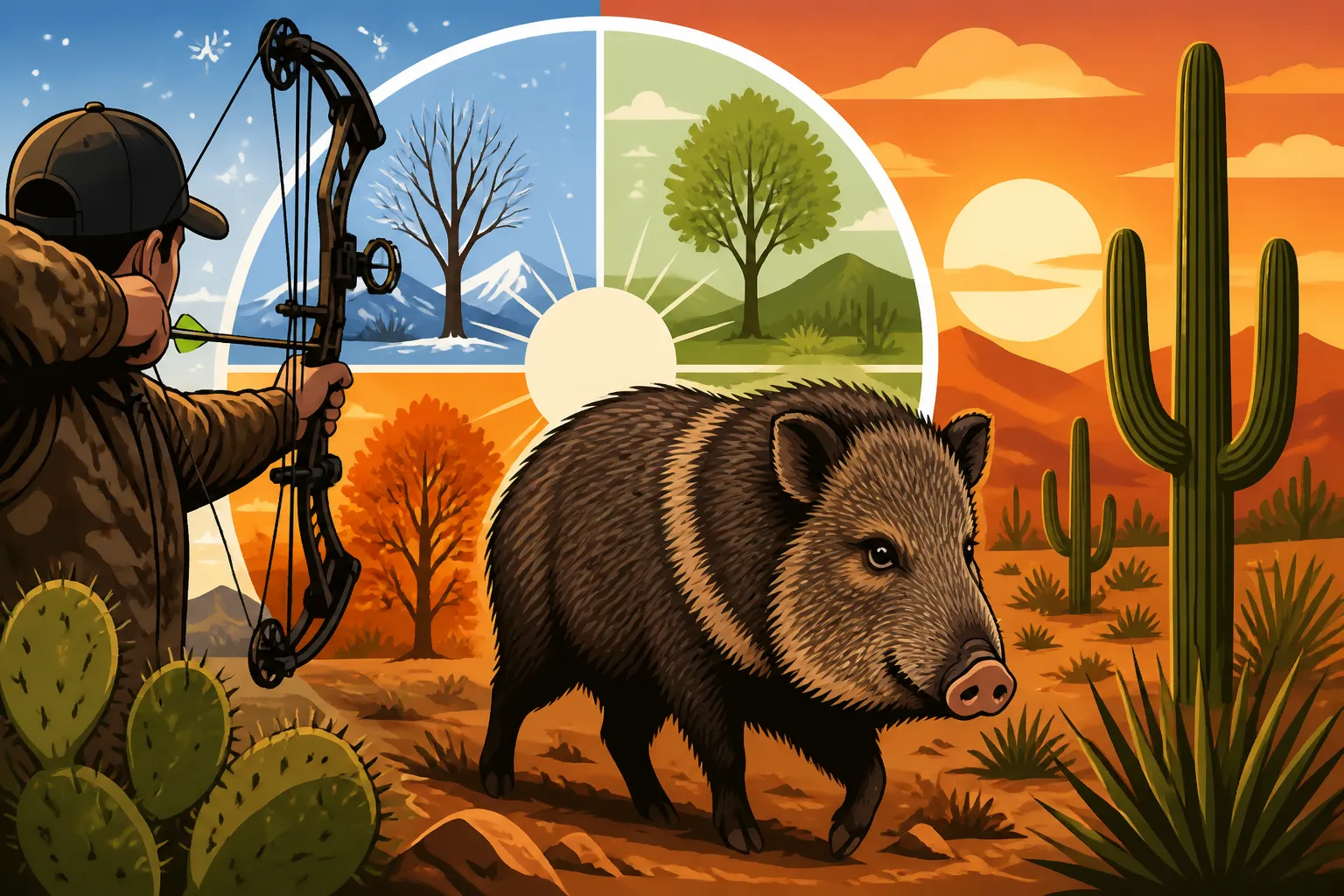
Javelina are creatures of habit, but those habits shift with the calendar. In the cooler months, generally from late fall through early spring, you'll often find them more active during daylight hours, feeding on prickly pear cactus, agaves, and roots. This is when they might be more visible, sunning themselves on rocky outcrops or moving through open flats. During these times, focus your scouting efforts on areas with an abundance of these food sources, particularly south-facing slopes that catch the most sun. These areas provide both warmth and sustenance.
As temperatures rise in late spring and especially through the scorching summer, their behavior changes dramatically. They become largely nocturnal or crepuscular, meaning they're most active at dawn and dusk to avoid the intense heat. During the hottest parts of the day, they'll seek dense shade in washes, under thick mesquite bosques, or in rocky caves. Their diet also shifts; while still consuming cactus, they'll prioritize succulent plants and anything that provides moisture. Your strategy must adapt accordingly: morning and evening hunts become paramount, and scouting for shaded bedding areas or game trails leading to water sources becomes key. Understanding Javelina Range Across Southern Arizona and how that range changes with seasons is critical for year-round success.
Understanding Herd Dynamics and Scent
Javelina are highly social animals, living in herds that can range from a few individuals to more than twenty. These herds stick together, moving as a unit, and their social structure is governed by scent communication. They have a dorsal scent gland that they use to mark territory, identify herd members, and communicate their presence. If you find fresh javelina sign – tracks, scat, or disturbed feeding areas – you can bet the herd isn't far. However, they also possess an incredible sense of smell and hearing, making close archery stalks incredibly challenging.
This strong reliance on scent means that understanding wind direction is not just important; it's absolutely critical when pursuing javelina. One whiff of human scent, and an entire herd can vanish into the brush before you even know they were there. Always approach downwind or crosswind. Their herd dynamics also mean that if you spook one, you've likely spooked them all. This emphasizes the need for stealthy approaches and quick, decisive shots. Learning about Javelina Herd Behavior and Scent can truly give you an edge, as it allows you to anticipate their movements and use their own communication methods (or lack thereof, when it comes to human scent) against them. Their distinct musky odor, often detectable on calm mornings, can also be a dead giveaway to their presence, especially if you're stalking thick cover.
Effective Hunting Strategies for Year-Round Success
Since javelina can be hunted year-round, your strategies can't be one-dimensional. The desert transforms with each season, and a tactic that works beautifully in January might be futile in August. Adapting your approach based on the environmental conditions and the javelina's corresponding behavior is the hallmark of a successful year-round hunter.
Spot and Stalk in Diverse Terrain
Spot and stalk is arguably the most exciting and challenging way to hunt archery javelina, and it's effective throughout the year, though its application changes with the seasons. In the cooler months, you might find javelina more often in open areas, making long-distance glassing and calculated stalks feasible. I like to find a good vantage point, often a ridge or hill, and use my binoculars and spotting scope to systematically pick apart slopes and draws. Once a herd is spotted, the real challenge begins: using terrain features like washes, gullies, and thick brush to close the distance without being seen or smelled. This requires immense patience and often means taking a circuitous route to get into bow range. GoHunt's detailed topographic maps are invaluable for planning these stalks, helping you identify hidden approaches and potential obstacles.
During the hotter parts of the year, spot and stalk becomes much more about finding them in their daytime beds or near water sources early or late in the day. Instead of glassing wide-open spaces, you'll be scrutinizing denser cover, looking for the tell-tale slight movement of an ear or the distinct outline of their bristly backs against the shade. Stalking in this thick, often noisy, vegetation demands an even slower, more deliberate approach. You'll be using every piece of available cover, from large rocks to mesquite bushes, to shield your movement. Remember, javelina have poor eyesight, but their hearing and smell are incredible. The desert floor, especially in rocky areas, can be incredibly loud, so soft-soled boots and extremely slow movement are a must. Successfully How Close a Bowhunter Needs to Get on Coues (or javelina, in this case) is often the key to punching your tag.
Hunting Water Sources and Feeding Areas
Water is life in the desert, and this truth is never more apparent than when hunting javelina. While javelina can go for extended periods without free-standing water by getting moisture from plants like prickly pear, they still prefer to drink regularly, especially during warmer periods. Identifying reliable water sources—stock tanks, guzzlers, seeps, or even temporary pools after monsoon rains—can be incredibly effective, particularly from late spring through early fall. These areas act as natural magnets, drawing in herds, and offering predictable ambush points for bowhunters. However, hunting water requires extreme caution to avoid contaminating it or disturbing other wildlife. Consider a pop-up blind or finding natural cover well downwind, ensuring you have a clear shot lane. Hunting a Stock Tank During Early Archery for javelina can be a very productive strategy when temperatures are high.
Beyond water, understanding their preferred feeding areas throughout the year is crucial. As mentioned, prickly pear is a staple. Look for pads that have been recently chewed or excavated roots where they've been digging for tubers. During cooler periods, south-facing slopes covered in agave and prickly pear are prime. After summer rains, new green growth or an abundance of various desert fruits can temporarily shift their feeding preferences. Tracking Javelina Through Thick Cover often leads you right to these feeding grounds. The key is to recognize that these areas are not static; they change with the seasons and local conditions. Constantly adapting your scout and hunt plan to what the desert is currently offering in terms of food and water will greatly enhance your success.
Regulations, Ethics, and What to Expect
Hunting javelina year-round in Arizona comes with certain responsibilities and ethical considerations. While the process of getting a tag might be straightforward, understanding the rules and preparing for the unique conditions of the Arizona desert is crucial for a successful and responsible hunt. It's not just about pulling back a bowstring; it's about respecting the animal, the land, and the hunting tradition.
Tagging and Reporting Requirements
Arizona Game and Fish Department (AZGFD) mandates specific procedures once you've successfully harvested a javelina. The most critical step is immediately tagging your animal. Your OTC tag will have specific instructions for how and where to attach it to the carcass. This is not a step to be delayed or overlooked; it's a legal requirement designed to ensure proper management and prevent illegal activities. Always carry a pen or pencil with you to fill out the tag accurately and legibly.
Beyond tagging, there are reporting requirements. Depending on the species and tag type, Arizona often requires hunters to report their harvest within a certain timeframe, sometimes online, sometimes by phone, or even in person at an AZGFD office. For javelina, typically, you'll need to report your harvest online through the AZGFD portal. This data is incredibly important for wildlife managers to track harvest numbers, population health, and make informed decisions about future hunting seasons. Failure to report a harvest can result in penalties, so always double-check the current regulations for the most up-to-date information. While the "Year-Round Archery Javelina in Arizona" means flexibility, the responsibility after the shot remains stringent.
Ethical Considerations for Archery Javelina
Hunting javelina with a bow, especially in the challenging desert environment, demands a heightened sense of ethical responsibility. Given their small size and tendency to move in thick cover, making a clean, humane shot is paramount. This means practicing diligently at various distances and angles, ensuring your bow is perfectly tuned, and knowing your personal limits. Never take a shot you're not confident in, especially if the animal is quartering away sharply or partially obscured by brush.
Furthermore, the year-round nature of the season means you might be hunting in extreme heat. This brings into play the critical ethical consideration of Field Dressing in Desert Heat and proper meat salvage. Javelina meat, when handled correctly, can be delicious, but it spoils rapidly in high temperatures. You must have a plan for field dressing immediately, cooling the carcass, and getting the meat out of the field quickly. This might involve carrying game bags, extra water for cooling, and knowing the shortest route back to your vehicle and ice. Leaving edible meat to spoil is a profound waste and an ethical violation. Responsible hunting also extends to being aware of Water Sources and Ethics in Arizona Desert Hunting, ensuring you leave no trace and respect these vital areas for all wildlife.
Seasonal Challenges and Preparation
Hunting javelina year-round means confronting the full spectrum of Arizona's diverse climate. The mild winter months (November-March) often offer the most pleasant hunting conditions, but even then, mornings can be surprisingly cold, and days can still reach into the 70s. Layering clothing is key. However, the true test comes during the warmer months. April and May can be hot and dry, while the monsoon season from July through September brings intense humidity, sudden thunderstorms, and often brutally high temperatures. Heat Management on an Arizona Early Season Hunt (which can extend through most of the year for javelina) becomes a primary concern.
You'll need to carry significantly more water during warmer hunts—at least a gallon per person per day, often more—and consider electrolytes to prevent dehydration. Footwear choice is also critical; good hiking boots that can handle rocky, thorny terrain are non-negotiable. Be vigilant for snakes, especially rattlesnakes, which are more active in warmer weather. Planning your hunts around the coolest parts of the day, focusing on early mornings and late evenings, will increase your comfort and effectiveness. Always inform someone of your hunting plans and expected return time, especially when venturing into remote desert areas, as help can be a long way off. A deep dive into Preparing Physically for a Desert Hunt is not an option, but a necessity for anyone looking to maximize their year-round javelina success.
Table: Javelina Seasonal Hunting Considerations
| Season | Typical Weather | Javelina Behavior Focus | Hunting Strategy Adjustments | Gear Considerations |
|---|---|---|---|---|
| Winter | Mild days, cold nights | Active daytime feeding, sunning on slopes | Glass open hillsides, longer stalks | Layered clothing, standard water |
| (Jan-Feb) | Low humidity | |||
| Spring | Warming, dry, increasing wind | Active mornings/evenings, seek shade mid-day | Waterholes, travel corridors, thicker cover stalks | Sun protection, increased water, lighter clothing |
| (Mar-May) | ||||
| Summer | Hot to extreme heat, monsoons | Nocturnal/crepuscular, dense shade during day, water sources | Primarily waterhole ambushes, early/late glassing | Max water, electrolytes, broad-brim hat, lightweight cooling fabrics |
| (June-Aug) | High humidity | |||
| Fall | Cooling, less predictable rain | Increased daytime activity, widespread feeding | Transition to open country glassing, feeding areas | Layered clothing, moderate water |
| (Sept-Dec) | Lower humidity |
Disclaimer
The information provided in this guide is for general informational purposes only and does not constitute legal advice. Hunting regulations in Arizona are subject to change, and it is the hunter's sole responsibility to consult the most current Arizona Game and Fish Department regulations booklet or website before engaging in any hunting activities. Always prioritize safety, ethical hunting practices, and compliance with all applicable laws.